



(Left) The Miss Shakti pageant described by former members of the organization. Participants performed dances representing Hindu goddesses during the group’s annual spiritual camp in Costinești, Romania. According to survivor testimony, the competition was presented as a celebration of divine feminine energy within the movement’s tantric teachings. At the end, women were encouraged to lose their costumes and dance naked.
(Right) Illustration represents a disappointing moment described by former members when selected women were brought to meet the group’s leader in a private setting. Several survivors have said the faded older guru greeted them in a bathrobe, and after sex made them drink his pee. Women claimed the encounter differed sharply from the expectations created by the organization’s portrayal of the guru as a spiritually extraordinary figure.
In late November 2023 French police launched a series of coordinated raids across the Paris region targeting a network of international yoga schools linked to Romanian guru Gregorian Bivolaru. Investigators deployed roughly 175 officers to search multiple properties connected to the organization. Dozens of suspects were detained, including the movement’s founder.[1]
Authorities allege the investigation uncovered a system that recruited women through yoga courses and spiritual retreats before subjecting some of them to psychological coercion, sexual exploitation, and trafficking. Prosecutors say the network relied on secrecy, spiritual authority, and tightly controlled living environments to maintain power over followers.[2]
To the outside world the organization presented itself as a loose federation of yoga schools devoted to meditation, spiritual growth, and tantric philosophy. Classes advertised esoteric spirituality and techniques for personal transformation. Students attending local branches often believed they were participating in ordinary yoga programs.
However, former members say the reality behind the scenes could be very different.
Their accounts describe a gradual process in which newcomers were drawn deeper into the group through friendship, spiritual promises, and increasingly secret teachings. And a select number of participants encountered the most controversial practices, which were framed as advanced spiritual initiations.
The story of one former member, Miranda Grace, provides a detailed glimpse into how that process unfolded.[3]
The Spiritual Entry Point
Miranda first encountered the organization through what appeared to be an ordinary yoga school operating in London under the name Tara Yoga Centre. At the time she was deeply interested in spiritual practice and had recently returned from India after completing yoga teacher training. The school’s curriculum seemed attractive to someone searching for deeper spiritual knowledge. Courses covered yoga postures, meditation techniques, astrology, tantra philosophy, and elements of Kashmiri Shaivism.
Students were told the organization practiced something called “white tantra,” which teachers described as a sacred spiritual tradition emphasizing energetic transformation rather than sexuality. This distinction was important because many Western tantra workshops openly incorporate sexual exercises. By contrast, the school presented itself as offering a purer and more traditional form of tantra rooted in ancient teachings.
Miranda later explained that nothing initially appeared suspicious. Teachers and students were warm and welcoming and the environment felt supportive and spiritual. Like many new members she believed she had discovered a serious community devoted to meditation and self-development.
The Founder and the Network
The broader movement behind these yoga schools traces back to Romanian teacher Gregorian Bivolaru. During the 1970s and 1980s Bivolaru taught yoga under Romania’s communist regime, when alternative spiritual practices were often suppressed. This period helped build his reputation among followers as a persecuted mystic and spiritual rebel.
After the fall of communism he established the Movement for Spiritual Integration into the Absolute, commonly known as MISA.[4] The organization later expanded internationally and began operating under numerous affiliated names, including the Atman Federation of Yoga Schools. Branches have appeared across Europe, Asia, and North America under names such as Tara Yoga Centre, Natha Yoga, and Mahasiddha Yoga.
Within the movement Bivolaru is referred to by followers as “Grieg,” a spiritual guide believed to possess advanced enlightenment and extraordinary energetic powers. Students are taught that he can accelerate spiritual evolution and transmit powerful mystical states to disciples. Critics and investigators, however, describe a very different picture. European authorities say the guru used psychological manipulation and spiritual authority to obtain sexual access to female followers and maintain a network of exploitation.[5]
Gradual Indoctrination
According to Miranda’s account, the group’s recruitment process unfolds slowly. New members begin with standard yoga classes and meditation workshops. Over time they are invited to retreats and special groups where the teachings become more esoteric. Teachers often emphasize themes of sacred femininity and the spiritual importance of sexual energy.
Women’s groups may include exercises designed to help participants feel more comfortable with their bodies. In some cases members are encouraged to wear lingerie or perform sensual dances framed as spiritual empowerment. Discussions about sexuality become increasingly explicit, though always couched in mystical language about energy, chakras, and sacred union.
Miranda recalled that the process felt gradual rather than shocking. The environment was filled with people who appeared joyful and spiritually advanced, which made it easier to overlook moments that felt strange or uncomfortable. Compliments and encouragement from teachers created the sense that she was progressing along an important spiritual path.
Eventually she was invited to join a more exclusive women’s group. Members were described as women who were particularly “open” and spiritually receptive. Inside the group the practices intensified. Participants were told they were exploring sacred feminine energy and were encouraged to express sensuality without shame.
At one point photographs were taken of participants and sent to the guru so he could evaluate their spiritual potential by reading their aura. Some of the photographs were nude. Shortly afterward Miranda was told she had been chosen to attend a summer camp in Romania.
The Romanian Retreat
The retreat took place during the organization’s large annual spiritual camp in Costinești, Romania. Thousands of followers from around the world attend the event each summer for lectures, meditations, and spiritual workshops organized by the movement. For many participants the gathering resembles a festival devoted to yoga and mystical philosophy.
According to Miranda’s account, the atmosphere changed once she arrived at the women’s villa connected to the retreat. Participants were required to surrender their passports and phones when entering the building and were only allowed to retrieve them when leaving the premises. Organizers explained that the rules were meant to protect the group from outside interference and to maintain a focused spiritual environment.
Women were also asked to swear secrecy oaths. In Miranda’s case this involved placing a hand on a Bible and promising never to reveal what happened inside the retreat or during certain initiations. Participants were warned that breaking this oath could damage their health, spiritual evolution, or even harm their families.
Another practice involved filming participants naked while they slowly turned in a circle. Organizers told them the recordings would allow the guru to read their aura and determine their spiritual level.
During the retreat the guru himself was spoken about in increasingly reverential terms. Teachers and senior members described him as a spiritual guide whose consciousness operated beyond ordinary human limitations. Followers shared stories about profound spiritual transformations they said they had experienced through his teachings.
One of the most prominent events at the camp was the Miss Shakti pageant. The competition was presented as a celebration of divine feminine energy inspired by Hindu goddess traditions. At the beginning participants wore elaborate costumes and performed choreographed dances meant to embody different goddesses. As the competition progressed, the performances became increasingly sexualized. By the final stage the remaining contestants appeared nude on stage. According to Miranda, the winner received the prize of a special spiritual relationship and guidance from the guru for one year.
The Secret Trip
After the retreat Miranda was invited to meet Bivolaru personally. The journey was conducted under strict secrecy. Participants were instructed to tell friends and family they were attending a silent retreat and would not be reachable.
During the drive toward Paris the women were given hats and sunglasses and told to keep them pulled down so they could not see where they were going. If police stopped the vehicle they were instructed to say they were simply traveling on a yoga holiday.
When they arrived at a house outside Paris their phones, passports, and bank cards were confiscated. Organizers said electronic devices interfered with spiritual energy and that documents had to be stored safely. In practice the measures ensured that the women had no independent means of communication or travel.
Inside the house they were required to read long documents describing tantric sexual techniques, watch videos, and write reflections about spiritual experiences. Participants were filmed naked again so the guru could supposedly analyze their energy. Several women slept in each bedroom while new arrivals appeared frequently. Investigators who later raided similar properties reported finding dozens of women living in crowded conditions under tight supervision.[6]
The Initiation
Eventually Miranda was taken to meet the guru. Her first reaction was confusion. She had expected a powerful spiritual figure but instead encountered an elderly man in a bathrobe.
Despite feeling no attraction, she felt enormous pressure to proceed. Every woman she knew in the organization had supposedly undergone the same initiation. Refusing would mean failing spiritually and losing her entire community.
She later described dissociating during the experience. Afterward she was required to record a positive testimonial while naked on camera describing the encounter as spiritually meaningful.[3]
Economic Exploitation
Miranda was later transferred to another house described as a spiritual integration center. In reality it functioned as a camgirl studio. Women worked shifts on adult websites while being told the activity was a form of spiritual volunteering known as karma yoga.
The payment structure was confusing. Food, housing, and fines were deducted from earnings, leaving many participants with little or no money. Former members say similar operations existed across several countries, including webcam studios, erotic film projects, massage centers, and clubs staffed by female disciples.
Investigators believe these businesses generated substantial income for the organization.
The 2023 Police Raids
Years of complaints from former members eventually led to a large international investigation. On November 28, 2023 French police carried out coordinated raids targeting properties connected to the network.[1]
Authorities arrested dozens of suspects and placed several in pretrial detention. Bivolaru himself was arrested in Paris, where police reportedly discovered large sums of cash during the search.[7] Investigators also reported finding dozens of women living in crowded conditions at locations linked to the case.[6]
Prosecutors allege the organization used spiritual ideology and psychological pressure to control followers and obtain sexual access to women. The guru denies the accusations and supporters claim the investigation is politically motivated. The case is expected to move toward trial in the coming years.
The “Golden Elixir” Practice
One of the most unusual doctrines described by former members involves a ritual referred to inside the organization as the “golden elixir.” According to Miranda’s testimony, women were taught that after prolonged tantric intercourse the body’s fluids become spiritually transformed into a sacred substance containing a person’s highest energetic essence.[3]
Within the ritual, urine produced after the sexual act was described as a powerful elixir capable of transmitting spiritual energy between partners. Participants were told that consuming or exchanging the substance allowed practitioners to absorb each other’s spiritual qualities and accelerate enlightenment.
The terminology appears to borrow from several older esoteric traditions. In Taoist internal alchemy, texts sometimes refer to symbolic “elixirs of immortality” created through meditation and breath practices that refine the body’s vital energy. These teachings describe internal energetic processes rather than literal bodily fluids.
Classical tantric traditions also contain symbolic references to sexual energy and bodily substances as vehicles for spiritual transformation. However, scholars note that the specific ritual described by survivors does not appear in historical tantric texts and appears to be a modern interpretation developed within the group’s teachings.
Former members say the doctrine functioned as a powerful form of conditioning. By framing extreme sexual practices as advanced spiritual techniques, it helped normalize behaviors that many participants would otherwise have found disturbing.
Why Systems Like This Work
Stories like Miranda’s often provoke disbelief. It is tempting to ask how intelligent people could become involved in such situations.
But the structure of these organizations explains much of the dynamic. People do not join a cult on the first day. They join yoga classes, meditation groups, and spiritual communities. The most extreme practices appear only after months or years of gradual escalation.
By that point members often have close friendships, romantic relationships, housing arrangements, and spiritual identities tied to the organization. Leaving can mean losing an entire social world and admitting that a deeply held belief system may have been deceptive.
That psychological trap is one of the most powerful control mechanisms any high-demand spiritual group can create.
When the Pattern Appears in Other Traditions
At first glance the story of the Romanian yoga network may appear to be an extreme and unusual case. It is easy to assume that such dynamics occur only in fringe spiritual movements operating outside established religious traditions.
Yet similar patterns have appeared in many different spiritual communities where authority becomes concentrated in the hands of revered teachers and questioning that authority is discouraged.
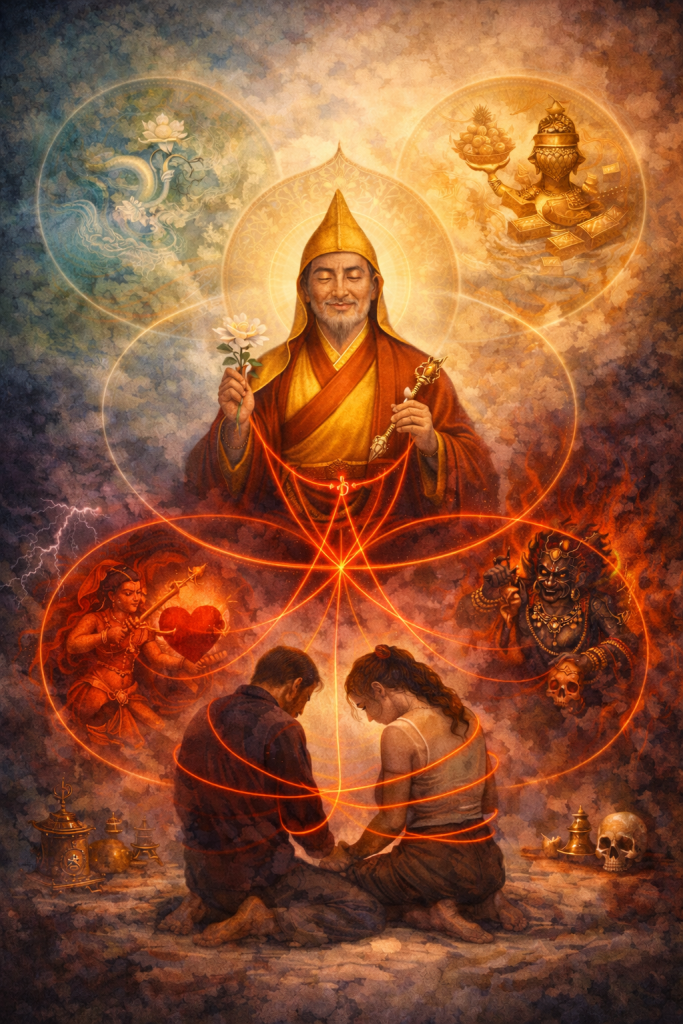
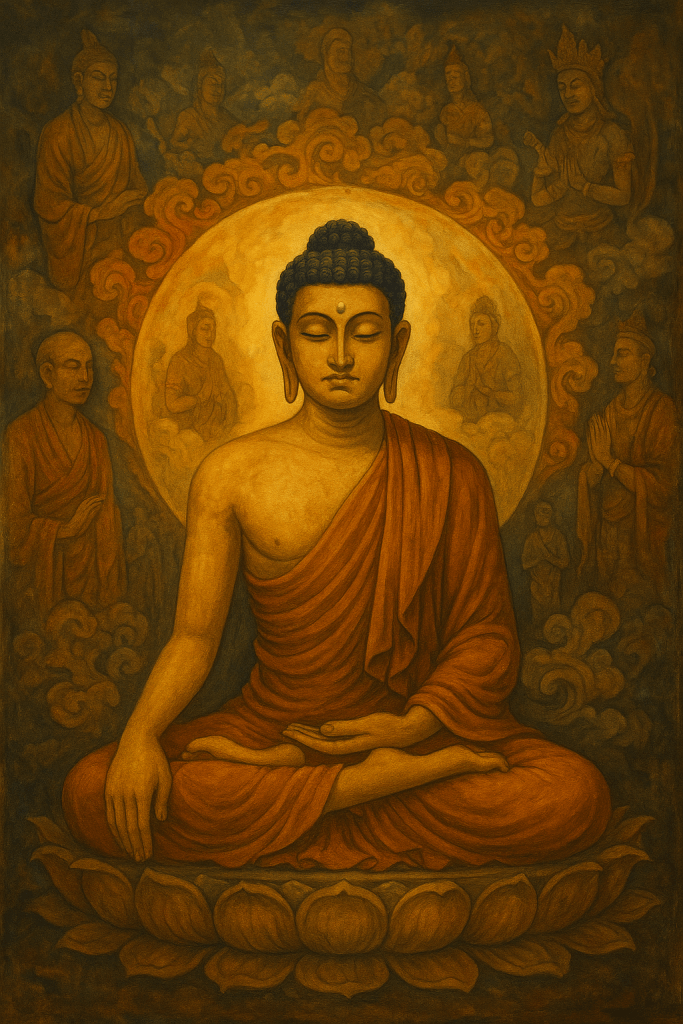
My own experience practicing within Tibetan Buddhist communities made this reality difficult to ignore. Within Vajrayana Buddhism, devotion to the guru is considered a central element of the spiritual path. Students are taught that the teacher embodies enlightened wisdom and that maintaining trust in the guru is essential for progress. In traditional teachings, breaking that bond of devotion can be described as creating extremely serious karmic consequences.[8]
In theory these teachings are meant to cultivate trust between teacher and student. In practice they can create environments where misconduct becomes difficult to challenge. When a teacher is viewed as spiritually infallible, ethical concerns can be reframed as failures of devotion.
Recent reports from the Samye Ling Buddhist community in Scotland illustrate how such dynamics can arise. Samye Ling is one of the oldest Tibetan Buddhist centers in the West and has played a major role in introducing Tibetan Buddhism to Europe. Yet accounts published by former practitioners describe allegations of bullying, coercion, sexual abuse, and misuse of tantric authority during retreats connected with some of the teachers associated with the community.[9]
According to reports compiled from former residents and retreat participants, several women had previously raised complaints about intimidation and psychological pressure during extended retreats on Holy Isle, the island retreat center connected with Samye Ling.[9] Some accounts describe the use of tantra in ways that participants experienced as coercive or abusive.
One particularly tragic case involved the reported suicide of a woman after participating in a long retreat associated with the center. Statements shared by members of a survivors’ support group suggest she had previously expressed distress about bullying by the guru during the retreat experience.[10]
These reports do not describe the same type of organized trafficking network alleged in the Romanian case. The situations are different in important ways. Yet the structural similarities are striking. In both contexts spiritual authority can become so elevated that criticism becomes socially and psychologically dangerous. Students may feel pressured to reinterpret discomfort as evidence of their own spiritual shortcomings rather than possible misconduct by a teacher.
Over time this dynamic can lead people to reinterpret harm as a path to spiritual progress and to ignore red flags.
Recognizing this pattern reveals a recurring vulnerability that appears whenever secrecy, hierarchical authority, and devotion converge around charismatic and powerful spiritual leaders.
Examining that vulnerability openly may be one of the most important steps spiritual communities can take if they hope to prevent similar harm in the future.
The story that began with a Romanian yoga movement ultimately points to a broader issue that reaches far beyond a single organization or religious tradition. Whenever spiritual authority becomes insulated from scrutiny, secrecy surrounds advanced teachings, and students are taught that questioning a teacher is a spiritual failure, the same dynamics emerge again and again. For many survivors, the hardest realization is that practices once presented as sacred were used to enforce silence, obedience, and harm. Understanding the patterns that recur in high-demand spiritual groups is one important way people can be protected from those who seek to misuse them.
Note: In recent years the controversy surrounding the Romanian yoga movement has begun to attract wider public attention. A new documentary series titled Twisted Yoga on Apple TV examines allegations surrounding the organization and its founder, drawing on interviews with former members and investigative reporting. Independent researchers have also compiled information and survivor testimony through the website Atman Cult Alert, which tracks developments related to the network and its affiliated schools. Several podcast series have explored the story in depth as well, including The Bad Guru from the BBC in the United Kingdom, Toxic Tantra produced in Germany, and The Road to Paradise, a Danish podcast investigating the organization’s activities in Europe. Together these projects reflect a growing international effort to understand how the movement expanded across multiple countries and how former members say they were drawn into its inner circles and exploited.
Footnotes
- International reporting on the November 2023 French police raids targeting the Atman Federation and related yoga organizations.
- Statements from French prosecutors describing trafficking and organized crime charges connected to the investigation.
- Miranda Grace interview on the YouTube channel Cults to Consciousness describing her experiences inside the Tara Yoga / Atman network.
- Historical background on Gregorian Bivolaru and the Movement for Spiritual Integration into the Absolute (MISA).
- Investigative reporting describing allegations of psychological manipulation and exploitation linked to the organization.
- Reports from French authorities describing conditions discovered in properties raided during the investigation.
- Media coverage describing the arrest of Gregorian Bivolaru and seizure of cash during searches in Paris.
- Discussions in Vajrayana Buddhist literature regarding the seriousness of breaking devotion to one’s guru.
- Reports compiled by Dakini Translations regarding allegations of misconduct and bullying involving Drupon Karma Lhabu and teachers connected with Samye Ling and Holy Isle retreats.
- Reporting and survivor statements regarding the death of a woman following participation in a retreat associated with the Samye Ling community.

 Tantric Deception