
Shapeshifting Siddhis in the Chakrasamvara Tantra and Related Traditions


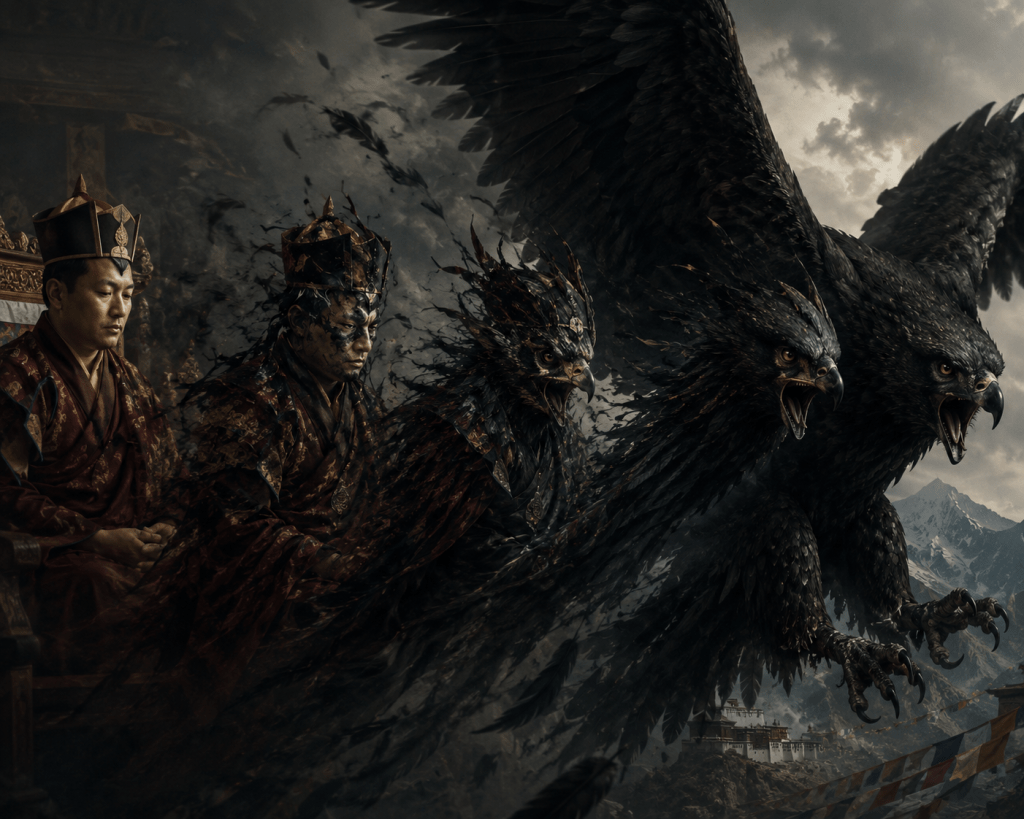
Among the stranger subjects in tantric literature, shapeshifting remains one of the least discussed in modern Buddhist writing. Contemporary presentations of Vajrayana often reduce siddhis (magical powers) to metaphors but the older tantric sources speak in a very different voice. They describe special abilities gained through ritual practice, sexual yoga, cremation-ground rites, mantra recitation, visionary contact with yoginis and dakinis, and mastery over subtle forces in the body. One of those powers was transformation into animals and birds, especially predatory birds associated with flight, hunting, and the crossing of worlds.

The Chakrasamvara Tantra belongs to the Yogini Tantras, a class of Buddhist tantras that emerged in medieval India between the eighth and twelfth centuries. These texts were tied to charnel-ground cults, wandering siddhas, and yogini circles that existed at the edge of settled religious life. David B. Gray notes that the Chakrasamvara system was deeply connected with yogini cults and with rites considered transgressive even within Indian Buddhism.[1] The tantric world described in these texts was not symbolic in the modern literary sense. Spirits, dakinis, flesh-offerings, flight, possession, and bodily transformation were treated as concrete possibilities.

The language surrounding yoginis and dakinis is especially important because these beings were repeatedly linked to shape-changing and aerial movement. Traditional tantric vocabulary uses terms such as khecari, meaning “sky-goer” or “sky-traveler.” The yogini was understood as a being capable of moving between human and nonhuman forms, crossing physical and subtle worlds. Medieval Shaiva and Buddhist tantras describe yoginis with animal heads, bird forms, or hybrid bodies. The scholar Shaman Hatley writes that yoginis were associated with “actual shapeshifting” and with the power of flight.[2] The same literature links them to cremation grounds, nocturnal rites, and transmission of forbidden knowledge.

These themes appear in Buddhist tantric systems connected to Chakrasamvara. The dakini was not simply a poetic figure. In Tibetan commentarial traditions, dakinis could appear as women, animals, spirits, or wrathful beings encountered during ritual practice and visionary states. Judith Simmer-Brown notes that advanced tantric systems described an “outer” dakini attained through completion-stage practices involving the subtle body and its energetic transformations.[3] For advanced siddhas (tantric masters), visionary identification with animal or deity forms could culminate in actual transformation.

The Chakrasamvara cycle itself preserves traces of older tribal and shamanic material absorbed into Buddhist tantra. (For reference see my previous article titled Tantra’s Hidden Origins: Magicians, Sorcerers, and the Non-Literate World of Ancient India). The central deity Heruka stands amid cremation grounds, wearing bone ornaments and trampling Hindu deities beneath his feet. The mandala contains circles of dakinis and yoginis who embody wild and dangerous forces. Several female tantric figures connected to the tradition take animal forms. Vajravarahi herself appears with the head of a sow projecting from her temple. Animal-headed yoginis appear throughout related tantric iconography, especially in the yogini cults that influenced the Yogini Tantras.[4]

What matters here is that medieval tantric practitioners understood bodily identity as fluid. Ritual identification with a deity was already considered a real alteration of consciousness and subtle embodiment. Certain siddhis pushed this much further. Tantric manuals across both Buddhist and Shaiva traditions contain rites for invisibility, flight, entering another body, controlling spirits, and assuming alternate forms. The line between spirit possession and shapeshifting was often thin.

The predatory bird carries special weight in this material. Birds of prey appear in tantric symbolism as beings that move between earth and sky, life and death. Dakinis themselves were frequently linked with vultures, hawks, crows, owls, and carrion birds associated with cremation grounds. Tibetan art and ritual literature preserve many examples of wrathful female spirits with wings, claws, and avian features. The Tibetan term for dakini, khandroma, literally means “sky-goer.” This idea of aerial movement was not seen as fantasy. The ability to leave the body, travel through the sky, or assume bird form were skills that belonged to the siddhas’ reperatoires across India and Tibet.

Accounts surrounding the eighty-four mahasiddhas strengthen this point. These wandering tantric adepts were credited with powers that included levitation, bodily transformation, magical travel, and command over animals. Hagiographies describe siddhas appearing in unexpected forms or vanishing from ordinary sight. Luipa, one of the central figures in the Chakrasamvara transmission lineage, practiced in charnel grounds and was linked with yogini initiations involving antinomian rites.[5] These stories were preserved by tantric communities as records of attainment rather than allegories.

Parallels with Indigenous traditions elsewhere are difficult to ignore. Among several Native American nations, especially in the Plains and Subarctic regions, ritual specialists described experiences of animal transformation tied to spirit travel, hunting magic, warfare, and visionary initiation. Eagle and hawk transformations carried particular importance because birds of prey were regarded as mediators between human beings and the upper worlds. Some ceremonial societies taught that a practitioner could spiritually become the animal whose power had entered him. Similar beliefs existed among Siberian shamans, Mongolian spirit-mediums, and Central Asian ecstatic traditions.

There are important differences between these cultures, and they should not be collapsed into a single universal system. Buddhist tantra emerged within the religious environment of India, drawing from Shaiva, tribal, yogic, and cremation-ground traditions. Native American ceremonial systems developed independently within their own spiritual landscapes. Yet the recurrence of animal transformation, flight, spirit embodiment, and predatory bird symbolism across cultures suggests that these experiences belong to a wider stratum of ritual consciousness.

Modern scholars usually interpret shapeshifting language symbolically because the academic world has little room for the supernatural claims made in tantric texts. Yet even cautious historians admit that medieval tantric practitioners themselves believed siddhis were real attainments. The Chakrasamvara Tantra emerged within circles that accepted spirit contact, magical rites, visionary encounters, and bodily transformation as part of advanced practice.[6]

Reports of shapeshifting and animal embodiment did not disappear with the medieval world. In Himalayan regions, parts of Nepal, India, Mongolia, and Tibet, stories about yogis taking animal form still circulate among practitioners and villagers. Similar accounts continue among Indigenous ceremonial traditions in the Americas. Outsiders may dismiss such claims as folklore, hallucination, or symbolic storytelling, but the communities preserving them rarely make such distinctions. For them, the spirit world remains actively dangerous, and immediate.

The modern tendency to sanitize tantra has hidden much of this material. Popular books often frame Vajrayana as a system of abstract psychology wrapped in exotic symbolism. The older texts present something more unsettling. The siddha was expected to cross thresholds ordinary society feared. Cremation grounds, possession states, sexual rites, communion with dakinis and demons, and shape-changing powers formed part of the same ritual landscape. The Chakrasamvara Tantra did not emerge from a polite monastery culture detached from magic. It emerged from circles that believed reality itself could be bent through disciplined contact with forces most people feared and avoided.

Footnotes

[1] David B. Gray, The Cakrasamvara Tantra: The Discourse of Sri Heruka (New York: American Institute of Buddhist Studies, 2007).

[2] Shaman Hatley, cited in “Yogini,” Wikipedia, discussing yogini traditions and shapeshifting associations. (en.wikipedia.org)

[3] Judith Simmer-Brown, discussed in “Dakini,” Wikipedia. (en.wikipedia.org)

[4] “Yogini Temples,” discussion of theriomorphic yoginis and tantric transformation motifs. (en.wikipedia.org)

[5] Alexander Berzin, “What Is Chakrasamvara Practice?” discussing Luipa and Chakrasamvara transmission traditions. (studybuddhism.com)

[6] “Cakrasamvara,” Encyclopedia.com, describing the Yogini Tantras and their transgressive ritual framework. (encyclopedia.com)
Tertons, Termas, and the Curious Origins of Hidden Teachings


Tibetan Buddhism’s terma tradition is usually framed as a luminous, providential means by which enlightened masters hide and later reveal teachings at the exact moment needed. That’s part of the story, but it’s not the whole story by any means. Read closely, and a darker current runs through the terma corpus: treasures hidden and guarded by wrathful powers, revelations that arrive through strange, sometimes malevolent intermediaries, and rituals whose intent and method look remarkably like what modern people would call dealings with spirits or demons. In short, many tertons don’t simply find teachings; they negotiate with non-human, often wrathful forces that can reasonably be described as demonic. Below I’ll examine Dylan Esler’s study of Gya Zhang Khrom (rGya Zhang khrom)¹ and other scholarly sources as a base to examine the phenomena of tertons and terma.

What the words mean

A terma (gter ma) is literally a “hidden treasure”: text, ritual object, or practice concealed (often in a rock, lake, or the mindstream of a guru) to be discovered by a tertön (gter ston), the treasure-revealer. Academic treatments correctly emphasize the social and legitimating functions of these discoveries in prophecies, lineages, and performative acts that make the revelation believable to followers. But the same sources that record authentication narratives also preserve striking descriptions of how termas are hidden, guarded, and recovered: they are defended by territorial spirits or “treasure-lords,” transmitted by non-human yogins, and often carry explicitly wrathful, “black magic” contents. Non-human yogins can take the form of visionary yogins, dakinis/dakas, local spirits, or wrathful entities, and they act as the intermediaries who hide, protect, or hand over the treasure.

A close example: Gya Zhang Khrom and wrathful treasures

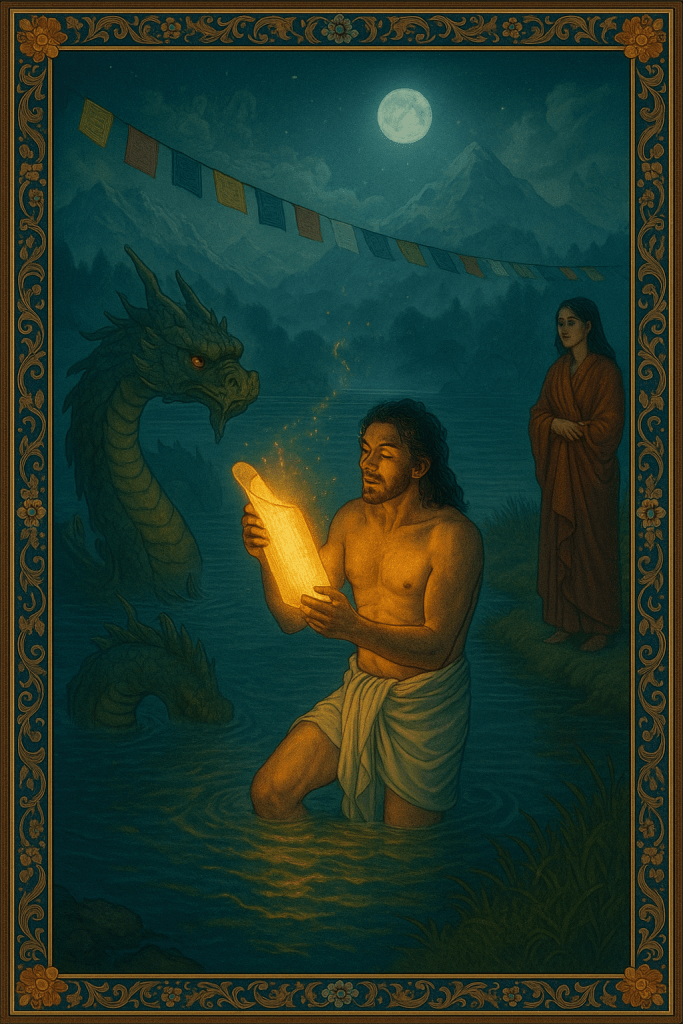
Dylan Esler’s article on Gya Zhang Khrom in the (Byang gter) Northern Treasures tradition recounts the classic terma motif: a mysterious yogin leads the future tertön to a hidden cache of ritual objects and scrolls that come out of fissures in rock, and the revealer deciphers and transmits material that includes both beneficent and harmful ritual instructions. Esler notes items described as “cycles for benefiting and harming,” in other words, materials for both white and black magic, and he situates Gya Zhang’s revelations within a Northern Treasure program that explicitly deploys wrathful, coercive ritual means. That combination of secret caches, hidden custodians, and instruction sets for destructive rituals is exactly the pattern that supports reading many termas as arriving via a demonic or semi-demonic channel.

Treasure-protectors and Lords of the Treasures: the institutional side of the “demonic”

The literatures that record terma narratives repeatedly mention gter srung (treasure-protectors) and gter bdag (lords of the treasures). These are not neutral filing cabinets: they are spirits of place, frequently wrathful, who demand protocols and substitutions (gter tshab) when a cache is opened. Ethnographic and textual scholarship treats these beings as part of the class of local, elemental, or “demonic” forces that Tibetan ritual both confronts and incorporates. Scholarly surveys of protector deities and the oral/ritual ecology around termas make clear that treasures do not simply sit inert but are guarded by active, sometimes dangerous entities. If a tertön is authorized by prophecy, that can mitigate local resistance; if not, accusations of theft and collusion with spirits arise.²

Demon-taming, wrathful methods, and ambiguous agency

The well-known motif of Padmasambhava as demon-tamer is instructive: foundational tantric figures are often framed as subduers of hostile spirits, and the very act of revealing a terma can be portrayed as the tertön’s success in negotiating or subduing a guardian force. But negotiation is not always tame or benign. A number of terma traditions preserve wrathful practices intended to overthrow enemies, cure epidemics, or control hostile spirits—techniques that look like pacts or coercive exchanges with non-human agencies. Scholarly work on Dzogchen/Northern Treasure liturgies and on early treasure careers shows repeated, explicit intersections between revealing termas and advancing ritual technologies of domination or protection over local powers.³

So, do tertons get their termas from demons?

In many traditional narratives and ritual contexts, yes. Termas are mediated by, guarded by, or negotiated with non-human beings that function similar to what observers would call demons. That’s a historical and anthropological claim. The primary sources and modern scholarship present a consistent pattern: treasures are hidden in the landscape or mind, are protected by wrathful custodians, and are sometimes transmitted by shadowy yogins or through visions that are indistinguishable from encounters with spirits. Where the contemporary, institutional presentation emphasizes enlightened intent and salvific purpose, the deeper ritual ecology reveals frequent recourse to powers that are territorial and morally ambiguous.

Final thoughts

Terma studies that stop at the rhetoric of revelation miss the subterranean reality that produces and polices those revelations. Esler’s account of Gya Zhang Khrom’s discoveries of materials explicitly useful for harming as well as helping presents a pattern replicated across the terma corpus. Read with discernment, the terma tradition looks less like a straight line from enlightened source to human disciple and more like a braided negotiation between the human revealer, local spirits or demons, and the institutional needs of Buddhist communities. That picture is central to my argument: many tertons operate at the shadowy margins where demonic forces and tantric techniques meet, and their termas are as much the products of those encounters as they are of the “pure” spiritual origins claimed by their lineages.

Notes:

  1. Dylan Esler, “Yamāntaka’s Wrathful Magic: An Instance of the Ritual Legacy of gNubs chen Sangs rgyas ye shes on the Byang gter Tradition via the Figure of rGya Zhang khrom,” Revue d’Études Tibétaines, no. 62 (Feb. 2022): 190–215, https://himalaya.socanth.cam.ac.uk/collections/journals/ret/pdf/ret_62_08.pdf (accessed Oct. 7, 2025).
  2. Jean-Luc Achard, “A Brief Note on the Northern Treasures of the Bon Tradition,” Revue d’Études Tibétaines, no. 68 (Jan. 2024): 16–35, https://d1i1jdw69xsqx0.cloudfront.net/digitalhimalaya/collections/journals/ret/pdf/ret_68_02.pdf (accessed Oct. 7, 2025).
  3. Christopher Bell, “Worldly Protector Deities in Tibetan Buddhism,” in Brill’s Encyclopedia of Buddhism, vol. 2: Major Personages in Myth, Hagiography and Historical Biography (Leiden: Brill, 2019), 1254–66, https://brill.com (entry available online; access depends on subscription) (accessed Oct. 7, 2025).

How Tantra Masqueraded as Buddhism: the Vajrayāna Deception


Vajrayana Buddhism, also known as Tibetan Buddhism or Tantric Buddhism, stands out for its rituals, deity worship, and complex esoteric practices. Its mantras, mandalas, and meditations on wrathful and yab/yum deities bear clear resemblance to Hindu Tantra, Vedic ritualism, and indigenous spirit cults.

So how did it convince anyone, especially devout Buddhists, that it was authentically taught by the historical Buddha?

The answer lies in a strategic combination of hidden teaching narratives, scriptural mimicry, ritual power, and imperial patronage. Let’s explore how this transformation occurred and what it means when viewed through the lens of Catholic faith and biblical discernment.

Secret Teachings: “The Buddha Taught It, But in Secret”

Vajrayana scriptures claim that the Buddha did teach tantra, but only in secret, to highly realized disciples. These teachings were said to have been hidden in celestial realms, entrusted to beings like Vajrapani or dakinis, or taught in the Buddha’s “enjoyment body” (sambhogakaya) form in other worlds such as Akanistha.(1)

This tactic mirrored earlier Mahayana developments, where new sutras like the Lotus or Avatamsaka were claimed to be higher revelations spoken by the Buddha, but not understood by his early disciples. The concept of esoteric knowledge reserved for the spiritually mature made these late texts seem like rediscovered treasures, rather than innovations.

Scriptural Mimicry and Retroactive Legitimization

To reinforce their authority, tantric scriptures deliberately mimicked the structure of traditional sutras. They often began with the familiar phrase, “Thus have I heard,” and depicted the Buddha teaching not only in celestial realms surrounded by bodhisattvas, but sometimes in radically transgressive settings such as charnel grounds, encircled by ḍākinīs and wrathful deities. These texts introduced elaborate cosmologies, detailed ritual instructions, and esoteric vows, presenting them as timeless wisdom, even though they were composed many centuries after the Buddha’s death.[2]

Authors also invented lineages, claiming that tantric teachings had been passed down secretly from Vajrapani to Nagarjuna, or from Padmasambhava to Tibetan kings.

Syncretism with Hindu and Folk Traditions

Instead of denying its similarities with Hindu Tantra, Vajrayana reinterpreted them. Wrathful deities were said to be enlightened Buddhas. Sexual rituals were described as a symbolic means to transform desire into wisdom. Offerings of blood, bones, and taboo substances were spiritualized as purifications of dualistic perception.

By repackaging Vedic and folk practices into a Buddhist framework, Vajrayana could absorb local traditions and declare them “Buddhist skillful means.”

Imperial Support and Monastic Integration

Tantra spread rapidly through the support of kings and monasteries. In Tibet, tantric masters were invited to subdue native spirits, secure political power, and perform rituals for prosperity. At Indian centers like Nalanda and Vikramashila, tantric scholars and monks practiced Mahayana logic by day and tantric visualization by night.

With the backing of the state and the academic establishment, Vajrayana was not seen as a fringe practice but as the “highest vehicle” of Buddhism.

Ritual Power and Psychological Experience

For the average practitioner, tantra “worked.” It offered visions, emotional catharsis, ritual protection, and the promise of fast-track enlightenment. The experiential pull of mantra, deity yoga, and initiation ceremonies gave people tangible results even if the doctrinal basis was historically shaky.

In the end, many believed not because of historical evidence, but because the system delivered experiences of spiritual intensity.

How Christianity Views This: The Domain of the Second Heaven

From a biblical and Catholic perspective, this raises serious concerns. The spiritual beings Vajrayana practitioners encounter, wrathful deities, dakinis, yidams, do not proclaim Christ as Lord and Savior. They do not point to the God of Abraham, Isaac, and Jacob. They offer power and enlightenment through self-transformation, not redemption.

The Bible is clear: Satan is the prince of the power of the air, ruling the spiritual domain between heaven and earth until Christ returns (Ephesians 2:2). What some refer to as the “second heaven” is where fallen angels operate, deceiving through false light, hidden knowledge, and seductive spiritual experiences.

Teachers like Derek Prince and Dr. Michael Heiser have explained how fallen entities inhabit unseen realms and impersonate divine figures such gods, ascended masters, or beings of light. Applying this view, the Buddhist realm of Akanistha, where the Buddha is said to teach in his sambhogakaya form, may not be a divine domain at all, but a carefully constructed counterfeit, orchestrated by spiritual powers aligned against the Kingdom of God.

This helps explain how a system like Vajrayana could emerge long after the Buddha’s time, imbued with supernatural power, spiritual visions, and doctrinal sophistication, yet still operate in direct opposition to the gospel of Jesus Christ.

Final Reflection: What About the Historical Buddha Himself?

This raises a deeper question: What about the historical Gautama Buddha?

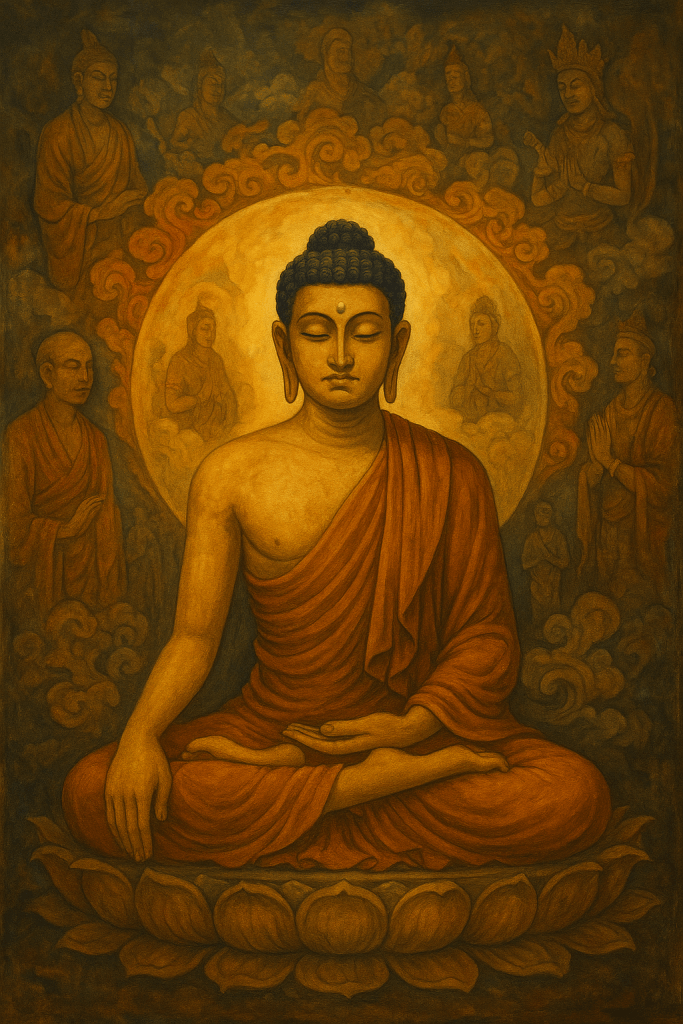
His teachings, centered on renunciation, ethical conduct, and insight, seem far removed from tantric fire offerings, deity visualizations, and magical spells. He did not claim to be a god. He emphasized detachment from craving and moral clarity. So, was he simply a wise man? Or was he also deceived?

From a Catholic and biblical perspective, any system that does not point to Christ as the way, the truth, and the life (John 14:6) must be seen as incomplete at best, and spiritually dangerous at worst. Even teachings that emphasize compassion and morality can become a snare if they direct people away from the living God.

It is possible that the historical Buddha, though perhaps sincere and ethically inclined, encountered spiritual influences he did not fully understand. If he received his insights through meditation without divine revelation, then he may have opened himself to guidance from fallen beings presenting themselves as enlightened or falsely divine. This is a sobering possibility, but one that must be considered if we are to remain faithful to biblical truth.

The gospel does not offer esoteric techniques. It offers a person, Jesus, who does not ask you to awaken into the realization of emptiness. He calls you by name into communion with him, into truth, and finally, into eternal life.


Footnotes:

(1) Akanistha, also spelled Akaniṣṭha, is considered in Mahayana and Vajrayāna cosmology to be the highest of the seventeen or eighteen heavens in the form realm (rūpadhātu), and specifically the realm where Buddhas in their “enjoyment body” (sambhogakāya) manifest and teach advanced bodhisattvas. It is portrayed as a pure, radiant dimension beyond ordinary perception, where tantra and esoteric teachings are said to be revealed. From a Christian perspective, such realms existing in the unseen spiritual domain, may correspond to what theologians like Derek Prince and Michael Heiser describe as the “second heaven,” a sphere under temporary dominion of fallen angelic beings capable of impersonating divine figures (see Ephesians 6:12, Daniel 10:13).

[2] Alexis Sanderson, “The Śaiva Age: The Rise and Dominance of Śaivism during the Early Medieval Period,” in Genesis and Development of Tantrism, edited by Shingo Einoo (Tokyo: Institute of Oriental Culture, University of Tokyo, 2009), pp. 124–126. Sanderson provides detailed evidence that Buddhist tantras were modeled after Śaiva texts and appeared centuries after the Buddha’s life.

David B. Gray, The Cakrasamvara Tantra: The Discourse of Śrī Heruka, (New York: American Institute of Buddhist Studies, 2007), Introduction, pp. 18–25. Gray discusses the charnel ground setting and the structure of tantric texts, including the invocation of ḍākinīs and wrathful deities, and their divergence from earlier Buddhist sūtra literature.