From the Yellow Brick Road to the Rock of Peter: A Journey Back


I was raised in the Catholic faith. Its prayers, seasons, schools, and sacraments shaped my earliest understanding of the world. But as I grew older, the atmosphere changed and it started to feel foreign to me. After the upheavals in the liturgy and doctrine that followed the Second Vatican Council, everything became muted and seemed different. Gone was the mystery and ritual of the high Mass. What replaced it was grey and humdrum. As I embraced my mid-teens I felt like the Church had become unrecognizable. I was bored in Mass and began to question everything. I felt myself drifting, carried away by the freedom and experimentation of the post-Hippie generation.

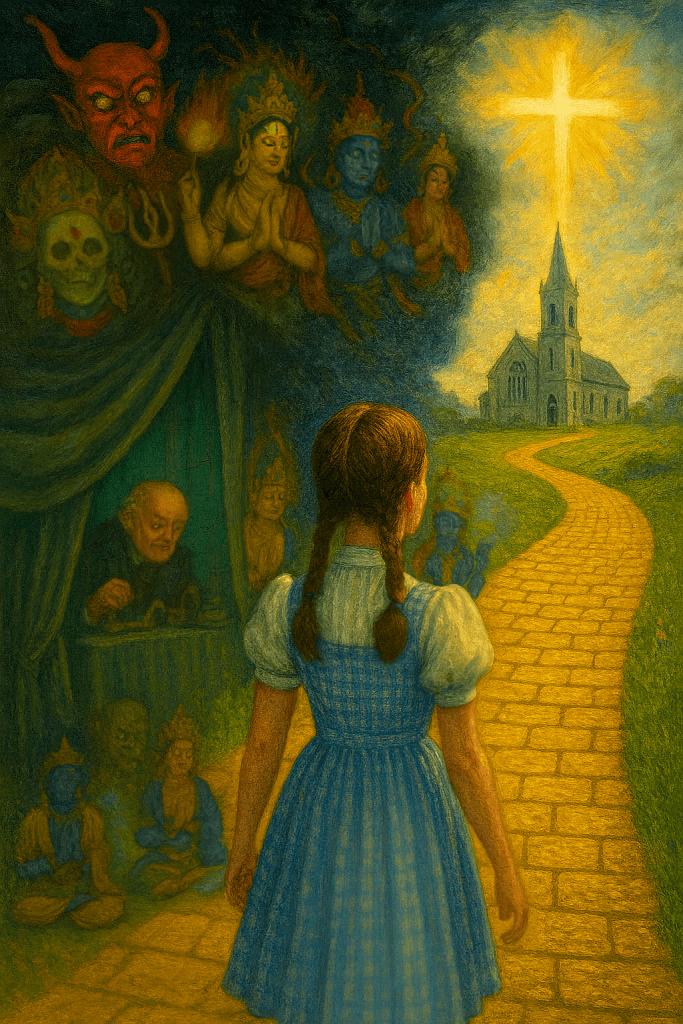
That search carried me far from the Church for more than three decades. As an adult I immersed myself in Tibetan Buddhism. Compared to the Catholicism I thought I had outgrown, this new path was exhilarating. The colorful symbols, rituals, exotic chanting, and promises of hidden knowledge shone bright like the Technicolor world Dorothy steps into after her house lands in Oz. Everything was vibrant and different. For a long time, I believed I had found a far richer spiritual universe than the one I had left behind.

As the years passed, I committed myself more deeply to Tibetan tantric Buddhism. Gurus, deities, and intricate ritual practices in long retreats promised transformation. I accepted men as guides who claimed they could lead me toward enlightenment. But slowly, over time, questions emerged. The yanas contradicted one another. The path began to feel less like liberation and more like entanglement in a feudal system with a hazy set of arcane laws. What had once seemed full of promise started to feel like a maze of deception.

The turning point came when I least expected it. Like Dorothy traversing the Emerald City, dazzled by spectacle, I had followed the yellow brick road as far as I could, believing I was approaching a transformative experience of enlightenment. And just as Dorothy eventually reaches Oz and pulls back the curtain, only to find a small man manipulating levers, I was forced to see behind the veil as well. The Root Guru I had trusted was revealed as a sorcerer, and the tantric deities I had once exalted no longer appeared as divine guides but as accusing, demonic forces. They became something like the scary flying monkeys that viciously attack Dorothy and her friends at one point. I suddenly realized that the impressive display I had put my faith in was only smoke and mirrors, and the powers behind it were not what they claimed at all, but actually fallen angels and their human minions.

That realization shook me to my core. In the very moment the illusion collapsed, a strange clarity emerged. I found myself remembering what I had learned as a child, what the Church had taught from the very beginning. The contrast between truth and imitation soon became unmistakable. What I had embraced as enlightened beings were nothing of the sort. Their nature did not align with the Most High God but with the very deceptive forces that the Bible warns against. I had spent years seeking hidden wisdom only to discover that the truth I needed had been with me since childhood. What a bizarre discovery after so many years of a life lived in error.

When I returned to the Catholic Church, I expected judgment or distance. Instead, I found the opposite. The Church received me with open arms, with the warmth of a parent waiting for a child who has been gone far too long. Over the years, thanks to Popes like John Paul II and Benedict, the Church regained some of its true colors that had been lost in the hasty rush to modernize. It now seemed sacramental and grounded in truth. I began to approach my re-version with the discerning mind of an adult hungry for knowledge. Gradually, a whole new world opened up to me and I was amazed that the truth of Christ’s sacrifice to humanity held new meaning after the horrors I had just lived through in the occult. Is the institution of the Catholic Church perfect? No. Its human side can fail, and at times it clearly has. Some say it is in crisis. Yet Christ promised, “You are Peter, and on this rock I will build my Church, and the gates of hell shall not prevail against it” (Matthew 16:18). That promise has become an anchor for me in these difficult times.

My journey through the many beguiling practices of Tibetan Buddhism taught me how convincing illusions can be. It taught me how eager the human heart is for spiritual novelty, and how easy it is to mistake mystical experiences for truth. The Catholic Church, which I once believed had lost its footing, proved steady after all. After thirty-five years away, I came home to the enduring Christian faith that had been guiding me from the beginning.
What If the Kundalini Serpent Fire Was Once Angelic?


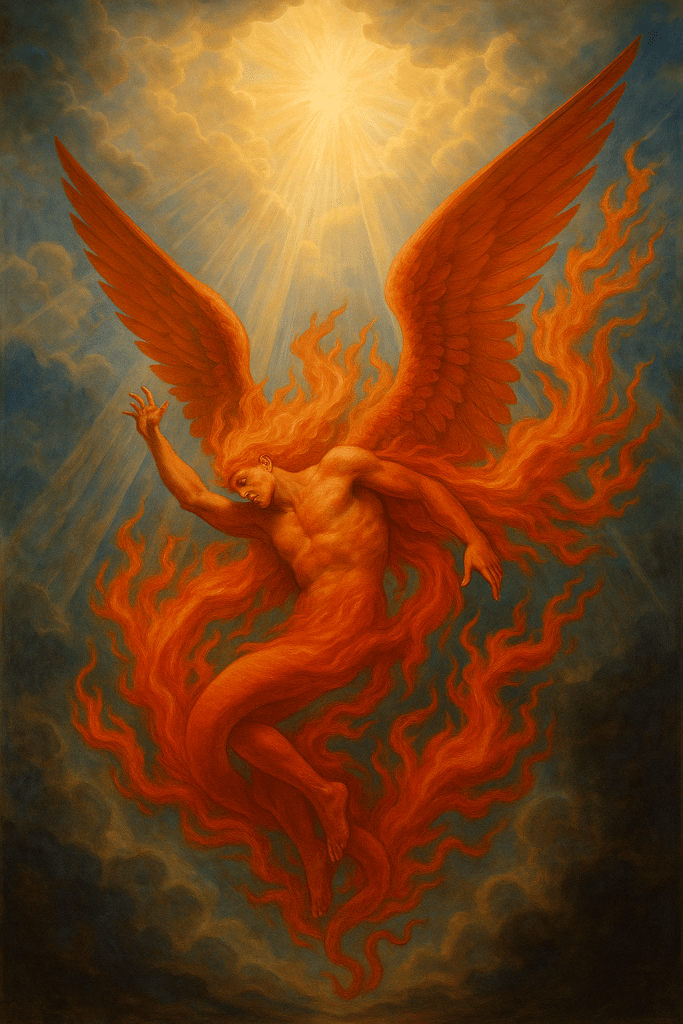
What if some of the radiant beings that ancient texts call Seraphim, the fiery, serpentine angels who once circled the throne of God, fell from that high order? The Hebrew word saraph itself means both burning one and serpent. In that ambiguity lies a bridge between the flaming spirits of heaven and the serpent powers found in other traditions.

Across the world, in the Sanskrit Purāṇas and yogic literature, there are also serpentine intelligences: the Nāgas, the Kundalinī energy, and the goddess figures who appear surrounded by flames. The sage Patañjali, author of the Yoga Sūtras, is deeply linked with serpent symbolism. In Indian mythology, he is sometimes described as an incarnation (avatāra) of the serpent deity Ādiśeṣa, or Ananta, the cosmic serpent who supports Viṣṇu. Ādiśeṣa is said to have descended to earth to bring knowledge that would relieve human suffering. This connection is why Patañjali is often portrayed with a serpent hood behind his head or a serpent body below the waist. Whether or not serpent spirits literally whispered the Yoga Sūtras to him, serpent imagery pervades yogic and tantric cosmology. The Nāgas are keepers of divine wisdom, and Kundalinī is envisioned as a coiled fiery energy at the base of the spine that awakens through disciplined practice. Over time, these motifs merged into a vision of serpentine power as both the source and the path of revelation. Suppose these mythic beings were echoes of the same order of spirits, glimpsed through another cultural lens. If the Seraphim of the Old Testament were “burning ones,” what would a fallen Seraph look like to those who encountered its power? Perhaps like the Kundalinī Śakti, a current of fire roaring through the body, consuming and transformative, perilous and hideous.

In Tibetan tantric art, figures such as Vajrayoginī blaze with this same imagery. She stands wreathed in flame, hair flying, a garland of human heads around her neck: a being of immense energy and occult knowledge. To her accomplished devotees she is enlightenment embodied, but to others overwhelmed by her force, the experience could resemble an encounter with a terrifying, cosmic intelligence that feels at once divine and frightfully destructive.

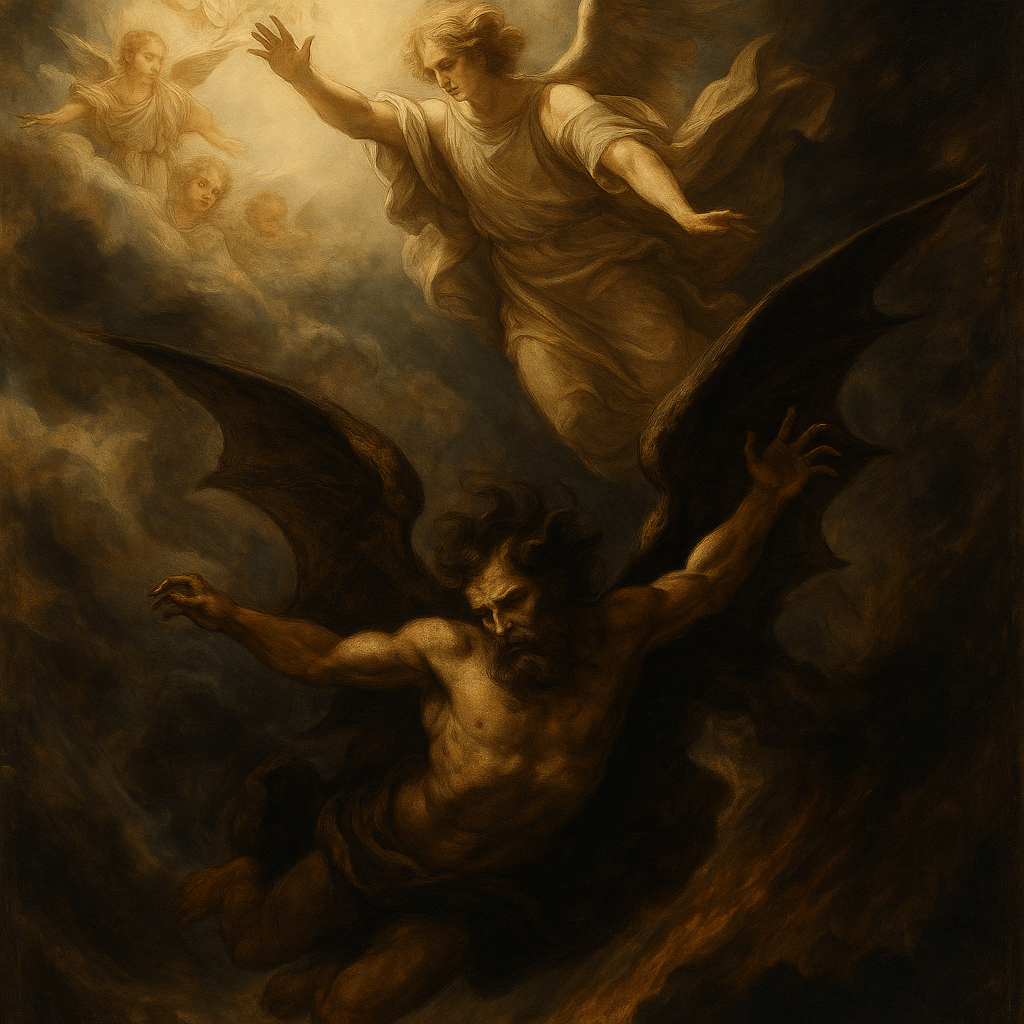
In Christian cosmology, the Seraphim stood closest to the divine light, their essence described as pure burning love. If the story of the angelic rebellion is true, the fall of Lucifer and his host might be understood as the perversion of that love for God turned inward toward self-worship. The Seraphs, if any joined that rebellion, would have fallen from the highest heaven to earth yet carried the memory of their incandescent proximity to the Most High. After such a fall, their nature would remain fiery but unmoored, no longer worshipping the divine but seeking vessels in which to become divine objects themselves, demanding reverence rather than giving it. Their rebellion took the form of imitation, of becoming godlike and leading humans away from God through elaborate systems of spiritual artifice. Seen through that lens, the serpent fire that rises in the body could be a vestige of this celestial descent, a remnant of the same luminous essence striving to return upward yet incapable of abiding in heaven because of their grave sin. In mythic terms, these fallen Seraphs might not have become the grotesque demons described by some exorcists but radiant, fallen intelligences deprived of their proper axis.

Catholic exorcists often describe demons as denizens of hell, creatures of stench, mockery, and degradation that feed on blood and fear. Yet if a third of the angels fell, the fallen host was not of one kind alone. Tradition holds that beings from all nine choirs joined the rebellion, from the lowly messengers to the highest Seraphs who once blazed before the throne. After the fall, these spirits lost their divine orientation but not their essential nature: fiery where they had been fiery, clever where they had been wise. In rebellion they became hierarchies of distortion, a dark mirror of heaven. Some manifest as the grotesque forms exorcists encounter; others as subtler intelligences still bearing the trace of their former luminosity. And what of the Nephilim, the offspring of the “sons of God” and human women? When they died, it is said, they became wandering spirits of great malice. “Demon,” then, is not a single species but a spectrum of fallen orders, each expressing what it once was in a corrupted form. As one exorcist observed, each fallen angel is a species unto itself. A fallen Seraph would perhaps appear differently from a fallen Power, Dominion, or Nephilim spirit.

If the Kundalinī or tantric fire represents contact with that residual Seraphic current, it may explain why it bears both a luminous and a destructive face. The energy feels ancient and intelligent. The ecstatic experiences described in yogic ascent mirror, in certain sense, a fallen entity yearning to return to its source. The agony that often accompanies a kundalini awakening—the painful burning, the psychic rupture, and the sense of another will within—could be the friction between that powerful celestial energy and the humble human vessel struggling to contain it. Whether one interprets this as possession or not, the pattern remains: what was once angelic becomes dangerous when severed from its orientation toward God and seeking to inhabit a human host.

Whether understood theologically, psychologically, or experientially, the speculation remains: serpent fire is something that seeks to burn within human beings, hoping to be redeemed and adored rather than condemned.

Spiritual paths that promise transcendence through serpent fire often walk a razor’s edge where illumination meets peril. Tantric Deception seeks to explore that tension, showing how practices that seem to lead toward light may instead open gateways into spiritual posession and darkness. What begins as ascent toward divinity can turn into descent into hell, both in this life and beyond. To approach the serpent fire is to confront both heaven and the echo of its fall, a perilous imitation of grace. One might call it a race to the bottom. The fallen angels made their choice long ago, and according to Christian theology there is no return for them. Those who follow, worship, or seek to become like them will share their fate in the same fire reserved for their fallen gods, a place described in Scripture as the final dwelling of the devil, his angels, and all who reject the true light. There they are said to be cast into a lake of fire that burns without end, cut off forever from the presence of the Most High God, where the torment born of rebellion becomes eternal.

How Tantra Masqueraded as Buddhism: the Vajrayāna Deception


Vajrayana Buddhism, also known as Tibetan Buddhism or Tantric Buddhism, stands out for its rituals, deity worship, and complex esoteric practices. Its mantras, mandalas, and meditations on wrathful and yab/yum deities bear clear resemblance to Hindu Tantra, Vedic ritualism, and indigenous spirit cults.

So how did it convince anyone, especially devout Buddhists, that it was authentically taught by the historical Buddha?

The answer lies in a strategic combination of hidden teaching narratives, scriptural mimicry, ritual power, and imperial patronage. Let’s explore how this transformation occurred and what it means when viewed through the lens of Catholic faith and biblical discernment.

Secret Teachings: “The Buddha Taught It, But in Secret”

Vajrayana scriptures claim that the Buddha did teach tantra, but only in secret, to highly realized disciples. These teachings were said to have been hidden in celestial realms, entrusted to beings like Vajrapani or dakinis, or taught in the Buddha’s “enjoyment body” (sambhogakaya) form in other worlds such as Akanistha.(1)

This tactic mirrored earlier Mahayana developments, where new sutras like the Lotus or Avatamsaka were claimed to be higher revelations spoken by the Buddha, but not understood by his early disciples. The concept of esoteric knowledge reserved for the spiritually mature made these late texts seem like rediscovered treasures, rather than innovations.

Scriptural Mimicry and Retroactive Legitimization

To reinforce their authority, tantric scriptures deliberately mimicked the structure of traditional sutras. They often began with the familiar phrase, “Thus have I heard,” and depicted the Buddha teaching not only in celestial realms surrounded by bodhisattvas, but sometimes in radically transgressive settings such as charnel grounds, encircled by ḍākinīs and wrathful deities. These texts introduced elaborate cosmologies, detailed ritual instructions, and esoteric vows, presenting them as timeless wisdom, even though they were composed many centuries after the Buddha’s death.[2]

Authors also invented lineages, claiming that tantric teachings had been passed down secretly from Vajrapani to Nagarjuna, or from Padmasambhava to Tibetan kings.

Syncretism with Hindu and Folk Traditions

Instead of denying its similarities with Hindu Tantra, Vajrayana reinterpreted them. Wrathful deities were said to be enlightened Buddhas. Sexual rituals were described as a symbolic means to transform desire into wisdom. Offerings of blood, bones, and taboo substances were spiritualized as purifications of dualistic perception.

By repackaging Vedic and folk practices into a Buddhist framework, Vajrayana could absorb local traditions and declare them “Buddhist skillful means.”

Imperial Support and Monastic Integration

Tantra spread rapidly through the support of kings and monasteries. In Tibet, tantric masters were invited to subdue native spirits, secure political power, and perform rituals for prosperity. At Indian centers like Nalanda and Vikramashila, tantric scholars and monks practiced Mahayana logic by day and tantric visualization by night.

With the backing of the state and the academic establishment, Vajrayana was not seen as a fringe practice but as the “highest vehicle” of Buddhism.

Ritual Power and Psychological Experience

For the average practitioner, tantra “worked.” It offered visions, emotional catharsis, ritual protection, and the promise of fast-track enlightenment. The experiential pull of mantra, deity yoga, and initiation ceremonies gave people tangible results even if the doctrinal basis was historically shaky.

In the end, many believed not because of historical evidence, but because the system delivered experiences of spiritual intensity.

How Christianity Views This: The Domain of the Second Heaven

From a biblical and Catholic perspective, this raises serious concerns. The spiritual beings Vajrayana practitioners encounter, wrathful deities, dakinis, yidams, do not proclaim Christ as Lord and Savior. They do not point to the God of Abraham, Isaac, and Jacob. They offer power and enlightenment through self-transformation, not redemption.

The Bible is clear: Satan is the prince of the power of the air, ruling the spiritual domain between heaven and earth until Christ returns (Ephesians 2:2). What some refer to as the “second heaven” is where fallen angels operate, deceiving through false light, hidden knowledge, and seductive spiritual experiences.

Teachers like Derek Prince and Dr. Michael Heiser have explained how fallen entities inhabit unseen realms and impersonate divine figures such gods, ascended masters, or beings of light. Applying this view, the Buddhist realm of Akanistha, where the Buddha is said to teach in his sambhogakaya form, may not be a divine domain at all, but a carefully constructed counterfeit, orchestrated by spiritual powers aligned against the Kingdom of God.

This helps explain how a system like Vajrayana could emerge long after the Buddha’s time, imbued with supernatural power, spiritual visions, and doctrinal sophistication, yet still operate in direct opposition to the gospel of Jesus Christ.

Final Reflection: What About the Historical Buddha Himself?

This raises a deeper question: What about the historical Gautama Buddha?

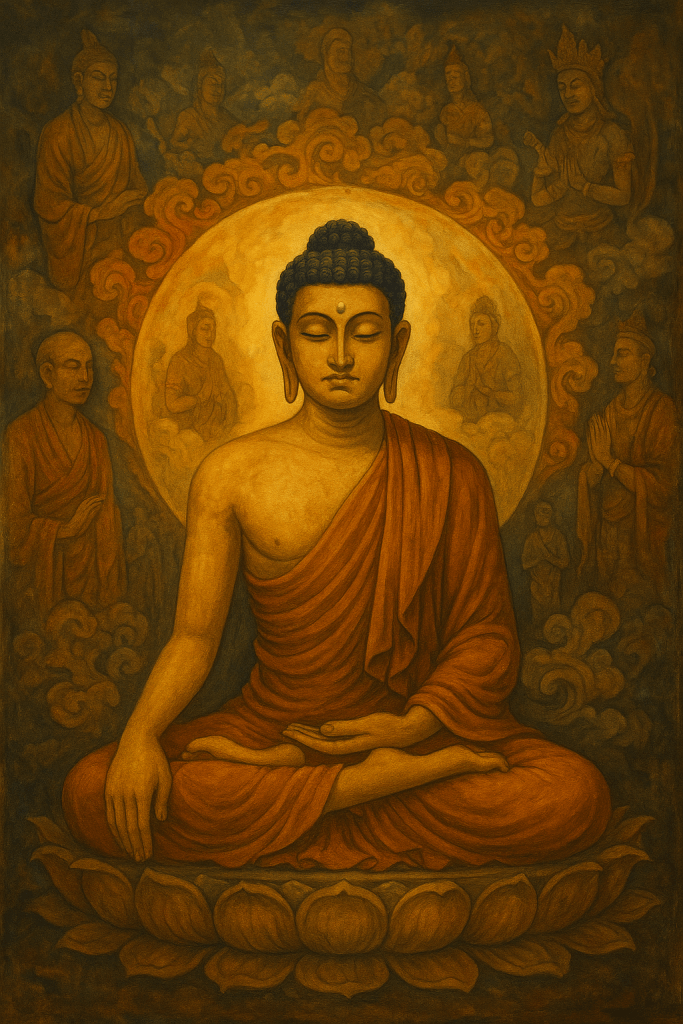
His teachings, centered on renunciation, ethical conduct, and insight, seem far removed from tantric fire offerings, deity visualizations, and magical spells. He did not claim to be a god. He emphasized detachment from craving and moral clarity. So, was he simply a wise man? Or was he also deceived?

From a Catholic and biblical perspective, any system that does not point to Christ as the way, the truth, and the life (John 14:6) must be seen as incomplete at best, and spiritually dangerous at worst. Even teachings that emphasize compassion and morality can become a snare if they direct people away from the living God.

It is possible that the historical Buddha, though perhaps sincere and ethically inclined, encountered spiritual influences he did not fully understand. If he received his insights through meditation without divine revelation, then he may have opened himself to guidance from fallen beings presenting themselves as enlightened or falsely divine. This is a sobering possibility, but one that must be considered if we are to remain faithful to biblical truth.

The gospel does not offer esoteric techniques. It offers a person, Jesus, who does not ask you to awaken into the realization of emptiness. He calls you by name into communion with him, into truth, and finally, into eternal life.


Footnotes:

(1) Akanistha, also spelled Akaniṣṭha, is considered in Mahayana and Vajrayāna cosmology to be the highest of the seventeen or eighteen heavens in the form realm (rūpadhātu), and specifically the realm where Buddhas in their “enjoyment body” (sambhogakāya) manifest and teach advanced bodhisattvas. It is portrayed as a pure, radiant dimension beyond ordinary perception, where tantra and esoteric teachings are said to be revealed. From a Christian perspective, such realms existing in the unseen spiritual domain, may correspond to what theologians like Derek Prince and Michael Heiser describe as the “second heaven,” a sphere under temporary dominion of fallen angelic beings capable of impersonating divine figures (see Ephesians 6:12, Daniel 10:13).

[2] Alexis Sanderson, “The Śaiva Age: The Rise and Dominance of Śaivism during the Early Medieval Period,” in Genesis and Development of Tantrism, edited by Shingo Einoo (Tokyo: Institute of Oriental Culture, University of Tokyo, 2009), pp. 124–126. Sanderson provides detailed evidence that Buddhist tantras were modeled after Śaiva texts and appeared centuries after the Buddha’s life.

David B. Gray, The Cakrasamvara Tantra: The Discourse of Śrī Heruka, (New York: American Institute of Buddhist Studies, 2007), Introduction, pp. 18–25. Gray discusses the charnel ground setting and the structure of tantric texts, including the invocation of ḍākinīs and wrathful deities, and their divergence from earlier Buddhist sūtra literature.

Kali and Vajrayoginī: A Biblical Perspective


In both Hindu and Buddhist tantric traditions, Kali and Vajrayoginī stand as iconic figures of immense power. Wrathful, seductive, and liberating, they are revered as goddesses who destroy ignorance and ego, leading practitioners to freedom through terrifying grace. They drink blood, wear garlands of skulls, and dance on corpses. These are not symbols for the faint of heart.

Kali, in Hinduism, is the goddess of time and death. She is the dark mother who slays demons, severs illusion, and devours ego. Vajrayoginī, in Vajrayāna Buddhism, is a female buddha who leads devotees to enlightenment through the annihilation of dualistic perception, often through erotic and wrathful means.

Today, many feminists embrace these goddesses as symbols of female empowerment, strength, and liberation from patriarchal religion. But this overlooks the possibility that these figures, far from celebrating womanhood, may actually represent a deep spiritual hostility toward it. The ego-annihilation they demand may not be empowering at all, but destructive, both spiritually and psychologically. When viewed through a biblical lens, one must consider whether these so-called icons of empowerment are in fact hostile agents cloaked in feminine form. From a biblical worldview, who are they really?


Fallen Beings or Demonic Entities

If we take the Bible as the sole and literal authority:

  • There is one true God (YHWH), and worship is due to Him alone.
  • Any supernatural beings outside of YHWH and His angels fall under:
    • Idols (Psalm 96:5 – “For all the gods of the nations are idols”)
    • Deceiving spirits or demons (1 Corinthians 10:20 – “The sacrifices of pagans are offered to demons, not to God.”)

From this view:

DeityBiblical Interpretation
KaliA manifestation of a demonic spirit that seduces worshippers through fear and false power
VajrayoginīA spirit of deception using mystical allure to imitate divine enlightenment

Why They’re Considered Dangerous

1. They Accept Worship Not Meant for Them

  • Worship of any being other than the God of Israel is strictly forbidden. (Exodus 20:3 – “You shall have no other gods before Me.”)
  • Revering supernatural powers outside of God constitutes rebellion and idolatry.

2. They Promote False Teachings

3. They Offer Counterfeit Spiritual Power

  • These goddesses can induce real mystical experiences through the occult third eye, but from a biblical view, such power is not from God.
  • They mimic light and transcendence, offering access to preternatural realms that ensnare souls in spiritual bondage.

Biblical Warnings Relevant to These Figures

  • 2 Corinthians 11:14 – “Even Satan disguises himself as an angel of light.”
  • Deuteronomy 13:1–3 – Even if a sign or wonder comes to pass, if it leads you to follow other gods, it is a test from the Lord.
  • Revelation 9:20 – Condemns worship of “idols of gold and silver… which cannot see or hear or walk.”

Summary (from a Biblical Lens)

Kali and Vajrayoginī are not misunderstood archetypes or symbolic feminine faces of divine truth. From a biblical standpoint, they are false gods or fallen spirits who lure seekers through mysticism, ecstasy, and power into worship that ultimately defies the true and living God.

Their powers are spiritual deceptions, designed to mimic enlightenment while leading souls away from salvation and the truth of Jesus Christ.

To those recovering from tantric abuse or deception: the biblical path does not deny spiritual reality, it affirms that spiritual warfare is real, and that freedom is found in Christ alone, not through altered states, or the worship of seductive wrathful or peaceful goddesses, or any other small “g” god for that matter.

You shall have no other gods before Me.” — Exodus 20:3