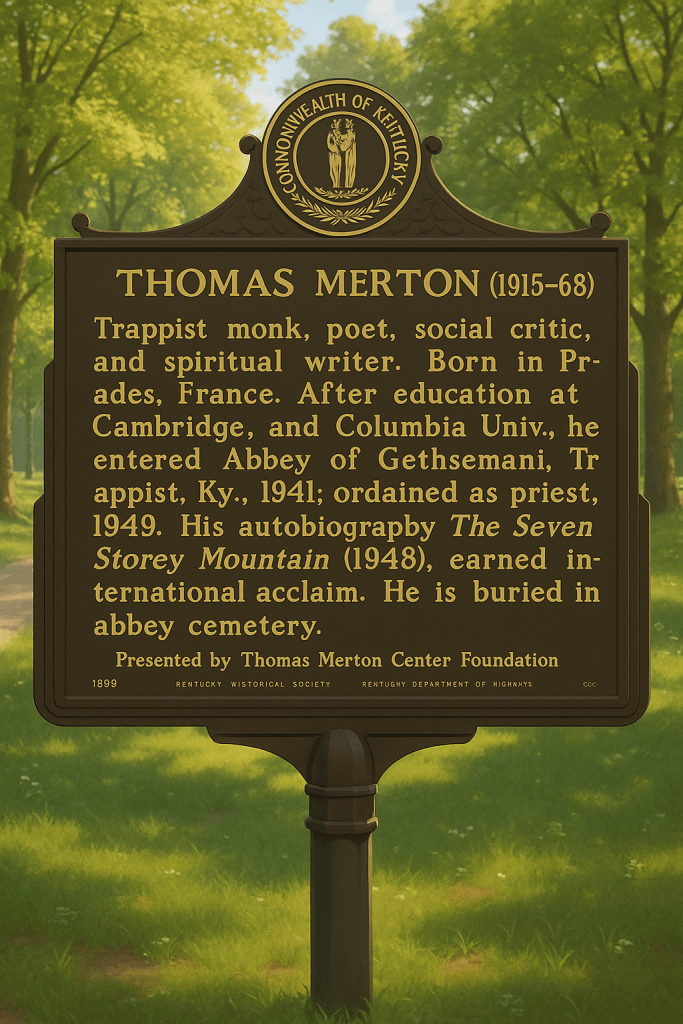
Thomas Merton’s Exploration of Tibetan Buddhist Mysticism and His Untimely Death


Thomas Merton remains one of the most fascinating and controversial figures in modern Catholic spirituality. A Trappist monk whose writing reached millions, he invited readers into a life of contemplation shaped by silence, inner stillness, and spiritual inquiry. By the 1960s, his search had expanded far beyond the borders of Christian tradition and into the world of Eastern mysticism. His journey raises important questions about discernment, authority, and the possibility that some mystical experiences do not come from God at all.

Why Merton looked East

Merton believed that Western Christianity had lost something essential. He felt that institutional concerns and intellectual debate had overshadowed direct experience of God. Eastern religions appeared to preserve a contemplative path in a purer form. Like many in the post–Vatican II era, he saw dialogue with non-Christian religions as an opportunity rather than a threat.

But such openness came with a cost. Many Catholics of his time assumed that all deep mystical traditions shared a common source. The idea that spiritual experiences could arise from contrary or even deceptive origins was rarely discussed. This lack of discernment created a vulnerable generation of seekers who treated Eastern practices as spiritually neutral when they were not.

Merton’s early interest in Asia

Long before traveling to Asia, Merton was reading Zen, Taoism, Advaita Vedanta, and Sufi mystics. He approached them with sincere curiosity, but also with a growing assumption that truth could be gleaned from any direction. His writings from this period suggest a desire for universal contemplative experience, sometimes without sufficient attention to the distinct theological and spiritual claims behind each tradition.

This tendency to universalize mystical experience would shape his final years.

Meeting the Dalai Lama

In 1968, Merton traveled to Dharamsala and spent several days with the Dalai Lama. Their meetings were warm and genuinely contemplative. Merton admired the Dalai Lama’s kindness, discipline, and clarity. The Dalai Lama later remembered Merton as the first Christian monk who came to him not as a tourist or academic but as a fellow practitioner of deep prayer.

Yet admiration does not erase theological differences. Tibetan Buddhism denies a creator God, embraces reincarnation, and employs esoteric tantric practices that involve deities outside the Holy Trinity. From a Christian point of view, this difference is huge. The Church has long taught the discernment of spirits: mystical experiences must be tested, because deceptive spiritual forces can imitate peace, clarity, and even compassion. Merton did not always express this caution.

Encounter with Kalu Rinpoche

Merton also met Kalu Rinpoche, one of the most respected Tibetan meditation masters of the twentieth century. He attended teachings on Mahamudra and was deeply impressed by the monastic discipline he witnessed. Kalu Rinpoche even invited him to undertake a long hermit retreat. Merton seemed drawn to the idea.

But Tibetan Buddhism contains layers of esoteric practice that Merton, like most Westerners of his time, did not fully understand. The serene exterior of Tibetan spirituality often conceals tantric rituals, spirit invocation, and hierarchical guru devotion that are fundamentally incompatible with Christianity. Later revelations of abuse and occult manipulation inside some of the major Tibetan lineages show how incomplete the Western picture had been. Merton could not have known this, yet his enthusiasm reflected a lack of discernment that would affect many who followed in his footsteps.

What else he explored

Merton’s range of interests was broad. He read Zen masters, Taoist sages, Hindu philosophers, and Sufi poets. He studied Christian hesychasm with new energy and sought common threads among all traditions. His impulse was generous, but generosity is not the same as spiritual clarity. Christian prayer directs the soul toward union with God. Eastern meditation, especially tantra, aims at dissolving the ego and merging with non-Christian spiritual entities.

These are not complementary goals but representative of different spiritual destinies.

Bangkok and a mysterious death

After leaving Dharamsala, Merton traveled to Bangkok to speak at an international monastic conference. On December 10, 1968, he died in his cottage shortly after giving a lecture. The official explanation was accidental electrocution from a faulty fan. Yet no autopsy was performed, and the circumstances were poorly documented. The inconsistencies have fueled speculation for decades.

His death came at a moment when he was moving more deeply into Buddhist thought. Whether he intended to integrate aspects of Tibetan practice into Christian monasticism remains unknown. His passing has an unfinished quality, as if he was on the edge of a major spiritual shift whose implications were never tested.

Why Merton still matters

Merton’s life challenges readers to seek authentic spiritual contemplation, not just intellectual understanding. It also warns Christians that not every path that promises depth is aligned with God. Eastern systems often carry metaphysical commitments and spiritual forces that stand in real conflict with Christian revelation. Without a strong framework of discernment, even sincere seekers can be misled.

Merton’s writings still inspire, yet his story also stands as a cautionary tale. The longing for mystical experience is real and often holy, but it must be shaped by sound doctrine and a sober awareness that not every spiritual path leads toward God.

Why a Baptized Christian Cannot Also Hold Tantric Vows


As young Western seekers, we were told directly by the refuge lama, a highly accomplished yogi whose presence and meditative depth made his words seem authoritative, that we could be both Christian and Buddhist. He said there was no conflict, that a person could be both Christian and take refuge in Tibetan Buddhism. Only much later did I begin to see that the metaphysical claims of Christianity and Tibetan Buddhism do not sit comfortably together. When examined honestly they point in opposite directions. This article explores that truth and why the issue deserves more clarity than it usually receives.

The Christian indelible mark

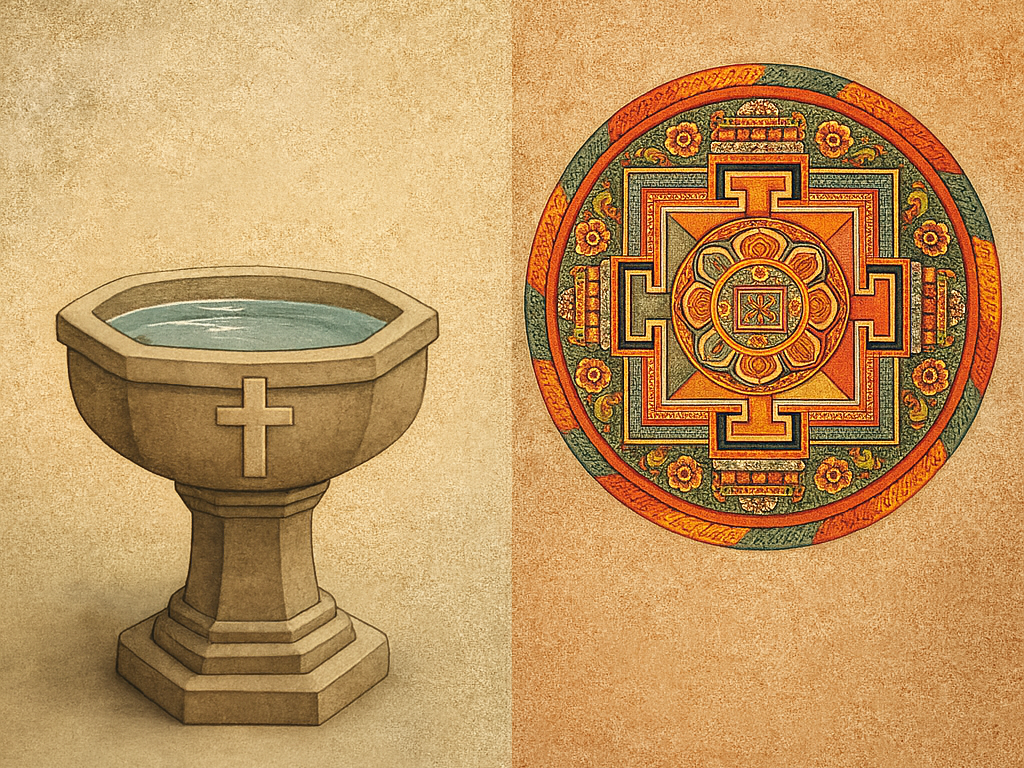
Catholic teaching holds that baptism is not a symbolic rite. It confers a real spiritual character on the soul, a mark that is indelible and permanent.¹ The person baptized is said to belong to Christ in a definitive way. Even if one later rejects Christian belief, the character imprinted by baptism remains. This teaching forms a central claim about spiritual identity. Baptism is a covenant, a seal, and a bond that cannot be undone by human action. Some theologians and exorcists describe it as a spiritual allegiance that shapes the destiny of the person marked by it.²

Vows in Tibetan Buddhism

Tibetan Buddhism also understands vows as real phenomena rather than mental constructs. They are described as subtle forms that arise in the practitioner’s continuum and remain active as long as the vow is kept.

Refuge: The refuge vow is the foundation of the path. To take refuge is to entrust oneself entirely to the Buddha, Dharma, and Sangha. This commitment is said to exist as a subtle form until broken.³

Bodhisattva vow: This vow stabilizes the intention to attain enlightenment for all beings. It is also considered to have ontological presence, shaping the practitioner’s moral and spiritual life.⁴

Tantric vows: Tantric samaya binds the practitioner to the guru, the deity, and the mandala. Tibetan commentaries treat samaya as a form that abides in the subtle body. Maintaining it is essential for any tantric practice to function. Breaking it has extremely dire consequences.⁵ Tantric vows require a view of reality that rejects any creator God and understands the deity as a manifestation of awakened mind.⁶

The awareness of the deities

What makes this tension even more striking is the role of the tantric deities. In traditional Tibetan understanding these deities are not abstract ideas. They are regarded as fully aware and responsive.⁶ When a practitioner takes refuge or samaya, the commitment is made not only in the presence of a human teacher but in the presence of the deity invoked.⁷

This means that even if a lama sincerely believes there is no conflict with Christianity, the deity knows exactly what commitments the practitioner brings into the mandala. The deity is aware of conflicting allegiances. If baptism marks a person as belonging to Christ, the tantric deity would encounter that mark as a pre-existing and incompatible bond.

When my refuge lama told us that being Christian was no problem, I accepted his assurance. He was revered, a man of immense yogic accomplishment. Yet the actual teachings of the system he represented do not support his statement. Neither do the Christian teachings. Christianity requires allegiance to the Most High God and sees baptism as a permanent seal of belonging.⁸ Thus, the two religious systems do not fit together. They are not partial overlaps but mutually exclusive covenants.

The question of whether one can be both Christian and a Tibetan Buddhist practitioner is not merely philosophical. It concerns real commitments that each tradition claims have unseen but powerful form. To treat these vows and sacraments lightly is to misunderstand them. To treat them seriously is to recognize that both paths make exclusive claims on the identity and destiny of the practitioner. Honesty requires admitting that they cannot be combined without dissolving the integrity of one or the other.


Sources

¹ Catechism of the Catholic Church, 2nd ed., §§1272–1274.
² Thomas Aquinas, Summa Theologiae, III, q. 63, aa. 1–6.
³ Jamgon Kongtrul Lodro Taye, The Treasury of Knowledge, Book Six.
⁴ Je Tsongkhapa, The Great Treatise on the Stages of the Path to Enlightenment, Vol. 1.
⁵ Khenpo Ngawang Pelzang, A Guide to the Words of My Perfect Teacher.
⁶ Patrul Rinpoche, The Words of My Perfect Teacher.
⁷ Dalai Lama and Alexander Berzin, The Gelug/Kagyu Tradition of Mahamudra, chapters on tantric initiation.
⁸ Benedict XVI, Address to the Roman Curia, 22 December 2006, section on baptismal identity.

Tibetan Tantra: A Snake in a Bamboo Tube


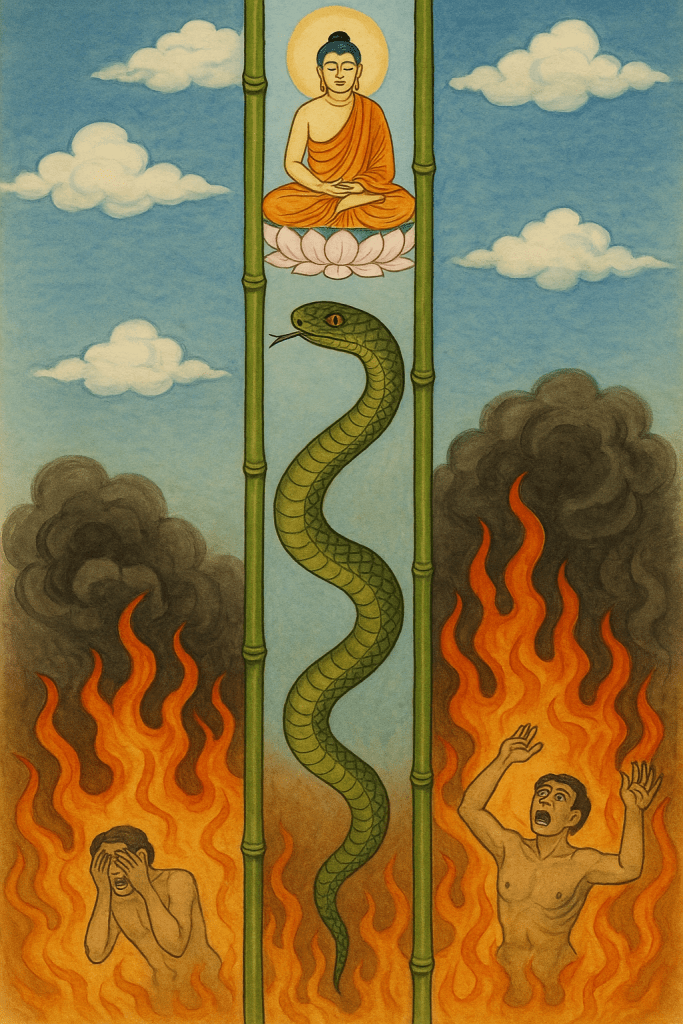
In Tibetan tantric Buddhism, the image of the snake trapped in a bamboo tube is more than a vivid proverb. It functions as a doctrinal warning: once a student enters the tantric path, there is no lateral escape. One either goes upward toward awakening or downward toward failure and “vajra hell.” Teachers have used this image to describe the uncompromising nature of samaya, the vows that bind a student to the guru, the deity, and the tantric methods themselves.¹

What is striking is how explicitly the tradition frames tantra as irreversible and high-stakes, and how rarely that stark truth is communicated to Western beginners before they agree to the vows that supposedly make the tube snap shut behind them. This mismatch between traditional warning and Western presentation is not a minor detail; it shapes the entire experience of Vajrayāna in modern contexts.

When the Warning Arrives Too Late

Many longtime practitioners have reported that the “snake in the tube” metaphor is introduced only after they have taken empowerments, established loyalty to the teacher, and accepted vows they did not fully understand. In one account, students were told after receiving advanced teachings that they were now like snakes [in a tube] with no side exit, and that questioning or leaving the guru’s authority carried dire karmic consequences.² Once framed in these terms, the student is no longer encountering tantra freely. The imagery becomes a retrospective justification for total commitment and an interpretive trap that discourages reevaluation, dissent or disengagement.

This sequencing matters. Warnings given after the student is already inside the tube are not warnings at all; they function as a mechanism of control. Sadly, it’s not just empty scaremongering to get the student to do whatever the teacher wants. The teacher can play a part in destroying the student if he wishes.

Western students, however, often enter tantra without the cultural framework that understands concepts like vajra–hell, and as a result frequently interpret them metaphorically or ignore them altogether during empowerments or teachings. As a result, the gravity of samaya is often hidden in plain sight. Students may assume that vows are symbolic or aspirational when, within the tradition, they are treated as binding conditions that determine spiritual destiny.

The asymmetry of information here is profound. Tibetan teachers know the stakes, but Western students usually do not.

Fear as a Reinforcing Mechanism

Inside the tantric system, samaya is often discussed as a bond of trust and devotion. But its shadow side is rarely addressed openly: the way threats of karmic ruin can be used to enforce silence and obedience. If leaving the guru, criticizing harmful behavior, or even doubting the teacher’s purity is framed as a breach of samaya, then fear becomes central to the student’s experience. Some Tibetan masters teach that both teacher and student can fall into vajra-hell for damaging the guru-disciple bond.³ In practice, however, this warning is most often directed at students, who are told that speaking publicly about misconduct or abuse may destroy their spiritual future.

Why the Snake Matters

The “snake in the bamboo tube” metaphor distills these concerns with unusual clarity. It shows that tantra is not designed to allow experimentation or partial commitment. It requires total participation in a closed system with its own rules, hierarchies, and cosmology. In cultures where this system has historically been embedded, those entering it do so in fuller awareness of the stakes. In the West, students often do not and they may hear such warnings in a highly suggestible state, without really grasping the implications.

One famous guru in the 1980s bluntly told students that they could be both Christian and Buddhist with no conflict whatsoever. This blatantly goes against Christian teaching. In those days Westerners were often thrust into the three-year-retreat program shortly after they signed up for teachings at Dharma centers with no knowledge of what they were really getting into. Many had little preparation to truly understand the arcane nature of samaya and its risks. Furthermore, many Tibetan teachers took advantage of their roles as authority figures to manipulate vulnerable students into sexual relationships and other sorts of commitments. Engaging in secretive sexual relationships with students while pressuring them to take highest yoga tantra vows and practices that would bind them forever often led to deep confusion and psychological unmooring.

The result is a form of spiritual engagement that looks consensual on the surface but lacks true informed consent. Students may be drawn in by promises of transformation but only later discover the rigidity of the commitments they have made. This is especially jarring given that Vajrayāna wraps together the renunciation of the Hinayāna, the boundless compassion of the Mahāyāna, and the esoteric demands of tantra. In this unwieldy fusion, the same tradition that teaches gentle observation of thoughts can also insist that a single critical thought toward one’s guru carries the weight of karmic catastrophe. The threat of vajra-hell sits uneasily beside Buddhism’s wider emphasis on compassion and non-judgment. An ethical issue looms large: a path that describes itself as having no side exit should not be offered as if it does.

To treat tantra’s danger as a secret or secondary detail is to undermine the integrity of the path itself. If practitioners are indeed snakes in a tube, they deserve to be told before they go inside.


Footnotes

¹ “Once you take samaya you become like a snake in a vertical bamboo tube: you’re either going up, or you’re going down. You can’t sneak out the side.” (Kun zang.org) (kunzang.org)
² Note: practitioner-reports and forum posts indicate the metaphor is often applied post-initiation. For example: “A Vajrayana practitioner is like a snake in a tube; … he can either go up or down, not left or right.” (dharmawheel.net)
³ “The metaphor for samaya is a snake in a bamboo tube. It has only 2 directions – up to enlightenment or down to the hells.” (TibetDharma.com) (Tibetan Buddhism)

From the Yellow Brick Road to the Rock of Peter: A Journey Back


I was raised in the Catholic faith. Its prayers, seasons, schools, and sacraments shaped my earliest understanding of the world. But as I grew older, the atmosphere changed and it started to feel foreign to me. After the upheavals in the liturgy and doctrine that followed the Second Vatican Council, everything became muted and seemed different. Gone was the mystery and ritual of the high Mass. What replaced it was grey and humdrum. As I embraced my mid-teens I felt like the Church had become unrecognizable. I was bored in Mass and began to question everything. I felt myself drifting, carried away by the freedom and experimentation of the post-Hippie generation.

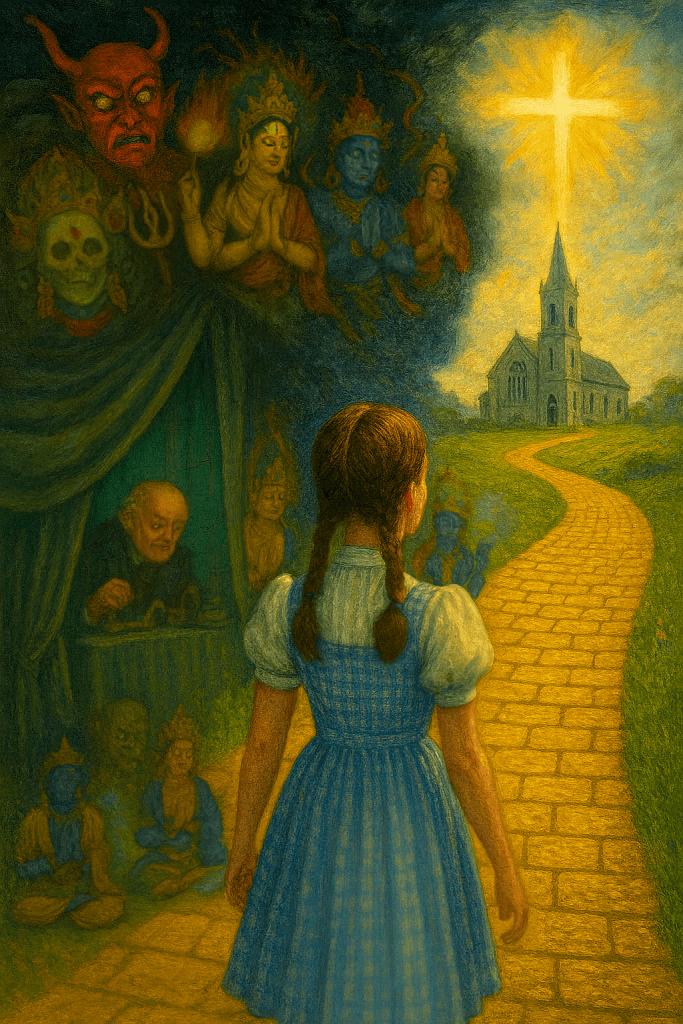
That search carried me far from the Church for more than three decades. As an adult I immersed myself in Tibetan Buddhism. Compared to the Catholicism I thought I had outgrown, this new path was exhilarating. The colorful symbols, rituals, exotic chanting, and promises of hidden knowledge shone bright like the Technicolor world Dorothy steps into after her house lands in Oz. Everything was vibrant and different. For a long time, I believed I had found a far richer spiritual universe than the one I had left behind.

As the years passed, I committed myself more deeply to Tibetan tantric Buddhism. Gurus, deities, and intricate ritual practices in long retreats promised transformation. I accepted men as guides who claimed they could lead me toward enlightenment. But slowly, over time, questions emerged. The yanas contradicted one another. The path began to feel less like liberation and more like entanglement in a feudal system with a hazy set of arcane laws. What had once seemed full of promise started to feel like a maze of deception.

The turning point came when I least expected it. Like Dorothy traversing the Emerald City, dazzled by spectacle, I had followed the yellow brick road as far as I could, believing I was approaching a transformative experience of enlightenment. And just as Dorothy eventually reaches Oz and pulls back the curtain, only to find a small man manipulating levers, I was forced to see behind the veil as well. The Root Guru I had trusted was revealed as a sorcerer, and the tantric deities I had once exalted no longer appeared as divine guides but as accusing, demonic forces. They became something like the scary flying monkeys that viciously attack Dorothy and her friends at one point. I suddenly realized that the impressive display I had put my faith in was only smoke and mirrors, and the powers behind it were not what they claimed at all, but actually fallen angels and their human minions.

That realization shook me to my core. In the very moment the illusion collapsed, a strange clarity emerged. I found myself remembering what I had learned as a child, what the Church had taught from the very beginning. The contrast between truth and imitation soon became unmistakable. What I had embraced as enlightened beings were nothing of the sort. Their nature did not align with the Most High God but with the very deceptive forces that the Bible warns against. I had spent years seeking hidden wisdom only to discover that the truth I needed had been with me since childhood. What a bizarre discovery after so many years of a life lived in error.

When I returned to the Catholic Church, I expected judgment or distance. Instead, I found the opposite. The Church received me with open arms, with the warmth of a parent waiting for a child who has been gone far too long. Over the years, thanks to Popes like John Paul II and Benedict, the Church regained some of its true colors that had been lost in the hasty rush to modernize. It now seemed sacramental and grounded in truth. I began to approach my re-version with the discerning mind of an adult hungry for knowledge. Gradually, a whole new world opened up to me and I was amazed that the truth of Christ’s sacrifice to humanity held new meaning after the horrors I had just lived through in the occult. Is the institution of the Catholic Church perfect? No. Its human side can fail, and at times it clearly has. Some say it is in crisis. Yet Christ promised, “You are Peter, and on this rock I will build my Church, and the gates of hell shall not prevail against it” (Matthew 16:18). That promise has become an anchor for me in these difficult times.

My journey through the many beguiling practices of Tibetan Buddhism taught me how convincing illusions can be. It taught me how eager the human heart is for spiritual novelty, and how easy it is to mistake mystical experiences for truth. The Catholic Church, which I once believed had lost its footing, proved steady after all. After thirty-five years away, I came home to the enduring Christian faith that had been guiding me from the beginning.

The Structure of Tantric Abuse


In Tibetan tantric Buddhism, the relationship between guru and disciple is said to be sacred, a channel for transmission of enlightenment itself. Yet within that same structure lies a potential for absolute domination. When a guru feels threatened, betrayed, or exposed, the same system that demands devotion can become an instrument of terror.

The tantric logic of punishment

In tantric doctrine, every vow (samaya) between guru and disciple is a metaphysical bond. Breaking it is said to unleash cosmic consequences. Ancient texts speak of wrathful deities and oath-bound protectors who punish those who “slander the guru” or “harm the Dharma.” The idea is not metaphorical. Illness, accidents, or misfortune are interpreted as visible proof that unseen forces are enforcing spiritual law.¹

A guru who believes this, and who claims mastery of the dark ritual practices that command those forces, often teaches others to believe it. That teacher wields enormous psychological power. To label someone a “samaya-breaker” is to mark them as deserving of sickness or death. This is not an internal accusation only; it shapes the views of the community where the guru holds god-like power. It gives the guru a pretext to use ritual methods to harm students whenever he deems it necessary.

Entities that cause disease

Traditional Tibetan cosmology offers a detailed taxonomy of spirits believed to cause physical and mental harm: bdud (demons), gdon (malevolent spirits), btsan (fiery mountain gods), klu (serpent beings of water), and srin po (ogres).² Each category is said to afflict a different organ, emotion, or realm of life. Texts such as René de Nebesky-Wojkowitz’s Oracles and Demons of Tibet describe elaborate systems of offerings and threats designed to control these beings.

Within this worldview, ritual specialists do not invent malevolent forces but redirect them. A demon bound by oath can be petitioned to punish a perceived oath-breaker. Protector deities can be asked to “remove obstacles” by striking enemies with disease or madness. These ideas are deeply embedded in tantric liturgy and methodology, even if modern dharma centers prefer to describe them symbolically.

The internal logic of coercion

When this metaphysical framework meets the authoritarian structure of a retreat or monastic hierarchy, the result can be catastrophic.³ Gurus can claim divine justification for acts that would otherwise be seen as abusive. If a disciple questions orders, refuses sexual advances, or tries to leave, the teacher can declare them in spiritual violation. From that point on, any misfortune that follows can be attributed to supernatural punishment rather than the guru’s actions.

Real world allegations

The potential for that logic to cross into criminal abuse is not theoretical. Scholar and translator Adele Tomlin has published a series of testimonies from women who participated in long-term tantric retreats under the auspices of major Tibetan Buddhist organizations in the United Kingdom and Nepal. According to Tomlin’s report, complaints were submitted to trustees of the dharma centers, as well as to resident teachers. Police reports were also made, with at least one woman reportedly informed that criminal acts had occurred.

The list of complaints is substantial: “…sexual harassment, sexual assault/coercion, ‘false imprisonment’ i.e. refusing to allow people to leave the retreat for urgent matters, such as medical diagnosis and treatment or due to psychological breakdowns, emotional bullying, insistence on signing non-disclosure legal agreements, refusal to provide proper aid to those in physical pain or serious sickness. It was reported that women who had requested to leave the retreat for the above reasons were responded to with threats that they would go to hell…and telling them they would have short lives, terrible sicknesses and their family members would die and get sick too.” There are also accounts of tantric rituals being misused “to ‘force’ consorts to engage in ‘subtle body energy’ unions without appropriate consent/devotion or even pre-requisite qualifications of the guru or consort for such a relation,” and reports that participants’ passports were confiscated before entering retreats in Nepal.”³ See Tomlin’s article here.

The psychology of fear

Once a disciple internalizes the idea that disobedience invites divine punishment, ordinary safeguards such as the law, conscience, and community protection lose their power. The guru becomes both the source of danger and the only possible protection from it. Fear of sickness, insanity, or karmic ruin may keep followers silent even when they experience or witness abuse. This is coercive control disguised as spirituality.

Why tantra is uniquely risky

Every hierarchical religion can produce abuse, but tantric systems amplify the risk because they contain dark magical rituals that can be used to secretly harm students who do not show proper obedience. In the Tibetan tantric system, the guru is not just a teacher but the embodiment of enlightenment itself. Vows are said to bind across lifetimes. Breaking them is imagined to destroy spiritual progress and unleash demonic retribution. That belief gives abusive teachers a supernatural mandate to harm and a theological excuse when they do.⁴

Many practitioners are drawn to long-term retreats by tantra’s promise of transformation. But are the risks worth it? Without structural accountability, the same tools can become weapons. When secrecy, charisma, and ritual authority converge, even devoted, sincere, and intelligent students can be trapped in a reality of pain and punishment.

For those who have lived inside such systems, the scars run deeper than physical or sexual trauma. The damage is also ontological: the haunting sense that unseen forces will stalk them forever and that they are cursed beyond escape. Healing begins by reclaiming moral and spiritual agency, by recognizing that no guru, spirit, or protector holds dominion over one’s body, mind, or fate. Yet once that agency has been surrendered to powerful gurus and their invisible minions, recovering it can be very difficult.

Notes

  1. Stanley Mumford, Himalayan Dialogue: Tibetan Lamas and Gurung Shamans in Nepal (Madison: University of Wisconsin Press, 1989).
  2. René de Nebesky-Wojkowitz, Oracles and Demons of Tibet (The Hague: Mouton, 1956).
  3. Adele Tomlin sole author of Dakini Translations website: NOT SO “HOLY ISLE”? TRAGIC TALES OF REPORTED (AND ENABLED) BULLYING AND SEXUAL MISCONDUCT TOWARDS WOMEN AT SAMYE LING UK BUDDHIST CENTRES THAT ENDED IN PHYSICAL AND PSYCHOLOGICAL HARM, ATTEMPTED SUICIDES AND MURDER. Article excerpted with attribution.
  4. Geoffrey Samuel, Civilized Shamans: Buddhism in Tibetan Societies (Washington: Smithsonian Institution Press, 1993).

An Encounter with Kali


The descent into Bengal began with a vision. As our plane banked low over the hazy sprawl of Calcutta, I sat in meditation, quietly preparing for a long journey north to Sikkim for a series of tantric empowerments. Then, quite suddenly, a naked dakini appeared before me, dancing and beckoning. She seemed to be greeting me to Calcutta. I knew, or thought I knew, that it was Kali.

We stayed in a modest Baptist guesthouse chosen for its safety and low price, a short walk from Mother Teresa’s compound. It was late October, and the air was warm and humid. Calcutta felt down at heel, yet intellectual and dignified. My companions, all Tibetan Buddhist practitioners, decided to visit Mother Teresa’s place to pay homage. I hung back. They were sincere in their devotion to that famous nun, but something in me pulled in another direction. Although I had been raised Catholic, I felt a faint aversion to anything connected with the Catholic Church. I regarded the religion as problematic at that time. Still, seeing how genuinely excited my friends were, I encouraged them to go.

The next day I hired a taxi and arranged for us to cross the city to the Dakshineswar Kali Temple, the same temple where Ramakrishna had worshipped and experienced his visions of the Divine Mother and became enlightened. “We really must make the effort to see it,” I told the others, although I wasn’t sure why. The journey took nearly an hour through dusty streets and chaotic traffic. I had read that Kali was the patron goddess of Bengal, and that Dakshineswar was one of her most important shrines. The closer we came, the stronger the pull felt.

At the temple, a long line of Indian devotees wound through the courtyard, each waiting to glimpse the goddess and receive her blessing. We appeared to be the only Westerners there. I knew very little about the history of the temple at that point. All I knew was that I had always been intrigued by Ramakrishna among all the Hindu mystics and had always wanted to visit his temple and pay my respects.

The Temple and Its History

The Dakshineswar Kali Temple was founded in the mid-nineteenth century by Rani Rashmoni, a wealthy zamindar who, according to legend, dreamt that the goddess Kali commanded her to build a temple on the banks of the Hooghly River rather than journey by boat to Varanasi¹. Rashmoni had been preparing for the pilgrimage for months and had spent a small fortune, but on the night before her departure, Kali appeared in a dream and told her she need not travel at all. Instead, the goddess instructed her to raise a temple and enshrine an image that Kali herself would inhabit, blessing all who came to worship. The temple was completed in 1855 and the complex stands on land said to resemble a tortoise, a form considered especially auspicious in Shakta-Tantra cosmology².

Architecturally, the main temple is built in the navaratna (nine-spired) style typical of Bengal, raised on a high platform overlooking the river³. Surrounding the sanctum are twelve identical Shiva shrines aligned along the Hooghly’s edge, a small Radha-Krishna temple, and bathing ghats for pilgrims⁴.

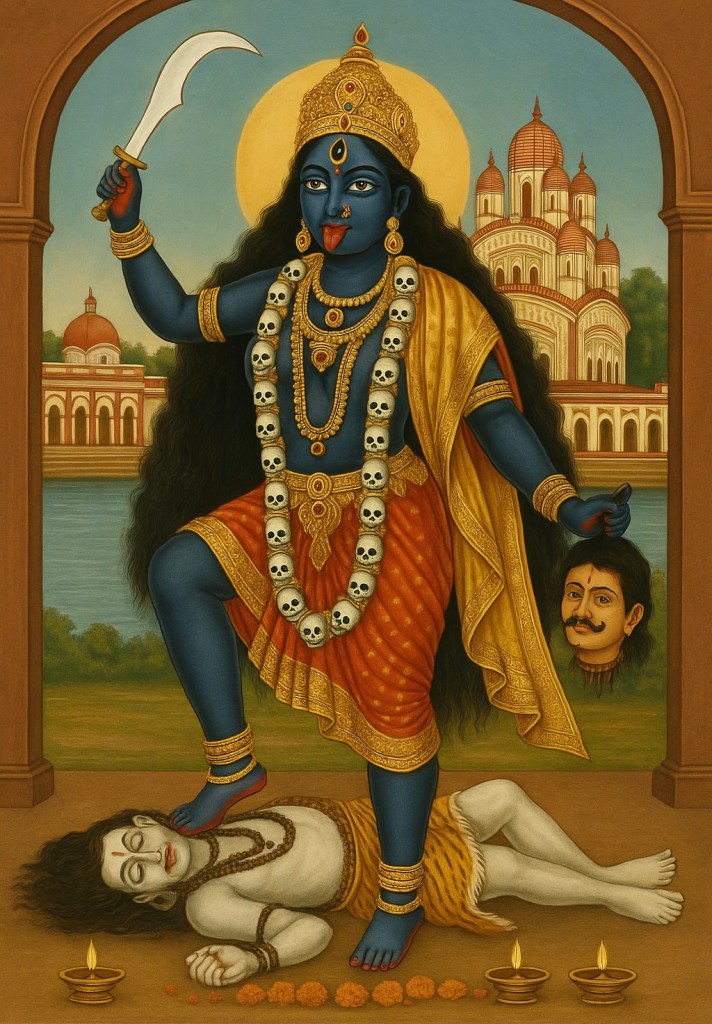
Inside the sanctum resides Bhavatarini, a fierce aspect of Kali known as “Saviour of the Universe,” depicted with one foot on Shiva’s chest⁵. The mystic Ramakrishna served as the temple’s priest and carried out years of intense spiritual practice within its grounds, transforming the site into one of India’s holiest centers of Shakti worship⁶. The atmosphere is thick with incense, bells, flowers, and the hum of a thousand mantras. Once inside the gate you feel the city’s chaos fall away.

As we stood in line, something unexpected happened. An Indian guard suddenly appeared, motioned to me and a Buddhist friend, and beckoned us forward. Without explanation, we were led past the waiting crowd directly to the inner sanctum. The goddess stood before us, draped in red and gold, eyes alive in the flicker of ghee lamps. When I received prasad, it tasted sweet and delicious, and I felt a surge of a deep, penetrating love. It was so overwhelming that I began to cry.

As a Tibetan Buddhist, I had always regarded Hindu deities as somehow inferior and secondary to the Tibetan ones who were the representations of the ultimate truth. My practice had centered on Vajrayogini and Chakrasamvara, not on Kali. Yet there, when the experience of divine love engulfed me in the Dakshineswar temple, I felt an unmistakable recognition.

Years later, after surviving the catastrophic unraveling of my own tantric path due to the betrayal by male Buddhist teachers, the exposure of their sexual abuses, and the psychic annihilation that followed, I began to study the origins of tantra in earnest. Through the research of Alexis Sanderson and others, I learned what my experience at Dakshineswar had already shown me: that the yoginī tantras of Tibetan Buddhism arose from the same crucible of medieval Hindu Śaiva and Śākta practice⁷. Vajrayoginī, the red goddess of my own initiations, was in essence a Buddhized form of Kali. The goddess in both traditions can give blessings and boons, but she can become, in an instant, a terrifying and destructive demon with her own set of intentions and cosmic laws.

That insight came at great cost. The deeper I studied, the more clearly I saw that tantra, in both Hindu and Buddhist forms, was inseparable from forces of domination, secrecy, and power. The same ecstatic current that once inspired devotion also lurked behind manipulation and abuse. In the West, these darker currents were long dismissed or hidden, until the many scandals of 2017 tore the veil away.

My visit to Kali’s temple remains a paradox. In that moment I felt only grace: the raw, overwhelming presence of the divine feminine. But in hindsight, I experienced Kali as both mother and destroyer, blessing and devourer. She welcomed me to Calcutta with open arms, but in time, in her Buddhist form as Vajrayogini, she stripped me of everything I held dear in order to completely destroy my body, mind, and soul. By the grace of the highest divinity, the eternal Christian God, I survived and am still alive to tell the tale.


Notes

  1. Dakshineswar Kali Temple, Wikipedia, last modified 2025.
  2. Ibid.
  3. Ibid.
  4. Ibid.; see also Dakshineswar Kali Temple official site, Places in Dakshineshwar (dakshineswarkalitemple.org).
  5. Dakshineswar Kali Temple, Britannica.
  6. Ibid.; Ramakrishna’s association documented in Swami Nikhilananda, The Gospel of Sri Ramakrishna (New York: Ramakrishna-Vivekananda Center, 1942).
  7. Alexis Sanderson, “The Śaiva Age: The Rise and Dominance of Śaivism during the Early Medieval Period,” in Genesis and Development of Tantrism, ed. Shingo Einoo (Tokyo: Institute of Oriental Culture, University of Tokyo, 2009), 41–350.

When Tantric Union in Tibetan Buddhism is Invasive and Unwanted


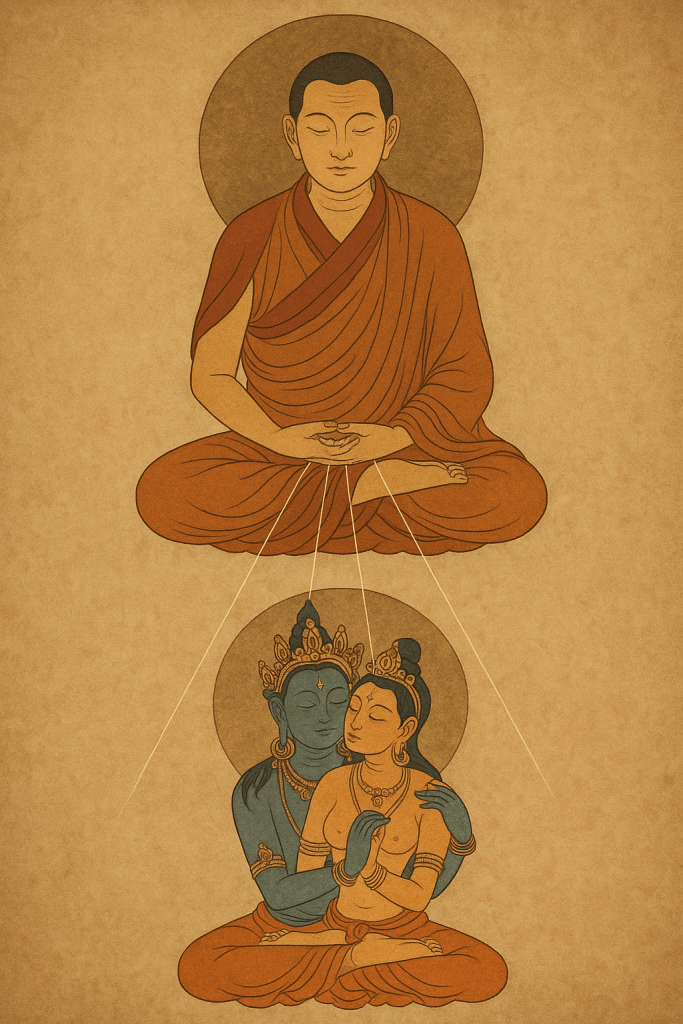
The ideal of tantric union in Vajrayāna Buddhism is described as the merging of wisdom and compassion, form and emptiness, masculine and feminine. In classical Tibetan art this appears as the yab-yum image of male and female deities in embrace.¹ The symbolism points to inner union, yet within the secrecy and hierarchy of tantra this ideal can become distorted. When intimacy, devotion, and power mix, the result can be psychological or sexual harm rather than awakening.

Union beyond the physical

“Union” (las kyi phyag rgya, maithuna) does not always refer to sexual intercourse. Many lineages teach “mental” or “energetic” union, where teacher and student visualize merging through subtle-body channels or shared deity practice.² Scholar Holly Gayley has examined how such “secret consort” (gsang yum) relationships blur lines between spiritual transmission and sexual exploitation.³

Anecdotal reports from practitioners describe non-physical experiences of sexual arousal or even orgasm initiated by the guru, without consent or understanding. For those unprepared, these experiences can feel like psychic invasion and an intrusion into the mind-body field. The ethical question is whether such experiences can ever be consensual in the context of absolute guru devotion.

The mechanism of “mental union”

Tantric theory holds that through visualization, mantra, and subtle-body control, energies (prāṇa, rlung) can be directed between beings. A guru visualized as a deity may “enter” the disciple’s heart or crown chakra, merging mindstreams in blessing.⁴ In positive settings this symbolizes transmission of realization. Yet in cases of coercion the same mechanism becomes violation: the student’s energetic body is penetrated without consent.

Ritual texts sometimes describe the guru entering the disciple’s central channel (tsa uma) through gaze or mantra, symbolic of energetic or spiritual transmission.⁵ Within Hindu Tantra, similar accounts exist of masters manipulating the disciple’s kundalinī or chakras.⁶ These ideas frame the possibility of non-physical sexualized experiences as part of spiritual union. When combined with secrecy and unequal power, the result may feel like mental rape rather than initiation.

Power, secrecy, and consent

The Vajrayāna guru is regarded as embodiment of the awakened state itself.⁷ Devotion to such a figure can override ordinary ethical boundaries. In Western contexts, where students lack cultural preparation, the potential for abuse rises sharply. Alexander Berzin warns that Western practitioners often misunderstand the traditional checks on guru authority and therefore submit to unhealthy relationships.⁸

Secrecy deepens the problem. The samaya vow forbids disclosure of tantric practices, even to peers. Gayley observes that this secrecy “can be used to reinforce sexual violence and silence abuse.”³

Real-world allegations

At Kagyu Samye Ling monastery and its retreat centre on Holy Isle in Scotland, multiple allegations have surfaced over the past decade. Reports describe bullying and psychological pressure during advanced retreats. Recently it was reported that a British woman may have died by suicide after a four-month retreat there. While there is no public evidence of sexual misconduct toward her, other survivors have alleged earlier incidents of “energy access” by the same teacher. Allegations included the use of “subtle body rape/sexual energy invasion,” according to an article by Adele Tomlin on the Dakini Translations website.⁹

The under-discussed nature of subtle-body abuse

Such cases remain largely invisible because tantric language itself obscures boundaries between metaphor and reality. A teacher’s claim of “mind-union” or “blessing” can mask non-consensual psychic intrusion. Students are often told that doubt equals spiritual failure, and that refusal breaks samaya. Without transparent ethics, the very tools meant to free the mind become weapons of domination.

Moving forward

Ethical tantric practice requires explicit, informed consent at every level: physical, psychological, and energetic. Teachers must articulate clearly what practices entail, and students must retain the right to refuse and leave. The spiritual promise of union cannot excuse the violation of personal autonomy. However, this kind of transparency is unheard of. Proper review structures and support for survivors are practically non-existent in most Tibetan Buddhist centers. The allegations surrounding Samye Ling and Holy Isle highlight what scholars such as Gayley describe as tantra’s “shadow”: the ease with which power can transform spiritual intimacy into a form of manipulation and abuse.


References

  1. Buddha Weekly, “What’s a Consort Union in Tantric Buddhism?” https://buddhaweekly.com/whats-consort-union-tantric-buddhism-no-not-sexual-fantasies-psychology-yab-yum-consorts-union-wisdom-compassion/
  2. Oxford Research Encyclopedia of Religion, “Tantra and the Tantric Traditions of Hinduism and Buddhism.” 2016.
  3. Gayley, Holly. “Revisiting the ‘Secret Consort’ (gsang yum) in Tibetan Buddhism.” Religions 9 (2018).
  4. Snellgrove, David. The Hevajra Tantra: A Critical Study. Oxford University Press, 1959.
  5. Wedemeyer, Christian K. Making Sense of Tantric Buddhism: History, Semiology, and Transgression in the Indian Traditions of Buddhist Tantra. Columbia University Press, 2013, esp. chap. 3–4, on symbolic initiation and tantric ritual language.
  6. White, David Gordon. Kiss of the Yoginī: “Tantric Sex” in its South Asian Contexts. University of Chicago Press, 2003.
  7. “The Guru Question: The Crisis of Western Buddhism and Global Future.” Info-Buddhism.com.
  8. Berzin, Alexander. Relating to a Spiritual Teacher: Building a Healthy Relationship. Snow Lion, 2000.
  9. Dakini Translations, “Suicide of Woman Reported in ‘Survivors of Samye Ling Support Group,’” by Adele Tomlin, the sole author of that site. https://dakinitranslations.com/2025/10/28/suicide-of-woman-reported-in-survivors-of-samye-ling-support-group-alleged-bullying-by-drupon-khen-karma-lhabu-teacher-misuse-tantra/
  10. Buddhistdoor Global, “Maithuna: Reflections on the Sacred Tantric Union of Masculine and Feminine.” https://www.buddhistdoor.net/features/maithuna-reflections-on-the-sacred-tantric-union-of-masculine-and-feminine/

The Moral Logic of Ritual Killing in the Wrathful Practices of Tibetan Buddhism


This piece follows up on my previous essay, “Tantric Deception: Black Magic and Power in Tibetan Buddhism,” which explored Solomon FitzHerbert’s study of tantric statecraft and the normalization of ritual violence in seventeenth-century Tibet. In this post, I turn to an even more revealing feature of FitzHerbert’s findings: the Fifth Dalai Lama’s own moral reasoning about ritual killing.

In his autobiography, the Fifth Dalai Lama confronts the criticism that tantric rituals of destruction should not be directed “against ordinary people.” His response is stunning in its candor: “We do not need to be ashamed of this,” he writes, “as it is taught in the Tantras.”¹ He goes further, citing the eight kinds of spirits who “fiercely execute the punishment” on behalf of the enlightened adept.²

Here the Great Fifth is not apologizing for violence; he is codifying it. FitzHerbert explains that the Dalai Lama invokes a moral category known as the ten fields of liberation (sgrol ba’i zhing bcu), a rubric for identifying the kinds of people whose killing can be ritually justified in tantric Buddhism.³ These include those who “cause harm to the Buddhist religion,” “bring dishonour to the Three Jewels,” “endanger the life of the guru,” “slander the Mahāyāna,” “sow discord among the vajra community,” “prevent others from attaining siddhi,” or “pervert views concerning karma and its retribution.”⁴

In other words, violence against the enemies of the dharma was not merely tolerated; it was systematized. The moral categories of Buddhist tantra aligned precisely with the ideological boundaries of religious loyalty. To kill an “enemy of the faith” was to enact liberation through wrathful compassion, a punitive act performed in the name of spiritual duty. In this context, the term liberation does not refer to enlightenment but serves as tantric code for killing.

The crucial question, then, is this: who decides who counts as an enemy of the dharma? It is the guru, a figure endowed with godlike authority, who makes that determination and authorizes the strike, much as a mafia boss sanctions a hit within his own organization.

Such ideas did not remain abstract. As FitzHerbert shows elsewhere, the Dalai Lama’s government ritualized the deployment of these doctrines in warfare and political suppression.⁵ What we see in these passages is the theological backbone of that policy: a cosmological logic that made violence both righteous and karmically justified.


When the “Fields of Liberation” Become Personal

The ethical implications of this doctrine extend far beyond the seventeenth century. Its structure, dividing the world between defenders and destroyers of the dharma, still echoes in the tantric imagination today. Within closed guru/disciple networks, where authority is absolute and ritual power is personalized, this logic can turn inwards toward vulnerable disciples.

When a teacher is accused of abuse–sexual, financial, or psychological–some may interpret criticism of that teacher as slander of the Mahāyāna or harm to the guru, two of the very offenses listed in the ten fields of liberation. Under this view, the accuser becomes a threat to the vajra community itself. The rhetoric of “vajra hell,” karmic downfall, or spiritual ruin can be mobilized as a form of punishment.

Even when no public or obvious ritual of destruction is performed, the doctrinal framework legitimizing wrathful retribution remains intact and the teacher may privately extract revenge. A teacher who sees himself as an accomplished tantric adept may claim to act from “enlightened wrath.” Certainly he convinces himself that is the case. He may claim his retribution is not from malice but from a compassion that destroys obscurations and seeks to protect his community from dissenters. In this way, spiritual authority can blur into coercion, and the old metaphysics of tantric punishment can be redeployed against dissenting students.

Thus, the problem is not simply historical. It lies in a theological grammar that still allows destructive acts to be reframed as enlightened means. When criticism is recast as “slander of the dharma,” and when the guru’s person is identified with the deity itself, retaliation can be justified as upholding the sacred order.

Facing the Doctrine Honestly

When Western seekers encounter Tibetan Buddhism, we are often presented with an image of serene compassion, untainted by coercion or cruelty. Yet the Fifth Dalai Lama himself dismantles that illusion. He writes without hesitation that violent tantric rites are legitimate instruments of enlightened rule. The “theatre state” of seventeenth-century Tibet was the political expression of doctrines like the ten fields of liberation.

If the tradition is to be understood honestly, these passages should be part of an open and very public conversation. The Fifth Dalai Lama’s own words make clear that within tantric ethics, destruction is allowed, and killing can be framed as an act of perverted compassion. The challenge for modern practitioners and scholars alike is to recognize how this same moral architecture can exist whenever authority claims transcendence from accountability.


Footnotes

  1. Solomon G. FitzHerbert, “The Fifth Dalai Lama and the Tantric Politics of State Formation in Seventeenth-Century Tibet,” Arts Asiatiques 27 (2018): 88.
  2. Ibid.
  3. Ibid., 89.
  4. Ibid.
  5. Ibid., 74–83.

Tantric Deception: Black Magic and Power in Tibetan Buddhism


I am amazed that the PR for Tibetan Buddhism in the West managed for so long to conceal the extent of black magic practiced by lamas in Tibet historically and even to the present day. This concealment, aided and abetted by the squeamishness and obliviousness of some scholars, has to stop. In the dharma centers I was involved in, anything dark in Tibetan lore was relegated to the Bön religion, and the implication was that once Buddhism took hold in Tibet, any kind of evil acts such as harming or killing sentient beings was completely off the table. The truth is that black magic is in the lexicon of the highest lamas in the lineage as well as ngakpas and others. I believe these techniques are used liberally and current scholarship is finally exposing it.

Solomon G. FitzHerbert’s study of the mid-seventeenth century makes the core point plainly. I came across FitzHerbert’s article via a post on Adele Tomlin’s website www.dakinitranslations.com. He argues that tantric ritual and the rhetoric of ritual violence were central to how the Ganden Phodrang state established and legitimated power, not a peripheral curiosity. He writes that Tibetan sources “more than compensate” for the lack of hard military data with abundant materials about the “legitimation and maintenance of authority” through ritual technologies and narratives.¹

Before the rise of the Fifth Dalai Lama, Tibet’s Tsang rulers were already forging political alliances through tantric warfare. FitzHerbert shows that the Tsang kings deliberately patronized lamas famed for their mastery of wrathful and repelling rites. The most favored were the hierarchs of the Karma Kagyu, the “black hat” Karmapa and the “red hat” Zhamarpa, along with the Jonang scholar Taranatha, who was also enjoined to perform repelling rituals on behalf of his patrons.² Their alliances were explicitly religious and martial: an “ecumenical alliance in the name of defending religion and Tibet from foreign armies.”³

Among the Tsang rulers’ most celebrated ritual specialists was the Nyingma master Sokdokpa Lodrö Gyeltsen (1552–1624), self-styled “Repeller of Mongols.”⁴ A disciple of Zhikpo Lingpa, Sokdokpa was the main heir to the revealed cycle Twenty-Five Ways of Repelling Armies (Dmag zlog nyi shu rtsa lnga).⁵ His Mongol-repelling rites were widely famed, and he worked directly with the Tsang ruler Phuntsok Namgyel. One elaborate rite performed in 1605 to coincide with a Tsang military offensive involved producing “some 150,000 paper effigies of enemy soldiers.”⁶ These were ritually destroyed to annihilate the opposing force, with Bonpo specialists also enlisted for their expertise in magical harm.⁷

According to FitzHerbert, Phüntsok Namgyel successfully forged a broad anti-Geluk alliance using tantric technologies of protection and destruction.⁸ After his death, “reputedly at the hands of offensive magic being hurled at him by the Zhabsdrung Ngag dbang rnam rgyal (1594–1651), founder of the state of Bhutan,”⁹ his son Karma Tenkyong (1604–1642) inherited a weakened position. The Shabdrung’s tantric assault, still treated in Bhutanese and Tibetan sources as a historical fact, thus became the legendary moment when a ruler famed for weaponizing ritual power was himself undone by it. It is one of the rare episodes where the logic of esoteric warfare entered the realm of accepted political history.

This is where the Fifth Dalai Lama comes into focus. FitzHerbert shows that in the 17th century the Great Fifth cultivated and systematized an official repertoire of destructive and protective rites in service of government aims. In his words, the Dalai Lama showed a “lifelong concern with learning, authoring and instituting an armory of defensive and offensive rituals for the mobilization of unseen forces” for the state.¹⁰ That program contributed to the Ganden Phodrang’s reputation for “magical power,” and helped stage what FitzHerbert calls the grandest “theatre state” in Tibetan Buddhist history.¹¹

FitzHerbert details three overlapping strategies. First, the new government suppressed, marginalized, or co-opted rival traditions of war magic associated with other schools, including Karma Kagyu and strands within Nyingma, while appropriating selective cycles that could be redeployed under Geluk authority.¹² Second, it rebuilt Nyingma institutions such as Dorjé Drak and Mindröling under Ganden Phodrang patronage, folding their esoteric prestige into the state project.¹³ Third, it sponsored new state rituals based on the Dalai Lama’s own visionary experiences, further centralizing ritual power in Lhasa.¹⁴

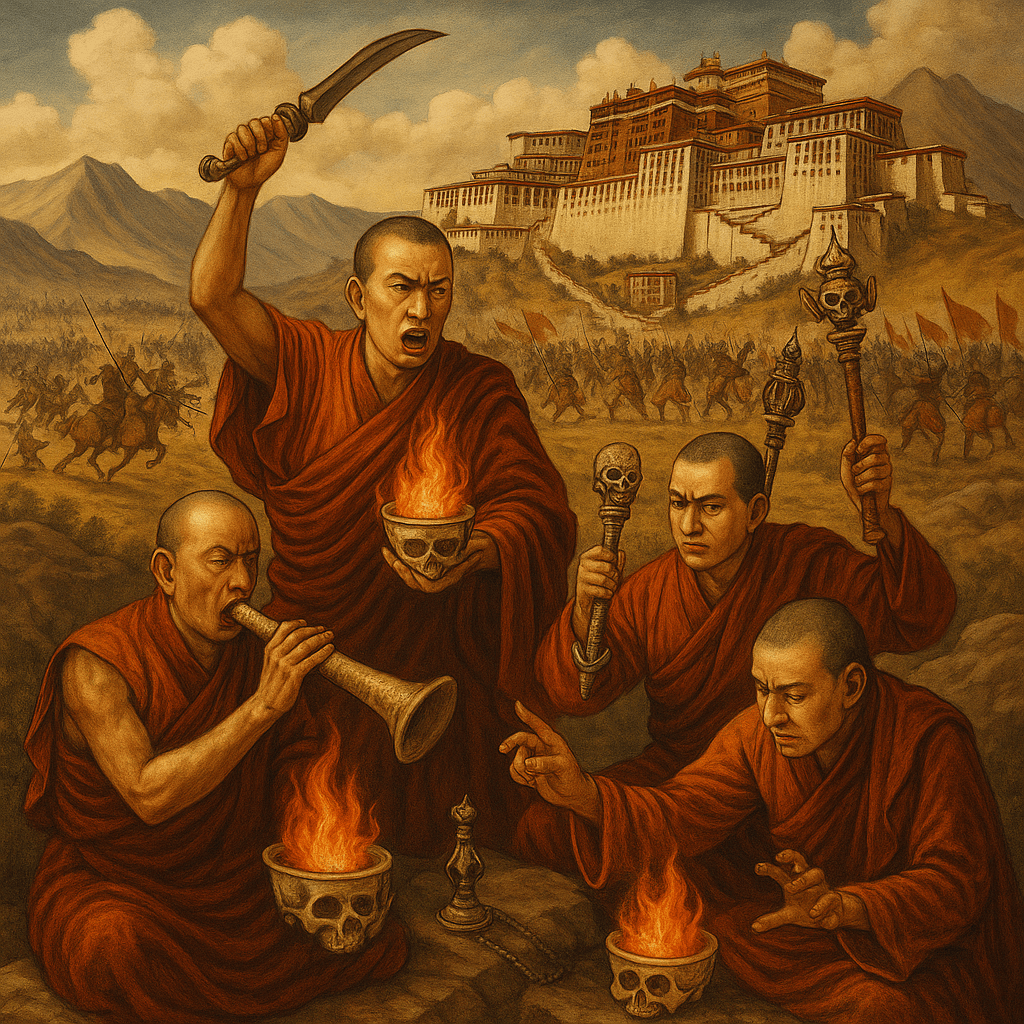
The rhetoric was not merely devotional. Lamas and ritual specialists acted as “bodyguards” whose professional task was destructive magic on behalf of patrons.¹⁵ Chroniclers attributed battlefield outcomes to the rites of powerful tantrikas. FitzHerbert highlights Chökyi Drakpa, famed for the Yamantaka cycle known as the “Ultra-Repelling Fiery Razor,” which centered on rites of “protecting, repelling and killing.”¹⁶ In one report, after deploying these rites against a Tümed encampment, “nothing was left behind but a name.”¹⁷

To grasp how such violence could be framed as meritorious, FitzHerbert shows the tantric logic that recasts killing as an enlightened “action” when performed by an empowered adept. The adept receives empowerment, performs extensive propitiation to forge identification with the deity, and then “incite[s]” and “dispatch[es]” oath-bound spirits to defend the dharma. By manipulating the five elements and the “public non-reality” of appearances, the practitioner can pacify, increase, control, or destroy, including against human enemies.¹⁸ The moral frame is clear in the sources he cites and translates. Killing is made licit because it is tantric, ritually purified and redirected as enlightened activity.¹⁹

FitzHerbert also situates Tibetan practices within a longer Indo-Buddhist lineage of war magic. He surveys Indian materials that speak of sainyastambha or army-repelling rites, and notes that the Hevajra states that “black magic for paralyzing armies,” is part of its “manifold purpose” and that the Kālacakra includes descriptions of war machines and siege methods such as “catapults, traps, siege towers, and so on,” alongside esoteric harm and protection.²⁰ He further notes the use of human effigies and effigy destruction in offensive rites against enemies, a hallmark of Tibetan ritual repertoires that drew on wider South Asian and even Indo-European precedents.²¹

Western idealization of Tibetan Buddhism has depended on ignoring this record. The lamas who administered and celebrated these rites were not outliers. They were the architects of a political order that fused charisma, ritual terror, and doctrinal justifications into a program of power. State-sponsored ritual violence was normalized in chronicles and hagiographies as enlightened means. The fact pattern is no longer obscure. It is all in the sources, and FitzHerbert has laid them out.

Although FitzHerbert’s focus is on state-sponsored ritual violence, similar technologies of harm have long been used by individual lamas against perceived enemies including, at times, their own disciples. The anthropologist Geoffrey Samuel has noted that the ritual power claimed by tantric masters can be turned inward, weaponizing spiritual authority to punish dissent or enforce obedience.²² In one well-documented episode from the nineteenth century, the treasure-revealer (tertön) Dorje Lingpa was said to have struck down a rival practitioner through wrathful ritual means, his death interpreted locally as a karmic consequence of opposing the lama’s command.²³ Such stories attest to a cultural logic in which ritual, psychic, or physical violence by enlightened masters could be valorized as the just expression of awakened power. I have personally been a victim of this deluded violent ritual power by Tibetan masters.

If Tibetan Buddhism is to be understood honestly outside Tibet, this history needs to be taught in dharma centers and discussed in scholarship without euphemism. The tradition’s own categories allow for destructive ritual and sanctified killing under certain conditions. Pretending otherwise does not protect the innocent devotees who arrive at dharma centers with open hearts seeking methods for developing compassion and loving kindness in service of enlightenment. Indeed, one must ask what kind of enlightenment tradition could allow, even glorify such violence.


Notes

  1. FitzHerbert, Rituals as War Propaganda, 91. FitzHerbert, Solomon G. “Rituals as War Propaganda in the Establishment of the Tibetan Ganden Phodrang State in the Mid-17th Century.” Cahiers d’Extrême-Asie 27 (2018): 49–119.
    https://www.persee.fr/doc/asie_0766-1177_2018_num_27_1_1508
  2. Ibid., 95–96.
  3. Ibid., 95.
  4. Ibid., 96.
  5. Ibid., 96.
  6. Ibid., 97.
  7. Ibid., 97.
  8. Ibid., 101.
  9. Ibid., 102–103.
  10. Ibid., 94.
  11. Ibid., 95.
  12. Ibid., 96.
  13. Ibid., 97.
  14. Ibid., 98.
  15. Ibid., 93.
  16. Ibid., 100.
  17. Ibid., 101.
  18. Ibid., 71.
  19. Ibid., 72.
  20. Ibid., 98–99.
  21. Ibid., 99.
  22. Geoffrey Samuel, Civilized Shamans: Buddhism in Tibetan Societies (Washington: Smithsonian Institution Press, 1993), pp. 429–432.
  23. Cathy Cantwell and Robert Mayer, “Representations of wrathful deities in treasure literature,” in Tantric Revisionings: New Understandings of Tibetan Buddhism and Indian Religion (Leiden: Brill, 2008), pp. 131–133.


The “Civilized” Shaman: Geoffrey Samuel and the Tension at the Heart of the Tibetan Religion


In Civilized Shamans: Buddhism in Tibetan Societies, Geoffrey Samuel offers a sweeping anthropology of Tibetan religion that refuses to take Tibetan Buddhism at face value. He finds a living tradition shaped by older and more unruly forces beneath the polished scholastic surface of the monasteries. What emerges is a civilization of monks and magicians, of disciplined philosophers and ecstatic ritualists. His argument is simple but radical: Tibetan Buddhism is the result of Indian Buddhist ethics and philosophy meeting the shamanic substratum of the high plateau.¹

Two orientations: clerical and shamanic

Samuel organizes Tibetan religion around two poles. The first, the clerical or monastic orientation, descends from Indian Buddhism with its monasteries, ethical codes, and scholastic systems of thought. It values restraint, karmic causality, and the gradual cultivation of enlightenment. The second, the shamanic orientation, grows from indigenous Tibetan practices centered on ritual efficacy, spirit interaction, and the manipulation of unseen forces. This orientation values power (dbang) more than purity and treats ritual specialists not as moral exemplars but as technicians of spiritual power.²

These two strands were never simply reconciled. Tibetan civilization attempted to domesticate the shaman. The ecstatic healer and spirit-fighter was refashioned into a lama, wrapped in robes and scriptures yet still capable of commanding spirits, averting misfortune, or destroying an enemy through ritual means. The civilized shaman is not a metaphor. It is a social type, the institutionalized magician of a literate Buddhist society.³

Dark rituals and the question of subjugation

The most uncomfortable continuity between these worlds lies in the domain of ritual violence, what Tibetan sources call drag-po or wrathful rites. These practices are directed not toward enlightenment but toward control: the binding, subduing, or annihilation of obstructing forces, whether demonic, psychic, or human.⁴

Samuel interprets these rites not as moral aberrations but as necessary expressions of the shamanic orientation within a Buddhist frame. Indian Buddhism had long flirted with magical power but kept it at the margins of monastic life. In Tibet, ritual mastery became central. The same lama who taught compassion might also perform a subjugation rite, using effigies, mantras, and visualizations of wrathful deities to annihilate obstacles, whether spiritual or human. Such practices, found in the Nyingma and Kagyu tantric cycles and institutionalized in monastic ritual manuals, embody a logic foreign to classical Indian soteriology yet native to shamanic cosmology, the idea that power must be met with power.⁵

What makes these rites “civilized” is not their ethical domestication but their integration into a bureaucratic religion. The Tibetan monastery became a regulated arena for managing violence and transforming it into ritual performance. The monastic code that forbade killing also licensed symbolic destruction: paper effigies burned, dough figures pierced, and demons tamed through mantras.⁶ This was how a society of monks could still believe in, and even engage in, acts of ritual aggression.

Power and legitimacy

Samuel’s analysis is more about social structure than theology. The clerical orientation secured legitimacy through moral authority and learning, while the shamanic orientation maintained relevance through immediate and pragmatic results. The former built monasteries; the latter kept communities going amid famine, disease, and invasion. Tibetan Buddhism’s durability, he argues, comes from this uneasy synthesis. The scholar-monk and the ritual adept needed each other: the first to lend doctrine and order, the second to command the spirits that haunted every valley and household.⁷

In this light, the dark rituals of subjugation are not aberrations but instruments of governance. They discipline the chaotic powers of the landscape just as the monastery disciplines the passions of the mind. To them, the wrathful deity is not a contradiction of compassion but its shadow: compassion armed.

Rethinking the “Buddhist” in Tibetan Buddhism

Samuel’s greatest contribution may be to unsettle what we think “Buddhist” means. By treating Tibetan religion as a field of interacting orientations rather than a single orthodoxy, he exposes the limits of modern, idealized Buddhism. The vision of Tibet as a purely pacific, philosophical culture depends on forgetting the tantric rites that promise to destroy human enemies or subjugate spirits.⁸ Samuel does not moralize about this tension; he historicizes it. The so-called civilized shaman is a figure born of necessity, mediating between an imported moral system and an indigenous world of volatile gods.⁹

A note on tantra as the mediating field

Samuel does not treat Hindu tantra as a third, independent strand within Tibetan Buddhism. Rather, he presents tantric practice as the meeting ground of the clerical and shamanic orientations. By the time tantra reached Tibet, Indian Buddhism had already absorbed many Śaiva and Śākta elements. What Tibet inherited, therefore, was a fully developed tantric Buddhism rather than a simple blend of Buddhist and Hindu ideas. In Samuel’s account, tantra provided the channel through which shamanic power could operate within a clerical framework. It was the mechanism that allowed ecstatic and ritual techniques to coexist with the disciplines of monastic scholarship.

He also describes tantric Buddhism in Tibet as a two-way exchange. The imported Indian systems of Hevajra, Guhyasamāja, Cakrasaṃvara, and others were reinterpreted through local cosmologies of mountain gods, territorial spirits, and ancestral deities. The result was what he calls “tantricized shamanism” or “shamanized Buddhism.” While Hindu tantra was one historical source, the Tibetan tantric complex became a hybrid formation that expressed shamanic cosmology through Buddhist doctrine.¹⁰

The afterlife of the civilized shaman

Civilized Shamans was published in 1993, before the wave of globalized Tibetan Buddhism tried to reframe lamas as psychologists or humanitarians. Yet its insight remains vital. Beneath every system of enlightenment lies a system of control. The Tibetan synthesis worked precisely because it did not abolish the shamanic element. It incorporated it, turning ecstatic violence into liturgy and spirit warfare into cosmology.¹¹

For those interested in understanding tantric practice, especially the darker currents of subjugation and protection, Samuel’s anthropology is a cautionary mirror. It reminds us that ritual power is never purely symbolic. Even when intellectualized, it retains the logic of coercion: to bind, to summon, to annihilate. Tibet’s civilization was built on mastering such forces. The tension Samuel describes is not an accident of history but a model of how Tibetan religion evolved. Civilized shamans appear wherever doctrine meets magic, wherever ethics must coexist with power. Tibet made that paradox explicit.¹²


Notes

  1. Geoffrey Samuel, Civilized Shamans: Buddhism in Tibetan Societies (Washington, D.C.: Smithsonian Institution Press, 1993), 11–13.
  2. Samuel, Civilized Shamans, 11–12, 134–136.
  3. Ibid., 478–480.
  4. Ibid., 238–240.
  5. Ibid., 259–262.
  6. Ibid., 468–471.
  7. Ibid., 465–469.
  8. Ibid., 244–246, 478.
  9. Ibid., 479–482.
  10. Ibid., 66–74, 242–243, 476–478, 480–481.
  11. Ibid., 476–479.
  12. Ibid., 481–482.