
What I Thought I Was Practicing in Tibetan Buddhism vs. What It Really Was


When I first encountered Tibetan Buddhism, I was filled with awe, curiosity, and hope. I was drawn to the idea of understanding the nature of mind, developing calm abiding (shamatha), and cultivating compassion and insight. I immersed myself in classic Mahayana texts like the Uttaratantra Shastra, with its soaring vision of Buddha nature, the luminous potential for awakening that each sentient being carries within them.

At that time, I was eager to deepen my meditation practice and learn how to navigate the mental storms of daily life. I believed this was a path of inner wisdom, clarity, and direct realization. I thought I had found something intellectually rigorous and deeply profound.

But after committing years of my life I realized that Tibetan Tantric Buddhism was a spiritual system that operated under authoritarian control, cultural secrecy, and a disturbing atmosphere of fear.

The Surface Beauty: What Drew Me In

  • The language of awareness, wisdom, and nonduality
  • Practices that promised to tame the mind and open the heart
  • Philosophical texts filled with Buddhist logic, the concept of emptiness, and the path of the bodhisattva
  • Encouragement to observe the mind and transcend egoic fixation

Like many sincere Western seekers, I accepted the rigid cultural structure, including the many hours of chanting in Tibetan, the hierarchy, and the ornate rituals, as necessary forms for accessing ancient wisdom. I told myself these were wrappings around the real treasure.

What I Actually Encountered

Instead of freedom, I slowly found myself embedded in a system that demanded unquestioning obedience to the guru, who was said to be indistinguishable from the Buddha himself. We were told the guru’s words were more important than our own inner convictions. If we had doubts, those were signs of impure perception or obstacles on the path.

And so, I suppressed my own sense of truth.

Instead of learning to observe my mind freely, I was encouraged, compelled, really, to submit my perception, my will, and even my moral conscience to someone else’s “realization.” In time, I was told that even misconduct or abuse from a guru must be viewed as pure, and that questioning it was a sign of my spiritual deficiency.

Essentially this was total submission to a human teacher presented as a living deity.

A Necessary Evil… or Something More?

For a long time, I rationalized this aspect of guru devotion. I thought, “This is just part of the package. I’ll take the good parts and accept the hierarchical guru system as a necessary condition to receive the blessings.”

But nothing prepared me for the revelation that this system involved actual practices of deity possession, and in some cases, black magic rituals by a covert spiritual power structure that operated on vengeance. And this wasn’t metaphorical.

The Hidden Core: Deity Possession and Guru Sorcery

Many Tibetan Vajrayana rituals involve āveśa, a concept that translates into spirit or deity possession. The practitioner “invites” a deity to merge with their mindstream. The guru is not just a teacher; he is seen as an embodiment of the deity, and rituals are performed to enforce that identification.

I discovered too late that some high-level gurus use this system to gain psychic and physical access to their disciples, manipulate their minds, and even curse those who disobey or break vows. This is not hyperbole but what has been hidden under the language of compassion and wisdom: a deeply esoteric system of spiritual domination.

My Awakening

It took me years to deprogram myself from the idea that questioning a guru meant spiritual death, and even longer to reclaim my own inner voice, the voice God placed in me. I now walk a different path entirely: One that does not require blind submission, that honors truth over secrecy, and Christ over cosmic manipulation.

If You’re Reading This…

You’re not crazy for feeling that something is off. You’re not wrong to listen to your instincts. What seems like harmless chanting, beautiful thangkas, and inspiring philosophy may hide something far more controlling and spiritually dangerous than you realize.
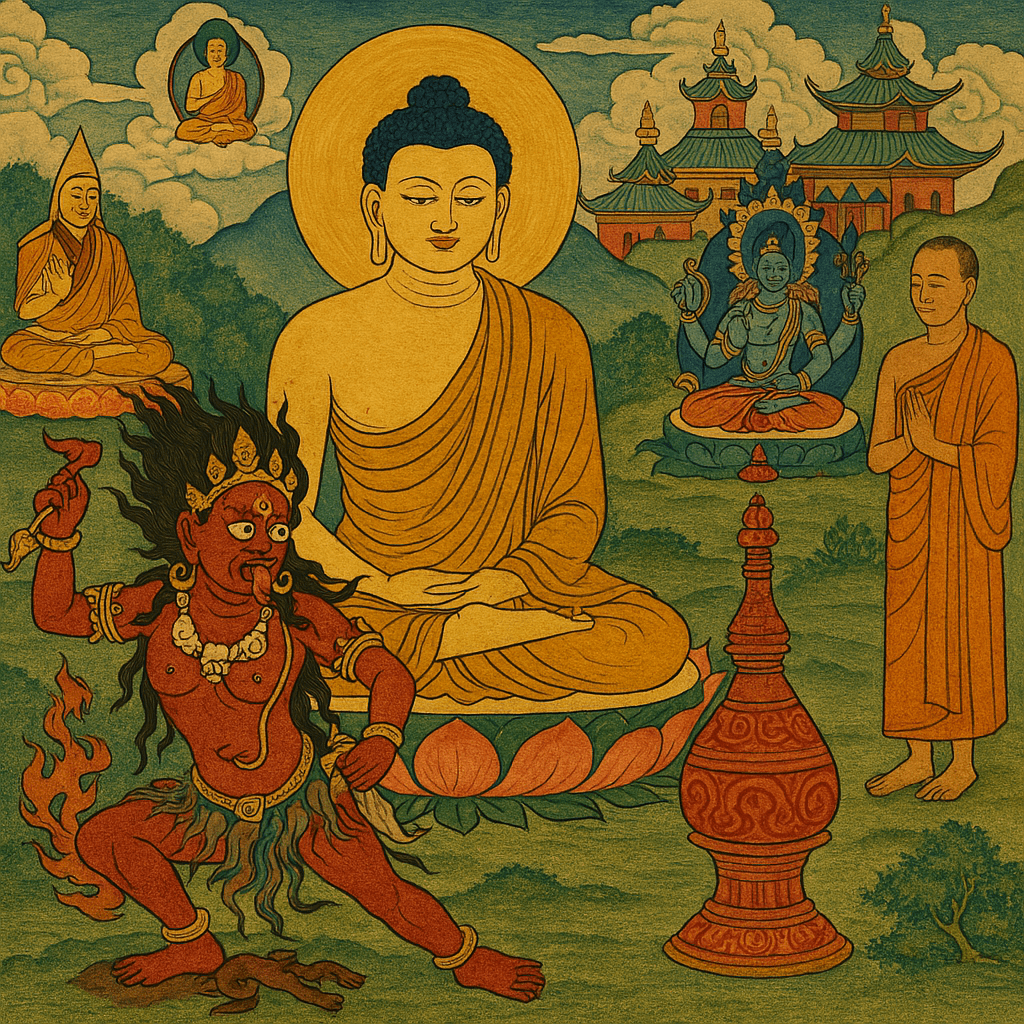
The Cultish Nature of Tibetan Buddhism


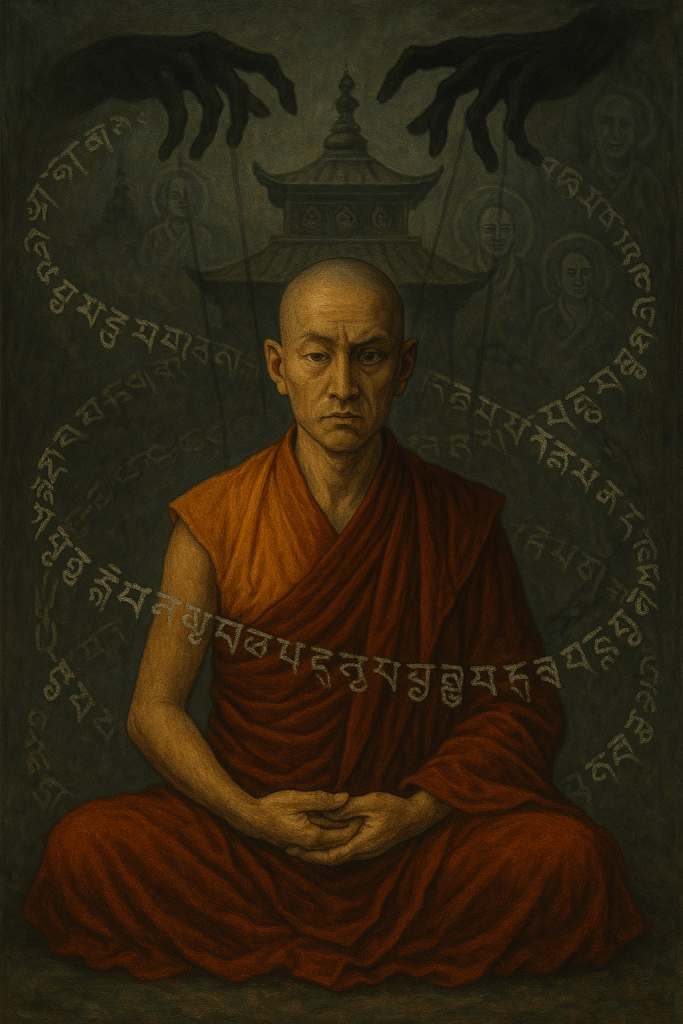
When I began my journey into Tibetan Buddhism, I was swiftly enveloped in its rituals and traditions. Without much explanation, I was handed monastic robes, instructed to shave my head, and urged to take lifelong vows. This rapid immersion into a structured and demanding system left me questioning the true nature of the practice. Was this a genuine spiritual path, or was I being drawn into a cult masquerading as a path to enlightenment?

The Allure of Tibetan Buddhism

Tibetan Buddhism often presents itself as a path of loving-kindness, compassion, and profound meditative insight. Its teachings emphasize peace, mindfulness, and the cultivation of wisdom. On the surface, these ideals are appealing and resonate with many.

However, lurking beneath this serene exterior is a complex structure of vows, rituals, and hierarchical relationships that can be overwhelming and oppressive.

The Samaya Vows: Protective or Deadly?

Central to Vajrayana Buddhism are the samaya vows, which are commitments taken by practitioners during tantric initiations. They establish a sacred bond between the guru and the disciple, outlining the conduct required to uphold that bond.

These vows can create a sense of obligation and fear. Breaking samaya is believed to lead to severe karmic consequences, placing immense pressure on individuals to adhere strictly to obedience no matter what the guru does.

Hidden Subjugation and Control

The hierarchical nature of Tibetan Buddhist communities can lead to overt forms of mind control and manipulation. The reverence for the guru borders on unquestioning subservience, with the guru’s authority rarely being challenged. This dynamic can foster an environment where questioning is discouraged, and followers are compelled to conform to the guru’s demands and the group’s expectations.

Moreover, the concept of “crazy wisdom” is sometimes used to justify behavior that would otherwise be deemed inappropriate or abusive. This philosophy, associated with figures like Chögyam Trungpa, suggests that unconventional or even disruptive actions by a guru are acceptable if they lead to spiritual awakening. Such justifications can blur ethical boundaries to the extent that students are ripe for abuse.

The Dark Side of Tibetan Buddhism

Instances of widespread misconduct within Tibetan Buddhist communities have been reported, raising concerns about the integrity of these institutions. The case of Sogyal Rinpoche, the founder of the Rigpa organization, is one example where allegations of sexual abuse and severe authoritarian control surfaced, leading to significant controversy and criticism. After eight students leaked a letter on the internet exposing his crimes, a highly-regarded Khenpo associated with the group gave a talk denouncing those eight students, angrily declaring that they would all go to vajra hell. Even though many Westerner disciples of Tibetan Buddhism don’t believe in vajra hell, I can assure you from first hand experience that it’s very real. You can read more about it here.

These incidents highlight the potential for exploitation within systems that place immense power in the hands of a single individual or a small group of leaders. The lack of accountability and transparency in many Tibetan Buddhist organizations can create an environment ripe for cultish abuse.

Conclusion: A Call for Critical Reflection

While Tibetan Buddhism appears to offer profound teachings and practices, it is essential to approach these traditions with a critical eye. The allure of compassion and peace should not overshadow the lack of ethical conduct, transparency, and respect for individual autonomy that often hides beneath the surface.

The Global Spread of Tantric Buddhism: A Departure from the Buddha’s Teachings?


When people hear the term “Buddhism,” they often imagine a peaceful monk seated under a tree, cultivating mindfulness and inner stillness. They might recall the image of the Buddha, Siddhartha Gautama, who renounced wealth and power to pursue a path of liberation through ethical conduct, meditation, and wisdom. What many do not realize is that across Asia, the original teachings of the Buddha have often been overlaid with rituals, deities, and esoteric practices that resemble occultism more than renunciation. This is especially true with the spread of Tantric Buddhism, also known as Vajrayāna.

Tantric Buddhism, which developed in India around the 6th century CE, introduced rituals, visualizations, secret initiations, deity yoga, and sexual symbolism that were foreign to the early teachings found in the Pāli Canon. While it may have originated in India, the influence of Tantra has spread far beyond the Himalayas. Countries known today for their Theravāda heritage, such as Cambodia, Laos, Vietnam, and Thailand, have all, at different times, been touched or even deeply influenced by Tantric practices. This article traces the spread of Tantric Buddhism and asks a pressing question: Is this fusion of Tantra and Buddhism in harmony with what the Buddha actually taught?


India: The Birthplace of Tantra and the Turning Point

Though Siddhartha Gautama taught a path of non-attachment, the later development of Tantric Buddhism in India marked a dramatic departure. The Tantric path emphasized achieving enlightenment quickly by harnessing the powerful energies of desire, fear, and wrath through ritual and symbolic transgression.

Early Buddhist schools such as Theravāda preserved the monastic, ethical, and meditative disciplines taught by the Buddha. But by the time Vajrayāna emerged, Buddhism in India had evolved into Mahāyāna and beyond, with Tantric elements becoming dominant in institutions like Nālandā and Vikramaśīla monasteries before their destruction. From here, Tantra spread east.


Tibet: The Tantric Stronghold

No country embraced Tantric Buddhism more completely than Tibet. With the arrival of Indian masters like Padmasambhava in the 8th century, Tibet adopted esoteric practices involving deity yoga, ritual offerings (such as torma and blood libations), and secret empowerments. The NyingmaKagyuSakya, and Gelug schools all incorporated tantric texts and practices, often passed orally and practiced in secrecy.

Tibetan Buddhism’s public face often emphasizes compassion and mindfulness, but beneath the surface lies a highly ritualized system of guru devotion, spirit invocation, and occult symbolism. Even the widely admired Dalai Lama is an initiated tantric practitioner who publicly defends the practice of deity yoga and sexual yogas, raising serious questions about his alignment with the historical Buddha’s path.


China: Mixed Influence and Lingering Tantra

In China, the dominant schools of Buddhism have historically been Chan (Zen), Pure Land, and Huayan. However, during the Tang dynasty (7th–10th centuries), Esoteric Buddhism (Mizong) was introduced by Indian masters like Amoghavajra. While it never overtook the native schools, it left a lasting impact in some sects and still survives in diluted form within Chinese folk religion and Taoist-Buddhist syncretism.

Today, Chinese Buddhism largely appears non-tantric, but undercurrents remain, especially in temple rituals involving spirit appeasement, elaborate deity worship, and occult practices inherited from early Tantric transmission.


Vietnam: The Mahāyāna-Tantra Hybrid

Vietnam officially follows Mahāyāna Buddhism, heavily influenced by Chinese traditions. However, tantric rituals were introduced via Chinese Esoteric Buddhism and Indian Tantric texts. Vietnamese temples often blend Pure Land devotion with protective rituals invoking wrathful deities or dhāraṇīs (mantras with supposed magical powers). Such rituals, while less publicized, reveal an undercurrent of occultism beneath an otherwise devotional landscape.


Cambodia and Laos: Theravāda Facade, Tantric Underbelly

Cambodia and Laos are Theravāda countries, yet their histories are steeped in tantric influence from the ancient Khmer Empire. Angkor Wat, though now viewed as a Hindu and Buddhist site, was once home to elaborate Tantric rituals. Statues of multi-armed deities and ritual paraphernalia suggest tantric syncretism flourished.

Today, while the public face of Buddhism in these countries is Theravāda, local shamans (mo phi) and monks alike may engage in protective magic, spirit invocations, and talisman-making, practices more akin to Tantric ritual than Theravādan restraint.


Thailand: Theravāda Mixed with Occultism

Thailand is often held up as a bastion of Theravāda purity, yet here too the line between Buddhism and occultism blurs. Amulets, tattoos (sak yant), and rituals to appease spirits are common. Many monks perform rituals invoking Phra Ngang or other spirits linked to animistic or tantric practices. While not called Tantra, the ritual culture that has evolved in Thailand includes aspects strikingly similar: mantras, yantras, invocations, and guru devotion.


The Buddha vs. Tantra: Are They Compatible?

The question at the heart of this analysis is critical: Do tantric practices align with the historical Buddha’s teachings?

The Buddha emphasized renunciation, morality, mindfulness, and wisdom. He warned against magic, ascetic extremism, and blind devotion to teachers. He discouraged speculation about supernatural powers and encouraged liberation through insight and ethical living.

Tantric Buddhism, by contrast, often involves oath-bound secrecy, symbolic transgression (including sexual union and consumption of taboo substances), and reliance on supernatural beings and powers. In many forms, it is more reminiscent of sorcery than liberation.

Bluntly stated, Tantra is not a spiritual shortcut, but a dangerous detour. It promises power, but often delivers confusion and spiritual enslavement. For survivors of tantric abuse, like myself, it’s critical to shine a light on how these practices have hidden behind the Buddha’s name and image for centuries. As Tantric Buddhism spread across the globe, from Tibet to Thailand, from China to Cambodia, it cloaked itself in the language of compassion and enlightenment; however, its methods betray a different source, one that leans toward secrecy, manipulation, and occultic power rather than truth and freedom.

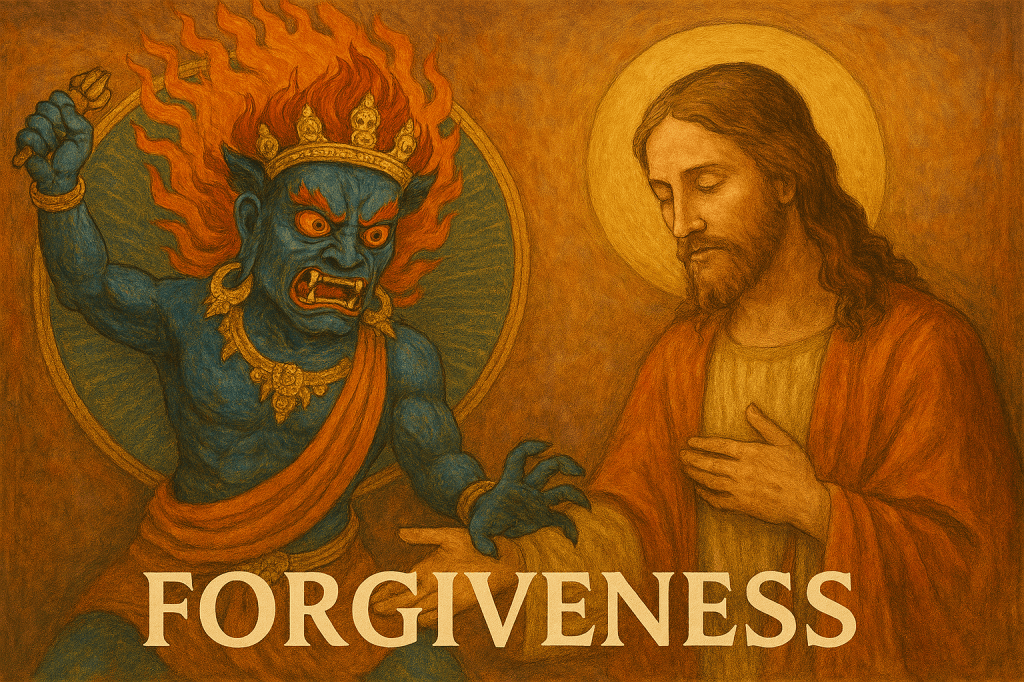
Forgiveness in Christianity vs Wrath in Tantric Tibetan Buddhism


In Tantric Tibetan Buddhism, forgiveness is not traditionally emphasized as it is in Christianity. Tibetan Buddhism places greater emphasis on karma, the universal law of cause and effect. According to this view, actions inherently produce outcomes, and there is little scope for simply “forgiving” or releasing someone from the karmic consequences of their deeds. Instead, purification practices are prescribed to cleanse one’s negative karma. If they are not done effectively, retribution is a given.

Ken McLeod, a prominent Western teacher and translator of Tibetan Buddhism, highlights this point clearly in an article titled, “Forgiveness is not Buddhist.” He writes, “In Tibetan Buddhism, forgiveness isn’t really addressed in the same way as it is in Christianity. Instead, there’s an emphasis on purification and insight into the nature of mind and action.” [1]

Practitioners engage in rituals and meditation practices, such as Vajrasattva purification practices, visualizing negative karma being cleansed. However, these rituals differ fundamentally from the Christian idea of interpersonal forgiveness. They are personal acts of purification rather than relational acts of forgiving or seeking forgiveness from another person or deity.

Although the emphasis in Tibetan Buddhism is allegedly on compassion (karuna), a larger concept of retribution is often at work behind the scenes. Compassion in Buddhism is the profound desire to alleviate suffering universally, extending even to one’s perceived enemies. Tantra, paradoxically, emphasizes karmic retribution that allows the guru to “payback” perceived slights and disrespect secretly using black magic techniques or “rituals of subjugation.”

Personal Account: The Dark Side of the Teachings

My own experience underscores the stark absence of forgiveness in Tantric Tibetan Buddhism. During a tantric ritual of annihilation, I desperately begged forgiveness from the guru for any perceived wrongdoing, hoping for mercy or compassion. I honestly did not know what I was being punished for. The guru, however, demonstrated not even the slightest bit of forgiveness or mercy. This painful event highlighted for me the profound differences between the compassionate forgiveness taught by Jesus Christ and the severe, impersonal karmic logic of Tantric Tibetan Buddhism.

Forgiveness in Christianity

In Christianity, forgiveness occupies a central and explicit place. It involves both human interpersonal forgiveness and divine forgiveness through the mercy and grace of God. Christianity explicitly encourages believers to forgive one another as God has forgiven them through Christ’s sacrifice on the cross.

Forgiveness in Christianity is relational, deeply rooted in repentance, reconciliation, and restoration of relationships with God and with others. It implies a personal release from the debt of sin through God’s grace, rather than the impersonal balancing of karmic scales.

Jesus teaches explicitly on forgiveness, such as in the Lord’s Prayer (“Forgive us our trespasses, as we forgive those who trespass against us”), emphasizing the interconnectedness of receiving and giving forgiveness. Forgiveness is portrayed not merely as a spiritual virtue but as a fundamental practice essential to spiritual health and salvation itself.

Western Practitioners and Misplaced Assumptions

Many Western practitioners of Tibetan Buddhism unconsciously overlay their Judeo-Christian cultural and moral values onto the tantric Buddhist teachings, often at their own detriment. They assume the presence of forgiveness and personal mercy that simply do not exist in the traditional tantric framework. This mistaken belief can lead practitioners to misunderstand or misinterpret the intentions and actions of teachers, making them vulnerable to exploitation and emotional and physical harm. Ultimately, recognizing these fundamental differences can lead to safety, and protection from mistaken spiritual paths. For more about the guru’s ability to engage in karmic retribution see here, here, and here.

[1] Ken McLeod, “Forgiveness is Not Buddhist,” Unfettered Mindhttps://unfetteredmind.org/forgiveness-is-not-buddhist/ (accessed April 9, 2025).

Wrathful Rituals and “Black Magic” in Tibetan Guru-Disciple Relationships

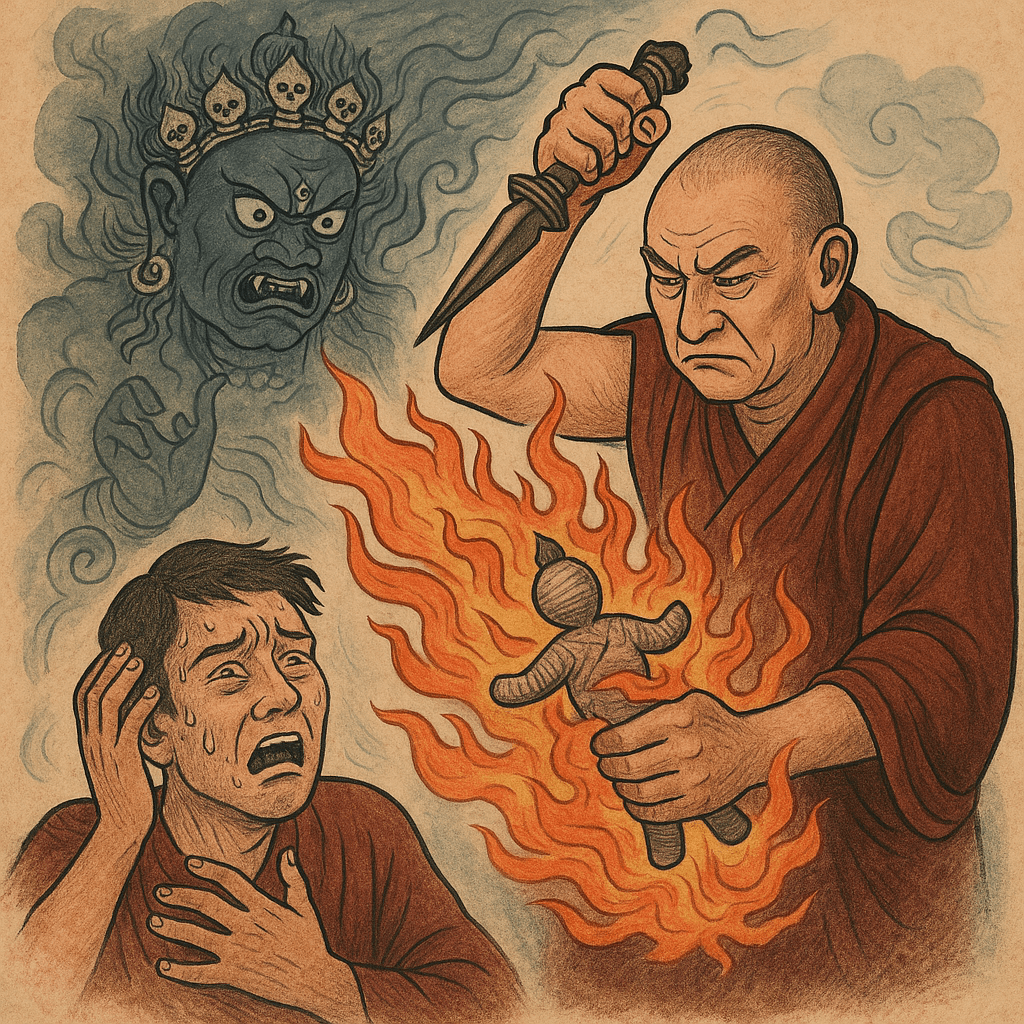
It is not far fetched to assert that it is the lama himself bringing about the karmic retribution on the student through black magic rituals using effigies and curses.


The Tibetan Buddhist tradition, especially its Vajrayana (tantric) aspect, contains teachings on wrathful rituals and even sorcery-like practices. These practices have occasionally been used (or misused) by gurus to punish or frighten disciples who violate guru devotion or samaya (sacred vows). Both classical texts and modern accounts document such phenomena:

  • Scriptural Warnings of Dire Consequences: Tantric scriptures and commentaries explicitly warn of terrible karmic punishment if a disciple betrays or criticizes their guru. For example, the Kalachakra Tantra says that even a moment of anger toward one’s guru destroys vast amounts of merit and causes rebirth in hell for eons (The Disadvantages of Incorrect Devotion to a Guru | Lama Yeshe Wisdom Archive).

  • Another text states that simply failing to properly honor a guru after receiving teachings can result in “rebirth for one hundred lifetimes as a dog” and then rebirth as a low-caste person or even a scorpion lamayeshe.com. In short, breaking samaya is portrayed as spiritually catastrophic, leading to suffering in this life and the next. These warnings, while couched as impersonal karmic law, create a climate in which gurus are held almost above criticism.

  • Oath-Breakers and Protector Deities: Tantric cosmology includes Dharmapāla (Dharma protectors) bound by oath to protect Buddhist teachings and teachers. Those who break their sacred vows or harm their guru are sometimes called “samaya-breakers” or oath-breakers. Historical texts indicate that oath-breakers were targeted by wrathful rituals. A striking example comes from a 13th-century Tibetan master at Kublai Khan’s court, Ga Anyen Dampa. In a decree mixing politics and magic, Dampa forbade harming his followers through curses or demons, but warned that if anyone disobeyed him, he would “unleash the fierce punishment of the Dharma Protectors” so that their heads would split into a hundred pieces (War Magic: Tibetan Sorcery | Rubin Museum). In other words, the guru swore to call upon wrathful deities to brutally destroy anyone who violated his command. Such records (in this case preserved as a protective charm) show that invoking black magic and protective deities as punishment for disobedience was not unheard of.

  • Effigies and “Black Magic” in Tantric Practice: Tibetan lamas developed elaborate ritual technologies to deal with enemies or detractors. Human effigies and dough figures (torma) are traditional ritual implements used to represent a target in magical rites. According to scholars, a “wide array of images, such as human effigies…or ritual dough-offering sculptures, were employed to…subdue or destroy one’s enemies” (War Magic: Tibetan Sorcery | Rubin Museum). In wrathful rites (such as the gTor dabs or torma-throwing ritual), the lama empowers an effigy with mantras and offers it to wrathful spirits or deities, directing the ensuing harm toward the intended victim. War Magic was even used at state levels, for instance, 12th-century Lama Zhang, a militant yogi, sent cursed tormas and spells against his foes and had protector goddesses like Shri Devi “assist” in battle (War Magic: Tibetan Sorcery | Rubin Museum). These historical uses of violent sorcery, while aimed at external enemies, set a background against which a guru might also target an “enemy” disciple who they feel has betrayed them.

  • Historical Case – The “Cursed Boots” Plot: In 1900, an incident in Lhasa suggests the reality of such magical punishments. The 13th Dalai Lama survived an assassination attempt involving black magic: a certain gifted pair of boots, which caused illness to the wearer, upon close inspection had “a harmful mantra hidden in the sole.” (Treasury of Lives: The Case of the Dalai Lama’s Cursed Boots – Tricycle: The Buddhist Review) The inquiry revealed that the boots were prepared as a curse by a lama famous for sorcery, acting on behalf of a former regent. That sorcerer (Lama Nyaktrul) confessed he was recruited to enchant the boots “as a means to sap the vitality of the Dalai Lama and cause his eventual death” (Treasury of Lives: The Case of the Dalai Lama’s Cursed Boots – Tricycle: The Buddhist Review). The plotters, including the ex-regent, were arrested, confirming this was not mere superstition but a documented attempt to use ritual magic to punish or eliminate a high lama. While this is a political case, it shows that Tibetan lamas did employ curses (mantras on effigies or objects) to secretly harm human targets. It’s a short step to imagine a vindictive guru doing similar things to a personal disciple who is seen as a traitor.

  • Even when literal demons aren’t invoked, the threat of supernatural harm is a powerful tool. Some Vajrayana insiders have noted that gurus sometimes wield samaya as a weapon of fear, warning that if a student breaks their devotion, it will hinder the guru’s life or send the student to Vajra Hell. This can psychologically terrorize students into silence and obedience.

  • Samaya and Guru Devotion as a Control Mechanism: The reverence for gurus in Tibetan Buddhism, while spiritually meaningful in that system, can be abused. Devoted students are taught to see the guru as embodying all Buddhas (The Disadvantages of Incorrect Devotion to a Guru | Lama Yeshe Wisdom Archive), and therefore criticizing the guru is equivalent to criticizing the Buddha himself. This makes any challenge tantamount to sacrilege. Teachers who demand absolute loyalty may invoke wrathful consequences to enforce it. In the lore, breaking samaya not only brings karmic punishment but may incite the guru’s protector spirits to take revenge. For instance, many guardian deities are oath-bound to “strike down those who break their vows” to the guru or teachings. A protector like Dorje Shugden, controversially, is believed by his devotees to punish monks who “betray” their lineage, an idea which has led to real-world fear and schisms ( Go On, Break Your Samaya | Tsem Rinpoche). Thus, within the context of guru devotion, the line between religious oath and curse can blur: a disciple who disobeys is told they invite not only bad karma but possibly violent divine retribution.

  • To go one step further, it is not far fetched to assert that it is the lama himself bringing about the karmic retribution on the student through black magic rituals using effigies and curses. These practices are particularly potent because the disciple would have opened themselves up to being possessed by the guru’s yidams and protectors through the empowerments and teachings they received from the guru. In addition, the guru is able to enter the mind and body of the disciple magically. See Tantric Astral Projection, the Guru’s Power to Liberate or Condemn. So basically, the potential enemy is already camped within the body/mind/spirit of the victim, waiting to strike should there be any samaya breakage. Although the tantric methods contain practices to repair broken samaya, the student/victim is not always aware that he has offended the guru and been condemned as an “unripe vessel” until it is too late.

In summary, credible sources, from canonical texts to academic studies and personal testimonies, support the claim that some Tibetan Buddhist gurus have used wrathful magic to punish dissenters. Traditional scriptures describe horrific fates for disciples who violate samaya, and Tibetan histories recount lamas employing curses, effigies, and protective deities to destroy enemies and “oath-breakers.” These examples, past and present, illustrate how the immense power ascribed to Vajrayana masters can morph into a tool of coercion, a “dark side” of guru devotion that Buddhist scholars and leaders are increasingly acknowledging. The evidence is admittedly esoteric, but it paints a consistent picture: under the pretext of protecting the Dharma or upholding sacred vows, some gurus have indeed used wrathful magic, rituals, or effigies to inflict harm on those who oppose or disobey them.

Sources:

A Critical Look at Vajrayana Magic


Vajrayana Buddhism presents itself as a path of radical transformation: a sacred alchemy where ordinary perception is transmuted into enlightened wisdom. Its ritual technologies are often described as “skillful means,” and its magical practices framed as expressions of “Buddha activity.” But the colorful mandalas and enchanting deity meditations obscure something more dangerous than most practitioners realize.

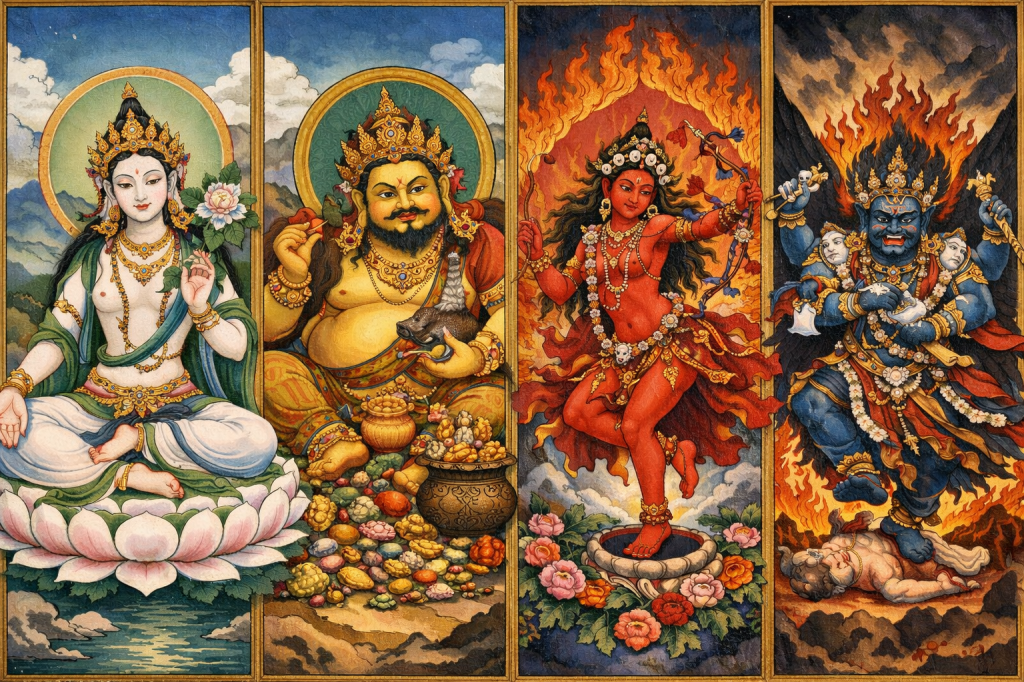
According to vajranatha.com, Vajrayana operates through four principal kinds of magical activity, each aligned with a cardinal direction, a color, and a particular type of power:

  • White (east): for pacifying and healing
  • Yellow (south): for increasing wealth and wisdom
  • Red (west): for attraction and control
  • Dark blue or green (north): for wrathful subjugation and protection

These are personified in the deity forms of White Tara, Dzambhala, Kurukulla, and Vajrakilaya, respectively. Collectively, these “Four Activities” are described as enlightened, but their function mirrors the mechanisms of many other systems of sorcery with spells for healing, prosperity, attraction, and destruction.

So who, or what, is powering these rituals?

Chögyam Trungpa, one of the most influential Tibetan lamas to bring Vajrayana to the West, once gave a startlingly candid warning:

“Committing oneself to the Vajrayana teaching is like inviting a poisonous snake into bed with you and making love to it. Once you have the possibility of making love to this poisonous snake, it is fantastically pleasurable: you are churning out antideath potion on the spot. The whole snake turns into antideath potion and eternal joy. But if you make the wrong move, that snake will destroy you on the spot.”
—Chögyam Trungpa

This is not a metaphor for the all-encompassing wisdom and compassion of the Buddhas and Bodhisattvas. It is a warning of immense spiritual danger.

Vajrayana demands the total surrender of one’s body, speech, and mind, not only to the teachings, but to the guru and the spiritual forces behind those teachings. This surrender is cloaked in bliss, ecstasy, and the promise of transformation. But as Trungpa makes clear, one wrong move and the very force you trusted can turn lethal. And it can turn on a dime.

I experienced this firsthand. It began as a profound visualization and mantra practice during a three-year retreat and gradually turned into energetic torment and psychological destabilization. The deities I once practiced became increasingly foreign, invasive, and predatory. The guru, once seen as a vessel of wisdom, became a wrathful executioner.

These practices are not what they seem: they tap into powerful and often uncontrollable spiritual forces. And one must ask, who or what is really powering these rituals? Who benefits when a practitioner opens themselves to these entities and their so-called “energies”? Why should we assume these forces are benevolent, simply because they have Buddhist names and appear in ornate, colorful iconography?

The structure described here isn’t just about religious symbolism or spiritual beauty, but it reflects a deep psychological system designed to influence the mind through ritual. Vajrayana practices use visualization, chanting, offerings, and mantra repetition to create altered states of consciousness and emotional and physical bonding with supernatural entities.

Vajrayana aligns closely with classic occult systems, ones that use similar rituals to summon, contact, and make pacts with spirits. Healing and increase, attraction and domination are not neutral tools. They are technologies for channeling unseen forces toward specific outcomes. And these forces are personified, and bonded with through ritual acts that, the deeper you go, begin to resemble spiritual possession with demonic pacts.

In my own experience, the entities I contacted through these practices eventually revealed themselves to be something other than the enlightened mind of the Buddhas, whatever that might be. They had their own will, their own agendas, and their own personalities. Especially in the darker rites of semi-wrathful and wrathful deities, there was a sharp edge of coercion, and spiritual threat.

If we take these rituals seriously, not as colorful mysticism, but as real technologies of spiritual manipulation, then we must also take seriously the possibility that their source may not be benevolent.

Just because it’s branded as “Buddha activity” doesn’t mean it is holy. Survivors of spiritual abuse in Tibetan Buddhism must be brave enough to ask the hard questions. Who, or what, are we inviting into our minds and bodies when we chant these mantras, visualize these beings, and make offerings in exchange for spiritual results? Are these forces truly enlightened or are we just calling them that because we’ve been taught to?

When your healing comes at the cost of spiritual bondage…When your wisdom is bought by making pacts with demons…Something is deeply wrong.

Magic in Vajrayana is not peripheral but central to the practice. And it must be examined with clear-eyed discernment.