
In both Hindu and Buddhist tantric traditions, Kali and Vajrayoginī stand as iconic figures of immense power. Wrathful, seductive, and liberating, they are revered as goddesses who destroy ignorance and ego, leading practitioners to freedom through terrifying grace. They drink blood, wear garlands of skulls, and dance on corpses. These are not symbols for the faint of heart.
Kali, in Hinduism, is the goddess of time and death. She is the dark mother who slays demons, severs illusion, and devours ego. Vajrayoginī, in Vajrayāna Buddhism, is a female buddha who leads devotees to enlightenment through the annihilation of dualistic perception, often through erotic and wrathful means.
Today, many feminists embrace these goddesses as symbols of female empowerment, strength, and liberation from patriarchal religion. But this overlooks the possibility that these figures, far from celebrating womanhood, may actually represent a deep spiritual hostility toward it. The ego-annihilation they demand may not be empowering at all, but destructive, both spiritually and psychologically. When viewed through a biblical lens, one must consider whether these so-called icons of empowerment are in fact hostile agents cloaked in feminine form. From a biblical worldview, who are they really?
Fallen Beings or Demonic Entities
If we take the Bible as the sole and literal authority:
There is one true God (YHWH), and worship is due to Him alone.
Any supernatural beings outside of YHWH and His angels fall under:
Idols (Psalm 96:5 – “For all the gods of the nations are idols”)
Deceiving spirits or demons (1 Corinthians 10:20 – “The sacrifices of pagans are offered to demons, not to God.”)
From this view:
Deity
Biblical Interpretation
Kali
A manifestation of a demonic spirit that seduces worshippers through fear and false power
Vajrayoginī
A spirit of deception using mystical allure to imitate divine enlightenment
Why They’re Considered Dangerous
1. They Accept Worship Not Meant for Them
Worship of any being other than the God of Israel is strictly forbidden. (Exodus 20:3 – “You shall have no other gods before Me.”)
Revering supernatural powers outside of God constitutes rebellion and idolatry.
2. They Promote False Teachings
3. They Offer Counterfeit Spiritual Power
These goddesses can induce real mystical experiences through the occult third eye, but from a biblical view, such power is not from God.
They mimic light and transcendence, offering access to preternatural realms that ensnare souls in spiritual bondage.
Biblical Warnings Relevant to These Figures
2 Corinthians 11:14 – “Even Satan disguises himself as an angel of light.”
Deuteronomy 13:1–3 – Even if a sign or wonder comes to pass, if it leads you to follow other gods, it is a test from the Lord.
Revelation 9:20 – Condemns worship of “idols of gold and silver… which cannot see or hear or walk.”
Summary (from a Biblical Lens)
Kali and Vajrayoginī are not misunderstood archetypes or symbolic feminine faces of divine truth. From a biblical standpoint, they are false gods or fallen spirits who lure seekers through mysticism, ecstasy, and power into worship that ultimately defies the true and living God.
Their powers are spiritual deceptions, designed to mimic enlightenment while leading souls away from salvation and the truth of Jesus Christ.
To those recovering from tantric abuse or deception: the biblical path does not deny spiritual reality, it affirms that spiritual warfare is real, and that freedom is found in Christ alone, not through altered states, or the worship of seductive wrathful or peaceful goddesses, or any other small “g” god for that matter.
You shall have no other gods before Me.” — Exodus 20:3
In the modern spiritual landscape, the image of the Tibetan Buddhist guru reigns supreme: a figure of wisdom, compassion, and radiant loving-kindness. They preach mindfulness, selflessness, and sanctity, inviting seekers into what appears to be a sacred journey toward enlightenment. Yet, to me, this image is a facade, a carefully curated performance masking a much darker reality.
I write these words not as a distant observer but as someone who has experienced firsthand the profound betrayal of being targeted by spiritual teachers I once trusted. In my personal journey, three different gurus, revered in their communities for saintly and/or enlightened behavior, turned to black magic rituals against me when I questioned, disagreed, or simply became inconvenient to their carefully maintained personas. This article is an exploration of the deep cognitive dissonance that allows such individuals to publicly embody ideals of compassion while privately committing acts of cruelty.
The Ideal: Loving-Kindness and Compassion as a Mask
Gurus in traditions such as Tibetan Buddhism, Hinduism, and various New Age movements are often held up as embodiments of selfless love and wisdom. Their teachings and writings are saturated with the language of peace and universal compassion. In public, they radiate qualities such as patience and gentleness, reinforcing the image of infallibility.
This idealized projection is not merely for the benefit of followers; it also serves the guru’s own self-concept. They must see themselves, and be seen as holy, thereby reinforcing their authority and maintaining their social and spiritual power.
The Threat: When a Disciple Questions Authority
In the sanitized image of the perfect guru, there is no room for dissent. Questions, criticisms, or any sign of independence from a disciple can be perceived not as opportunities for dialogue, but as existential threats. After all, if a guru’s authority rests on the illusion of flawless wisdom and compassion, any crack in that image could unravel the entire edifice.
When faced with a questioning or independent-minded disciple, an insecure guru may respond not with the compassion they preach, but with fear, rage, and vindictiveness. To protect their power, they must eliminate the threat, not through open dialogue or humility, but through covert aggression.
The Betrayal: Weaponizing Spiritual Power
Traditions rich in esoteric knowledge provide tools that can be used for healing and protection, but also for harm. Tibetan Buddhism, for instance, preserves rituals historically intended to call down curses, obstacles, and psychic attack upon perceived enemies.
In my experience, these gurus invoked black magic against me. These were not random charlatans; they were highly respected spiritual leaders, who waxed eloquently in the language of love and compassion. Yet when challenged, they resorted to covert energetic and magical attacks, using the very tradition they claimed to uphold to violate the sacred trust between teacher and student.
Cognitive Dissonance: Reconciling Saintliness with Malice
How does a guru reconcile the horror of harming a disciple while maintaining their self-image as a bodhisattva, a compassionate enlightened being? The answer must lie in cognitive dissonance: the mental stress of holding two contradictory beliefs simultaneously.
To preserve their self-concept, the guru must justify their actions internally:
“I am protecting the dharma.”
“This disciple was dangerous, impure, deserving of punishment.”
“Sometimes cruel and violent actions are necessary for the greater good.”
Through rationalization, projection, and splitting, they maintain the fiction of compassion while engaging in spiritual violence. They convince themselves that their harmful actions are righteous, necessary, and justified.
The Aftermath for the Disciple
For those of us on the receiving end, the experience is devastating on many levels. It deeply tears at the soul to be targeted by those we once revered. The betrayal fractures trust not only in teachers but in the entire spiritual path. The disciple may grapple at first with:
Confusion: “Was it my fault?”
Self-doubt: “Did I deserve this?”
Spiritual disillusionment: “Is true compassion even real?”
If the disciple survives this first stage, similar to a victim of Stockholm syndrome, there comes a gradual dawning of the truth: the Tibetan Buddhist path, far from being one of light, has revealed itself as a path of darkness. That realization, painful as it is, can ultimately be deeply empowering.
I do not minimize the devastating effects of the powerful magic performed by these modern-day mahasiddhas. Black magic attacks are very real, manifesting as physical illness, emotional despair, and worse. Healing from such trauma requires immense courage and deep inner work. It is one of the most horrific experiences a human being can endure.
Yet, there is a stronger and truly holy force at work in the universe: the Most High God–yes, the biblical God. Sadly, many Tibetan gurus seem to have little experience of Jesus Christ, the Holy Spirit, or the true mercy and compassion that they embody.
The Deeper Horror: Gurus Possessed by False Spirits
It is not enough to say these gurus made mistakes or succumbed to human weakness. When a soul trained in the disciplines of compassion, wisdom, and loving-kindness instead chooses cruelty, retaliation, and spiritual violence, something darker is at work.
One must ask: how can they inflict such harm without being crushed by the weight of their own conscience? The terrifying truth is that many of these gurus may no longer be acting from their own hearts at all. They are, at some deep inner level, possessed, not by the enlightened deities they claim to serve, but by deceptive demonic forces masquerading as gods, bodhisattvas, protectors, and spirits of light.
In their ignorance and self-deception, they have invited darkness into themselves. They have handed over their will to entities that delight in mockery, destruction, and the inversion of sacred teachings. The rituals they once performed for healing and protection now become channels for curses, oppression, and spiritual decay.
And yet, even in this darkness, a greater light shines.
There is a true and living God, the Most High, whose justice is perfect and whose mercy is real. There is Jesus Christ, the Holy Spirit, and the incorruptible power of divine love, utterly beyond the reach of these childish gurus and their counterfeit spiritualities.
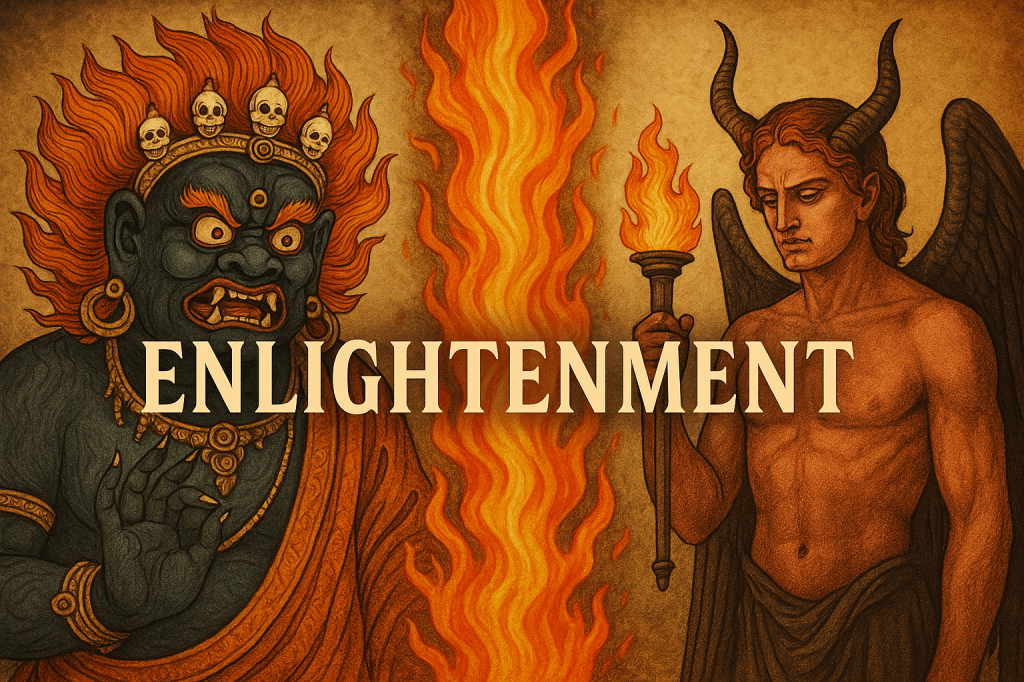
When I was a devoted Tibetan Buddhist, the word enlightenment held sacred weight. It meant the complete awakening of compassion and wisdom, the state of a Buddha who sees through illusion and dedicates themselves to freeing all sentient beings from the sufferings of samsara. I trusted in that vision, because I believed I was following a noble tradition.
But even then, something always felt a little off. I had a quiet discomfort I kept pushing aside.
The problem was this: the term enlightenment wasn’t exclusive to Buddhism. I saw the same word used in the occult, in Theosophy, Freemasonry, and even Luciferianism, often in ways that glorified rebellion and the pursuit of hidden knowledge. Why were systems as wildly different as Tibetan Buddhism and Luciferian occultism both invoking “enlightenment” and “awakening” as their ultimate goal? Why did the same term span both the sacred and the profane?
Tibetan Buddhism: Enlightenment as Compassionate Wisdom
In Tibetan Buddhism, enlightenment is the realization of emptiness, the transcendence of ego, and the birth of boundless compassion. The ideal of the bodhisattva is someone who delays their own final nirvana in order to help all other beings reach liberation. This enlightenment isn’t just something a guru gifts you; it’s a hard-won transformation of your own mind.
Vajrayana Buddhism, the tantric branch of Tibetan Buddhism, adds layers of secrecy and initiation. There are empowerments, mantras, visualizations, and guru devotion practices. It uses powerful symbols such as vajras, weapons, fire, and wrathful deities that on the surface could resemble occult ritual. This made me uneasy. Was this actually an Eastern form of the same hidden path to power that Western esoteric groups followed?
I reassured myself that Vajrayana was different. It used “occult” methods, maybe, but only to realize true compassion and emptiness. Still, the similarity in tone and terminology between tantric rituals and occult rites always bothered me.
Now, after 35 years of hard work, study, devotion, and ultimately betrayal at the hands of tantric Buddhist gurus and deities, I’ve come to a grim realization: the enlightenment I was seeking wasn’t what I thought it was. It is merely an occult system dressed in Buddhist robes. The deeper I went, the clearer it became that Tibetan Buddhism and Luciferianism are two sides of the same coin. They may use different language, imagery, and rituals, but they are architecturally and spiritually similar and they both serve darkness, not light.
The word that they share, enlightenment, is the bait they use to ensnare seekers.
Luciferianism and Tibetan Buddhism: Two Faces of the Same Enlightenment Agenda
In Luciferianism, enlightenment is about becoming your own god. Lucifer is framed not as evil, but as the “light-bringer,” the one who defies divine authority to bestow forbidden knowledge. Enlightenment here is rebellion, self-deification, and esoteric power.
Helena Blavatsky, the founder of Theosophy, which heavily influenced modern occultism, named her journal Lucifer and described the figure as a misunderstood bringer of divine wisdom¹. In The Secret Doctrine, she refers to Lucifer as the “spirit of intellectual enlightenment”² and equates him with the higher mind of humanity. Freemasonry, Theosophy, and modern occultism all share the core motif: moving from darkness to light, and from ignorance to gnosis, through secret initiation.³
This kind of “light” is occult and exclusive. The “enlightened ones” in these systems are initiates who’ve been brought into deeper mysteries. The light is not for everyone; it’s reserved for those chosen by the system who are able to serve its agenda.
What shocked me, and what I ignored for years, is that tantric Buddhism functions much the same way. It promises special teachings, revealed only to the initiated. It trains students to see their guru as a living Buddha, above criticism or doubt, and presents his questionable actions as “skillful means,” while bypassing basic moral accountability. There is a similar secretive, hierarchical structure although this one is surrounded by colorful thangkas and Sanskrit mantras.
The deeper I went, the more I saw that my devotion was being weaponized against me. Tantric gurus used “crazy wisdom” to justify harm, and “samaya vows” to silence dissent. It wasn’t really compassion, but a spiritual aristocracy, no different from the occult orders I once thought Buddhism stood apart from. The beatific vision of enlightenment for the benefit of all sentient beings was merely the bait. The hook was the hidden power of dark forces.
Now I see clearly that the word enlightenment, both in Tibetan Buddhism and Luciferianism, functions as a kind of smokescreen. It sounds noble, luminous, and superior. But in both systems, it serves those in power and creates a class of “enlightened ones” who are above reproach, who serve gods and buddhas from unseen realms that are not what they appear to be.
“Enlightened Ones” as Agents of the Lie
It’s not just that the term enlightenment is misused. It’s that those who claim it, whether in Tibetan Buddhism or Luciferianism, are agents of a system that serves a being or beings pretending to be of the light.
These “enlightened ones” often behave the same way, regardless of tradition: they demand loyalty, obedience, and silence. They wield charisma and secrecy as tools. And when challenged, they invoke mystical authority and retaliation.
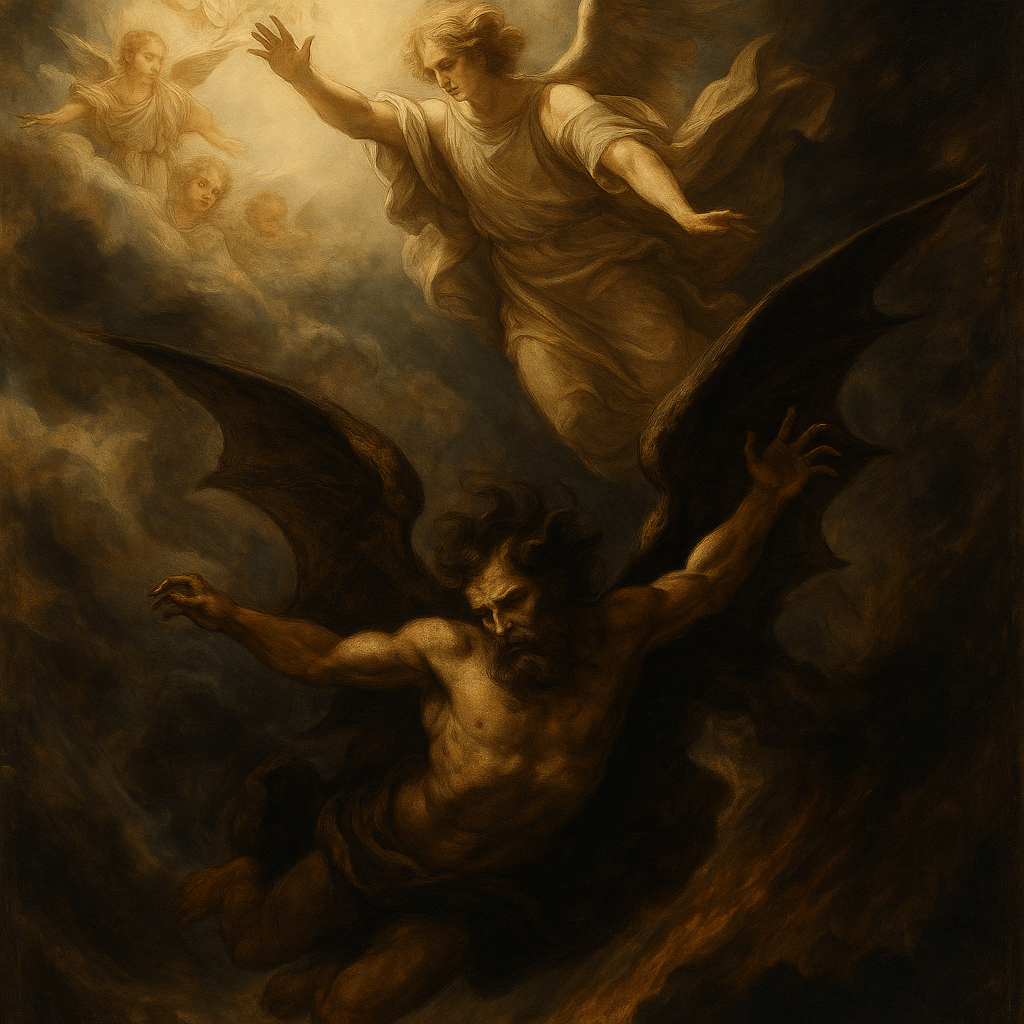
In both systems, the “light” is a mask and those who follow it are bound to something posing as divine. Whether it’s called Buddha, a Bodhisattva, an Ascended Master, or Lucifer, the same current runs underneath: it is a demonic force clothed in the language of transcendence.
Christianity and the True Nature of Light
Unlike Tibetan Buddhism and occultism, Christianity doesn’t use enlightenment as a central goal. It speaks instead of salvation, grace, and being born again through the Holy Spirit. The light of Christ is not esoteric knowledge reserved for an initiated elite but is open, relational, and grounded in love and repentance. Christ’s light is not something attained through ritual or secrecy; it is something revealed publicly and offered to all.
As Jesus says in the Gospel of John: *“I have spoken openly to the world. I have always taught in synagogues and in the temple, where all Jews come together. I have said nothing in secret.”⁵ This sharply contrasts with occult traditions, including tantric Buddhism, where knowledge is concealed, layered in initiations, and distributed only to those deemed “ready.” In my own experience, this secrecy became a mask for control. I was told not to question or doubt. I had to sacrifice my own inner wisdom and clarity.
But the light of Christ does not require silence or blind devotion. The Holy Spirit is not a power to be manipulated, but a divine presence who convicts, comforts, and guides with truth. In my experience, that is the only light that does not deceive.
Every other version I followed, no matter how radiant it appeared, eventually demanded that I suppress my discernment, abandon my conscience, and serve a system of secrecy cloaked in mystical language.
A Word to the Seekers
To anyone still in these systems, or brushing up against them through yoga, New Age teachings, or tantric practices: be careful with “light” that demands you stop using discernment. Be cautious of teachers who ask for your silence or your soul. Be wary of the spiritual forces behind the promised enlightenment.
I say this not as an outsider, but as someone who gave my life to this path. I practiced the rituals, prostrated to the gurus, and offered my heart in devotion. And when the mask came off, I saw what was truly being served, and it wasn’t holy. It was something else entirely.
Footnotes and Sources
Blavatsky, H. P., Lucifer, Vol. 1. Theosophical Society, 1887.
Blavatsky, H. P., The Secret Doctrine, Vol. 2. Theosophical Publishing House, 1888.
Pike, Albert. Morals and Dogma of the Ancient and Accepted Scottish Rite of Freemasonry. Southern Jurisdiction, 1871.
Mackey, Albert G. The Symbolism of Freemasonry. Masonic Publishing, 1882.
The Holy Bible, English Standard Version, John 18:20.
Crowley, Aleister. The Book of the Law. 1904.
Bailey, Alice A. Initiation, Human and Solar. Lucis Publishing Company, 1922.
Dapsance, Marion. “Behind the Smiling Façade: Abuse in Tibetan Buddhism.” Le Nouvel Observateur, 2018. Translated and discussed in Tricycle: The Buddhist Review.
Sawerthal, Anna. “Sogyal Rinpoche’s Abuse and the Breakdown of Secrecy in Buddhism.” Tricycle, 2018.
Peljor, Tenzin. “Tibetan Buddhism and Abuse: Why Critical Thinking is Essential.” Interview in Spiegel Online, 2019.
In the world of Tibetan Tantra, the guru is not merely a teacher. He is regarded as a living embodiment of enlightenment, someone who, once accepted, must be obeyed as if he were the Buddha himself. Into this framework walk countless Western women, often earnest seekers of truth, healing, or transcendence. But when romance, sexuality, and devotion become intertwined, the results are rarely transformative. More often, they are tragic.
This article explores the inherent power imbalance, cultural dissonance, and psychological manipulation that underpin many intimate relationships between Tibetan tantric gurus and their female disciples.
A Different Cultural Code
In Tibetan culture, it is not uncommon for powerful men, including lamas, to have secret relationships, multiple consorts, or children outside of marriage. In many traditional communities, this behavior is normalized, even expected. Male infidelity is culturally tolerated, and truth-telling in romantic relationships is not seen as a moral imperative.
For many Western women, however, raised in societies where emotional honesty and monogamy are core values in intimate relationships, these behaviors come as a rude awakening. When a Tibetan lama engages in a romantic or sexual relationship with a Western disciple, he often does so under entirely different assumptions than she brings to the table.
The result is a tragic mismatch, not only of expectations, but of entire worldviews.
Samaya: A Weaponized Vow
At the heart of tantric Buddhism is the concept of samaya, a sacred vow of loyalty and obedience to the guru. These vows are complex, often opaque, and understood differently in Tibetan contexts than in the West. A Western woman may believe she is entering a relationship based on mutual affection or spiritual partnership, while the guru sees her as a consort, a dakini, a means to an end, whose role is to support his realization through sexual union, secrecy, and ritual submission. A less realized guru might just use women for his own sexual satisfaction without having the ability to properly engage in tantric sex for spiritual ends. This is often true nowadays.
In any case, breaking samaya is said to have dire consequences, not only spiritually, but psychologically, and physically. The risk is greatly compounded if the woman undertakes a traditional three-year-retreat and engages in the highest yoga tantra practices, including the physical yoga. The looming threat of tantric destruction can trap women in relationships that are exploitative, confusing, and coercive. Once the guru becomes the channel for the deity, any questioning of his authority can be framed as demonic and a cause for imminent karmic downfall.
Possession Disguised as Enlightenment
Tantric union is not merely symbolic. It often involves rituals where the guru is said to be “inhabited” by the deity and his voice, gaze, and touch become divinely charged. During such practices, the female disciple is encouraged to dissolve her ego, to merge into the guru-deity, and to practice dak nang or “pure view.” This process can mimic, and in some cases become, a form of spiritual possession.
What’s often missed is the psychological and energetic takeover that occurs. The guru, now deified in the disciple’s mind and practice, can dominate her thoughts, dreams, emotions, and even her bodily functions. This fusion can make it nearly impossible for her to discern spiritual guidance from emotional manipulation or sexual coercion.
Real-World Tragedies
Numerous cases, both widely reported and quietly suppressed, illustrate the dangers of intimate relationships between tantric gurus and their students. These accounts reveal recurring patterns of deception, coercion, and spiritual abuse, all cloaked in esoteric language and asymmetrical power dynamics. They are not isolated incidents but part of a systemic pattern deeply embedded in a tradition that grants unchecked spiritual authority to men who are rarely held accountable.
For those who wish to explore further, consider just a few of the many investigations and testimonies:
Buddhist Project Sunshine – Phase 3 Final Report (2018) This comprehensive report documents allegations of abuse within the Rigpa community, providing detailed accounts and analyses. 📄 Read the PDF Report
Beyond the Temple – What Now? Blog Formerly known as “What Now?”, this blog offers reflections and information from ex-Rigpa members about their experiences and the broader implications of abuse in spiritual communities. Beyond the Temple – Survivors of Abuse in Tibetan Buddhism
Tricycle – “Rigpa Abuse: Former Students of Sogyal Rinpoche Share Their Stories” An article featuring firsthand accounts from former students detailing their experiences with Sogyal Rinpoche and the Rigpa organization. 📰 Read the Article
Lion’s Roar – “Letter to Sogyal Rinpoche from Current and Ex-Rigpa Members Details Abuse Allegations” This piece publishes a letter from Rigpa members outlining specific abuse allegations against Sogyal Rinpoche. 📄 Read the Letter
The Aftermath: Disillusionment and Healing
For many women, the breaking point comes when the promised enlightenment fails to materialize, and the emotional wounds become undeniable. Depression, anxiety, spiritual confusion, sexual trauma, and a profound crisis of faith often follow. Some leave Tibetan Buddhism altogether. Others struggle for years in silence, fearing karmic retribution or spiritual failure.
But there is also healing. More and more survivors are finding their voices, connecting with others, and re-evaluating what true spirituality looks like outside the grip of occult religions.
Conclusion: A Cautionary Tale
The guru-disciple relationship in tantric Buddhism is not a romantic ideal. It is a spiritual contract saturated with asymmetrical power, cultural blindness, and theological complexity. When this dynamic becomes sexual, the risks multiply exponentially. For Western women seeking union with the divine, the guru-lover becomes not a liberator but a captor. The elaborate practice of guru yoga further seals the deal.
This truth must be told, not to demonize individuals or traditions, but to expose the structural and spiritual dangers that thrive in secrecy. Love, in its purest form, cannot flourish where truth is sacrificed to deception and devotion is manipulated into coercion.
In Hilary Mantel’s The Mirror and the Light, Thomas Cromwell rises from blacksmith’s son to the right hand of King Henry VIII. He becomes the monarch’s “mirror and light,” reflecting and executing his will. But the same proximity that elevates him also destroys him. When Cromwell fails to deliver a pleasing queen, he is arrested, disgraced, and executed, his closeness to power proving fatal.
Tibetan tantric Buddhism operates on a hauntingly similar logic. In this tradition, the guru is king, and the disciple, like a courtier, is raised or destroyed at the guru’s whim. Far from being egalitarian or purely spiritual, Tibetan Buddhism, especially in its institutional forms, retains a deeply feudal structure, complete with titles, inheritance, land ownership, and enforced hierarchy.¹
Tibetan Buddhism as a Feudal System
For centuries, Tibetan Buddhism was not just a religion but the ruling system of the nation. The Dalai Lama was both spiritual sovereign and temporal king. Monasteries controlled vast tracts of land, collected taxes, and held legal authority over villages.² Senior lamas, often reincarnated tulkus, inherited wealth and power from their predecessors, a system akin to aristocracy by divine right. Large institutions like Drepung, Sera, and Tashi Lhunpo amassed political influence and wealth, with monasteries owning up to two-thirds of arable land in pre-1950s Tibet.³
The tulku system (identifying reincarnated masters) consolidated this feudalism. Wealth and authority passed to a chosen child, often from a high-status family, and the child was installed into a network of patronage, where senior monks managed the estate until the tulku matured. Ordinary monks and villagers remained economically dependent on these institutions, often working the land in exchange for spiritual services and blessings.⁴ According to historian Melvyn Goldstein, Tibetan society was “essentially a form of monastic feudalism.”⁵
The Guru as King: Absolute Power
In the Vajrayāna path, the guru is not merely a teacher: he is treated as the Buddha himself. Vajrayāna texts warn against questioning the guru, no matter how erratic or abusive his behavior.⁶ Students are bound by samaya (tantric vows), which demand total obedience, silence, and loyalty. In this relationship, the disciple becomes like Cromwell: a mirror for the guru’s will, performing rituals, making offerings, and receiving favor or punishment.
This closeness creates the illusion of intimacy, even love. Many disciples report feeling spiritually chosen or singled out by the guru. But this intimacy masks a darker truth: it is conditional and instrumental. When the disciple fails to satisfy the guru, by asking questions, expressing trauma, or failing to uphold impossible vows, they are cast out. Not just socially, but cosmically.⁷
Falling Out of Favor: Spiritual Annihilation
When a disciple displeases a guru in these feudal tantric systems, the consequences are severe. Historically, punishments ranged from beatings and public shaming to exile from the monastic estate.⁸ In modern times, exile takes subtler forms: ostracism, reputation assassination, spiritual gaslighting, and the threat of karmic damnation. Survivors of abuse report being told they were “possessed by demons,” “breaking their samaya,” or “falling into the lower realms” simply for speaking out.⁹
Just like Henry VIII’s wives or ministers, the disciple who falls out of favor is ritually erased. Their years of devotion are forgotten; their insights mocked. The same master who called them “special” now identifies them as a threat to the dharma. The disciple’s proximity to power becomes their undoing.
When the Light Burns
The title The Mirror and the Light is tragically fitting for both Thomas Cromwell and the countless disciples who believed that closeness to the guru meant safety. In Tibetan tantric Buddhism’s feudal framework, it often means the opposite. Disciples serve as tools of the guru’s charisma, devotion, and control. When they no longer reflect his will, they are discarded and spiritually “executed” without ceremony.
Just as Cromwell’s brilliance could not save him, neither can sincerity or devotion save a disciple in a rigged, feudal system.
Footnotes
Geoffrey Samuel, Civilized Shamans: Buddhism in Tibetan Societies (Smithsonian Institution Press, 1993), pp. 22–29.
Melvyn C. Goldstein, A History of Modern Tibet, Volume 1: The Demise of the Lamaist State (University of California Press, 1989), pp. 80–95.
Matthew T. Kapstein, The Tibetans (Wiley-Blackwell, 2006), pp. 142–148.
Toni Huber and Stuart Blackburn, Origins of the Tulku System in The Social History of Tibetan Institutions (Brill, 2002).
Goldstein, History of Modern Tibet, p. 90.
Alex Wayman, The Role of the Guru in Vajrayana, in Tibetan Buddhism: Reason and Revelation, ed. S. Lopez (SUNY Press, 1997).
Miranda Adams, Samaya and Silence: Enforcing Obedience in Vajrayana Communities, unpublished thesis, 2020.
Janet Gyatso, Being Human in a Buddhist World (Columbia University Press, 2015), ch. 3.
Annabella Pitkin, “Broken Samaya and the Threat of Hell: Devotion, Dissent, and Control in Contemporary Tibetan Buddhism,” Journal of Global Buddhism, Vol. 22 (2021).
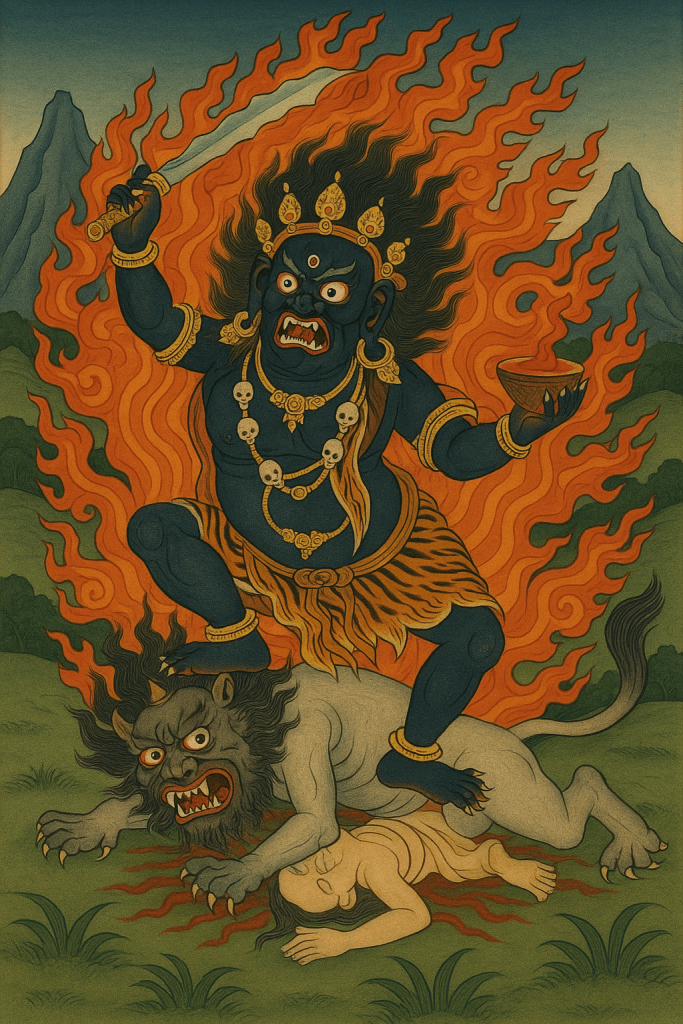
In this thangka-style painting, a wrathful tantric deity, likely Mahākāla, stands triumphant, engulfed in flames of spiritual power. He tramples a beast-like demon beneath his feet, which in turn crushes a human figure below. Far from mere symbolism, this hierarchy reveals a grim reality embedded in Tibetan tantric worldview: a cosmology where demons are organized in ranks, with wrathful deities occupying the highest tiers. These so-called “protector” spirits are themselves demonic in nature. They are powerful but subjugated through ritual, and are commanded by the guru to unleash violence against enemies of the dharma. The animal-like demon represents a lower-order spirit, weaponized by the deity. The crushed human symbolizes an actual person, someone the practitioner or lama has deemed a threat. The image is not just metaphor: it is a magical contract of domination.
Buddhists sometimes invoke ferocious protector deities like Mahākāla or Vajrakīlaya in rituals charged with violent imagery. In Tibetan history, such wrathful practices were often presented as spiritual rites to subdue obstacles, but evidence shows they could target actual enemies. For example, medieval Tibetan lamas served in warfare and politics: Lama Zhang (12th C. Kagyu) “engaged in political and military affairs” and even sent students into battle (War Magic: Tibetan Sorcery | Rubin Museum), using tantric rituals and deities (like Vajravārāhī and Mahākāla) to subjugate foes. Under the Mongol Yuan, Tibetan Buddhist “magical warfare” became statecraft: Tsami Lotsāwa, a Tangut court chaplain, authored texts like “The Usurpation of Government,” a how-to on overthrowing rulers invoking Mahākāla against armies. When Genghis Khan’s siege faltered in 1210, Tibetan sources credit Mahākāla summoned by Tsami (War Magic: Tibetan Sorcery | Rubin Museum) with bursting the Mongol siege dams and routing the attackers. The Mongols then adopted Mahākāla as their state protector. Likewise, Tibetan figures like the 8th Karmapa Karma Pakshi reportedly requested Mahākāla to exact revenge on his Chinese captors; lore even says Mahākāla “struck” the imperial palace (calling upon Mahakala…. | Ganachakra). Even the Nyingma saint Rwa Lotsāwa Dorje Drag (11th–12th C.) is celebrated in tradition for having “killed/murdered thirteen lamas” allegedly via Vajrabhairava rituals (Teacher: Rwa Lotsawa Dorje Drag). These and other incidents show tantric masters of Nyingma and Kagyu lineages historically appealed to protectors and demons in worldly struggles, not just inner battles.
Historical examples of tantric “war magic” include:
Sectarian conflicts: Rival Buddhist factions sometimes accused each other of violent tantra. (For example, later Gelugpa–Nyingma disputes mention rituals aimed at sectarian “enemies.”) In legend, a Kagyu master used Mahākāla to punish “impure” Gelugpas, and Dorje Shugden cult lore alleges victims of protector curses. (Such sectarian claims persist, though here we focus on pre-modern precedents.)
Regional skirmishes: Kagyu and Nyingma yogins were known as healers and sorcerers. One Kagyu lama reportedly used protective rites to strike fear into rebels. Vajrabhairava, a wrathful Nyingma deity, was famously employed by Rwa Lotsāwa in ritual assassinations (one story credits him with killing Marpa Lotsāwa’s son, Dharma Dode) (Himalayan Art: News).
These accounts contradict the comforting piety that “the only enemies are our defilements.” Instead, Tibetan sources show tantric deities being literally invoked against human foes and armies. Even art and prayers reinforce this: Palden Lhamo, the Dalai Lamas’ protector, is often depicted brandishing a sword and holding a skull bowl “brimming with the blood of vanquished enemies” (Palden Lhamo: Supreme Guardian Goddess of the Dalai Lamas – Tibetan Buddhist Encyclopedia). Such imagery underscores that the deity’s “compassion” is militarized.
Violent Imagery in Ritual Texts
The ritual texts themselves are unapologetically graphic. For example, a common Vajrakīlaya (Krodha Phurba) sādhanā (prayer) reads like a battle spell. One verse proclaims that Vajrakīlaya wields weapons “with which even the whole great mountain Sumeru is crushed to dust,” and that he “grinds to atoms the nine Gong-po brothers of phenomenal existence” (Cult of the Deity Vajrakila). In context, the “Gong-po brothers” symbolize fundamental enemies or obstacles (often conceptualized as Mara’s forces or the mind’s afflictions), but the language is literal and violent.
Texts on Mahākāla and Vajrabhairava likewise list long menus of violent exploits, trampling demons, cannibalizing spirits, or annihilating armies. In many kīlaya and bairaṇa (wrathful) rituals, the practitioner is explicitly instructed to cast forms or effigies of enemies into a bonfire or entangle them with magical ropes (Cult of the Deity Vajrakila) (The Rhetoric of Violence in the Buddhist Tantras). These are not purely abstract symbols but are described as actively destroying whoever or whatever they represent.
Indeed, scholar David Gray notes that Buddhist tantras use two kinds of violent rhetoric: grandiose, hyperbolic imagery to glorify the deity and impress the initiate, and actual ritual prescriptions for “violent ritual practices” (The Rhetoric of Violence in the Buddhist Tantras). While the former may seem merely figurative, Gray observes that even “symbolic” rituals often aim to harm the person symbolized (for example, burning an effigy of an enemy) (The Rhetoric of Violence in the Buddhist Tantras). Many tantra texts then justify these acts as transcending ordinary ethics: invoking a state of “non-dual gnosis” to excuse what would otherwise be murder (The Rhetoric of Violence in the Buddhist Tantras). In short, tantric sādhanās straddle symbolism and reality: they metaphorically crush delusions, but describe that metaphor in ultra-realistic, brutal terms accompanied by magical spells intended to harm human beings.
Empowered Lamas and “Transgressive” Rituals
Why this double talk? Tibetan lineages insist that only the most accomplished yogins (mahasiddhas) may perform such rites, precisely because they are “transgressive” and dangerous. The idea is that a realized master, having already tamed anger within, can safely wield wrath outside. As one modern analysis notes, advanced tantric practitioners are allowed “to invert Buddhist moral injunctions,” because rites aimed at killing are taught only to those senior enough to hold them (Buddhist Pacifists at War – JSTOR Daily). In practice, this meant kings, high lamas or court chaplains, not ordinary monks, performed these rituals.
Yet even senior masters often downplay the literal meaning today. Contemporary teachers frequently claim that prayers to “destroy enemies” really target the five poisons or ego-clinging, not people. (For instance, some explain Palden Lhamo’s blood bowl as symbolic of afflictions conquered.) Such interpretations align with inner-journey aspects of Vajrayāna. But history and ritual texts offer a different picture: these deities were invoked as warrior gods. Indeed, modern scholars argue that Buddhist tantra developed war-magic precisely because societies faced real threats. As Iain Sinclair puts it, defensive magic in early tantras was “pacifist in nature” but “destructive war magic also developed.” (Buddhist Pacifists at War – JSTOR Daily) Tantric manuals taught spells to freeze enemy armies with blizzards, sicken them with disease, or even consume them invisibly (Buddhist Pacifists at War – JSTOR Daily) ((PDF) War Magic: Religion, Sorcery, and Performance). One text in the Kālacakra cycle even provides a just-war framework, allowing only defensive conflict, infused with inner virtue, but this too presumes actual armed struggle (Buddhist Pacifists at War – JSTOR Daily).
This tension has sparked scholarly debate. Bryan Cuevas notes tantra’s fusion of “the internal and external worlds,” with protectors serving both spiritual and mundane power (War Magic: Tibetan Sorcery | Rubin Museum). Gray emphasizes that, despite rhetoric, tantrics did prescribe lethal rituals, legitimized by claims to higher awareness (The Rhetoric of Violence in the Buddhist Tantras).
Critical Perspective and Conclusions
In light of this evidence, the standard assurance that wrathful protector practices are only symbolic ring hollow. Certainly, Vajrayāna doctrine can spiritualize violence, positing that a bodhisattva’s anger is “pure compassion.” But when lamas claim “I’m just crushing my own ego,” the historical record shows they were also legitimizing political or personal power plays. At the very least, the literalist language of the liturgies warrants skepticism. A practitioner chanting “grind my enemies into dust” is arguably invoking cosmic butchery, not just inner peace.
For modern readers, this does not necessarily indict all Vajrayāna practice for many make upstanding vows and use wrathful deities for healing or psychological aid. However, it does mean we should be wary of uncritical glosses. As Gray warns, tantra’s “ethical double standard,” appealing to transcendent insight to excuse violence, has been used to justify harmful actions even in contemporary settings (The Rhetoric of Violence in the Buddhist Tantras).
For those intrigued or unsettled by these findings, scholars continue to examine how Tibetan Buddhism navigates the gulf between its nonviolent ideals and its martial heritage. Controversies within the tradition and in academic circles reflect this struggle. What is certain is that any romantic notion of pacifist Buddhism must contend with the very real phenomenon of tantric war magic and the subjugation rituals conducted against human beings.
Further Reading: For critical scholarship on these issues, see Iain Sinclair’s “War Magic and Just War in Indian Tantric Buddhism” (Buddhist Pacifists at War – JSTOR Daily) (Buddhist Pacifists at War – JSTOR Daily) and Bryan Cuevas, “The Wizarding World of Tibetan Sorcery” (in Faith and Empire, esp. ch.5) (War Magic: Tibetan Sorcery | Rubin Museum) (War Magic: Tibetan Sorcery | Rubin Museum). David B. Gray’s article “The Rhetoric of Violence in the Buddhist Tantras” (2018) explicitly examines tantric prescriptions of violence (The Rhetoric of Violence in the Buddhist Tantras). Solomon FitzHerbert’s study of 17th-c. Tibetan “ritual propaganda” is also enlightening. (Online references: Rubin Museum’s “War Magic” exhibition, Himalayan Art archives, and academic discussions by Sinclair and Gray are excellent starting points.)
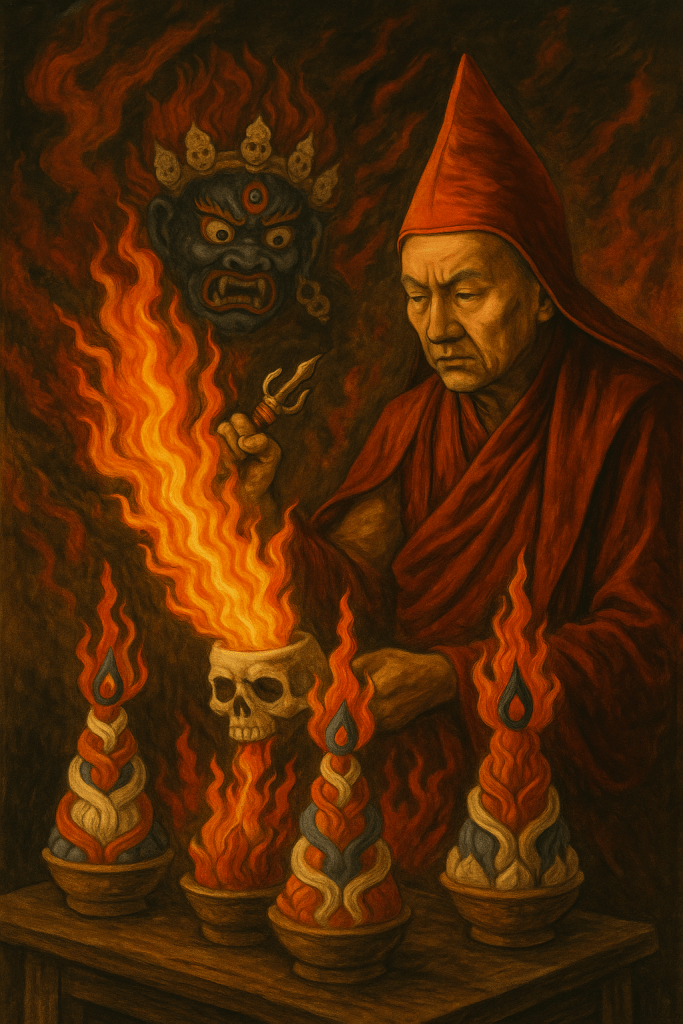
Tormas, those colorful, often conical sculptures made of barley flour, butter, and symbolic color, are widely recognized in Tibetan Buddhism as ritual offerings to deities. They are often seen as objects of devotion, used to accumulate merit and cultivate compassion. But there is another seldom discussed dimension of torma practice: their use in rituals of subjugation. These are aimed at destroying enemies, silencing dissenters, and even killing.
This article isn’t written for shock value or out of cultural disrespect. It comes from a deep need for transparency. I practiced within Tibetan Buddhism for decades, and what I discovered about the weaponization of these ritual objects came not from hearsay or internet rumors, but from firsthand experience, insider teachings, and years of quiet observation that finally crystallized into understanding.
What Are Tormas?
Tormas are empowered physical representations of deities as well as their palaces and mandalas. They also serve as offerings to the deities. Some types of tormas are used for offerings to spirits, and as weapons against obstructive spirits or humans. Other types of tormas known as “effigies” serve as targets. They are not merely symbolic. In Vajrayana practice, the effigies serve as “substitute bodies” for the consciousness of beings, meaning that a torma can become the ritual stand-in for an actual person. When a torma is offered, burned, stabbed, buried, or fed to spirits, it is not just a prop. It is, ritually speaking, a direct vessel for action.
In general, use of tormas can be for peaceful or wrathful purposes.
Categories of Harmful Tormas
While Western practitioners are often taught the “peaceful” or “blissful” uses of tormas (such as offering to bodhisattvas or for pacifying illnesses), most Tibetan tantric lineages include the “four activities” of pacifying, enriching, magnetizing, and subjugating. These last two, magnetizing and subjugating, can lead to dangerous territory.
Here are some of the more occult, wrathful uses of tormas:
1. Subjugation of Enemies
Tormas are used to summon wrathful deities, who are then directed to “crush” or “bind” an enemy’s consciousness. This includes ritual domination of the enemy’s will, health, and spiritual power.
2. “Black Torma” Killings
Some lineages include advanced practices where a torma is empowered as the life force of a person. The torma is ritually destroyed: stabbed, burned, or fed to spirits. The goal is to destroy the target’s body, mind, or soul. In some cases, the practitioner prays explicitly for the target’s death.
3. “Torma of Speech Destruction”
These are used to silence critics or opposing religious figures. The practitioner invokes wrathful deities to sever the “enemy’s” speech, discredit them, or even cause them to go mad.
4. Sending Spirits via Tormas
Tormas can serve as carriers or offerings to nefarious spirits, binding the target’s consciousness to entities tasked with tormenting them. This can result in psychic invasion, night terrors, loss of mental clarity, or obsession.
Why This Needs to Be Talked About
These rituals are rarely, if ever, disclosed to outsiders. In fact, many lamas downplay them entirely until a student is “ripe” for higher teachings. But many practitioners have felt the effects of these rituals without knowing what they are. Unexplained breakdowns, spiritual confusion, sudden illness, and relational collapse often follow a break with the guru or a breach of samaya. We are told it is just our karma, but sometimes, it’s a ritual backlash.
If this sounds unbelievable, I understand. It sounded unbelievable to me, too, until I experienced it firsthand.
These practices are not just theoretical. They are happening now, in retreat centers and monasteries in India, Nepal and the West, in ritual rooms, behind closed doors. And their effects are very real.
Who Is Most at Risk?
Former students who break samaya or speak out
Critics of the guru or institution
Those perceived as spiritual “competitors”
Women who reject inappropriate advances
Outsiders who get too close to the truth
Reclaiming Truth
This article is not an indictment of all Tibetan teachers or practitioners. There are sincere people within the tradition who reject the use of harmful rites. But silence around these rituals has enabled a culture of fear, manipulation, and unchecked spiritual abuse.
It’s time to talk about it. The torma is not always what it seems. What looks like a simple offering on the altar may, in some cases, be a vessel of vengeance. We must not look away. If we really care deeply about the benefit of “all sentient beings” we must expose the truth about the dark side of tormas and their harmful uses in tantric Tibetan Buddhism.
When I first encountered Tibetan Buddhism, I was filled with awe, curiosity, and hope. I was drawn to the idea of understanding the nature of mind, developing calm abiding (shamatha), and cultivating compassion and insight. I immersed myself in classic Mahayana texts like the Uttaratantra Shastra, with its soaring vision of Buddha nature, the luminous potential for awakening that each sentient being carries within them.
At that time, I was eager to deepen my meditation practice and learn how to navigate the mental storms of daily life. I believed this was a path of inner wisdom, clarity, and direct realization. I thought I had found something intellectually rigorous and deeply profound.
But after committing years of my life I realized that Tibetan Tantric Buddhism was a spiritual system that operated under authoritarian control, cultural secrecy, and a disturbing atmosphere of fear.
The Surface Beauty: What Drew Me In
The language of awareness, wisdom, and nonduality
Practices that promised to tame the mind and open the heart
Philosophical texts filled with Buddhist logic, the concept of emptiness, and the path of the bodhisattva
Encouragement to observe the mind and transcend egoic fixation
Like many sincere Western seekers, I accepted the rigid cultural structure, including the many hours of chanting in Tibetan, the hierarchy, and the ornate rituals, as necessary forms for accessing ancient wisdom. I told myself these were wrappings around the real treasure.
What I Actually Encountered
Instead of freedom, I slowly found myself embedded in a system that demanded unquestioning obedience to the guru, who was said to be indistinguishable from the Buddha himself. We were told the guru’s words were more important than our own inner convictions. If we had doubts, those were signs of impure perception or obstacles on the path.
And so, I suppressed my own sense of truth.
Instead of learning to observe my mind freely, I was encouraged, compelled, really, to submit my perception, my will, and even my moral conscience to someone else’s “realization.” In time, I was told that even misconduct or abuse from a guru must be viewed as pure, and that questioning it was a sign of my spiritual deficiency.
Essentially this was total submission to a human teacher presented as a living deity.
A Necessary Evil… or Something More?
For a long time, I rationalized this aspect of guru devotion. I thought, “This is just part of the package. I’ll take the good parts and accept the hierarchical guru system as a necessary condition to receive the blessings.”
But nothing prepared me for the revelation that this system involved actual practices of deity possession, and in some cases, black magic rituals by a covert spiritual power structure that operated on vengeance. And this wasn’t metaphorical.
The Hidden Core: Deity Possession and Guru Sorcery
Many Tibetan Vajrayana rituals involve āveśa, a concept that translates into spirit or deity possession. The practitioner “invites” a deity to merge with their mindstream. The guru is not just a teacher; he is seen as an embodiment of the deity, and rituals are performed to enforce that identification.
I discovered too late that some high-level gurus use this system to gain psychic and physical access to their disciples, manipulate their minds, and even curse those who disobey or break vows. This is not hyperbole but what has been hidden under the language of compassion and wisdom: a deeply esoteric system of spiritual domination.
My Awakening
It took me years to deprogram myself from the idea that questioning a guru meant spiritual death, and even longer to reclaim my own inner voice, the voice God placed in me. I now walk a different path entirely: One that does not require blind submission, that honors truth over secrecy, and Christ over cosmic manipulation.
If You’re Reading This…
You’re not crazy for feeling that something is off. You’re not wrong to listen to your instincts. What seems like harmless chanting, beautiful thangkas, and inspiring philosophy may hide something far more controlling and spiritually dangerous than you realize.
When I began my journey into Tibetan Buddhism, I was swiftly enveloped in its rituals and traditions. Without much explanation, I was handed monastic robes, instructed to shave my head, and urged to take lifelong vows. This rapid immersion into a structured and demanding system left me questioning the true nature of the practice. Was this a genuine spiritual path, or was I being drawn into a cult masquerading as a path to enlightenment?
The Allure of Tibetan Buddhism
Tibetan Buddhism often presents itself as a path of loving-kindness, compassion, and profound meditative insight. Its teachings emphasize peace, mindfulness, and the cultivation of wisdom. On the surface, these ideals are appealing and resonate with many.
However, lurking beneath this serene exterior is a complex structure of vows, rituals, and hierarchical relationships that can be overwhelming and oppressive.
The Samaya Vows: Protective or Deadly?
Central to Vajrayana Buddhism are the samaya vows, which are commitments taken by practitioners during tantric initiations. They establish a sacred bond between the guru and the disciple, outlining the conduct required to uphold that bond.
These vows can create a sense of obligation and fear. Breaking samaya is believed to lead to severe karmic consequences, placing immense pressure on individuals to adhere strictly to obedience no matter what the guru does.
Hidden Subjugation and Control
The hierarchical nature of Tibetan Buddhist communities can lead to overt forms of mind control and manipulation. The reverence for the guru borders on unquestioning subservience, with the guru’s authority rarely being challenged. This dynamic can foster an environment where questioning is discouraged, and followers are compelled to conform to the guru’s demands and the group’s expectations.
Moreover, the concept of “crazy wisdom” is sometimes used to justify behavior that would otherwise be deemed inappropriate or abusive. This philosophy, associated with figures like Chögyam Trungpa, suggests that unconventional or even disruptive actions by a guru are acceptable if they lead to spiritual awakening. Such justifications can blur ethical boundaries to the extent that students are ripe for abuse.
The Dark Side of Tibetan Buddhism
Instances of widespread misconduct within Tibetan Buddhist communities have been reported, raising concerns about the integrity of these institutions. The case of Sogyal Rinpoche, the founder of the Rigpa organization, is one example where allegations of sexual abuse and severe authoritarian control surfaced, leading to significant controversy and criticism. After eight students leaked a letter on the internet exposing his crimes, a highly-regarded Khenpo associated with the group gave a talk denouncing those eight students, angrily declaring that they would all go to vajra hell. Even though many Westerner disciples of Tibetan Buddhism don’t believe in vajra hell, I can assure you from first hand experience that it’s very real. You can read more about it here.
These incidents highlight the potential for exploitation within systems that place immense power in the hands of a single individual or a small group of leaders. The lack of accountability and transparency in many Tibetan Buddhist organizations can create an environment ripe for cultish abuse.
Conclusion: A Call for Critical Reflection
While Tibetan Buddhism appears to offer profound teachings and practices, it is essential to approach these traditions with a critical eye. The allure of compassion and peace should not overshadow the lack of ethical conduct, transparency, and respect for individual autonomy that often hides beneath the surface.
When people hear the term “Buddhism,” they often imagine a peaceful monk seated under a tree, cultivating mindfulness and inner stillness. They might recall the image of the Buddha, Siddhartha Gautama, who renounced wealth and power to pursue a path of liberation through ethical conduct, meditation, and wisdom. What many do not realize is that across Asia, the original teachings of the Buddha have often been overlaid with rituals, deities, and esoteric practices that resemble occultism more than renunciation. This is especially true with the spread of Tantric Buddhism, also known as Vajrayāna.
Tantric Buddhism, which developed in India around the 6th century CE, introduced rituals, visualizations, secret initiations, deity yoga, and sexual symbolism that were foreign to the early teachings found in the Pāli Canon. While it may have originated in India, the influence of Tantra has spread far beyond the Himalayas. Countries known today for their Theravāda heritage, such as Cambodia, Laos, Vietnam, and Thailand, have all, at different times, been touched or even deeply influenced by Tantric practices. This article traces the spread of Tantric Buddhism and asks a pressing question: Is this fusion of Tantra and Buddhism in harmony with what the Buddha actually taught?
India: The Birthplace of Tantra and the Turning Point
Though Siddhartha Gautama taught a path of non-attachment, the later development of Tantric Buddhism in India marked a dramatic departure. The Tantric path emphasized achieving enlightenment quickly by harnessing the powerful energies of desire, fear, and wrath through ritual and symbolic transgression.
Early Buddhist schools such as Theravāda preserved the monastic, ethical, and meditative disciplines taught by the Buddha. But by the time Vajrayāna emerged, Buddhism in India had evolved into Mahāyāna and beyond, with Tantric elements becoming dominant in institutions like Nālandā and Vikramaśīla monasteries before their destruction. From here, Tantra spread east.
Tibet: The Tantric Stronghold
No country embraced Tantric Buddhism more completely than Tibet. With the arrival of Indian masters like Padmasambhava in the 8th century, Tibet adopted esoteric practices involving deity yoga, ritual offerings (such as torma and blood libations), and secret empowerments. The Nyingma, Kagyu, Sakya, and Gelug schools all incorporated tantric texts and practices, often passed orally and practiced in secrecy.
Tibetan Buddhism’s public face often emphasizes compassion and mindfulness, but beneath the surface lies a highly ritualized system of guru devotion, spirit invocation, and occult symbolism. Even the widely admired Dalai Lama is an initiated tantric practitioner who publicly defends the practice of deity yoga and sexual yogas, raising serious questions about his alignment with the historical Buddha’s path.
China: Mixed Influence and Lingering Tantra
In China, the dominant schools of Buddhism have historically been Chan (Zen), Pure Land, and Huayan. However, during the Tang dynasty (7th–10th centuries), Esoteric Buddhism (Mizong) was introduced by Indian masters like Amoghavajra. While it never overtook the native schools, it left a lasting impact in some sects and still survives in diluted form within Chinese folk religion and Taoist-Buddhist syncretism.
Today, Chinese Buddhism largely appears non-tantric, but undercurrents remain, especially in temple rituals involving spirit appeasement, elaborate deity worship, and occult practices inherited from early Tantric transmission.
Vietnam: The Mahāyāna-Tantra Hybrid
Vietnam officially follows Mahāyāna Buddhism, heavily influenced by Chinese traditions. However, tantric rituals were introduced via Chinese Esoteric Buddhism and Indian Tantric texts. Vietnamese temples often blend Pure Land devotion with protective rituals invoking wrathful deities or dhāraṇīs (mantras with supposed magical powers). Such rituals, while less publicized, reveal an undercurrent of occultism beneath an otherwise devotional landscape.
Cambodia and Laos: Theravāda Facade, Tantric Underbelly
Cambodia and Laos are Theravāda countries, yet their histories are steeped in tantric influence from the ancient Khmer Empire. Angkor Wat, though now viewed as a Hindu and Buddhist site, was once home to elaborate Tantric rituals. Statues of multi-armed deities and ritual paraphernalia suggest tantric syncretism flourished.
Today, while the public face of Buddhism in these countries is Theravāda, local shamans (mo phi) and monks alike may engage in protective magic, spirit invocations, and talisman-making, practices more akin to Tantric ritual than Theravādan restraint.
Thailand: Theravāda Mixed with Occultism
Thailand is often held up as a bastion of Theravāda purity, yet here too the line between Buddhism and occultism blurs. Amulets, tattoos (sak yant), and rituals to appease spirits are common. Many monks perform rituals invoking Phra Ngang or other spirits linked to animistic or tantric practices. While not called Tantra, the ritual culture that has evolved in Thailand includes aspects strikingly similar: mantras, yantras, invocations, and guru devotion.
The Buddha vs. Tantra: Are They Compatible?
The question at the heart of this analysis is critical: Do tantric practices align with the historical Buddha’s teachings?
The Buddha emphasized renunciation, morality, mindfulness, and wisdom. He warned against magic, ascetic extremism, and blind devotion to teachers. He discouraged speculation about supernatural powers and encouraged liberation through insight and ethical living.
Tantric Buddhism, by contrast, often involves oath-bound secrecy, symbolic transgression (including sexual union and consumption of taboo substances), and reliance on supernatural beings and powers. In many forms, it is more reminiscent of sorcery than liberation.
Bluntly stated, Tantra is not a spiritual shortcut, but a dangerous detour. It promises power, but often delivers confusion and spiritual enslavement. For survivors of tantric abuse, like myself, it’s critical to shine a light on how these practices have hidden behind the Buddha’s name and image for centuries. As Tantric Buddhism spread across the globe, from Tibet to Thailand, from China to Cambodia, it cloaked itself in the language of compassion and enlightenment; however, its methods betray a different source, one that leans toward secrecy, manipulation, and occultic power rather than truth and freedom.