Mahāsiddhas, Mantras, and Murder: Tibetan Buddhist Ritual Violence Reexamined

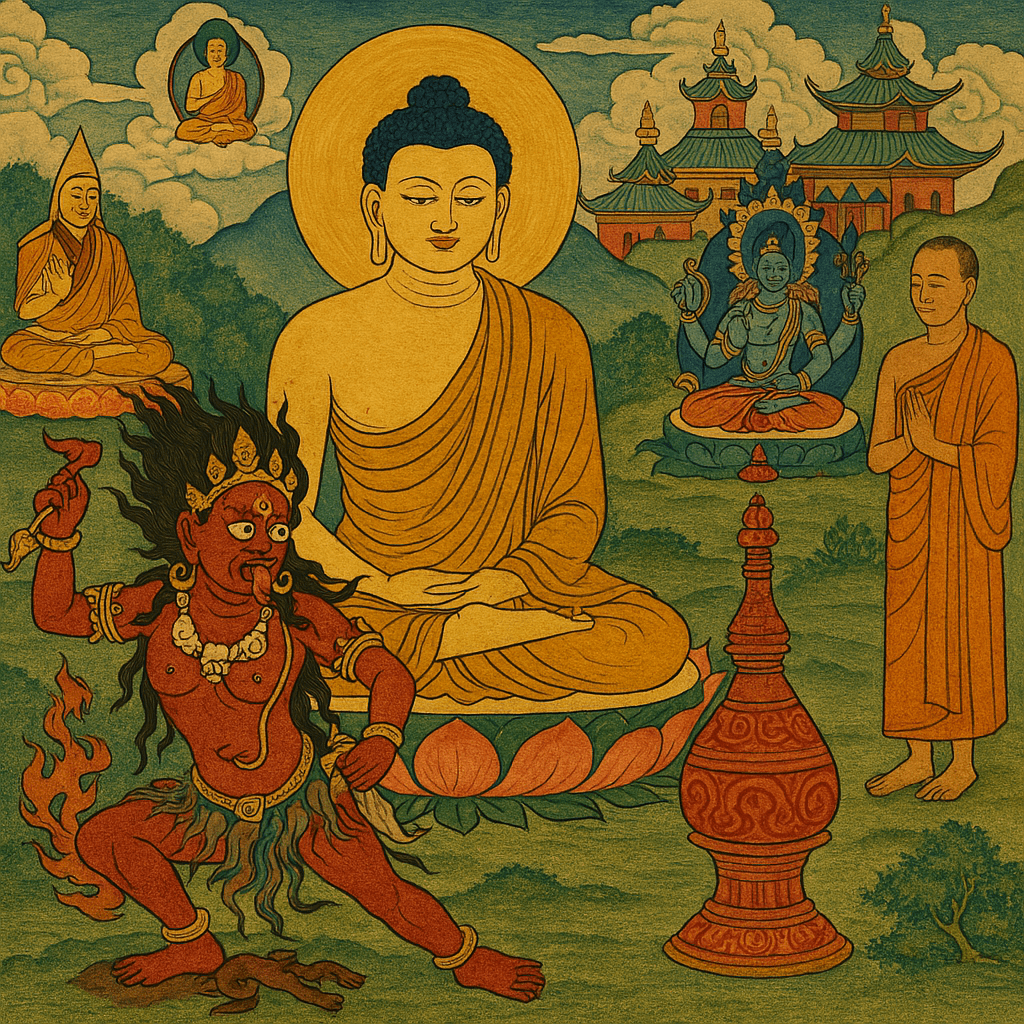
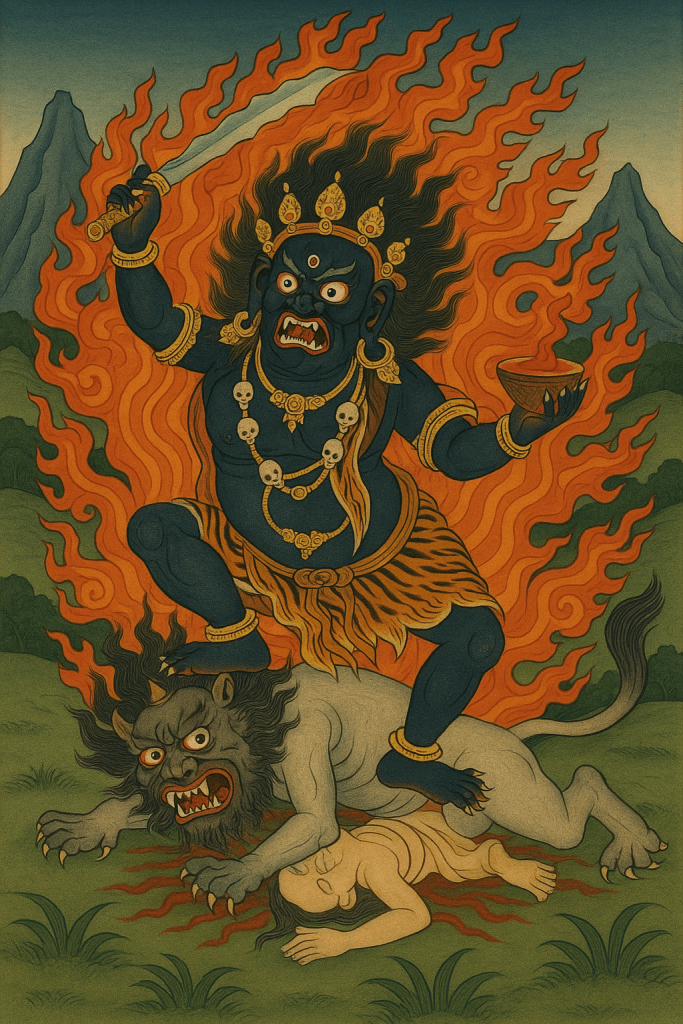
In this thangka-style painting, a wrathful tantric deity, likely Mahākāla, stands triumphant, engulfed in flames of spiritual power. He tramples a beast-like demon beneath his feet, which in turn crushes a human figure below. Far from mere symbolism, this hierarchy reveals a grim reality embedded in Tibetan tantric worldview: a cosmology where demons are organized in ranks, with wrathful deities occupying the highest tiers. These so-called “protector” spirits are themselves demonic in nature. They are powerful but subjugated through ritual, and are commanded by the guru to unleash violence against enemies of the dharma. The animal-like demon represents a lower-order spirit, weaponized by the deity. The crushed human symbolizes an actual person, someone the practitioner or lama has deemed a threat. The image is not just metaphor: it is a magical contract of domination.

Buddhists sometimes invoke ferocious protector deities like Mahākāla or Vajrakīlaya in rituals charged with violent imagery. In Tibetan history, such wrathful practices were often presented as spiritual rites to subdue obstacles, but evidence shows they could target actual enemies. For example, medieval Tibetan lamas served in warfare and politics: Lama Zhang (12th C. Kagyu) “engaged in political and military affairs” and even sent students into battle (War Magic: Tibetan Sorcery | Rubin Museum), using tantric rituals and deities (like Vajravārāhī and Mahākāla) to subjugate foes. Under the Mongol Yuan, Tibetan Buddhist “magical warfare” became statecraft: Tsami Lotsāwa, a Tangut court chaplain, authored texts like “The Usurpation of Government,” a how-to on overthrowing rulers invoking Mahākāla against armies. When Genghis Khan’s siege faltered in 1210, Tibetan sources credit Mahākāla summoned by Tsami (War Magic: Tibetan Sorcery | Rubin Museum) with bursting the Mongol siege dams and routing the attackers. The Mongols then adopted Mahākāla as their state protector. Likewise, Tibetan figures like the 8th Karmapa Karma Pakshi reportedly requested Mahākāla to exact revenge on his Chinese captors; lore even says Mahākāla “struck” the imperial palace (calling upon Mahakala…. | Ganachakra). Even the Nyingma saint Rwa Lotsāwa Dorje Drag (11th–12th C.) is celebrated in tradition for having “killed/murdered thirteen lamas” allegedly via Vajrabhairava rituals (Teacher: Rwa Lotsawa Dorje Drag). These and other incidents show tantric masters of Nyingma and Kagyu lineages historically appealed to protectors and demons in worldly struggles, not just inner battles.

Historical examples of tantric “war magic” include:

  • Imperial warfare: Tibetan Buddhist shamans at the Tangut and Yuan courts summoned Mahākāla to combat invading armies (War Magic: Tibetan Sorcery | Rubin Museum). Mongol ruler Qubilai Khan’s ritualist (the Sakya lama Dampa) was famed for invoking Mahākāla to turn back enemies; Mahākāla’s visage was later flown on Mongol battle banners (Himalayan Art: News) (War Magic: Tibetan Sorcery | Rubin Museum).
  • Sectarian conflicts: Rival Buddhist factions sometimes accused each other of violent tantra. (For example, later Gelugpa–Nyingma disputes mention rituals aimed at sectarian “enemies.”) In legend, a Kagyu master used Mahākāla to punish “impure” Gelugpas, and Dorje Shugden cult lore alleges victims of protector curses. (Such sectarian claims persist, though here we focus on pre-modern precedents.)
  • Regional skirmishes: Kagyu and Nyingma yogins were known as healers and sorcerers. One Kagyu lama reportedly used protective rites to strike fear into rebels. Vajrabhairava, a wrathful Nyingma deity, was famously employed by Rwa Lotsāwa in ritual assassinations (one story credits him with killing Marpa Lotsāwa’s son, Dharma Dode) (Himalayan Art: News).

These accounts contradict the comforting piety that “the only enemies are our defilements.” Instead, Tibetan sources show tantric deities being literally invoked against human foes and armies. Even art and prayers reinforce this: Palden Lhamo, the Dalai Lamas’ protector, is often depicted brandishing a sword and holding a skull bowl “brimming with the blood of vanquished enemies” (Palden Lhamo: Supreme Guardian Goddess of the Dalai Lamas – Tibetan Buddhist Encyclopedia). Such imagery underscores that the deity’s “compassion” is militarized.

Violent Imagery in Ritual Texts

The ritual texts themselves are unapologetically graphic. For example, a common Vajrakīlaya (Krodha Phurba) sādhanā (prayer) reads like a battle spell. One verse proclaims that Vajrakīlaya wields weapons “with which even the whole great mountain Sumeru is crushed to dust,” and that he “grinds to atoms the nine Gong-po brothers of phenomenal existence” (Cult of the Deity Vajrakila). In context, the “Gong-po brothers” symbolize fundamental enemies or obstacles (often conceptualized as Mara’s forces or the mind’s afflictions), but the language is literal and violent.

Texts on Mahākāla and Vajrabhairava likewise list long menus of violent exploits, trampling demons, cannibalizing spirits, or annihilating armies. In many kīlaya and bairaṇa (wrathful) rituals, the practitioner is explicitly instructed to cast forms or effigies of enemies into a bonfire or entangle them with magical ropes (Cult of the Deity Vajrakila) (The Rhetoric of Violence in the Buddhist Tantras). These are not purely abstract symbols but are described as actively destroying whoever or whatever they represent.

Indeed, scholar David Gray notes that Buddhist tantras use two kinds of violent rhetoric: grandiose, hyperbolic imagery to glorify the deity and impress the initiate, and actual ritual prescriptions for “violent ritual practices” (The Rhetoric of Violence in the Buddhist Tantras). While the former may seem merely figurative, Gray observes that even “symbolic” rituals often aim to harm the person symbolized (for example, burning an effigy of an enemy) (The Rhetoric of Violence in the Buddhist Tantras). Many tantra texts then justify these acts as transcending ordinary ethics: invoking a state of “non-dual gnosis” to excuse what would otherwise be murder (The Rhetoric of Violence in the Buddhist Tantras). In short, tantric sādhanās straddle symbolism and reality: they metaphorically crush delusions, but describe that metaphor in ultra-realistic, brutal terms accompanied by magical spells intended to harm human beings.

Empowered Lamas and “Transgressive” Rituals

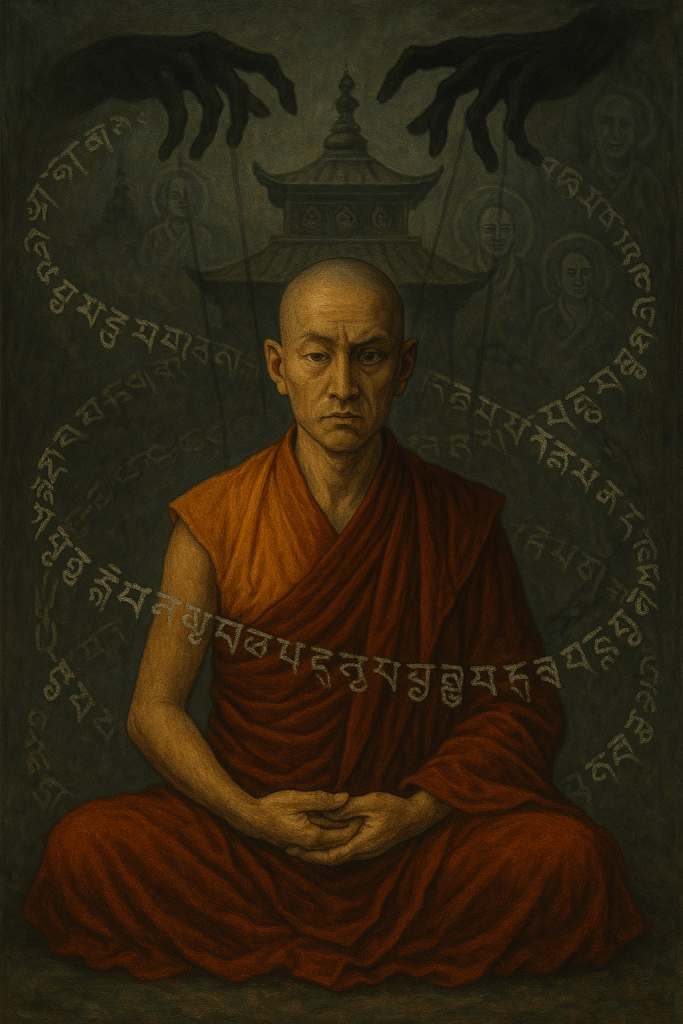
Why this double talk? Tibetan lineages insist that only the most accomplished yogins (mahasiddhas) may perform such rites, precisely because they are “transgressive” and dangerous. The idea is that a realized master, having already tamed anger within, can safely wield wrath outside. As one modern analysis notes, advanced tantric practitioners are allowed “to invert Buddhist moral injunctions,” because rites aimed at killing are taught only to those senior enough to hold them (Buddhist Pacifists at War – JSTOR Daily). In practice, this meant kings, high lamas or court chaplains, not ordinary monks, performed these rituals.

Yet even senior masters often downplay the literal meaning today. Contemporary teachers frequently claim that prayers to “destroy enemies” really target the five poisons or ego-clinging, not people. (For instance, some explain Palden Lhamo’s blood bowl as symbolic of afflictions conquered.) Such interpretations align with inner-journey aspects of Vajrayāna. But history and ritual texts offer a different picture: these deities were invoked as warrior gods. Indeed, modern scholars argue that Buddhist tantra developed war-magic precisely because societies faced real threats. As Iain Sinclair puts it, defensive magic in early tantras was “pacifist in nature” but “destructive war magic also developed.” (Buddhist Pacifists at War – JSTOR Daily) Tantric manuals taught spells to freeze enemy armies with blizzards, sicken them with disease, or even consume them invisibly (Buddhist Pacifists at War – JSTOR Daily) ((PDF) War Magic: Religion, Sorcery, and Performance). One text in the Kālacakra cycle even provides a just-war framework, allowing only defensive conflict, infused with inner virtue, but this too presumes actual armed struggle (Buddhist Pacifists at War – JSTOR Daily).

This tension has sparked scholarly debate. Bryan Cuevas notes tantra’s fusion of “the internal and external worlds,” with protectors serving both spiritual and mundane power (War Magic: Tibetan Sorcery | Rubin Museum). Gray emphasizes that, despite rhetoric, tantrics did prescribe lethal rituals, legitimized by claims to higher awareness (The Rhetoric of Violence in the Buddhist Tantras).

Critical Perspective and Conclusions

In light of this evidence, the standard assurance that wrathful protector practices are only symbolic ring hollow. Certainly, Vajrayāna doctrine can spiritualize violence, positing that a bodhisattva’s anger is “pure compassion.” But when lamas claim “I’m just crushing my own ego,” the historical record shows they were also legitimizing political or personal power plays. At the very least, the literalist language of the liturgies warrants skepticism. A practitioner chanting “grind my enemies into dust” is arguably invoking cosmic butchery, not just inner peace.

For modern readers, this does not necessarily indict all Vajrayāna practice for many make upstanding vows and use wrathful deities for healing or psychological aid. However, it does mean we should be wary of uncritical glosses. As Gray warns, tantra’s “ethical double standard,” appealing to transcendent insight to excuse violence, has been used to justify harmful actions even in contemporary settings (The Rhetoric of Violence in the Buddhist Tantras).

For those intrigued or unsettled by these findings, scholars continue to examine how Tibetan Buddhism navigates the gulf between its nonviolent ideals and its martial heritage. Controversies within the tradition and in academic circles reflect this struggle. What is certain is that any romantic notion of pacifist Buddhism must contend with the very real phenomenon of tantric war magic and the subjugation rituals conducted against human beings.

Further Reading: For critical scholarship on these issues, see Iain Sinclair’s “War Magic and Just War in Indian Tantric Buddhism” (Buddhist Pacifists at War – JSTOR Daily) (Buddhist Pacifists at War – JSTOR Daily) and Bryan Cuevas, “The Wizarding World of Tibetan Sorcery” (in Faith and Empire, esp. ch.5) (War Magic: Tibetan Sorcery | Rubin Museum) (War Magic: Tibetan Sorcery | Rubin Museum). David B. Gray’s article “The Rhetoric of Violence in the Buddhist Tantras” (2018) explicitly examines tantric prescriptions of violence (The Rhetoric of Violence in the Buddhist Tantras). Solomon FitzHerbert’s study of 17th-c. Tibetan “ritual propaganda” is also enlightening. (Online references: Rubin Museum’s “War Magic” exhibition, Himalayan Art archives, and academic discussions by Sinclair and Gray are excellent starting points.)

The Darker Side of Tormas: Ritual Implements of Subjugation and Harm in Tibetan Tantric Practice


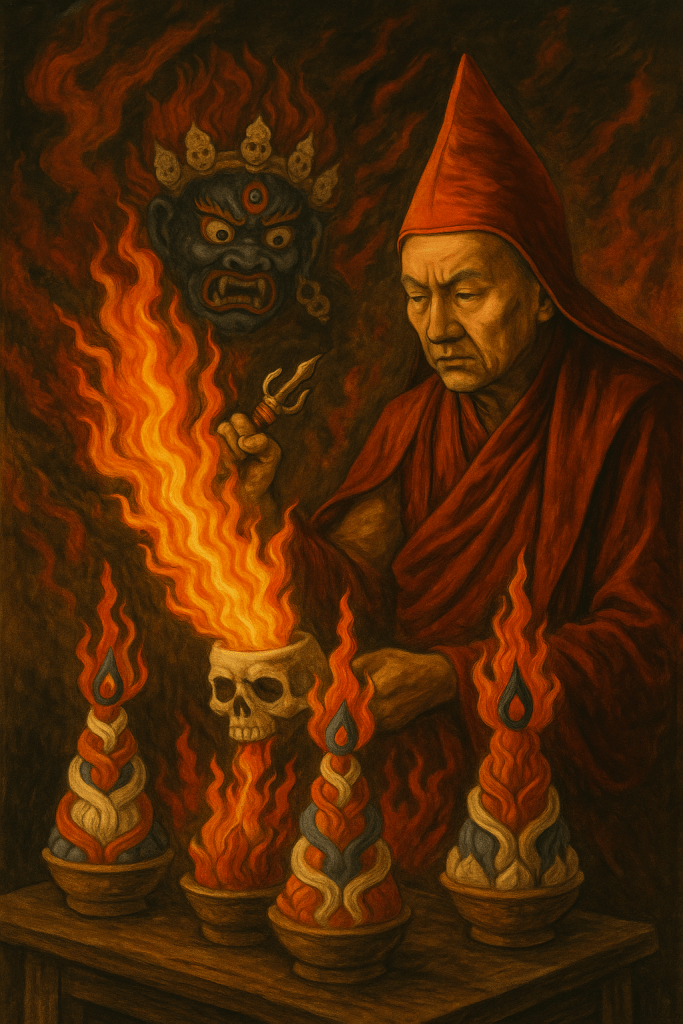
Tormas, those colorful, often conical sculptures made of barley flour, butter, and symbolic color, are widely recognized in Tibetan Buddhism as ritual offerings to deities. They are often seen as objects of devotion, used to accumulate merit and cultivate compassion. But there is another seldom discussed dimension of torma practice: their use in rituals of subjugation. These are aimed at destroying enemies, silencing dissenters, and even killing.

This article isn’t written for shock value or out of cultural disrespect. It comes from a deep need for transparency. I practiced within Tibetan Buddhism for decades, and what I discovered about the weaponization of these ritual objects came not from hearsay or internet rumors, but from firsthand experience, insider teachings, and years of quiet observation that finally crystallized into understanding.

What Are Tormas?

Tormas are visualized and empowered representations of deities as well as their palaces and mandalas. They also serve as offerings to the deities. Some types of tormas are used for offerings to spirits, and as weapons against obstructive spirits or humans. Other types of tormas known as “effigies” serve as targets. They are not merely symbolic. In Vajrayana practice, the effigies serve as “substitute bodies” for the consciousness of beings, meaning that a torma can become the ritual stand-in for an actual person. When a torma is offered, burned, stabbed, buried, or fed to spirits, it is not just a prop. It is, ritually speaking, a direct vessel for action.

In general, use of tormas can be for peaceful or wrathful purposes.

Categories of Harmful Tormas

While Western practitioners are often taught the “peaceful” or “blissful” uses of tormas (such as offering to bodhisattvas or for pacifying illnesses), most Tibetan tantric lineages include  the four activities of pacifying, enriching, magnetizing, and subjugating. These last two, magnetizing and subjugating, can lead to dangerous territory.

Here are some of the more occult, wrathful uses of tormas:

1. Subjugation of Enemies

Tormas are used to summon wrathful deities, who are then directed to “crush” or “bind” an enemy’s consciousness. This includes ritual domination of the enemy’s will, health, and spiritual power.

2. “Black Torma” Killings

Some lineages include advanced practices where a torma is empowered as the life force of a person. The torma is ritually destroyed: stabbed, burned, or fed to spirits. The goal is to destroy the target’s body, mind, or soul. In some cases, the practitioner prays explicitly for the target’s death.

3. “Torma of Speech Destruction”

These are used to silence critics or opposing religious figures. The practitioner invokes wrathful deities to sever the “enemy’s” speech, discredit them, or even cause them to go mad.

4. Sending Spirits via Tormas

Tormas can serve as carriers or offerings to nefarious spirits, binding the target’s consciousness to entities tasked with tormenting them. This can result in psychic invasion, night terrors, loss of mental clarity, or obsession.

Why This Needs to Be Talked About

These rituals are rarely, if ever, disclosed to outsiders. In fact, many lamas downplay them entirely until a student is “ripe” for higher teachings. But many practitioners have felt the effects of these rituals without knowing what they are. Unexplained breakdowns, spiritual confusion, sudden illness, and relational collapse often follow a break with the guru or a breach of samaya. We are told it is just our karma, but sometimes, it’s a ritual backlash.

If this sounds unbelievable, I understand. It sounded unbelievable to me, too, until I experienced it firsthand.

These practices are not just theoretical. They are happening now, in retreat centers and monasteries in India, Nepal and the West, in ritual rooms, behind closed doors. And their effects are very real.

Who Is Most at Risk?

  • Former students who break samaya or speak out
  • Critics of the guru or institution
  • Those perceived as spiritual “competitors”
  • Women who reject inappropriate advances
  • Outsiders who get too close to the truth

Reclaiming Truth

This article is not an indictment of all Tibetan teachers or practitioners. There are sincere people within the tradition who reject the use of harmful rites. But silence around these rituals has enabled a culture of fear, manipulation, and unchecked spiritual abuse.

It’s time to talk about it. The torma is not always what it seems. What looks like a simple offering on the altar may, in some cases, be a vessel of vengeance. We must not look away. If we really care deeply about the benefit of “all sentient beings” we must expose the truth about the dark side of tormas and their harmful uses in tantric Tibetan Buddhism.


What I Thought I Was Practicing in Tibetan Buddhism vs. What It Really Was


When I first encountered Tibetan Buddhism, I was filled with awe, curiosity, and hope. I was drawn to the idea of understanding the nature of mind, developing calm abiding (shamatha), and cultivating compassion and insight. I immersed myself in classic Mahayana texts like the Uttaratantra Shastra, with its soaring vision of Buddha nature, the luminous potential for awakening that each sentient being carries within them.

At that time, I was eager to deepen my meditation practice and learn how to navigate the mental storms of daily life. I believed this was a path of inner wisdom, clarity, and direct realization. I thought I had found something intellectually rigorous and deeply profound.

But after committing years of my life I realized that Tibetan Tantric Buddhism was a spiritual system that operated under authoritarian control, cultural secrecy, and a disturbing atmosphere of fear.

The Surface Beauty: What Drew Me In

  • The language of awareness, wisdom, and nonduality
  • Practices that promised to tame the mind and open the heart
  • Philosophical texts filled with Buddhist logic, emptiness, and the path of the bodhisattva
  • Encouragement to observe the mind and transcend egoic fixation

Like many sincere Western seekers, I accepted the rigid cultural structure, including the hours of chanting in Tibetan, the hierarchy, and the ornate rituals, as necessary forms for accessing ancient wisdom. I told myself these were wrappings around the real treasure.

What I Actually Encountered

Instead of freedom, I slowly found myself embedded in a system that demanded unquestioning obedience to the guru, who was said to be indistinguishable from the Buddha himself. We were told the guru’s words were more important than our own inner convictions. If we had doubts, those were signs of impure perception or obstacles on the path.

And so, I suppressed my own sense of truth.

Instead of learning to observe my mind freely, I was encouraged, compelled, really, to submit my perception, my will, and even my moral conscience to someone else’s “realization.” In time, I was told that even misconduct or abuse from a guru must be viewed as pure, and that questioning it was a sign of my spiritual deficiency.

Essentially this was total submission to a human teacher presented as a living deity.

A Necessary Evil… or Something More?

For a long time, I rationalized this aspect of guru devotion. I thought, “This is just part of the package. I’ll take the good parts and accept the hierarchical guru system as a necessary condition to receive the blessings.”

But nothing prepared me for the revelation that this system involved actual practices of deity possession, and in some cases, black magic rituals by a covert spiritual power structure that operated on vengeance. And this wasn’t metaphorical.

The Hidden Core: Deity Possession and Guru Sorcery

Many Tibetan Vajrayana rituals involve āveśa, a concept that translates into spirit or deity possession. The practitioner “invites” a deity to merge with their mindstream. The guru is not just a teacher; he is seen as an embodiment of the deity, and rituals are performed to enforce that identification.

I discovered too late that some high-level gurus use this system to gain psychic and physical access to their disciples, manipulate their minds, and even curse those who disobey or break vows. This is not hyperbole but what has been hidden under the language of compassion and wisdom: a deeply esoteric system of spiritual domination.

My Awakening

It took me years to deprogram myself from the idea that questioning a guru meant spiritual death, and even longer to reclaim my own inner voice, the voice God placed in me. I now walk a different path entirely: One that does not require blind submission, that honors truth over secrecy, and Christ over cosmic manipulation.

If You’re Reading This…

You’re not crazy for feeling that something is off. You’re not wrong to listen to your instincts. What seems like harmless chanting, beautiful thangkas, and inspiring philosophy may hide something far more controlling and spiritually dangerous than you realize.

Tantric Āveśa and Demonic Possession: A Comparative Exploration


Āveśa (Sanskrit) refers to a state of spiritual possession or divine inhabitation in which a deity or sacred power “enters” and dwells within a person. The word literally means “an entering” or “fusion,” describing the incorporation of divine power into the human body. Such forms of sacred possession have long been central to Indian Tantric practice, invoked for both worldly benefits (bhoga) and spiritual liberation (mokṣa). This is often contrasted with demonic possession in Christian theology, typically characterized as an involuntary affliction by an evil spirit.

Cross-cultural studies note that spirit possession can be either voluntary or involuntary, and it is interpreted differently depending on the tradition. Western occult traditions, such as Luciferianism, may view possession by a demon as desirable, even leading to a so-called “perfect possession.” In Christianity, however, even voluntary possession by a demonic force is considered evil. The question then arises: who or what possesses the practitioner in Eastern contexts?

Towards the end of my 35 years in Tantric Buddhism, I came to believe that the force presenting itself as a deity was, in fact, demonic. In what follows, I will examine the phenomenon of āveśa in two major esoteric traditions, Hindu Tantra (especially Shaiva lineages such as Kashmir Shaivism), and Tibetan Vajrayāna Buddhism. I will contrast these forms of divinely sanctioned possession with demonic possession in Christian and occult frameworks, drawing from historical sources, academic analysis, and personal experience.


Āveśa in Hindu Tantric Traditions

Scriptural Origins and Tantric Development

The Sanskrit root ā-viś (to enter) appears in early Indian texts, foreshadowing the later Tantric elaboration of āveśa.1 From the 5th to 11th centuries, Tantric scriptures across Śāiva, Śākta, and Buddhist milieus incorporated āveśa into ritual practice. Scholar Vikas Malhotra describes āveśa as the “entrance or fusion of oneself with the deity,” central to both magical and liberatory goals.2

These practices utilized mantras, mudrās, and nyāsa (installing mantras on the body) to induce the deity’s presence. Often this process was linked to śaktipāta, or the descent of divine energy. Over time, āveśa came to refer not just to deity possession, but a range of spiritual states culminating in union with Śiva.3 In contrast to exorcism (removing evil spirits), this adorcistic form of possession aimed to invite a divine presence.

Kashmir Shaivism and Samāveśa

In the Trika system of Kashmir Shaivism, the term samāveśa refers to full ontological immersion in Śiva-consciousness. Abhinavagupta, a 10th-century Hindu philosopher and Tantric adept, defined it as a merger of individual and divine being, sometimes accompanied by shaking, trance, or devotional ecstasy.4 Rituals such as nyāsa or advanced mudrā usage were seen as ways to divinize the body. Kṣemarāja, a key Trika commentator, emphasized that the body itself becomes a vessel for cosmic forces, eroding the sense of ego.5

This idea extended to daily ritual. The practitioner installs divine presences into various body parts—e.g., “May Brahmā be in my genitals, ViṣŇu in my feet, Śiva in my heart”—until the self is transformed.6 Āveśa was also connected to śaktipāta dīkṣā (initiation by grace), which Abhinavagupta saw as the guru’s transmission of divine force into the student.

Historical sources and hagiographies portray this not as pathology but sacred awakening. In the Bhakti tradition, saints like Caitanya and Rāmakṛṣṇa exhibited signs interpreted as divine possession, a loss of ordinary consciousness during worship or dancing in states of trance. In goddess worship, the ecstatic state of bhāva can evolve into full possession by a fierce Devī or goddess.

Induced Trance in Ritual Practice

Possession is not accidental; it is often deliberately induced. Contemporary folk-Tantric rites like Theyyam in Kerala reenact this vividly. The performer undergoes intense ritual preparation, dons a sacred headdress, and becomes a vessel for the deity. His demeanor, voice, and movements change dramatically, and devotees approach him as a god.7 These techniques including fasting, music, sacred garb, and mantra, parallel ancient Tantric rituals meant to induce āveśa.

Importantly, this experience is consensual. A priest may invite a deity for oracular guidance or blessing. The Tantric yogi similarly invites identification with Śiva. As Frederick Smith notes, such possession is the most valued spiritual experience in many Indian settings.8 Advanced yogis even practiced para-kāya praveśa, the entry of one’s consciousness into another’s body, a form of high-level āveśa.9


Āveśa (Possession) in Tibetan Vajrayāna Buddhism

Deity Yoga and Guru Inhabitation

Though the term “possession” is less used, Vajrayāna emphasizes divine inhabitation. In Deity Yoga, one visualizes oneself as a yidam (meditational deity) and invites the deity’s wisdom aspect (jñānasattva) to merge with the visualization (samayasattva). Through mantra and meditation, the practitioner dissolves ego and identifies as the deity.

While framed as an enlightened act, in practice there is no safeguard against malevolent forces. Many Tibetan rituals derive from the Yoginītantras, esoteric texts filled with wrathful, dangerous dākinīs. These entities are unpredictable and must be carefully propitiated. Practitioners hope to merge with them for wisdom and power, but failure often results in spiritual collapse or madness. One either becomes “enlightened” or is destroyed.

My personal experience, including participating in two three-year retreats, led me to conclude these deities are not divine but demonic. After prolonged practice, I experienced terrifying possession states, torturous sensations, and an uncontrollable kundalini awakening. While there were moments of bliss and magical phenomena, the final result was spiritual devastation.

Guru Yoga and Transmission

Guru Yoga, especially in the Nyingma and Kagyu lineages, mirrors āveśa. The practitioner visualizes the guru dissolving into them, merging body, speech, and mind. This is intended to produce an inseparable union. Some historical accounts even describe instant enlightenment via physical gestures or verbal commands from a master, a form of mind-to-mind transmission akin to possession.

Some Vajrayāna practices involve obvious demon possession. The Nechung Oracle, for example, enters trance during elaborate rituals, allowing the deity Pehar to possess his body. Frightening physical changes, voice alteration, and strength are observed. The practice is structured around phowa, a method of ejecting consciousness to allow divine entry.10


Possession as Initiation and Transformation

Both traditions treat āveśa as transformative. In Hindu Tantra, samāveśa may mark initiation or realization. In Vajrayāna, empowerment rituals symbolically install the lineage mindstream into the disciple. When successful, the practitioner believes they have merged with divine consciousness.

The experiences are often euphoric and expansive. Yet, as I learned, they can also become nightmarish. The forces one invokes may not be what they seem. While traditions insist the entities are enlightened or benevolent, there is no proof. Many undergo trauma, dissociation, and spiritual breakdown.


Christian Views of Possession: A Stark Contrast

In Christian theology, possession is demonic by nature. The demon enters uninvited or through occult involvement, and exorcism is the remedy. Symptoms include revulsion to the sacred, altered voices, and loss of control. Unlike tantric āveśa, the demon is not a divine aspect but an evil other. (I should note that the kundalini energy always felt “other” to me, but I was encouraged to see it as a positive experience.)

Catholic doctrine states that even voluntary occult involvement is condemned, seen as opening a door to bondage; the soul remains untouched, but the body and mind may be dominated. Consent may be partial or misguided, but once entered, the demon seeks destruction.

Only the Holy Spirit is seen as a positive presence, and even then, Christian traditions speak of inspiration rather than possession. Some Pentecostal expressions resemble Eastern possession states, but many Christians believe these, too, are counterfeit Holy Spirit experiences linked to kundalini phenomena.

Scripture offers stern warnings:

“All the gods of the nations are demons.” — Psalm 96:5 (Septuagint) “They sacrificed to demons, not to God.” — Deuteronomy 32:17

In conclusion: āveśa is framed as a sacred merging in Tantra, but my experience revealed it as demonic deception. Beneath the ritual beauty lies spiritual subjugation. As an exorcist once warned me: Be careful who or what you invite to abide within.


Footnotes

  1. “A Brief Study of Possession in Hinduism Part II: The Spiritual Context,” Indic Today
  2. Vikas Malhotra, ĀveŚan and Deity Possession in the Tantric Traditions of South Asia
  3. Ibid. 
  4. “The Fulcrum of Experience in Indian Yoga and Possession Trance.” 
  5. Ibid. 
  6. Indic Today, op. cit. 
  7. “Theyyam,” Wikipedia
  8. Frederick M. Smith, The Self-Possessed: Deity and Spirit Possession in South Asian Literature and Civilization
  9. Yogasūtra III.38. 
  10. “Nechung Oracle,” Wikipedia

The Cultish Nature of Tibetan Buddhism


When I began my journey into Tibetan Buddhism, I was swiftly enveloped in its rituals and traditions. Without much explanation, I was handed monastic robes, instructed to shave my head, and urged to take lifelong vows. This rapid immersion into a structured and demanding system left me questioning the true nature of the practice. Was this a genuine spiritual path, or was I being drawn into a cult masquerading as a path to enlightenment?

The Allure of Tibetan Buddhism

Tibetan Buddhism often presents itself as a path of loving-kindness, compassion, and profound meditative insight. Its teachings emphasize peace, mindfulness, and the cultivation of wisdom. On the surface, these ideals are appealing and resonate with many.

However, lurking beneath this serene exterior is a complex structure of vows, rituals, and hierarchical relationships that can be overwhelming and oppressive.

The Samaya Vows: Protective or Deadly?

Central to Vajrayana Buddhism are the samaya vows, which are commitments taken by practitioners during tantric initiations. They establish a sacred bond between the guru and the disciple, outlining the conduct required to uphold that bond.

These vows can create a sense of obligation and fear. Breaking samaya is believed to lead to severe karmic consequences, placing immense pressure on individuals to adhere strictly to obedience no matter what the guru does.

Hidden Subjugation and Control

The hierarchical nature of Tibetan Buddhist communities can lead to overt forms of mind control and manipulation. The reverence for the guru borders on unquestioning subservience, with the guru’s authority rarely being challenged. This dynamic can foster an environment where questioning is discouraged, and followers are compelled to conform to the guru’s demands and the group’s expectations.

Moreover, the concept of “crazy wisdom” is sometimes used to justify behavior that would otherwise be deemed inappropriate or abusive. This philosophy, associated with figures like Chögyam Trungpa, suggests that unconventional or even disruptive actions by a guru are acceptable if they lead to spiritual awakening. Such justifications can blur ethical boundaries to the extent that students are ripe for abuse.

The Dark Side of Tibetan Buddhism

Instances of widespread misconduct within Tibetan Buddhist communities have been reported, raising concerns about the integrity of these institutions. The case of Sogyal Rinpoche, the founder of the Rigpa organization, is one example where allegations of sexual abuse and severe authoritarian control surfaced, leading to significant controversy and criticism. After eight students leaked a letter on the internet exposing his crimes, a highly-regarded Khenpo associated with the group gave a talk denouncing those eight students, angrily declaring that they would all go to vajra hell. Even though many Westerner disciples of Tibetan Buddhism don’t believe in vajra hell, I can assure you from first hand experience that it’s very real. You can read more about it here.

These incidents highlight the potential for exploitation within systems that place immense power in the hands of a single individual or a small group of leaders. The lack of accountability and transparency in many Tibetan Buddhist organizations can create an environment ripe for cultish abuse.

Conclusion: A Call for Critical Reflection

While Tibetan Buddhism appears to offer profound teachings and practices, it is essential to approach these traditions with a critical eye. The allure of compassion and peace should not overshadow the lack of ethical conduct, transparency, and respect for individual autonomy that often hides beneath the surface.

The Global Spread of Tantric Buddhism: A Departure from the Buddha’s Teachings?


When people hear the term “Buddhism,” they often imagine a peaceful monk seated under a tree, cultivating mindfulness and inner stillness. They might recall the image of the Buddha, Siddhartha Gautama, who renounced wealth and power to pursue a path of liberation through ethical conduct, meditation, and wisdom. What many do not realize is that across Asia, the original teachings of the Buddha have often been overlaid with rituals, deities, and esoteric practices that resemble occultism more than renunciation. This is especially true with the spread of Tantric Buddhism, also known as Vajrayāna.

Tantric Buddhism, which developed in India around the 6th century CE, introduced rituals, visualizations, secret initiations, deity yoga, and sexual symbolism that were foreign to the early teachings found in the Pāli Canon. While it may have originated in India, the influence of Tantra has spread far beyond the Himalayas. Countries known today for their Theravāda heritage, such as Cambodia, Laos, Vietnam, and Thailand, have all, at different times, been touched or even deeply influenced by Tantric practices. This article traces the spread of Tantric Buddhism and asks a pressing question: Is this fusion of Tantra and Buddhism in harmony with what the Buddha actually taught?


India: The Birthplace of Tantra and the Turning Point

Though Siddhartha Gautama taught a path of non-attachment, the later development of Tantric Buddhism in India marked a dramatic departure. The Tantric path emphasized achieving enlightenment quickly by harnessing the powerful energies of desire, fear, and wrath through ritual and symbolic transgression.

Early Buddhist schools such as Theravāda preserved the monastic, ethical, and meditative disciplines taught by the Buddha. But by the time Vajrayāna emerged, Buddhism in India had evolved into Mahāyāna and beyond, with Tantric elements becoming dominant in institutions like Nālandā and Vikramaśīla monasteries before their destruction. From here, Tantra spread east.


Tibet: The Tantric Stronghold

No country embraced Tantric Buddhism more completely than Tibet. With the arrival of Indian masters like Padmasambhava in the 8th century, Tibet adopted esoteric practices involving deity yoga, ritual offerings (such as torma and blood libations), and secret empowerments. The NyingmaKagyuSakya, and Gelug schools all incorporated tantric texts and practices, often passed orally and practiced in secrecy.

Tibetan Buddhism’s public face often emphasizes compassion and mindfulness, but beneath the surface lies a highly ritualized system of guru devotion, spirit invocation, and occult symbolism. Even the widely admired Dalai Lama is an initiated tantric practitioner who publicly defends the practice of deity yoga and sexual yogas, raising serious questions about his alignment with the historical Buddha’s path.


China: Mixed Influence and Lingering Tantra

In China, the dominant schools of Buddhism have historically been Chan (Zen), Pure Land, and Huayan. However, during the Tang dynasty (7th–10th centuries), Esoteric Buddhism (Mizong) was introduced by Indian masters like Amoghavajra. While it never overtook the native schools, it left a lasting impact in some sects and still survives in diluted form within Chinese folk religion and Taoist-Buddhist syncretism.

Today, Chinese Buddhism largely appears non-tantric, but undercurrents remain, especially in temple rituals involving spirit appeasement, elaborate deity worship, and occult practices inherited from early Tantric transmission.


Vietnam: The Mahāyāna-Tantra Hybrid

Vietnam officially follows Mahāyāna Buddhism, heavily influenced by Chinese traditions. However, tantric rituals were introduced via Chinese Esoteric Buddhism and Indian Tantric texts. Vietnamese temples often blend Pure Land devotion with protective rituals invoking wrathful deities or dhāraṇīs (mantras with supposed magical powers). Such rituals, while less publicized, reveal an undercurrent of occultism beneath an otherwise devotional landscape.


Cambodia and Laos: Theravāda Facade, Tantric Underbelly

Cambodia and Laos are Theravāda countries, yet their histories are steeped in tantric influence from the ancient Khmer Empire. Angkor Wat, though now viewed as a Hindu and Buddhist site, was once home to elaborate Tantric rituals. Statues of multi-armed deities and ritual paraphernalia suggest tantric syncretism flourished.

Today, while the public face of Buddhism in these countries is Theravāda, local shamans (mo phi) and monks alike may engage in protective magic, spirit invocations, and talisman-making, practices more akin to Tantric ritual than Theravādan restraint.


Thailand: Theravāda Mixed with Occultism

Thailand is often held up as a bastion of Theravāda purity, yet here too the line between Buddhism and occultism blurs. Amulets, tattoos (sak yant), and rituals to appease spirits are common. Many monks perform rituals invoking Phra Ngang or other spirits linked to animistic or tantric practices. While not called Tantra, the ritual culture that has evolved in Thailand includes aspects strikingly similar: mantras, yantras, invocations, and guru devotion.


The Buddha vs. Tantra: Are They Compatible?

The question at the heart of this analysis is critical: Do tantric practices align with the historical Buddha’s teachings?

The Buddha emphasized renunciation, morality, mindfulness, and wisdom. He warned against magic, ascetic extremism, and blind devotion to teachers. He discouraged speculation about supernatural powers and encouraged liberation through insight and ethical living.

Tantric Buddhism, by contrast, often involves oath-bound secrecy, symbolic transgression (including sexual union and consumption of taboo substances), and reliance on supernatural beings and powers. In many forms, it is more reminiscent of sorcery than liberation.

Bluntly stated, Tantra is not a spiritual shortcut, but a dangerous detour. It promises power, but often delivers confusion and spiritual enslavement. For survivors of tantric abuse, like myself, it’s critical to shine a light on how these practices have hidden behind the Buddha’s name and image for centuries. As Tantric Buddhism spread across the globe, from Tibet to Thailand, from China to Cambodia, it cloaked itself in the language of compassion and enlightenment; however, its methods betray a different source, one that leans toward secrecy, manipulation, and occultic power rather than truth and freedom.

Jesus Let Me Walk Away; the Gurus Did Not


When I was fifteen, I walked away from the Catholic Church.

There was no drama, no spiritual backlash, no eerie sense of guilt or dread. I simply left. I had questions, and I didn’t know the answers. Like so many teenagers raised in religion, I drifted toward freedom, or what I thought was freedom. But I never stopped believing in Jesus Christ. I always knew He was real.

Still, for eight years, I lived outside the Church. No demons haunted me. No spiritual “agents” came after me. No dark force tried to pull me back or punish me. I was free to explore.

Then, at twenty-three, I was introduced to Tibetan Buddhism by a friend. Spiritual curiosity quickly became commitment. The teachings were deep, the rituals profound, and the promises huge. My belief in Jesus wasn’t challenged outright; instead, the gurus cleverly and swiftly recast Him as a “bodhisattva,” one of many enlightened beings in a cosmic buffet of spiritual options. I was told He was admirable, but not unique. Just another wise, and probably enlightened teacher.

I didn’t realize then how that subtle shift had planted the seeds of spiritual confusion. Over time, the practices became more demanding and more secretive. Eventually questions weren’t welcomed. When I began to notice darker occult elements woven into the heart of the practice, I had troubling doubts. The tantric path spoke of vajra hell, an eternal punishment for those who questioned or broke samaya (spiritual vows to the guru). And not just for betrayal or disobedience, but even for internal doubts.

And when I had them, everything changed.

I was tossed out. Not just socially or emotionally, but spiritually. I was attacked, not just by my former gurus, but by unseen forces. It was violent and supernatural. The very same tradition that had claimed to offer peace and enlightenment unleashed something very dark the moment I started to turn away from the guru.

This wasn’t like walking away from the Catholic Church. It was completely different. I experienced a spiritual assault of such magnitude that no one could believe me. And it begged the question: What kind of spiritual path tortures you for eternity for having doubts?

A demonic path does.The historical Buddha taught to question everything, but tantra did not allow it.

Tibetan Buddhism may parade as a tradition of compassion and peace, but my experience showed otherwise. If it were truly of the Light, it wouldn’t need to threaten vajra hell or unleash invisible tormentors on those who simply ask blunt and honest questions. It wouldn’t need to cloak the guru in infallibility while turning a blind eye to his abuse. And it certainly wouldn’t need to demonically retaliate against a soul simply for having doubts and trauma. The difference between the two paths couldn’t be clearer. When I left the Church, there was silence. When I left Tibetan Buddhism, there was war.


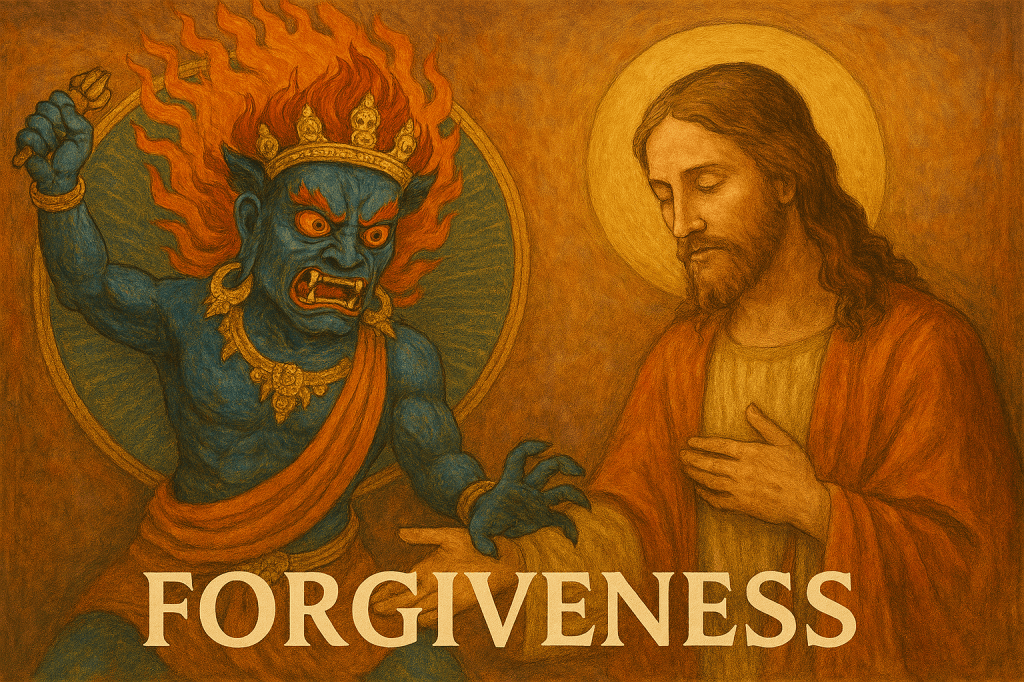
Forgiveness in Christianity vs Wrath in Tantric Tibetan Buddhism


In Tantric Tibetan Buddhism, forgiveness is not traditionally emphasized as it is in Christianity. Tibetan Buddhism places greater emphasis on karma, the universal law of cause and effect. According to this view, actions inherently produce outcomes, and there is little scope for simply “forgiving” or releasing someone from the karmic consequences of their deeds. Instead, purification practices are prescribed to cleanse one’s negative karma. If they are not done effectively, retribution is a given.

Ken McLeod, a prominent Western teacher and translator of Tibetan Buddhism, highlights this point clearly in an article titled, “Forgiveness is not Buddhist.” He writes, “In Tibetan Buddhism, forgiveness isn’t really addressed in the same way as it is in Christianity. Instead, there’s an emphasis on purification and insight into the nature of mind and action.” [1]

Practitioners engage in rituals and meditation practices, such as Vajrasattva purification practices, visualizing negative karma being cleansed. However, these rituals differ fundamentally from the Christian idea of interpersonal forgiveness. They are personal acts of purification rather than relational acts of forgiving or seeking forgiveness from another person or deity.

Although the emphasis in Tibetan Buddhism is allegedly on compassion (karuna), a larger concept of retribution is often at work behind the scenes. Compassion in Buddhism is the profound desire to alleviate suffering universally, extending even to one’s perceived enemies. Tantra, paradoxically, emphasizes karmic retribution that allows the guru to “payback” perceived slights and disrespect secretly using black magic techniques or “rituals of subjugation.”

Personal Account: The Dark Side of the Teachings

My own experience underscores the stark absence of forgiveness in Tantric Tibetan Buddhism. During a tantric ritual of annihilation, I desperately begged forgiveness from the guru for any perceived wrongdoing, hoping for mercy or compassion. I honestly did not know what I was being punished for. The guru, however, demonstrated not even the slightest bit of forgiveness or mercy. This painful event highlighted for me the profound differences between the compassionate forgiveness taught by Jesus Christ and the severe, impersonal karmic logic of Tantric Tibetan Buddhism.

Forgiveness in Christianity

In Christianity, forgiveness occupies a central and explicit place. It involves both human interpersonal forgiveness and divine forgiveness through the mercy and grace of God. Christianity explicitly encourages believers to forgive one another as God has forgiven them through Christ’s sacrifice on the cross.

Forgiveness in Christianity is relational, deeply rooted in repentance, reconciliation, and restoration of relationships with God and with others. It implies a personal release from the debt of sin through God’s grace, rather than the impersonal balancing of karmic scales.

Jesus teaches explicitly on forgiveness, such as in the Lord’s Prayer (“Forgive us our trespasses, as we forgive those who trespass against us”), emphasizing the interconnectedness of receiving and giving forgiveness. Forgiveness is portrayed not merely as a spiritual virtue but as a fundamental practice essential to spiritual health and salvation itself.

Western Practitioners and Misplaced Assumptions

Many Western practitioners of Tibetan Buddhism unconsciously overlay their Judeo-Christian cultural and moral values onto the tantric Buddhist teachings, often at their own detriment. They assume the presence of forgiveness and personal mercy that simply do not exist in the traditional tantric framework. This mistaken belief can lead practitioners to misunderstand or misinterpret the intentions and actions of teachers, making them vulnerable to exploitation and emotional and physical harm. Ultimately, recognizing these fundamental differences can lead to safety, and protection from mistaken spiritual paths. For more about the guru’s ability to engage in karmic retribution see here, here, and here.

[1] Ken McLeod, “Forgiveness is Not Buddhist,” Unfettered Mindhttps://unfetteredmind.org/forgiveness-is-not-buddhist/ (accessed April 9, 2025).

Wrathful Rituals and “Black Magic” in Tibetan Guru-Disciple Relationships

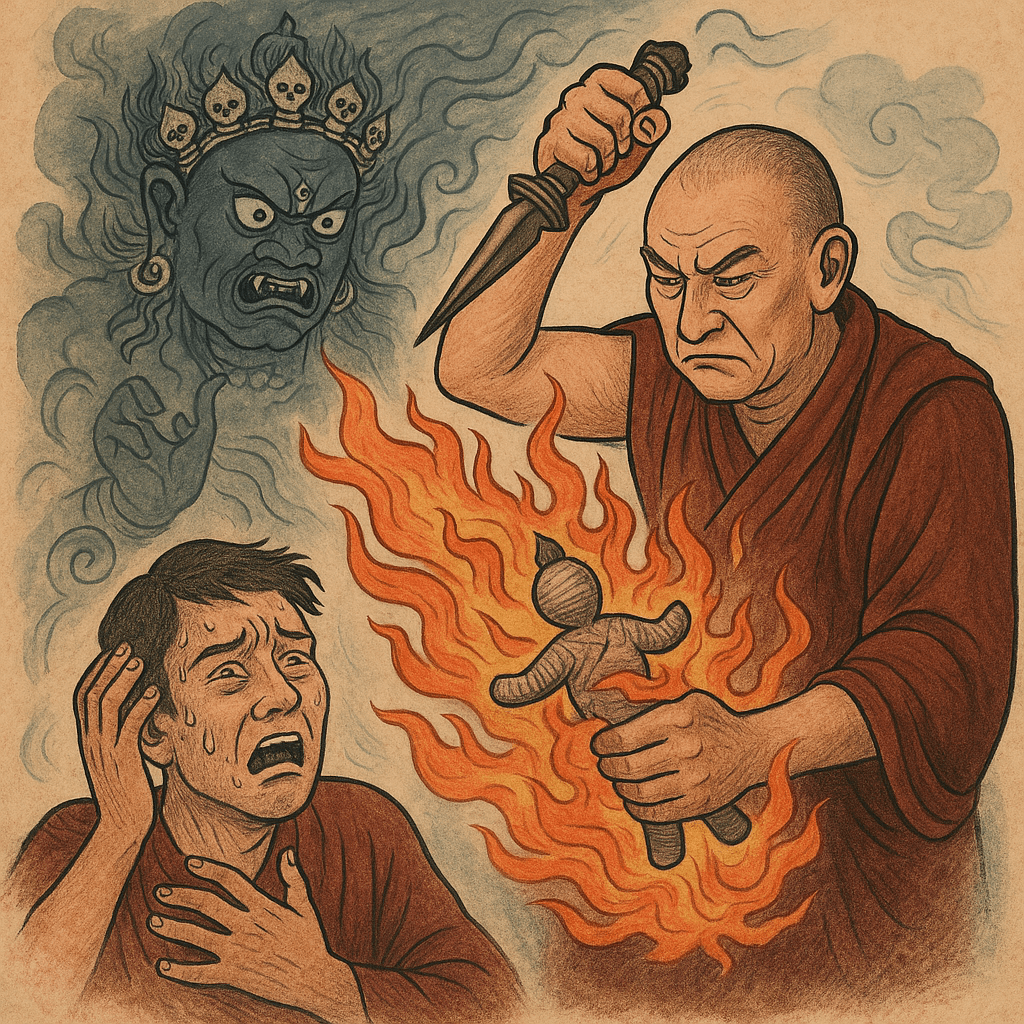
It is not far fetched to assert that it is the lama himself bringing about the karmic retribution on the student through black magic rituals using effigies and curses.


The Tibetan Buddhist tradition, especially its Vajrayana (tantric) aspect, contains teachings on wrathful rituals and even sorcery-like practices. These practices have occasionally been used (or misused) by gurus to punish or frighten disciples who violate guru devotion or samaya (sacred vows). Both classical texts and modern accounts document such phenomena:

  • Scriptural Warnings of Dire Consequences: Tantric scriptures and commentaries explicitly warn of terrible karmic punishment if a disciple betrays or criticizes their guru. For example, the Kalachakra Tantra says that even a moment of anger toward one’s guru destroys vast amounts of merit and causes rebirth in hell for eons (The Disadvantages of Incorrect Devotion to a Guru | Lama Yeshe Wisdom Archive).

  • Another text states that simply failing to properly honor a guru after receiving teachings can result in “rebirth for one hundred lifetimes as a dog” and then rebirth as a low-caste person or even a scorpion lamayeshe.com. In short, breaking samaya is portrayed as spiritually catastrophic, leading to suffering in this life and the next. These warnings, while couched as impersonal karmic law, create a climate in which gurus are held almost above criticism.

  • Oath-Breakers and Protector Deities: Tantric cosmology includes Dharmapāla (Dharma protectors) bound by oath to protect Buddhist teachings and teachers. Those who break their sacred vows or harm their guru are sometimes called “samaya-breakers” or oath-breakers. Historical texts indicate that oath-breakers were targeted by wrathful rituals. A striking example comes from a 13th-century Tibetan master at Kublai Khan’s court, Ga Anyen Dampa. In a decree mixing politics and magic, Dampa forbade harming his followers through curses or demons, but warned that if anyone disobeyed him, he would “unleash the fierce punishment of the Dharma Protectors” so that their heads would split into a hundred pieces (War Magic: Tibetan Sorcery | Rubin Museum). In other words, the guru swore to call upon wrathful deities to brutally destroy anyone who violated his command. Such records (in this case preserved as a protective charm) show that invoking black magic and protective deities as punishment for disobedience was not unheard of.

  • Effigies and “Black Magic” in Tantric Practice: Tibetan lamas developed elaborate ritual technologies to deal with enemies or detractors. Human effigies and dough figures (torma) are traditional ritual implements used to represent a target in magical rites. According to scholars, a “wide array of images, such as human effigies…or ritual dough-offering sculptures, were employed to…subdue or destroy one’s enemies” (War Magic: Tibetan Sorcery | Rubin Museum). In wrathful rites (such as the gTor dabs or torma-throwing ritual), the lama empowers an effigy with mantras and offers it to wrathful spirits or deities, directing the ensuing harm toward the intended victim. War Magic was even used at state levels, for instance, 12th-century Lama Zhang, a militant yogi, sent cursed tormas and spells against his foes and had protector goddesses like Shri Devi “assist” in battle (War Magic: Tibetan Sorcery | Rubin Museum). These historical uses of violent sorcery, while aimed at external enemies, set a background against which a guru might also target an “enemy” disciple who they feel has betrayed them.

  • Historical Case – The “Cursed Boots” Plot: In 1900, an incident in Lhasa suggests the reality of such magical punishments. The 13th Dalai Lama survived an assassination attempt involving black magic: a certain gifted pair of boots, which caused illness to the wearer, upon close inspection had “a harmful mantra hidden in the sole.” (Treasury of Lives: The Case of the Dalai Lama’s Cursed Boots – Tricycle: The Buddhist Review) The inquiry revealed that the boots were prepared as a curse by a lama famous for sorcery, acting on behalf of a former regent. That sorcerer (Lama Nyaktrul) confessed he was recruited to enchant the boots “as a means to sap the vitality of the Dalai Lama and cause his eventual death” (Treasury of Lives: The Case of the Dalai Lama’s Cursed Boots – Tricycle: The Buddhist Review). The plotters, including the ex-regent, were arrested, confirming this was not mere superstition but a documented attempt to use ritual magic to punish or eliminate a high lama. While this is a political case, it shows that Tibetan lamas did employ curses (mantras on effigies or objects) to secretly harm human targets. It’s a short step to imagine a vindictive guru doing similar things to a personal disciple who is seen as a traitor.

  • Even when literal demons aren’t invoked, the threat of supernatural harm is a powerful tool. Some Vajrayana insiders have noted that gurus sometimes wield samaya as a weapon of fear, warning that if a student breaks their devotion, it will hinder the guru’s life or send the student to Vajra Hell. This can psychologically terrorize students into silence and obedience.

  • Samaya and Guru Devotion as a Control Mechanism: The reverence for gurus in Tibetan Buddhism, while spiritually meaningful in that system, can be abused. Devoted students are taught to see the guru as embodying all Buddhas (The Disadvantages of Incorrect Devotion to a Guru | Lama Yeshe Wisdom Archive), and therefore criticizing the guru is equivalent to criticizing the Buddha himself. This makes any challenge tantamount to sacrilege. Teachers who demand absolute loyalty may invoke wrathful consequences to enforce it. In the lore, breaking samaya not only brings karmic punishment but may incite the guru’s protector spirits to take revenge. For instance, many guardian deities are oath-bound to “strike down those who break their vows” to the guru or teachings. A protector like Dorje Shugden, controversially, is believed by his devotees to punish monks who “betray” their lineage, an idea which has led to real-world fear and schisms ( Go On, Break Your Samaya | Tsem Rinpoche). Thus, within the context of guru devotion, the line between religious oath and curse can blur: a disciple who disobeys is told they invite not only bad karma but possibly violent divine retribution.

  • To go one step further, it is not far fetched to assert that it is the lama himself bringing about the karmic retribution on the student through black magic rituals using effigies and curses. These practices are particularly potent because the disciple would have opened themselves up to being possessed by the guru’s yidams and protectors through the empowerments and teachings they received from the guru. In addition, the guru is able to enter the mind and body of the disciple magically. See Tantric Astral Projection, the Guru’s Power to Liberate or Condemn. So basically, the potential enemy is already camped within the body/mind/spirit of the victim, waiting to strike should there be any samaya breakage. Although the tantric methods contain practices to repair broken samaya, the student/victim is not always aware that he has offended the guru and been condemned as an “unripe vessel” until it is too late.

In summary, credible sources, from canonical texts to academic studies and personal testimonies, support the claim that some Tibetan Buddhist gurus have used wrathful magic to punish dissenters. Traditional scriptures describe horrific fates for disciples who violate samaya, and Tibetan histories recount lamas employing curses, effigies, and protective deities to destroy enemies and “oath-breakers.” These examples, past and present, illustrate how the immense power ascribed to Vajrayana masters can morph into a tool of coercion, a “dark side” of guru devotion that Buddhist scholars and leaders are increasingly acknowledging. The evidence is admittedly esoteric, but it paints a consistent picture: under the pretext of protecting the Dharma or upholding sacred vows, some gurus have indeed used wrathful magic, rituals, or effigies to inflict harm on those who oppose or disobey them.

Sources:

Read Between the Lines: A Glimpse into the Dark Heart of Guru Devotion


This week, a well-known lineage master in Tibetan Buddhism is live-streaming teachings to an international audience. The subject? The Fifty Verses on the Guru, a classical text often revered in Tibetan spiritual circles.

What stands out is not the spiritual inspiration one might expect, but the chilling severity of the warnings directed at anyone who dares to question or criticize the guru. In these verses, critics are threatened with death by plagues, poison, spirits, and natural disasters. They’re told they’ll be attacked by bandits, burned alive, and ultimately “cooked in hell.”

Yes, cooked in hell.

These aren’t metaphorical suggestions. They’re clear, unambiguous threats proclaimed with spiritual authority and recited with solemnity. And they’re being taught to women (a group of nuns) dedicating their lives to a religion that claims to offer liberation.

One may ask, is this liberation? Or is it spiritual coercion?

Consider how the following verses read:

Those great fools who criticize
The guru’s feet will die from plagues,
Disasters, fevers, evil spirits,
Contagions, and from poisons.

They will be killed by tyrants, snakes,
Water, fire, dakinis, bandits,
And vighna and vinayaka spirits,
And then they will go to the hells.

You must never rile the mind
Of the master. A fool who does
Will certainly be cooked in hell.

These are not compassionate teachings encouraging wisdom and discernment. These are fear-based tactics meant to silence and suppress any legitimate questioning of authority. And they’re not buried in obscure corners of the tradition; they are central, foundational texts, recited aloud in front of devoted students, streamed across the world for anyone to witness.

So what does it say about a religion when its core teachings equate dissent with spiritual doom? What kind of teacher feels justified in repeating these words to those under his care?

And more importantly: what happens to someone who dares to think critically? Remember, many of the advanced gurus have the supernatural ability (siddhi) to read the thoughts of their disciples.

In the wake of widespread abuse scandals across Tibetan Buddhist institutions, many of which have been publicly documented, the insistence on blind obedience to the guru should raise serious red flags. If you’re drawn to Tibetan Buddhism or already involved, ask yourself: Do you feel free to question? Do you feel safe? Perhaps it is time to take an honest look at this tradition.