

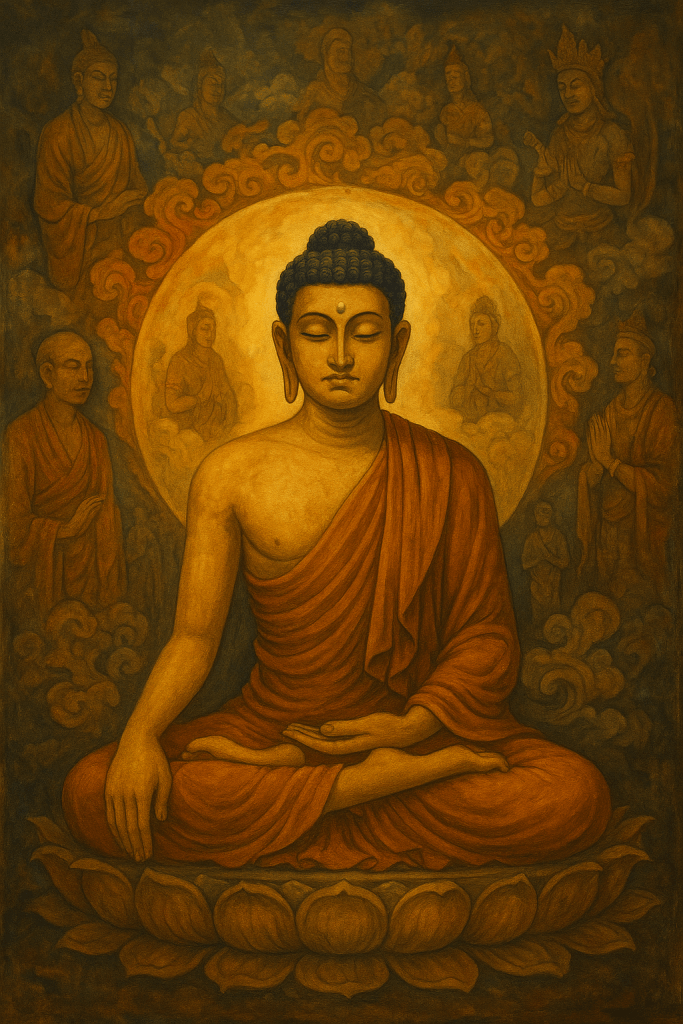
It has taken me decades to admit something that began as a faint suspicion, then settled into unease, and now has crystallized into a sober conclusion: Tibetan tantric Buddhism is not what I thought it was. Nor is it what I believed when I first encountered it many years ago, a bit before the time His Holiness the Dalai Lama received the Nobel Peace Prize in 1989.
Back then, the first wave of Tibetan lamas and rinpoches were arriving in the West. To many of us, they seemed like emissaries from a lost Shangrila. Coming out of the disillusionment of the Vietnam War years, with trust in government and organized religion badly shaken, we were primed to seek something transcendent and pure. And here were these men, holy men trained in the monasteries of old Tibet, carrying with them an aura of mystery and profound wisdom. Meeting them felt like an unimaginable stroke of good fortune.
The historical Buddha’s teachings struck us as luminous and deeply humane. The philosophical treatises were subtle, the meditation techniques precise and effective. And then there was tantra. We were told, almost in passing, that tantra too came directly from the Buddha. No mention was made of its roots in Shaivism, or its overlaps with the worship of Shiva, Kali, and the other tantric currents in Indian religion. Yes, there were references to the 84 Siddhas, some of whom practiced in Hindu traditions, but it was presented as a kind of colorful backdrop rather than something that demanded careful inquiry. The task, we were told, was to study the dharma, not to ask too many uncomfortable questions.
And yet, the Buddha himself had urged his students to test his words as one tests gold: cutting, burning, hammering to see if it is true. I carried that instruction into Tibetan Buddhism. But the environment I found myself in didn’t encourage such testing. Quite the opposite.
Very quickly, I was drawn into the highest yoga tantras. After a series of initiations that were performed in Tibetan, a language I didn’t understand, I was informed by a lama I scarcely knew that from now on, I had to do whatever he told me. Cognitive dissonance set in immediately. Around me, others spoke of him as a fully enlightened buddha. Terms like samaya and vajra hell were introduced without context, wrapped in a swirl of historical Buddha teachings and cryptic tantric concepts. Critical thought was not just discouraged; it was quietly undermined. The lama was king, and the student’s role was obedience.
For Westerners raised with democratic ideals and an education that stressed inquiry, this was a bewildering fit. Many of us unconsciously overlaid our early religious conditioning onto what was, in fact, a foreign and feudal religious structure with a pantheon of strange and colorful deities. The result of treating the lama as an omniscient god created confusion, sometimes tragedy. I have heard of suicides, psychotic breaks, and lives unmoored. At the same time, I know people who genuinely believe they have benefited from Tibetan Buddhism. For years, I counted myself among them, until my own turn came.
I was privately attacked by my gurus during a tantric ritual for what I considered minor offenses related to situations outside of my control. What followed was worse: a series of what can only be described as black magical assaults. I now look back at those suicides I had once heard about and wonder: had they endured similar attacks, subtle or overt, after questioning or disappointing their teachers? Perhaps. I cannot know for sure. But I do know this: the mask of compassion many lamas wear often drops when they feel challenged or exposed. Not all, certainly. But enough to form a pattern.
That slow dawning that Tibetan tantric Buddhism was not what it was presented to be has been deeply painful. The disillusionment runs far beyond personal disappointment; it speaks to a betrayal of trust, the suppression of critical thought, and the dangers that arise when power is handed to unaccountable gurus who claim authority over hidden magical practices and wield them at will. Brought into a Western culture of sincere but searching seekers, this has created a toxic mix that leaves people vulnerable at the very moment they are most open.
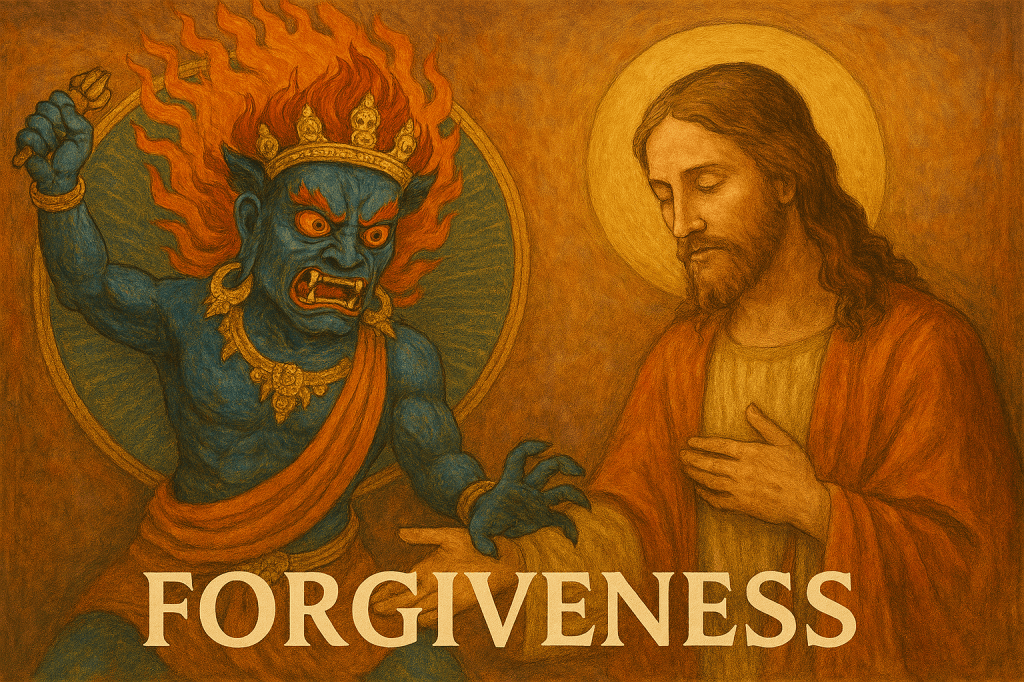
 Tantric Deception