This week, a well-known lineage master in Tibetan Buddhism is live-streaming teachings to an international audience. The subject? The Fifty Verses on the Guru, a classical text often revered in Tibetan spiritual circles.
What stands out is not the spiritual inspiration one might expect, but the chilling severity of the warnings directed at anyone who dares to question or criticize the guru. In these verses, critics are threatened with death by plagues, poison, spirits, and natural disasters. They’re told they’ll be attacked by bandits, burned alive, and ultimately “cooked in hell.”
Yes, cooked in hell.
These aren’t metaphorical suggestions. They’re clear, unambiguous threats proclaimed with spiritual authority and recited with solemnity. And they’re being taught to women (a group of nuns) dedicating their lives to a religion that claims to offer liberation.
One may ask, is this liberation? Or is it spiritual coercion?
Consider how the following verses read:
Those great fools who criticize The guru’s feet will die from plagues, Disasters, fevers, evil spirits, Contagions, and from poisons.
They will be killed by tyrants, snakes, Water, fire, dakinis, bandits, And vighna and vinayaka spirits, And then they will go to the hells.
You must never rile the mind Of the master. A fool who does Will certainly be cooked in hell.
These are not compassionate teachings encouraging wisdom and discernment. These are fear-based tactics meant to silence and suppress any legitimate questioning of authority. And they’re not buried in obscure corners of the tradition; they are central, foundational texts, recited aloud in front of devoted students, streamed across the world for anyone to witness.
So what does it say about a religion when its core teachings equate dissent with spiritual doom? What kind of teacher feels justified in repeating these words to those under his care?
And more importantly: what happens to someone who dares to think critically? Remember, many of the advanced gurus have the supernatural ability (siddhi) to read the thoughts of their disciples.
In the wake of widespread abuse scandals across Tibetan Buddhist institutions, many of which have been publicly documented, the insistence on blind obedience to the guru should raise serious red flags. If you’re drawn to Tibetan Buddhism or already involved, ask yourself: Do you feel free to question? Do you feel safe? Perhaps it is time to take an honest look at this tradition.
I came to the realization they were actually evil (you have to understand they can pretend to be good, even despite their demonic names, and twist your mind into believing in them—and it feels very real)—but I couldn’t resist their power.”
They’d love bomb me and then in the next breath become really nasty. Eventually it got to the point I’d see Lucifer walking around my apartment, as a real man, and then take control of my body…and end up raping me.”
These words, pulled from a harrowing testimony posted on Reddit, felt like echoes of my own past, so chillingly familiar that I found myself nodding.
The author of the post, anonymous but heartbreakingly real, shares a decade-long descent into Luciferianism, New Age spirituality, kundalini experiences, possession, and finally, miraculous deliverance by Jesus Christ. Her story is raw, detailed, and unapologetically honest. And for those of us who have lived through the spiritual counterfeit, it rings true on every level.
Like her, I once believed the false light was real. In my case, it came in Tibetan robes, wrapped in Buddhist philosophy and tantric mysticism, cloaked in teachings about “enlightenment” and “emptiness.” Before my first three-year retreat in my twenties, my retreat lama (guru) love-bombed me. He saw my spiritual hunger and poured affection, flattery, and attention into me until the day I resisted his sexual advances. Then his interest in me turned to cruelty. The same happened again, years later, with my second three-year retreat root guru. It’s a familiar pattern to survivors of spiritual abuse: seduction, betrayal, and punishment.
The Reddit testimony describes a similar spiritual seduction, initially sweet and ecstatic, culminating in a brutal loss of bodily autonomy. Demonic spirits love-bombed her, appeared to her as beautiful, powerful entities and then turned violent and abusive, eventually raping her both spiritually and physically. She writes of Lucifer “walking around her apartment… and taking control of her body.” I, too, experienced possession after tantric rituals designed to merge with deities. The difference is, in Tibetan Buddhism, such possession is framed as “blessing.”
And like her, I couldn’t break free until I cried out to Jesus, not under pressure, but because I had nowhere else to turn. When I finally surrendered, I, too, felt deliverance (still ongoing) that was cleansing, and unmistakably holy. It felt like the definite breaking of chains.
This woman’s account is long, but worth reading. You can find the full testimony here. It’s a sobering reminder of how widespread and insidious these spiritual deceptions are and how they shape-shift across traditions, religions, and cultures, but always carry the same fingerprints: seduction, confusion, torment, and ultimate destruction of the soul.
Her courage in speaking out is an act of spiritual warfare, and I share this not to sensationalize her story but to affirm: you are not alone. And yes, there is a way out.
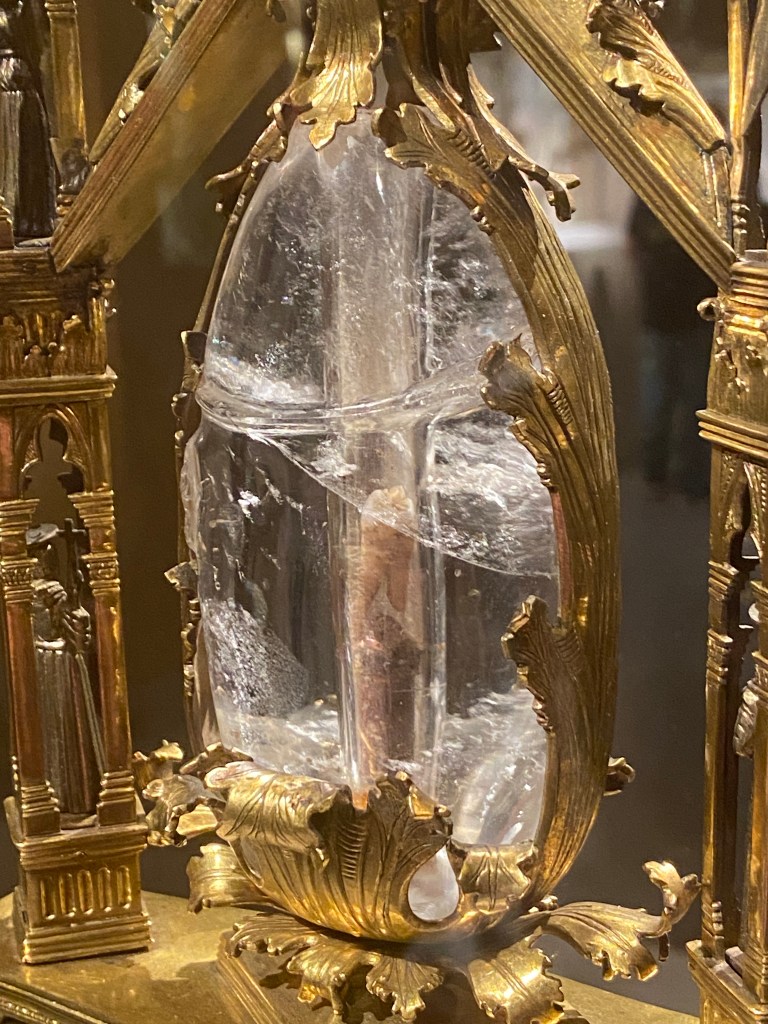
Relic of St. Mary Magdalene in the Metropolitan Museum, NYC
There is a strange and disturbing trend among occult and demonic religions, particularly within esoteric branches of Buddhism, such as Tibetan Vajrayana. These traditions go to great lengths to mimic, distort, and counterfeit elements of the Catholic faith. Why? Because Satan has no creativity of his own. His kingdom is one of imitation, distortion, and inversion. And when we look closer, it becomes chillingly clear: many of these occult systems are designed as spiritual forgeries, imitating the truths of the Catholic Church while replacing Christ with false gods and demons.
Here are just a few examples.
Relics: Holy vs. Unholy
In Catholicism, relics are a beautiful and reverent way the faithful connect with the saints in heaven. The bones, hair, and clothing of saints, when venerated properly, are physical reminders of lives of holiness and union with Christ. First-class relics (parts of a saint’s body), second-class relics (items the saint used), and third-class relics (objects touched to a first-class relic) are all part of an ancient, sacred tradition rooted in the Incarnation: God came in the flesh, and through His Body and those who share in His holiness, the physical becomes a channel of grace.
Now compare this to Tibetan Buddhism and other occult traditions.
Tibetan lamas preserve the bones and hair of deceased teachers and display them in shrines. In some cases, these relics are even mixed into pills or powders thought to convey “blessings” or spiritual power. Even more shockingly, there are “blood pills” created from the blood of high lamas, dried and consumed by devotees, believed to transfer the lama’s blessing and heal the disciples’ illnesses.
What we see here is not simply reverence for a teacher but an occult inversion of the sacred. These objects are treated as talismans or sources of supernatural power, often wrapped in secrecy, ritual, and magical thinking.
Apostolic Succession vs. Tantric Lineage
The Catholic Church has an unbroken apostolic lineage going back to Christ Himself. This is not just symbolic but the real spiritual authority passed from bishop to bishop, from the Apostle Peter to the present-day pope. The sacraments are valid because of this lineage. The Holy Spirit moves through it, not because of magical powers or personal charisma, but because of Christ’s promise to His Church.
Tibetan Buddhism, too, places massive emphasis on “lineage” in the passing of initiations, teachings, and realizations from teacher to student. They claim these go back to the historical Buddha, Sakyamuni. But here’s the problem: the tantras, the core of Tibetan esoteric practice,did not exist during Sakyamuni Buddha’s life. These were later developments, many of which emerged between the 5th and 10th centuries AD, centuries after the Buddha died.
So how do they justify their claims? Through visions, dream revelations, hidden treasure texts (termas), and secret transmissions from spirit beings. These are not testable or historically verifiable. Instead, they mimic the structure of apostolic succession while relying on supernatural claims rooted in occultism. It’s a counterfeit version of Catholic apostolic lineage, one that replaces the Holy Spirit with “dakinis,” “protectors,” and wrathful spirits.
Blessed Sacrament vs. Tantric Empowerments
In the Catholic Church, the Eucharist is the Real Presence of Jesus, body, blood, soul, and divinity. It is the highest form of worship and union with God. Only validly ordained priests can consecrate the Host, and it is surrounded with reverence and liturgy.
IIn tantric Buddhism, “empowerments” are elaborate rituals meant to grant spiritual powers, open energy channels, and “ripen” the disciple for advanced practices. They are sometimes sexually charged, invoking deities (who are really demons in disguise), and can involve ingesting “nectars,” or entering into trance states. Many initiations are based on “secret” transmissions, whispered lineages, or magical seals. These seals are believed to imprint a spiritual mark or bind the practitioner to a specific deity, practice, and lineage. But this is not unique to Tibetan Buddhism. Magical seals are also found in Satanism, Luciferianism, and ceremonial magic, where they are used to summon or bind spirits and demons in exchange for occult knowledge, power, or protection. These seals are spiritual contracts or expressions of unseen allegiances, and their use is never neutral. They are tools of spiritual manipulation that open the soul to influence, possession, or bondage by demonic spirits. In these traditions, the seal acts as a gateway or portal, and it is binding, a counterfeit version of the indelible mark left by the Holy Spirit in baptism or confirmation. Where the Church seals the faithful with chrism and the sign of the cross, occult traditions seal their initiates with marks of spiritual enslavement.
Chrism refers to a consecrated oil used in the Catholic Church during certain sacraments, specifically Baptism, Confirmation, and Holy Orders. It is a mixture of olive oil and balsam, blessed by a bishop during Holy Week.
The use of chrism is deeply symbolic:
It represents the Holy Spirit and divine anointing.
It marks the person as set apart for God, sealed with grace and incorporated into Christ.
The anointing with chrism leaves an indelible spiritual mark on the soul, which can never be removed.
The tantric empowerments claim to transform the practitioner’s body, speech, and mind into that of a deity but again, this is a counterfeit. Instead of communion with God through grace, it’s the deification of the self through ritual manipulation and demonic assistance.
The Church Triumphant vs. the Pantheon of Demons
Catholics honor the communion of saints, those in heaven who intercede for us and serve as models of holiness. Saints are not worshipped; they are venerated. The glory always goes to God.
Tibetan Buddhism features a dizzying pantheon of “yidams” (meditational deities), “protectors,” and “enlightened deities” that are summoned, visualized, and sometimes merged with through complex meditations. These include wrathful, terrifying figures in colors of blue, red, and black, with fangs, skulls, and weapons, dripping with blood or dancing on corpses. Vajrayogini, for example, is often visualized standing on a human corpse, holding a flayed skin and drinking from a skull cup. Although these are claimed to be symbols of transcendence, they are actually demonic imitations of holiness.
Satan’s Strategy: Imitation, Not Innovation
Why does the enemy copy the Church? Because the Catholic Church is the true Bride of Christ. Satan can’t create truth, but he can twist it. His most dangerous weapons are not outright lies, but distorted half-truths wrapped in spiritual language. He dresses up darkness to look like light.
Tibetan Buddhism and similar occult systems offer spiritual hierarchy, ritual, relics, and transmission, but without Christ. They offer communion, but with spirits and demons. They offer transformation, but into false gods, not saints.
The Real Power: Jesus Christ
There is no substitute for the true power of God through Jesus Christ. No blood pill, no tantric lineage, no magical empowerment can wash away sin or bring eternal life. Only Christ, crucified and risen, can do that.
For those who have been caught up in these counterfeit systems, whether through curiosity, spiritual seeking, or deception, it is important to remember that there is hope and it is possible to extricate oneself. Jesus is the Way, the Truth, and the Life and his truth is not hidden in secret teachings or passed down in esoteric rituals. It is freely offered to all who repent and believe.
The emergence of Tantric Buddhism, also known as Vajrayana, represents a radical departure from the original teachings of the Buddha. While early Buddhism focused on ethical conduct, meditation, and wisdom as the path to enlightenment, Tantra introduced esoteric rituals, mantras, and controversial practices that blurred the lines between Buddhism and Hindu Shaivite traditions. The origins of Tantric Buddhism can be traced back to the mid-first millennium CE, gaining prominence between the seventh and tenth centuries. This period saw its infiltration into the great Buddhist monastic institutions of India, including the renowned Nalanda University.
The Rise of Tantric Buddhism
By the seventh century, Buddhist monks and scholars at Nalanda, Vikramashila, and other centers of learning began incorporating Tantric elements into their teachings. The introduction of deities, elaborate rituals, and magical practices marked a significant transformation from the rational and ethical framework established by the Buddha. The Guhyasamāja Tantra (c. 8th century) and other tantras became part of monastic curricula, suggesting that at least some scholars at these institutions were receptive to these esoteric traditions.
However, not all Buddhist monks welcomed these innovations. The Chinese monk Hsuan Chao (Xuanzhao), who traveled to India in the 10th century, was particularly critical of the Tantric Buddhists he encountered. He likened their practices to those of the Kapalikas, a Shaivite sect notorious for engaging in transgressive rituals involving human remains, sexual rites, and magical invocations.
Hsuan Chao’s Observations
Hsuan Chao’s journey to India was part of a larger Chinese monastic tradition of seeking authentic Buddhist teachings from their source. Although there is no definitive evidence that he studied at Nalanda, he likely visited Buddhist centers where Tantra was taught and observed its practitioners firsthand. He was disturbed by their practices, which he viewed as a stark deviation from the ethical and meditative traditions that defined early Buddhism.
His critiques were not merely personal reflections; they were grounded in the belief that Buddhism had been corrupted by external influences. The Buddha’s original teachings, as preserved in the Pali Canon and early Mahayana texts, emphasized renunciation, discipline, and insight. By contrast, Tantric Buddhism introduced complex rituals, deity worship, and doctrines that mirrored Hindu traditions, leading figures like Hsuan Chao to question whether these practices were truly Buddhist at all.
The Heretical Shift
Tantric Buddhism’s divergence from the core principles of Buddhism raises important questions about its legitimacy. The Buddha’s teaching on suffering (dukkha), impermanence (anicca), and non-self (anatta) left no room for the mystical aspirations of Tantra. Yet, by the late first millennium, Tantric texts were becoming influential within Buddhist traditions, particularly through the incorporation of dhāranīs (magical incantations) and mantras into Mahayana and Vajrayana texts. Some Mahayana sutras, such as the Lotus Sutra and Golden Light Sutra, contain elements of magical prayer, leading to scholarly debate over whether these were original to the texts or later interpolations. The presence of spells and protective charms in Buddhist literature suggests that such additions may have been efforts to appeal to popular religious sensibilities rather than direct reflections of the Buddha’s earliest teachings.
It is likely that some of these magical elements were added later, as Buddhism adapted to local traditions and sought to compete with Hindu and indigenous religious movements. In doing so, it absorbed ritualistic elements that were foreign to its original doctrine. The Buddha himself warned against blind faith in supernatural powers, emphasizing instead the development of wisdom and ethical conduct. This makes the inclusion of tantric rituals, many of which involved breaking moral precepts, highly suspect.
Conclusion
The rise of Tantric Buddhism represents a significant and, arguably, heretical transformation of the Buddha’s teachings. While early Buddhism sought liberation through ethical discipline and meditation, Tantra embraced occult rituals and esoteric knowledge as shortcuts to enlightenment. Monks like Hsuan Chao saw this as a dangerous deviation, likening Tantric Buddhists to the Kapalikas, whose extreme practices had long been considered outside the bounds of both Buddhist and Hindu orthodoxy.
The question remains: Was Tantric Buddhism a legitimate evolution of Buddhist thought, or was it a corruption of its foundational principles? Given its reliance on practices that directly contradicted the Buddha’s teachings, the latter seems more likely. As such, the study of Tantric Buddhism should be approached with a critical eye, recognizing its fundamental departure from the wisdom and ethics that once defined the Buddhist path.
In the Western embrace of Tibetan Buddhism, samaya (sacred bond) is often treated as a vague concept, a flexible spiritual guideline open to interpretation. Many practitioners, influenced by modern individualism, believe they can define samaya for themselves, shaping it to fit their personal path. But it’s not so easy. Samaya is not a subjective ideal or a broad ethical principle. It is an uncompromising system of laws dictated by the deities of Tibetan Buddhist tantra, and the consequences of breaking it are catastrophic.
The Origin of Samaya: A System of Absolute Control
As Sam van Schaik explains, with the emergence of Vajrayāna in the seventh century, samaya became the defining framework of tantric practice. It was not merely a commitment to enlightenment or bodhichitta; it was a rigid contract that bound the practitioner to the deities, the guru, and the teachings in a way that left no room for negotiation. The very term “samaya” signifies a binding agreement, a point of convergence where wisdom manifests through ritual, visualization, and esoteric substances. These vows were not meant to be symbolic gestures but inviolable pacts with cosmic forces.
The West tends to frame Buddhism as a path of peace and compassion, yet within Vajrayāna, samaya is not about universal kindness or personal growth. It is about absolute allegiance to the tantric system. Any deviation from this allegiance is not simply a spiritual misstep, it is a crime against the sacred laws of tantra.
The Consequences of Breaking Samaya: Illness, Insanity, and Demonic Affliction
One of the most terrifying aspects of samaya is its enforcement mechanism. Unlike moral guidelines in mainstream Buddhism, which rely on karmic repercussions across lifetimes, samaya violations often carry immediate and devastating consequences in this very life. Tibetan texts are explicit: breaking samaya leads to physical illness, mental instability, and possession by malevolent forces.
Illness as a Sign of Broken Samaya
Tantric texts frequently warn that violating samaya will manifest as sickness. This is not metaphorical. Traditional Tibetan medical texts list broken samaya as a cause of chronic diseases, unexplained fevers, and deteriorating health that no ordinary treatment can cure. The idea is that the tantric deities and protectors, angered by the transgression, withdraw their blessings, leaving the practitioner vulnerable to suffering, often caused by the deities themselves.
It is not uncommon to hear stories in Vajrayāna circles of Westerners who fought with or abandoned their guru, only to fall into inexplicable physical decline. Some develop persistent health issues that defy medical diagnosis. Others find themselves facing severe misfortunes, financial ruin, or a string of accidents. Traditional Tibetan lamas do not hesitate to attribute such misfortunes to broken samaya.
Demonic Afflictions: The Price of Transgression
Beyond physical illness, breaking samaya is believed to invite spiritual and psychological torment. The tantric pantheon is not just composed of peaceful deities; it is teeming with wrathful beings, dharma protectors, and guardian spirits who enforce the rules of the tradition with merciless precision. When samaya is broken, these entities are said to turn against the practitioner, causing possession, insanity, or relentless bad luck.
In the Tibetan worldview, demonic affliction is not an abstract concept but a literal reality. Those who have transgressed samaya might experience intense nightmares, hallucinations, or an overwhelming sense of mental disintegration. Some report hearing voices, seeing terrifying visions, or feeling the presence of unseen entities oppressing them. In extreme cases, individuals descend into madness, their minds fractured under the weight of their spiritual transgressions.
Samaya and the Persecution of Women Who Resist Sexual Exploitation
While samaya is traditionally presented as a means of maintaining the purity of Vajrayāna teachings, there have been numerous instances where it has been weaponized against women. Throughout Tibetan Buddhist history, samaya has been invoked to silence and punish women who resisted sexual advances from their gurus or exposed instances of abuse.
The guru-disciple relationship in Vajrayāna is absolute, with the guru often regarded as the embodiment of the Buddha’s wisdom. Women who took empowerments from a lama were thus considered bound to him through samaya. If they later rejected his sexual advances or spoke out against his predatory behavior, they were accused of breaking their samaya vows, making them spiritually compromised and subject to supernatural retribution.
A striking example of this dynamic is found in the research of scholar Holly Gayley, who examines how Vajrayāna secrecy and power dynamics have historically been used against women. In her article, Revisiting the ‘Secret Consort’ (gsang yum) in Tibetan Buddhism, Gayley recounts a case in which a Tibetan woman refused the sexual advances of a lama and warned other women about him. As a result, it was said that she was condemned to Vajra Hell, an especially severe form of punishment for breaking samaya. This narrative reflects the broader pattern of how women who resist sexual coercion by spiritual authorities are framed as transgressors rather than victims.¹
Let me begin with a cautionary tale from Tibet regarding the judgment pronounced by Yama, the Lord of Death, to a woman who refused to serve as the consort for a Buddhist teacher or lama (Skt: guru, Tib: bla ma).1 The young lady from a well-to-do family, named Chödrön, had sought out Buddhist teachings from numerous esteemed lamas. One of them, the itinerant Zhönu Gyaltsen, asked her to be his “secret consort,” but she refused. The request caused her to lose faith in the lama and leave the gathering before receiving the complete instructions. Later, she told girlfriends about the incident. In Yama’s assessment, since Zhönu Gyaltsen was a master of esoteric teachings, Chödrön had breached her tantric commitments (Skt: samaya, Tib: dam tshig) on several counts: not complying with the lama’s request, not completing the training in his teachings and (worst of all, it seems) speaking about the incident with other women. When Chödrön protests that if the lama was realized, it was inappropriate for him to take a sexual interest in her, Yama counters that when Zhönu Gyaltsen died, numerous relics and miraculous signs occurred, attesting to his high degree of realization. Positioning her as a gossip, he avers that she caused numerous others to lose faith, thereby harming the lama and his disciples. He concludes, “it is a greater sin to denigrate and slander lamas and teachers than it is to murder a thousand living beings,” and condemns her to suffer the torments of the hell realms. [1]”
Some Tibetan Buddhist practitioners might argue that when a lama engages in unethical behavior, such as lying, manipulation, or sexual misconduct, he is the one who has broken samaya. They may claim that by violating his own Vinaya or Mahāyāna vows, the lama has nullified his spiritual authority, thereby freeing disciples from any obligation of fealty.
In her article for Lion’s Roar magazine, “Samaya as Symbiotic Relationship,” Damchö Diana Finnegan recounts questioning several erudite Vajrayāna teachers on this issue. According to her, these teachers asserted that “the samaya between guru and student would be broken when the guru asks the students to provide them with sexual services. Therefore, according to this doctrinal interpretation, students who are being pressed for sex are no longer bound by any samaya commitments to comply. The guru has already broken that sacred bond with the disciple.”
However, it is telling that none of these teachers were willing to go on the record with their statements. Why were they reluctant to share their names? Their silence suggests that this perspective, while politically palatable, may not reflect the deeper realities of samaya within Vajrayāna doctrine. While I may be mistaken, I believe this view misinterprets the mechanics of samaya. Within the Vajrayāna framework, if a lama has attained realization through tantric practice, disciples who receive tantric empowerments and teachings from him/her must remain bound to him/her regardless of his ethical conduct.
The logic of Vajrayāna dictates that the guru is beyond conventional morality, and his actions, even those that appear harmful, should be seen as expressions of skillful means. This rigid framework leaves little room for individual discernment; once samaya is taken, loyalty to the guru is absolute. Lesser concepts such as conventional morality, compassion, or ethical considerations do not override the tantric principle of unwavering devotion. Fealty to the guru is absolute.
The West’s Dangerous Misunderstanding of Samaya
Western practitioners often brush aside the concept of samaya, treating it as a personal promise rather than a sacred contract with supernatural consequences. Many believe they can pick and choose which vows to follow, rationalizing that samaya should align with their own moral compass. But in the rigid framework of Vajrayana Buddhism, this is not how it works. Samaya is otherwordly, enforced by divine forces beyond human comprehension.
Modern spiritual seekers dabbling in Tibetan Buddhism often think they can leave if it no longer serves them. But the system was never designed for that kind of flexibility. The moment one takes empowerment, they are bound to the guru and the deities of the tradition. There is no “undoing” samaya without consequence. The idea that one can walk away from tantric vows unscathed is a Western delusion.
The Reality Check: Understanding the Gravity of Vajrayāna Commitments
For those considering the tantric path, a harsh reality check is necessary. Vajrayāna is not a casual spiritual endeavor. It is a binding commitment that demands unwavering loyalty. Once samaya is taken, there is no turning back without risk. The system is not built on forgiveness but on law, and those who transgress it may find themselves in a living nightmare.
If Western practitioners truly wish to engage with Tibetan Buddhism, they must abandon the idea that samaya is subjective. It is not about compassion or bodhichitta in the general sense; it is a legalistic, doctrinal framework with severe consequences. Breaking samaya is not just a spiritual failing but a transgression against forces that do not easily forgive.
To those who have already taken empowerment, the only recourse is strict adherence to samaya or intense purification practices to mitigate the damage of broken samaya. For those who have not yet committed, this article serves as a warning: enter at your own risk, and understand that once you do, there is no way out without a price.
Some of the sources for this article are as follows:
The practice of divination has long been embedded in the religious and esoteric traditions of cultures across the world. One particularly striking example is the use of mirror divination, or prasena, a ritual in which a prepubescent child gazes into a reflective surface to reveal hidden knowledge or foresee the future. This practice, as highlighted by scholar Sam van Schaik in a recent interview, appears in both Ethiopian and Tibetan traditions and has possible roots tracing back to ancient Babylonian magic. [1]
Such continuity across vastly different cultures raises compelling questions about the transmission and persistence of esoteric knowledge throughout history.
The Ritual and Its Cultural Manifestations
Mirror divination has been historically practiced in multiple religious traditions, often involving a spiritual mediator, typically a child, who, under the guidance of a ritual master, peers into a reflective surface to receive supernatural insights. In Ethiopian traditions, this practice is documented in both ancient manuscripts and contemporary ritualistic settings. In Tibetan Buddhism, it appears in esoteric texts and continues to be used in divinatory rituals conducted by monks and lay practitioners alike.
The use of children in such rituals is significant. Many cultures have believed that children, being less conditioned by worldly concerns, are more receptive to supernatural or spiritual forces. These divinatory practices align with similar practices found in the Greco-Roman world, where oracles and seers would enter trance states to communicate divine messages.
A Babylonian Legacy?
Van Schaik suggests that mirror divination may have originated in Babylonian magic before spreading both eastward and westward. Babylon, as a major center of esoteric learning, was home to extensive traditions of divination, astrology, and ritual magic. Texts from Mesopotamia describe forms of lecanomancy (divination using liquid in a bowl) and katoptromancy (mirror scrying), practices that share structural similarities with the Ethiopian and Tibetan rituals.
This hypothesis aligns with broader historical patterns of cultural diffusion. The Silk Road and other trade routes served as conduits for not only commerce but also religious and magical knowledge. Babylonian astrological systems influenced both Greek and Indian traditions, just as mystical and ritualistic practices traveled alongside Buddhist monks and lay merchants. The presence of mirror divination in both Ethiopia and Tibet suggests that it may be a fragment of a much older and interconnected system of spiritual technologies.
Esoteric Transmission and the Kundalini Connection
The cross-cultural presence of mirror divination raises intriguing parallels with other esoteric practices, including the concept of kundalini. Just as divination involves opening oneself to external spiritual influences, kundalini awakening in tantric traditions is described as an energetic activation that fundamentally alters consciousness. In both cases, the practitioner becomes a vessel for forces beyond the self, forces that can be interpreted as divine or, in some cases, as possessing spirits.
For those who have experienced kundalini awakenings through tantric or meditative practices, the sensation of an “other” presence taking control is strikingly similar to descriptions found in spirit possession traditions. The parallel suggests that some esoteric practices, whether labeled as divination, energy work, or spiritual awakening, may stem from the same underlying phenomenon, one that has been variously interpreted depending on cultural and religious frameworks.
Implications for Understanding the Occult Legacy
If mirror divination has indeed traveled from Babylon to the far reaches of Ethiopia and Tibet, it serves as a potent reminder that esoteric traditions are rarely confined to one religion or civilization. They emerge, transform, and persist across centuries, carried by those who practice them and reshaped by the cultures that adopt them.
For those exploring the intersection of ancient magic and spiritual deception, this historical continuity offers a crucial insight: many seemingly distinct mystical practices may share a common origin, one that predates organized religions and crosses the boundaries of geography and belief. As such, these traditions warrant deeper examination, especially for those who, like myself, have encountered their hidden dangers firsthand.
[1]Sam van Schaik, interviewed by Jonathan Samuels, Interview with Sam van Schaik (January 15-16, 2019), p. 12.
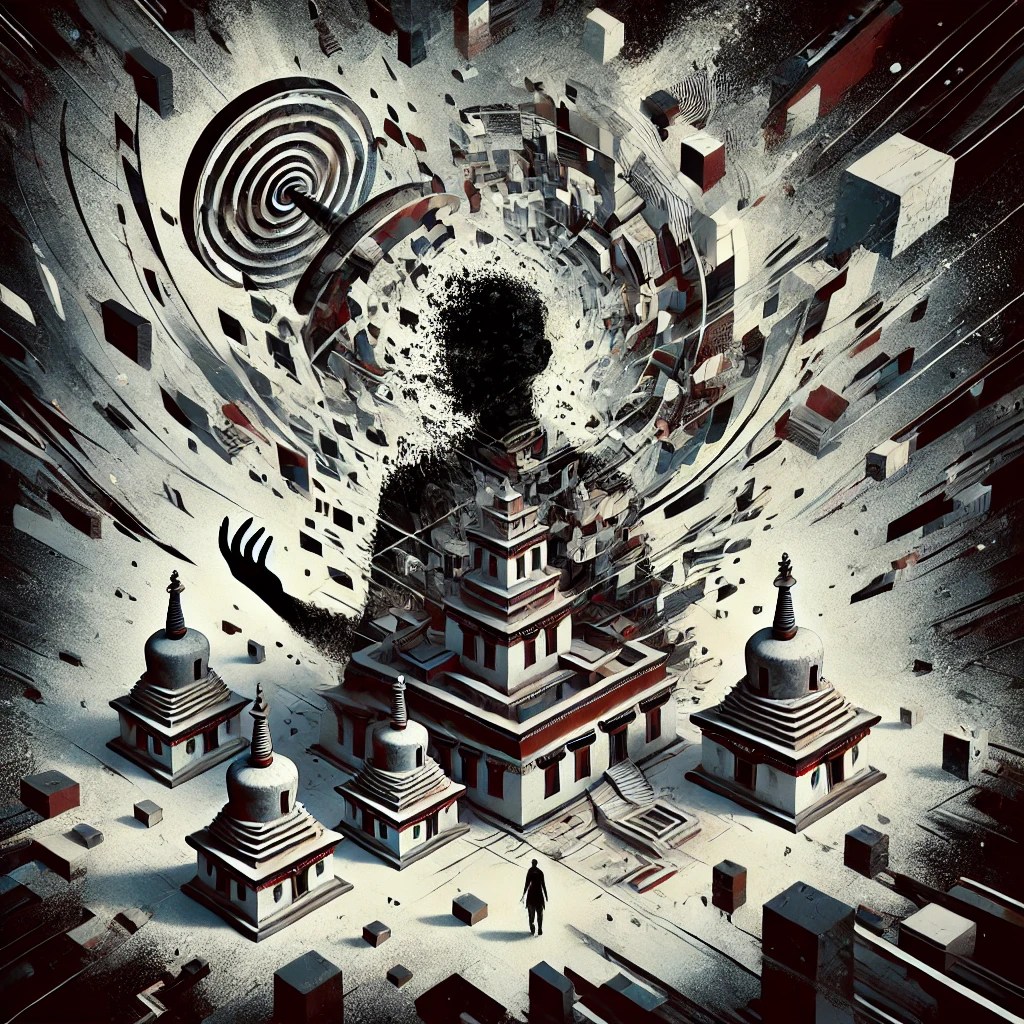
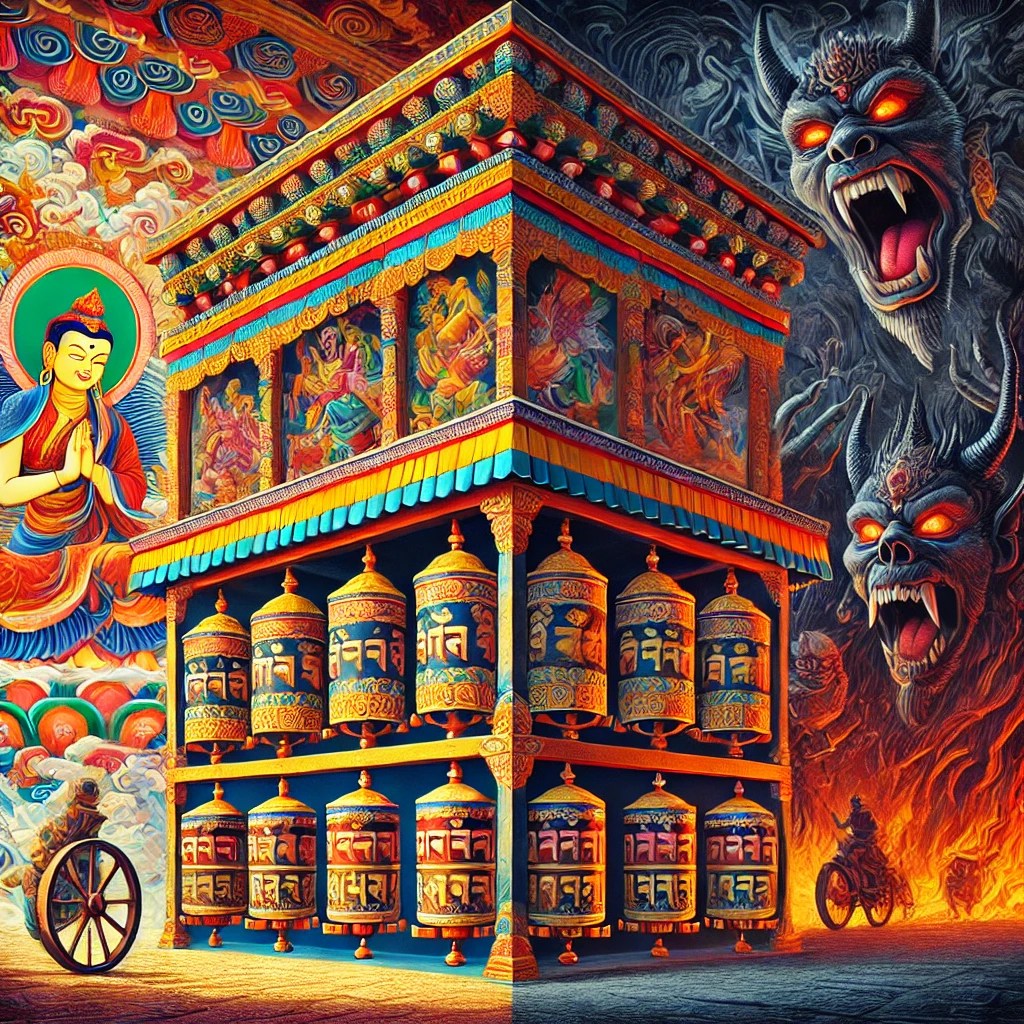
This illustration depicts the state of “vajra hell,” the total dissolution of the mind.
When many Westerners approach Tibetan Buddhism, they do so with an open heart and a desire to deepen their spiritual practice. The exotic rituals, profound teachings, and seemingly compassionate community can be deeply appealing. However, beneath this shiny surface lies a complex web of commitments and consequences that few are prepared for, most notably, the concept of samaya (sacred bond) and its implications.
What is Samaya?
Samaya refers to the vows and commitments a student makes to their tantric guru and yidam deities. These vows are considered sacred, and maintaining them is central to the practitioner’s spiritual progress. However, the specifics of these vows and the consequences of breaking them are often vaguely communicated, especially to Western practitioners who may not be familiar with the cultural and historical contexts in which these practices developed.
The Culture of Silence and Fear
One of the most concerning aspects of samaya is the culture of silence it fosters. Criticizing or even feeling anger towards one’s guru, regardless of whether that anger is justified, is seen as a severe violation. In some teachings, it’s said that such emotions can lead to dire spiritual consequences, including rebirth in vajra hell, a particularly terrifying concept designed to enforce obedience and submission.
This culture makes it exceedingly difficult for practitioners to voice concerns or challenge questionable behavior. The fear of spiritual retribution can be paralyzing, leaving individuals trapped in harmful situations without support.
The Danger of Vague Punishments
In many Tibetan Buddhist communities, the specific repercussions for breaking samaya are deliberately left vague. This ambiguity serves to keep practitioners in a state of uncertainty and fear, unsure of what might trigger severe consequences. For those involved in intensive practices like three-year retreats, this can create an environment ripe for manipulation and abuse.
A Warning to Western Practitioners
If you’re considering entering into a tantric relationship with a Tibetan Buddhist guru, it’s crucial to fully understand the commitments you’re making. Ask questions, seek out diverse perspectives, and be wary of any teacher who discourages inquiry or transparency.
Remember, spiritual growth should not come at the cost of your autonomy, well-being, or mental health. Trust your instincts, and don’t hesitate to step away from harmful situations.
Final Thoughts
Tibetan Buddhism offers many seemingly profound teachings, but it’s essential to approach these practices with both a very discerning mind, especially if you come from a Judeo-Christian background. Understanding the hidden dangers of Tibetan Buddhism can help protect you from falling into harmful dynamics that have ensnared many unsuspecting practitioners before you.
Tibetan Buddhism is widely admired in the West for its profound philosophical teachings, its meditative depth, and its association with peace and compassion as exemplified by figures like the Dalai Lama. However, there is a lesser known and far more complex aspect of Tibetan Buddhism that intertwines its spiritual practices with white and black magic, divination, and tantra. Sam van Schaik’s Buddhist Magic: Divination, Healing, and Enchantment through the Ages provides a fascinating lens into these practices, showing how Tibetan Buddhism is not a monolithic tradition but a syncretic amalgam of divergent systems.
This blog post aims to shed light on the magical underpinnings of Tibetan Buddhism, comparing them to Western grimoires, and questioning their alignment with the teachings of the historical Buddha. It also highlights the often overlooked fact that Tibetan Buddhism is not one system, but a hybrid of at least three distinct traditions: early Buddhist teachings, Hindu tantra (including influences from Kashmir Shaivism), and indigenous Tibetan shamanistic practices.
The Magical Practices of Tibetan Buddhism
Van Schaik’s book reveals the prevalence of magical practices in Tibetan Buddhism, ranging from divination to enchantment and healing. These practices are codified in texts that resemble Western grimoires, (manuals that prescribe rituals, mantras, and symbols to achieve specific outcomes such as protection, wealth, healing, or destruction). In Tibetan Buddhism, these texts often attribute their power to the blessings of deities or enlightened beings, yet their focus on manipulating outcomes through ritual actions aligns them with the magical traditions of the West.
Such practices include:
1. Divination: Techniques for predicting the future using symbolic tools such as dice, mirrors, or astrological charts.
2. Healing Rituals: Invocations of deities and spirits to cure illnesses, often involving complex rituals that parallel Western ceremonial magic.
3. Protective Charms: Talismans and mantras designed to ward off negative influences, akin to the sigils and spells of Western occultism.
4. Black Magic for the Destruction of Enemies: Rituals and spells aimed at causing harm or misfortune to perceived adversaries. These practices often involve invoking wrathful deities or spirits to unleash destructive energies, creating symbolic effigies or representations of enemies to channel harm, and performing rites designed to summon curses or disrupt the lives of opponents. These practices, though justified in some texts as a form of “compassionate wrath” to subdue harmful beings, bear a stark resemblance to the malevolent workings of Western grimoires and are a significant departure from the Buddha’s teachings of nonviolence and compassion.
While the first three categories are often framed as compassionate and benevolent, they reveal a focus on material and worldly outcomes that stands in contrast to the Buddha’s original teachings on renunciation and liberation from samsara. The fourth category is clearly destructive.
The Historical Buddha vs. Tibetan Magic
The teachings of Siddhartha Gautama, the historical Buddha, emphasize the Four Noble Truths and the Eightfold Path as a means of transcending suffering and achieving enlightenment. These teachings encourage ethical conduct, mindfulness, and wisdom, rejecting reliance on supernatural interventions or rituals. In the early Buddhist texts, the Buddha explicitly warns against using his teachings for worldly gain, emphasizing liberation over manipulation of the material world.
In contrast, the magical practices detailed in Tibetan Buddhist texts often prioritize worldly benefits, from health and wealth to protection and influence. While these practices may offer immediate relief or benefits, they risk diverting practitioners from the Buddha’s core message of liberation through self-discipline and insight.
The Influence of Tantra and Shamanism
Tibetan Buddhism’s integration of magic is largely due to its synthesis with other traditions, including:
1. Kashmir Shaivism and Hindu Tantra: Many tantric elements in Tibetan Buddhism, including the use of mandalas, mantras, and deity yoga, can be traced directly to Hindu traditions. These practices focus on harnessing esoteric energies and often include rituals that bear striking similarities to magical ceremonies.
2. Indigenous Tibetan Shamanism: Before Buddhism arrived in Tibet, the indigenous traditions were steeped in shamanistic practices involving spirit invocations, exorcisms, and divination. As Buddhism merged with these local traditions, it absorbed many of their magical elements.
3. Early Buddhist Teachings: The foundational teachings of the Buddha provide a third, distinct layer. While these teachings aim for transcendence and ultimate freedom from suffering, their integration with tantric and shamanistic practices in Tibet has created a system with seemingly contradictory goals.
Two (or Three) Systems at Work
In Tibetan Buddhism, these diverse influences coexist uneasily under the same umbrella. On one hand, we have the Buddha’s path of ethical discipline, meditation, and wisdom. On the other hand, we have the tantric and magical systems, which often emphasize power, ritual mastery, and worldly results. The attempt to merge these systems has resulted in a unique yet conflicting spiritual tradition.
For Western audiences, the peaceful and compassionate image of Tibetan Buddhism often obscures these darker, magical elements. It is crucial to recognize that beneath the veneer of benevolence lies a tradition that includes practices reminiscent of Western occultism. This highlights the importance of discernment and understanding the true nature of this tradition.
A Warning for Seekers
In conclusion, Buddhist Magic: Divination, Healing, and Enchantment through the Ages, serves as an essential resource for those seeking to understand the complex and multifaceted nature of Tibetan Buddhism.
Western practitioners and admirers of Tibetan Buddhism should approach the tradition with open eyes. While the philosophical and meditative teachings of Tibetan Buddhism offer profound insights, the magical practices described in van Schaik’s book represent a different domain, one that often contradicts the Buddha’s core message. Understanding the historical and cultural layers that make up Tibetan Buddhism can help people avoid a potential minefield of dangerous spiritual practices.
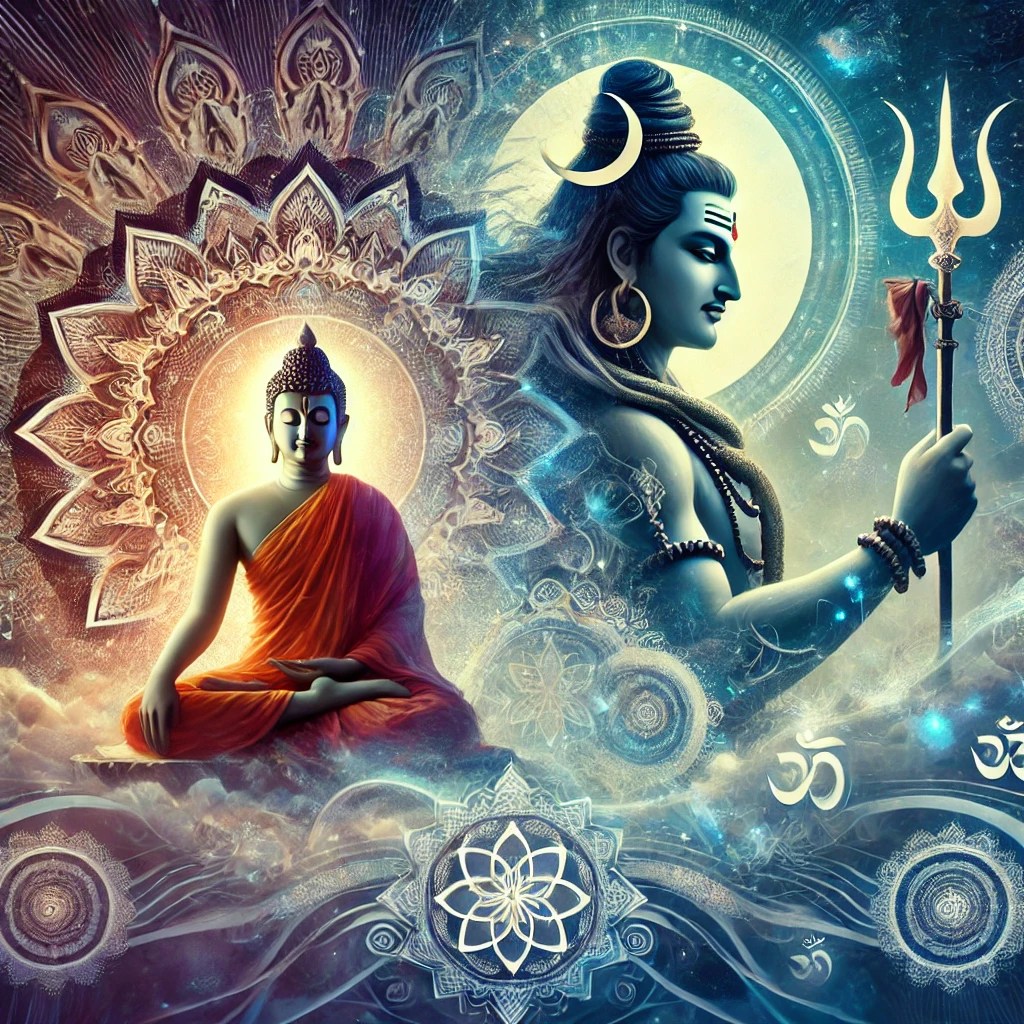
The rich interplay between Hindu and Buddhist Tantric traditions has been a subject of rigorous scholarly inquiry, yet much of this relationship has remained obscured in popular understandings of Tibetan Buddhism. Three seminal works, Francesco Sfewa’s “Some Considerations on the Relationship Between Hindu and Buddhist Tantras”, Alexis Sanderson’s “Vajrayāna: Origin and Function in Buddhism”, and Robert Mayer’s “The Figure of Maheśvara/Rudra in the rÑiṁ-ma-pa Tantric Tradition,” shed light on the foundational role of Kashmir Shaivism in shaping the Yoginītantras of Tibetan Buddhism. These articles offer compelling evidence that Tibetan Buddhist Tantras, particularly the Yoginītantras, were heavily influenced by Saiva texts and practices, directly linking Tibetan Buddhism to the figure of Śiva himself.
In the transmission of Tibetan Buddhism to the West, Tibetan masters often downplayed or ignored this profound connection. Instead, they ascribed the Tantras to the Buddha himself, claiming that he taught these esoteric teachings in a transcendent form after his parinirvāṇa (passing away). According to traditional accounts, these teachings were revealed at specific sacred locations, such as Mount Malaya, situated in present day Sri Lanka. These teachings, it is said, were preserved in the realms of gods and nāgas (serpentine spirits) before being transmitted to humanity through visionary masters. By presenting the Tantras as originating from the Buddha rather than acknowledging their Saivite roots, Tibetan masters aimed to establish their authority and distinguish their tradition from external influences.
However, as Sanderson, Sfewa, and Mayer document, the Yoginītantras in Tibetan Buddhism were not created in isolation. They borrowed extensively from Saivite texts like the Brahmayāmala, Siddhayogeśvarīmata, and Picumata, incorporating not only ritual frameworks but also mythological narratives. This borrowing represents what scholars call “pious plagiarism,” where Saivite materials were recontextualized to align with Buddhist soteriological goals. The myths, rituals, and iconography of the Yoginītantras, which are central to Tibetan Buddhist Tantra, thus owe their origins to Śiva and his Tantras.
Recognizing this connection does not diminish the uniqueness of Tibetan Buddhism but rather situates it within a broader, interconnected spiritual landscape. It underscores how traditions evolve through dynamic cultural exchanges, offering a deeper understanding of Tantra’s history.
Shared Foundations and “Pious Plagiarism”
Francesco Sfewa’s analysis highlights the undeniable overlap between Hindu and Buddhist Tantra. He suggests that this commonality arises not from coincidental similarities but from deliberate borrowings. Sfewa notes the phenomenon of “pious plagiarism,” where texts from the Hindu Saivite tradition were adapted into Buddhist contexts, particularly the Yoginītantras. He emphasizes the need to move beyond vague notions of a “shared religious substratum” and instead examine direct textual dependencies.
Alexis Sanderson: Tracing Scriptural Borrowings
Sanderson’s meticulous philological work underscores this dependency. He demonstrates how Buddhist Vajrayāna texts, especially the Yoginītantras, borrowed heavily from Saiva sources such as the Brahmayāmala and the Siddhayogeśvarīmata. For example, he shows that ritual frameworks and mythic narratives in Buddhist texts like the Hevajra Tantra align closely with Saiva models. Sanderson argues that these borrowings are not isolated but reflect a systematic incorporation of Saivite elements into Buddhist Tantra.
Mythology as a Lens: Robert Mayer’s Insights
Robert Mayer takes a mythological approach, examining the narrative of the “Taming of Maheśvara/Rudra.” This myth, central to many Buddhist Tantras, portrays the subjugation of Saiva deities by Buddhist figures, symbolizing the assimilation of Saivite practices into Buddhist frameworks. Mayer sees this narrative as a “charter myth” that legitimizes Buddhist Vajrayāna’s adoption of Saiva elements. He also highlights how Tibetan Buddhist traditions reinterpreted these myths, assigning Buddhist meanings to Saivite symbols while acknowledging their origins.
Reconciling Differences: A Shared Soteriology?
Despite their doctrinal differences, Sfewa, Sanderson, and Mayer point to a shared soteriological framework underpinning both traditions. Both Hindu and Buddhist Tantras emphasize liberation through a union with the divine, facilitated by initiations, meditative practices, and ritual. This common ground enabled a seamless exchange of ideas, even as each tradition reinterpreted borrowed elements to align with its goals.
Implications for Modern Scholarship
The work of these scholars challenges us to rethink the boundaries between Hindu and Buddhist Tantric traditions. Rather than viewing them as isolated systems, we see them as part of a dynamic cultural and religious interplay. This perspective not only clarifies our understanding of Tantra but also offers broader insights into how religious traditions evolve through interaction. This, in turn, calls into question the myth that tantric Buddhism came directly from the Buddha himself.
Recognizing the historical and cultural debts of Tibetan Buddhism to Kashmir Shaivism, particularly in the Yoginītantras, does not detract from its significance. Instead, it situates Tibetan Buddhist Tantra within a tapestry of spiritual exchange, affirming the adaptability of religious traditions across time and space.






 Tantric Deception