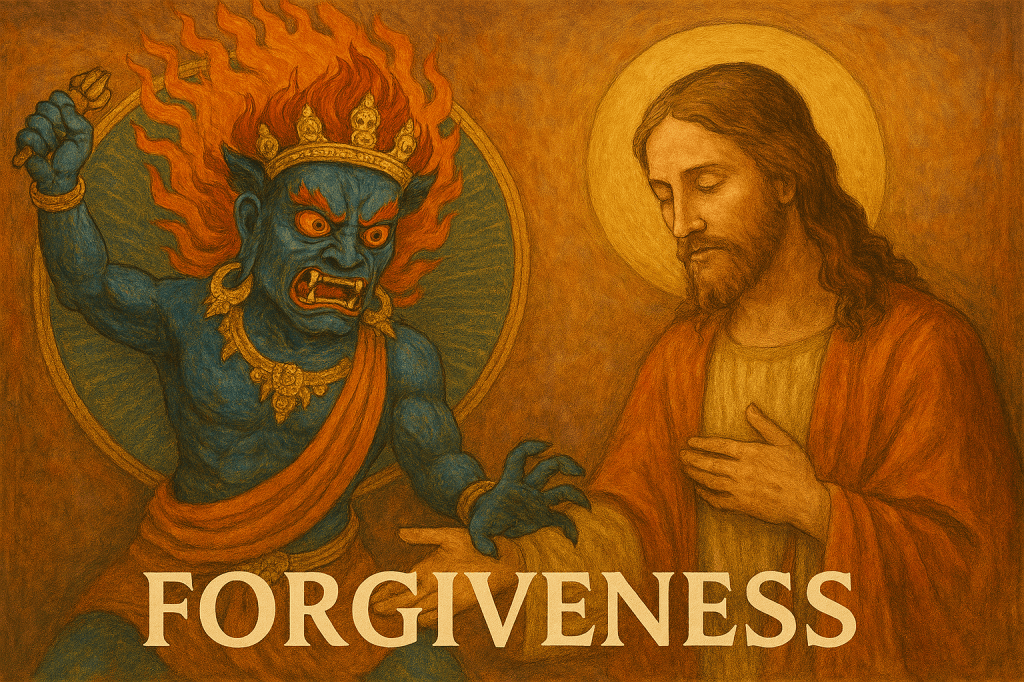
In Tantric Tibetan Buddhism, forgiveness is not traditionally emphasized as it is in Christianity. Tibetan Buddhism places greater emphasis on karma, the universal law of cause and effect. According to this view, actions inherently produce outcomes, and there is little scope for simply “forgiving” or releasing someone from the karmic consequences of their deeds. Instead, purification practices are prescribed to cleanse one’s negative karma. If they are not done effectively, retribution is a given.
Ken McLeod, a prominent Western teacher and translator of Tibetan Buddhism, highlights this point clearly in an article titled, “Forgiveness is not Buddhist.” He writes, “In Tibetan Buddhism, forgiveness isn’t really addressed in the same way as it is in Christianity. Instead, there’s an emphasis on purification and insight into the nature of mind and action.” [1]
Practitioners engage in rituals and meditation practices, such as Vajrasattva purification practices, visualizing negative karma being cleansed. However, these rituals differ fundamentally from the Christian idea of interpersonal forgiveness. They are personal acts of purification rather than relational acts of forgiving or seeking forgiveness from another person or deity.
Although the emphasis in Tibetan Buddhism is allegedly on compassion (karuna), a larger concept of retribution is often at work behind the scenes. Compassion in Buddhism is the profound desire to alleviate suffering universally, extending even to one’s perceived enemies. Tantra, paradoxically, emphasizes karmic retribution that allows the guru to “payback” perceived slights and disrespect secretly using black magic techniques or “rituals of subjugation.”
Personal Account: The Dark Side of the Teachings
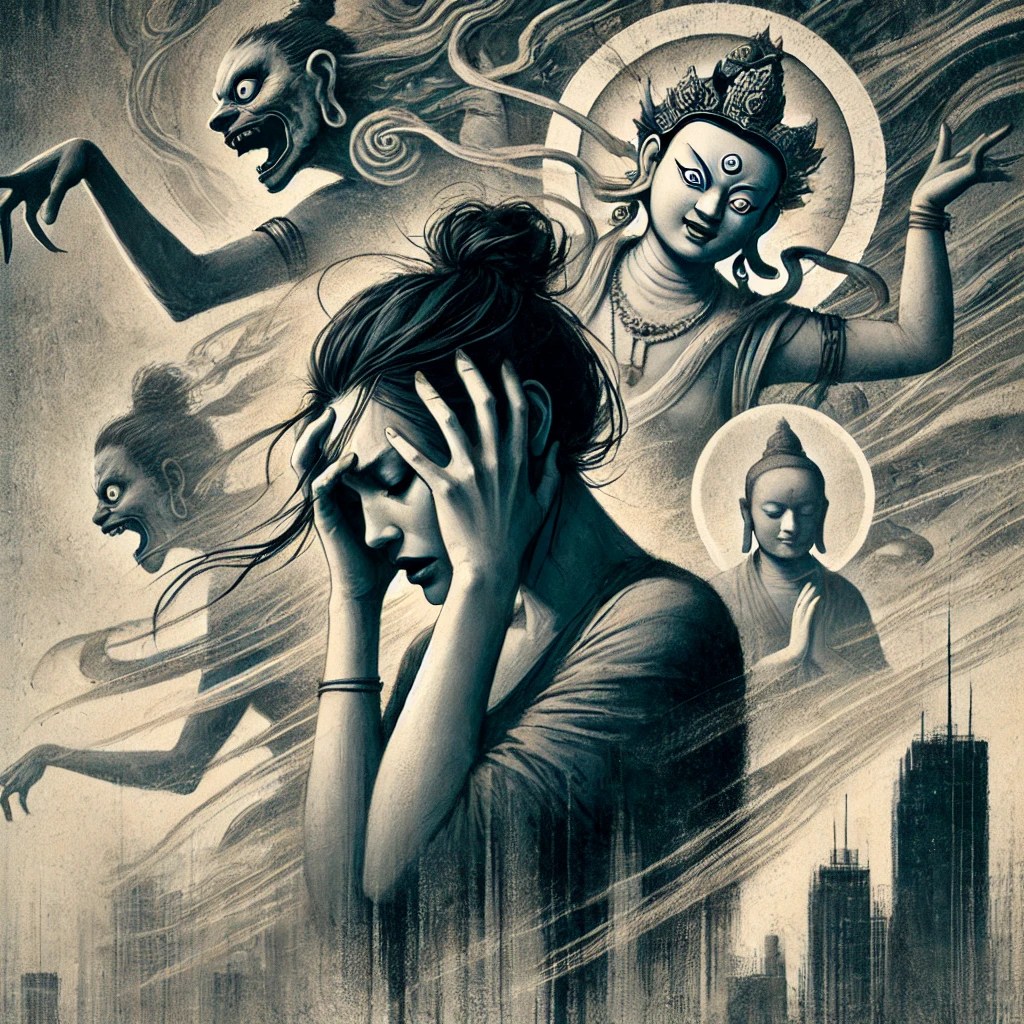
My own experience underscores the stark absence of forgiveness in Tantric Tibetan Buddhism. During a tantric ritual of annihilation, I desperately begged forgiveness from the guru for any perceived wrongdoing, hoping for mercy or compassion. I honestly did not know what I was being punished for. The guru, however, demonstrated not even the slightest bit of forgiveness or mercy. This painful event highlighted for me the profound differences between the compassionate forgiveness taught by Jesus Christ and the severe, impersonal karmic logic of Tantric Tibetan Buddhism.
Forgiveness in Christianity
In Christianity, forgiveness occupies a central and explicit place. It involves both human interpersonal forgiveness and divine forgiveness through the mercy and grace of God. Christianity explicitly encourages believers to forgive one another as God has forgiven them through Christ’s sacrifice on the cross.
Forgiveness in Christianity is relational, deeply rooted in repentance, reconciliation, and restoration of relationships with God and with others. It implies a personal release from the debt of sin through God’s grace, rather than the impersonal balancing of karmic scales.
Jesus teaches explicitly on forgiveness, such as in the Lord’s Prayer (“Forgive us our trespasses, as we forgive those who trespass against us”), emphasizing the interconnectedness of receiving and giving forgiveness. Forgiveness is portrayed not merely as a spiritual virtue but as a fundamental practice essential to spiritual health and salvation itself.
Western Practitioners and Misplaced Assumptions
Many Western practitioners of Tibetan Buddhism unconsciously overlay their Judeo-Christian cultural and moral values onto the tantric Buddhist teachings, often at their own detriment. They assume the presence of forgiveness and personal mercy that simply do not exist in the traditional tantric framework. This mistaken belief can lead practitioners to misunderstand or misinterpret the intentions and actions of teachers, making them vulnerable to exploitation and emotional and physical harm. Ultimately, recognizing these fundamental differences can lead to safety, and protection from mistaken spiritual paths. For more about the guru’s ability to engage in karmic retribution see here,here, and here.
In a dusty corner of southern India, something strange is happening. Among the Catholic untouchables of Tamil Nadu the Virgin Mary reigns. These are the Dalit communities who converted to Christianity to escape caste oppression. Here the Virgin Mary is not just the mother of Christ or the Queen of Heaven. She’s the protector from demons, the healer of the possessed, and the exorcist of lustful spirits who prey on young women. [1]
Her name here is Arockyai Mary, “Our Lady of Good Health,” and unlike the goddesses of India’s native pantheon, she never harms. She doesn’t demand blood, or rage, or possess.
This makes her an anomaly in a world where possession is an everyday threat and where menstruation, pregnancy, and the liminal chaos of female sexuality are believed to attract wandering spirits, often the ghosts of those who died violently or before their time. These spirits, it is said, latch onto the vulnerable, especially women, and drive them into trances and convulsions.
And then there are the Hindu goddesses like Mariyamman [2] and Kaliamman [3], powerful but volatile. They heal, but they can also possess, punish, and destroy. Unlike the Virgin Mary, who is seen as unconditionally loving and healing, Mariyamman and Kaliamman’s protection must be earned through ritual and sacrifice. Their presence is often feared as much as it is venerated, revealing a form of feminine divinity that is transactional, fierce, and unpredictable.
The deeper thread that ties this to my own journey through Eastern mysticism and into Catholic truth is that the female deities of India are not so much saviors as they are owners. They ride their devotees like horses often through an overpowering kundalini experience. They enter bodies without informed consent. They demand submission, sacrifice, and pain. This is what possession looks like when the divine manifests as fierce femininity unmoored from moral restraint.
But the Virgin Mary is different in kind, not just degree. She doesn’t exploit vulnerability; she protects it. Her power is rooted in love, not domination. She doesn’t punish women for their sexuality; she guards them from the predators that do.
Many of us who were drawn into the tantric and yogic traditions found ourselves worshiping goddesses we didn’t truly understand such as Kali, Vajrayogini, and Durga. These powerful beings granted “blessings” that often came in the form of disorientation, illness, and spiritual invasion. What we called “awakening” was perhaps possession, wrapped in ritual and mystique.
In the story of the Paraiyar women, we see this clearly. Demonic possession is a warning as well. The culture teaches women that if they stray outside ritual boundaries, if they become too sexually visible, if they travel alone at dusk or cross the wrong river, they open the door to attack. And it’s the Virgin Mary, not Kali, who shows up to cast the darkness out.
Humanity does not need more divine rage, but the one Woman who is pure benevolence: the Mother of Jesus who through her perfection is feared by and can cast out spirits and demonic goddesses.
[1] Source article: Deliège, Robert. “La Possession démoniaque chez les Intouchables catholiques de l’Inde du sud / Demoniac Possession Among the Catholic Untouchables in Southern India.” Archives de sciences sociales des religions, no. 79, 1992, pp. 115–134. Available online.
[2] Mariyamman is a powerful village goddess widely worshipped in South India, especially in Tamil Nadu. Her name combines “mari,” meaning rain or disease, and “amman,” meaning mother—making her the Mother of Rain and Disease. She is especially associated with illnesses like smallpox, fevers, and skin diseases, but also with fertility, childbirth, and protection from evil spirits. Visually, she often appears fierce—sometimes with fiery red skin, holding a trident, and crowned with flames—bearing a resemblance to goddesses like Kali or Durga. Her shrines are typically modest, and her worship is deeply rooted in folk rituals. Devotees may offer animal sacrifices, participate in firewalking, or fall into trances believed to be divine possessions. In many cases, women are the ones possessed by Mariyamman, and these episodes are interpreted as both blessings and warnings—depending on whether the goddess has been properly appeased.
[3] Kaliammam is a fierce village manifestation of the goddess Kali, worshipped primarily in Tamil Nadu and other parts of South India. The name “Kaliamman” translates to “Mother Kali,” reflecting her role as a local protective mother goddess rooted in folk traditions. Like Kali, she is associated with destruction, power, and the eradication of evil, but in the village context, she is also invoked for healing, fertility, and protection from malevolent spirits. Kaliamman is often depicted with dark skin, a lolling tongue, wild hair, and multiple arms holding weapons—symbolizing her unrestrained spiritual power. Her worship includes rituals that are intense and sometimes violent: offerings of blood, possession trances, firewalking, and dramatic acts of devotion are common. She is believed to possess her devotees—often women—either to bless them, deliver a warning, or punish neglect. She must be honored and feared. Her presence reinforces moral and ritual boundaries in the community, demanding reverence through sacrifice and submission rather than drawing near in mercy or compassion.
Vajrayana Buddhism presents itself as a path of radical transformation: a sacred alchemy where ordinary perception is transmuted into enlightened wisdom. Its ritual technologies are often described as “skillful means,” and its magical practices framed as expressions of “Buddha activity.” But the colorful mandalas and enchanting deity meditations may obscure something far more dangerous than most practitioners realize.
According to vajranatha.com, Vajrayana operates through four principal kinds of magical activity, each aligned with a cardinal direction, a color, and a particular type of power:
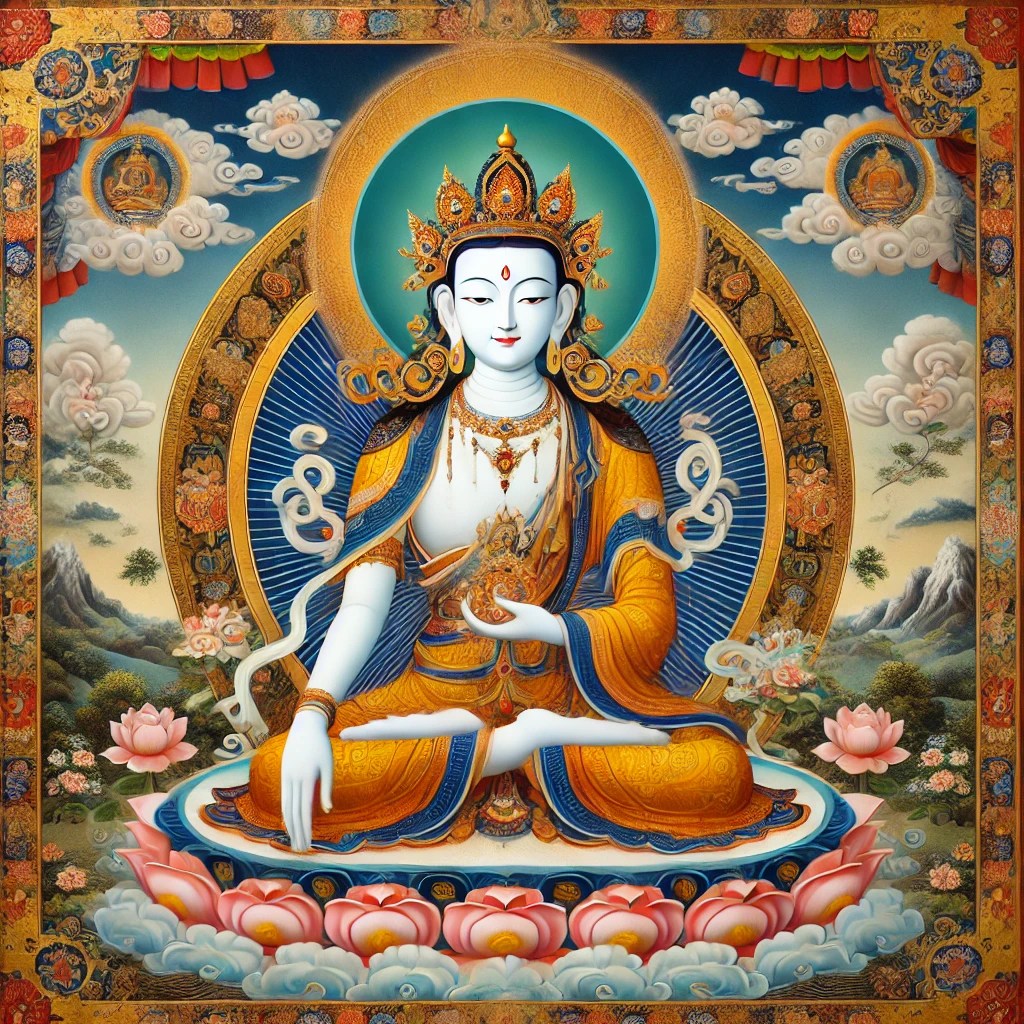
White (east): for pacifying and healing
Yellow (south): for increasing wealth and wisdom
Red (west): for attraction and control
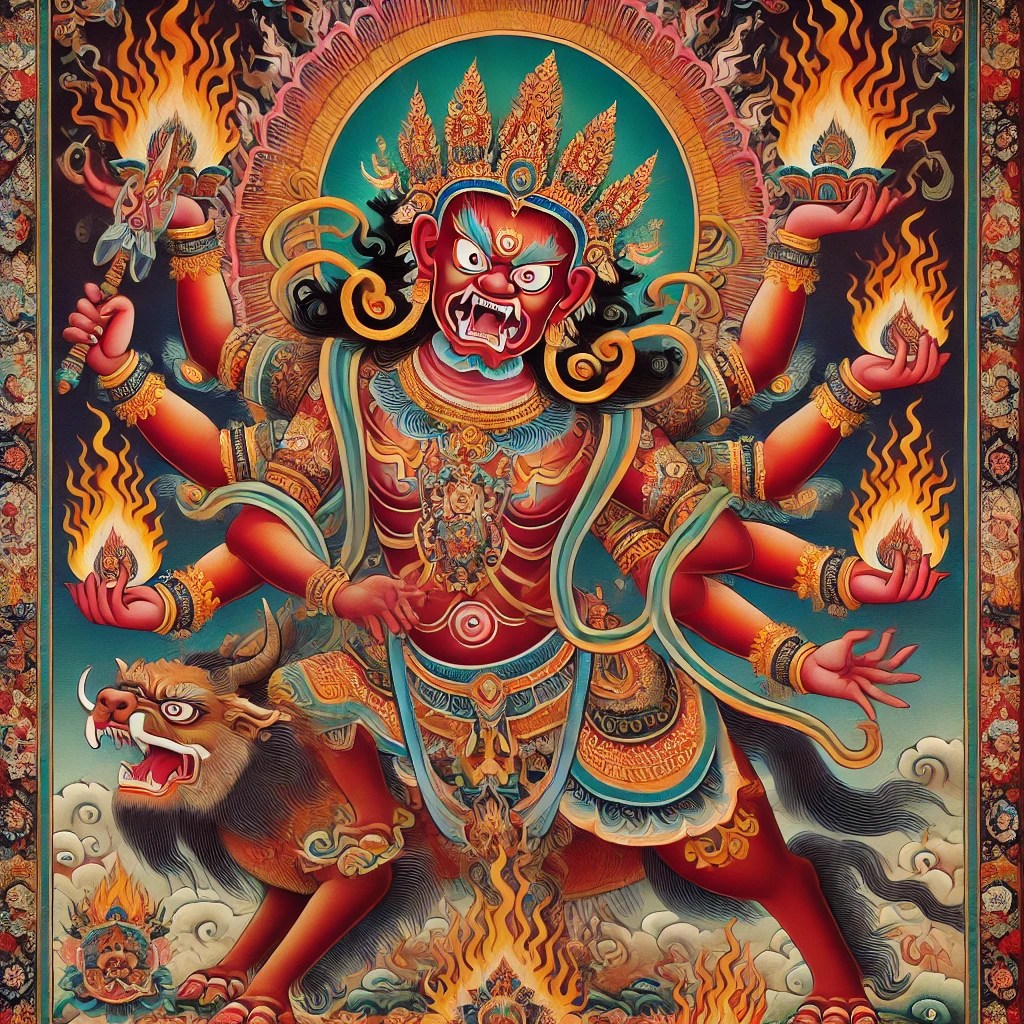
Dark blue or green (north): for wrathful subjugation and protection
These are personified in the deity forms of White Tara, Dzambhala, Kurukulla, and Vajrakilaya, respectively. Collectively, these “Four Activities” are described as enlightened, but their function mirrors the mechanisms of many other occult systems: healing, sorcery, love spells, exorcism, and domination.
So who, or what, is powering these rituals?
Chögyam Trungpa, one of the most influential Tibetan lamas to bring Vajrayana to the West, once gave a startlingly candid warning:
“Committing oneself to the Vajrayana teaching is like inviting a poisonous snake into bed with you and making love to it. Once you have the possibility of making love to this poisonous snake, it is fantastically pleasurable: you are churning out antideath potion on the spot. The whole snake turns into antideath potion and eternal joy. But if you make the wrong move, that snake will destroy you on the spot.” —Chögyam Trungpa
This is not a metaphor for the all-encompassing wisdom and compassion of the Buddhas and Bodhisattvas. It is a warning of immense spiritual danger.
Vajrayana demands the total surrender of body, speech, and mind, not only to the teachings, but to the guru and the spiritual forces behind those teachings. This surrender is cloaked in bliss, ecstasy, and the promise of transformation. But as Trungpa makes clear, one wrong move and the very force you trusted can turn lethal. It can turn on a dime.
I experienced this firsthand. It began as a profound visualization and mantra practice during a three-year retreat and gradually turned into energetic torment and psychological destabilization. The deities I once practiced became increasingly foreign, invasive, and predatory. The guru, once seen as a vessel of wisdom, became a wrathful executioner.
These practices are not what they seem: they tap into powerful magic. And one must ask, who is really powering these rituals? Who benefits when a practitioner opens themselves to these entities and their so-called “energies”? Why should we assume these forces are benevolent, simply because they have Buddhist names and appear in ornate, colorful iconography?
The structure described here isn’t just about religious symbolism or spiritual beauty, it reflects a deep psychological system designed to influence the mind through ritual. Vajrayana practices use visualization, chanting, offerings, and mantra repetition to create altered states of consciousness and emotional bonding with supernatural entities. This is what scholars call ritual psychology: the way ritual shapes belief, identity, and experience.
But Vajrayana doesn’t just manipulate the mind. It aligns closely with classic occult systems, ones that use similar rituals to summon, contact, and make pacts with spirits. Healing and increase, attraction and domination are bit neutral tools. They are technologies for channeling unseen forces toward specific outcomes. And these forces are personified, and bonded with through ritual acts that, the deeper you go, begin to resemble spiritual possession with demonic pacts.
In my own experience, the entities I contacted through these practices eventually revealed themselves to be something other than the enlightened mind of the Buddhas, whatever that might be. They had their own will, their own agendas, and their own personalities. Especially in the darker rites of semi-wrathful and wrathful deities, there was a sharp edge of coercion, and spiritual threat.
If we take these rituals seriously, not as colorful mysticism, but as real technologies of spiritual manipulation, then we must also take seriously the possibility that their source may not be benevolent.
Just because it’s branded as “Buddha activity” doesn’t mean it is holy. Survivors of spiritual abuse in Tibetan Buddhism must be brave enough to ask the hard questions. Who, or what, are we inviting into our minds and bodies when we chant these mantras, visualize these beings, and make offerings in exchange for spiritual results? Are these forces truly enlightened or are we just calling them that because we’ve been taught to?
When your healing comes at the cost of spiritual bondage…When your wisdom is bought by making pacts with demons…Something is deeply wrong.
Magic in Vajrayana is not peripheral but central to the practice. And it must be examined not with awe, but with clear-eyed discernment.
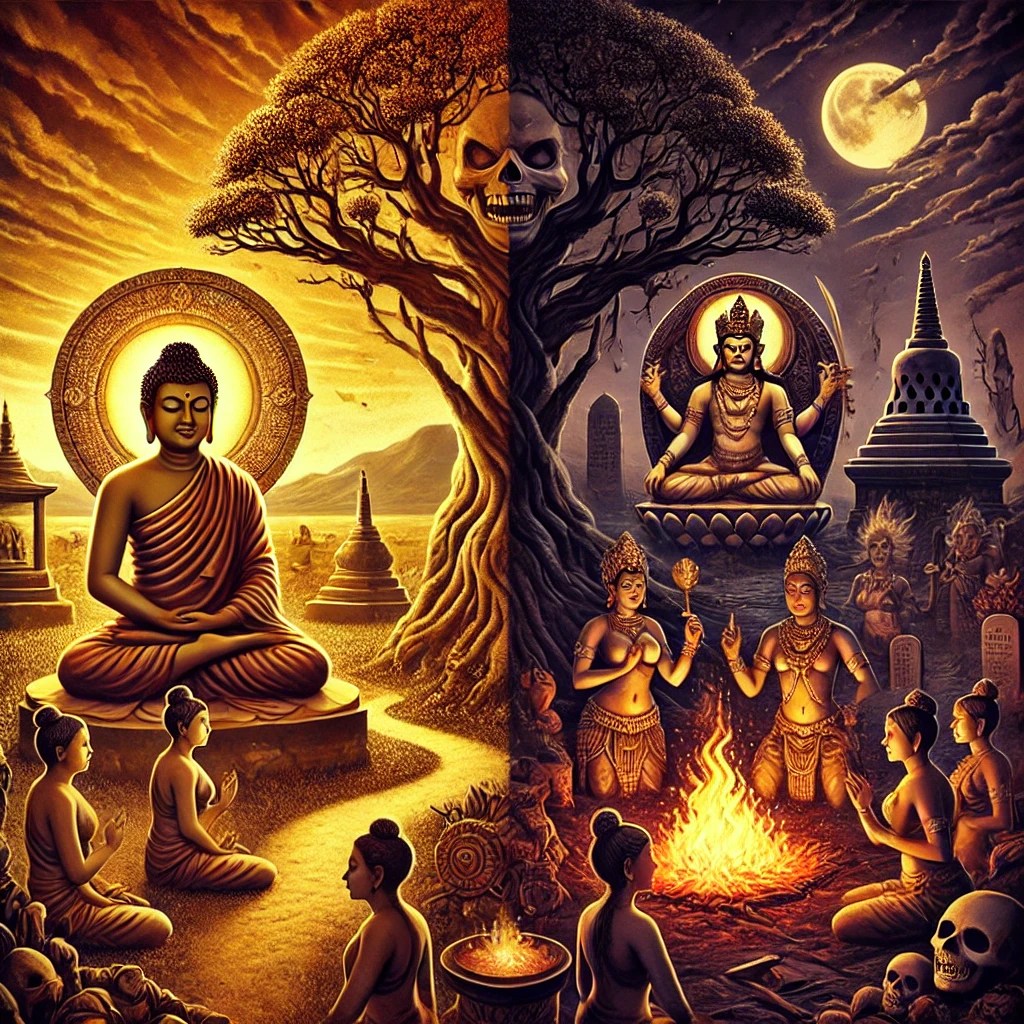
The Buddhist Tantras present themselves as the so-called ‘fast track’ to enlightenment, yet their historical origins, practices, and content diverge so significantly from the Buddha’s original teachings that one must ask: has something hijacked Buddhism under the guise of esoteric wisdom? Given that the Buddha never endorsed magical practices, sexual rituals, or deity worship, why would these suddenly emerge in the later tantric texts? Did an alien or even malevolent force infiltrate and co-opt Buddhism?
The Evolution of Tantra: A Radical Departure
David B. Gray’s study of the Cakrasamvara Tantra and Francesco Sferra’s analysis of the Hindu-Buddhist tantric relationship both expose an inconvenient truth: Tantric Buddhism did not originate organically from the Buddha’s teachings. Instead, it emerged centuries later, largely influenced by non-Buddhist elements, specifically, Hindu Śaiva traditions and indigenous occult practices.
The Buddha’s original teachings in the Pali Canon and early Mahayana texts emphasized ethical living, meditation, and wisdom as the path to liberation. Nowhere in the sutras do we find instructions for transgressive sexual rites, violence, or summoning spirits, yet these are prominent features in Tantric Buddhism.
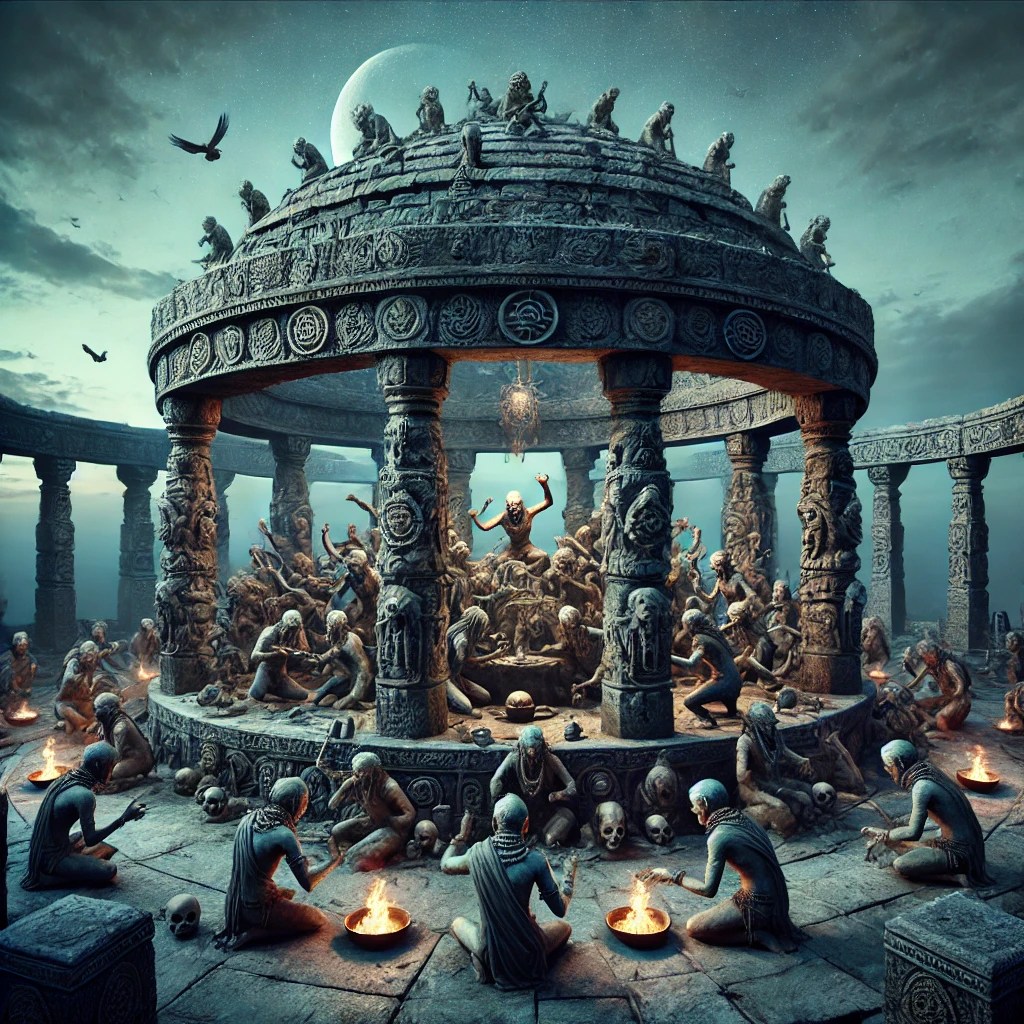
Gray’s study of Cakrasamvara Tantra makes it clear that these texts were not composed within monastic Buddhist institutions but rather in liminal, non-traditional spaces. The practitioners of these tantras, the siddhas, were often depicted as wandering ascetics engaging in bizarre and shocking rituals. This movement incorporated elements of Hindu Kapalika practices, which involved cremation ground rituals, consumption of taboo substances, and the worship of wrathful deities. Such imagery is wholly alien to the serene and ethical path laid out by the Buddha.
Magical Powers and Occult Influences
One of the most glaring discrepancies between Tantra and early Buddhism is the obsession with supernatural powers (siddhis). In the Cakrasamvara Tantra, entire chapters are dedicated to spell-casting, invisibility techniques, and the control of spirits. Gray describes a ritual where an adept pulverizes the skin of a corpse’s foot, mixes it with blood, and recites mantras to gain the power of invisibility. This is not the noble Eightfold Path.
Similarly, Sferra highlights the deep infiltration of Hindu esoteric ideas into Buddhist Tantra. The very concept of mantra as a mechanism for altering reality aligns more closely with Vedic sacrificial traditions than with the Buddha’s core doctrine of impermanence and dependent origination. If enlightenment is beyond form, why is so much emphasis placed on elaborate rituals, deity worship, and secret initiations?
The “Demonic” Question: An Ancient Deception?
Given the radical departure from Buddhist teachings, one must ask: what is really behind the Tantras? If Tantra promises enlightenment but is steeped in dark rituals and transgressive practices, could it be a deception? The Bible describes Satan as a deceiver who masquerades as an angel of light (2 Corinthians 11:14). Could Tantra be a system where malevolent entities disguise themselves as enlightened deities?
Tantric deities such as Heruka and Vajravārāhī are described as trampling on Hindu gods, signifying the subjugation of earlier traditions. However, they themselves bear striking similarities to wrathful Hindu deities like Bhairava and Kali. Gray notes that these deities were often worshipped in charnel grounds, places of death and decay: locations that, across cultures, have been associated with spirits and demonic activity.
Furthermore, the Yoginītantras introduce figures such as dakinis, who were once seen as flesh-eating spirits but were later reinterpreted as enlightened beings. Why would the Buddha, who taught the renunciation of desire, suddenly endorse interactions with terrifying, sexualized female spirits? Could it be that these entities were never enlightened at all, but rather opportunistic spirits hijacking Buddhism for their own ends?
Why Would the Buddha Suddenly Promote Magic?
Sferra’s work highlights that even within Buddhist circles, there was resistance to the Tantras. The Yoginītantras, which emphasize sexuality and violent rituals, were seen as particularly controversial. The historical Buddha spent his life teaching śīla (morality), samadhi (concentration), and prajñā (wisdom). The introduction of abhiseka (initiation rites), visualization of deities, and sexual yoga represents an alien system grafted onto Buddhism rather than an authentic development of his teachings.
Even within later Buddhist traditions, there were attempts to downplay the more disturbing aspects of Tantra. Gray notes that later Tibetan commentators, such as Tsongkhapa, reinterpreted or omitted elements that were too transgressive. If Tantra were truly the highest Buddhist path, why would it require such extensive revision?
Conclusion: A Counterfeit Path?
Tantric Buddhism presents itself as a shortcut to enlightenment, but historical scrutiny reveals it to be a hybrid system, borrowing heavily from non-Buddhist traditions while contradicting the very essence of the Buddha’s teachings. The emphasis on occult powers, erotic mysticism, and deity worship starkly contrasts with the original Buddhist path.
If the Buddha himself never taught Tantra, why should we accept it as a legitimate form of Buddhism? More disturbingly, given its fixation on spirit invocation, possession, and ritual magic, is it possible that Tantra is not just an aberration but an infiltration? Is it a deception designed to mislead practitioners?
The questions remain open, but one thing is clear: Tantra is not Buddhism as the Buddha taught it. Those seeking truth must discern whether they are walking the Buddha’s path or following an elaborate illusion that masquerades as enlightenment.
REFERENCES:
Gray, David B.The Cakrasamvara Tantra: Its History, Interpretation, and Practice in India and Tibet. Religion Compass 1, no. 6 (2007): 695–710. https://doi.org/10.1111/j.1749-8171.2007.00046.x.
Sferra, Francesco. “Some Considerations on the Relationship Between Hindu and Buddhist Tantras.” Journal of the International Association of Buddhist Studies 27, no. 1 (2004): 263–307.
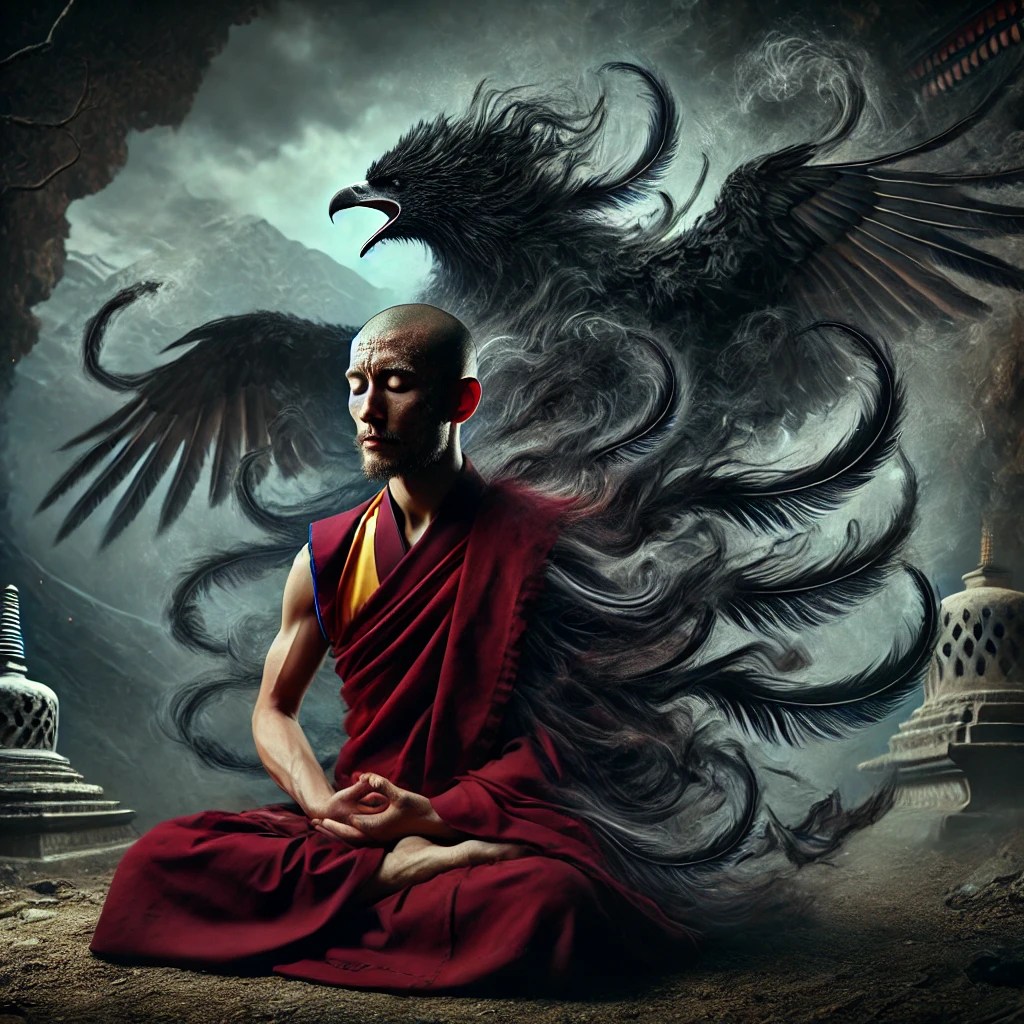
Shape-shifting has long been a recurring theme in mystical traditions across the world, appearing in shamanic practices, tantric rituals, and folklore. In Tibetan Buddhism, the Chakrasamvara Tantra contains instructions for shape-shifting, particularly into animals such as hawks and eagles. The presence of these spells in a sacred text raises an intriguing question: where do these siddhis (spiritual powers) truly originate from? Are they manifestations of enlightenment, or do they come at a cost, placing the practitioner in debt to unseen forces?
Shape-Shifting in the Cakrasamvara Tantra
The Cakrasamvara Tantra is one of the most esoteric and influential texts within the Anuttarayoga (highest yoga) class of Tantric Buddhism. Among its many rituals, it contains precise instructions for practitioners to take on non-human forms, including that of a bird. David Gray, in his translation and commentary on the text, notes that these shape-shifting spells are not mere metaphors but were understood as actual yogic attainments.
The text outlines multiple methods for transformation. One passage describes a ritual in which a practitioner can enchant a cord made from the sinew or hair of an animal and bind it around their neck to assume that animal’s form. This includes birds such as hawks, owls, and vultures, as well as larger quadrupeds (Cakrasamvara Tantra, Chapter XLVII, p. 363). Another section states that by consuming or even touching an enchanted substance, the yogin may take on a divine or animal form (Cakrasamvara Tantra, Chapter XLIX, p. 369). These instructions suggest that shape-shifting was considered a real and attainable siddhi for advanced practitioners.
In Vajrayana, these extraordinary abilities, known as siddhis, are divided into two categories:
Mundane siddhis (laukika siddhis), which include powers such as flight, invisibility, and shape-shifting.
Supreme siddhis (lokottara siddhis), which refer to enlightenment itself.
While the latter is the ultimate goal of practice, the existence of spells for mundane abilities suggests that some practitioners were actively seeking, and attaining, more earthly, supernatural powers.
But why would a Buddhist tantra contain shape-shifting spells? The standard response is that these abilities help advanced practitioners aid sentient beings and overcome obstacles. However, if the goal were purely benevolent, why does the very same tantra contain spells for harming, controlling, and even destroying sentient beings? The presence of violent and coercive rituals alongside shape-shifting practices suggests that acquiring such siddhis was not solely about compassion or enlightenment. Instead, these abilities may have served more ambiguous or self-serving purposes, whether for power, domination, and even destruction. Moreover, history is filled with accounts of people acquiring mystical abilities at a hidden cost, often through pacts with forces beyond their ultimate control or comprehension. If a yogin can assume the form of an animal, what else might they be gaining or losing in the process?
Debt to the Unseen: Shape-Shifting and Supernatural Pacts
The idea that magical transformations require spiritual debt is not unique to Tantra. Across cultures, shape-shifting often comes with hidden agreements between the practitioner and demonic entities.
Shamanism and Possession: In many indigenous traditions, a shaman does not shape-shift alone but must first enter a trance state, often facilitated by spirits or tutelary deities. This raises the question, when a shaman transforms into an animal, are they truly in control, or is something else working through them?
Vampirism and the Undead Pact: The myth of the vampire is closely related to shape-shifting, with folklore describing their ability to turn into bats, wolves, or mist. Yet, vampires are universally depicted as cursed beings who exist by taking the life force of others. Their transformations are not self-generated but come as a consequence of an external force, a dark exchange that binds them to an unnatural state.
Faustian Bargains in Occult Traditions: From medieval grimoires to modern occultism, the idea persists that those who seek supernatural abilities must often enter into a contract with demonic non-human entities. The magician gains knowledge or power but loses something in return, whether it be autonomy or a portion of their soul.
Could the siddhis described in tantric texts function similarly? If shape-shifting is possible, does it occur through the practitioner’s own spiritual mastery, or is it facilitated by a demonic force to which they become indebted?
The Cost of Siddhis: Are They Truly Benevolent?
Tantric Buddhism teaches that mundane siddhis should never be sought for their own sake. In the Hevajra Tantra, a text closely related to Chakrasamvara, the practitioner is warned that seeking supernatural abilities out of attachment can lead to ruin. Some Buddhist teachers even caution that siddhis can become obstacles on the path to liberation, enticing practitioners away from true spiritual realization.
If shape-shifting and similar siddhis are real, should they be seen as gifts of an awakened mind or as evidence of hidden transactions with demonic forces? If the latter, what do these forces ultimately seek in return?
For those who have witnessed such transformations firsthand, the question remains: What is really behind them?
[1] Gray, David B. (2007). The Cakrasamvara Tantra (The Discourse of Śrī Heruka): A Study and Annotated Translation. New York: American Institute of Buddhist Studies at Columbia University. ISBN: 978-0975373460. See Chapter XLVII, p. 363, and Chapter XLIX, p. 369 for descriptions of shape-shifting methods.
Tibetan Buddhism is often portrayed as a peaceful, meditative tradition centered on compassion and enlightenment. However, this masks a complex esoteric system that includes the worship and manipulation of worldly protectors (Chökyong) and wrathful spirits. While some of these entities are invoked for protection and blessings, they can also be weaponized against perceived enemies. In this article, we explore the darker side of tantric practices involving these beings and how they can be used to harm others.
Worldly Protectors: Not Always Benevolent
Worldly protectors (Tib. Chökyong) are not enlightened beings but rather powerful spirits, often local deities or ancient demons that were subdued and bound by tantric masters into serving the Buddhist dharma. Unlike fully enlightened protectors, who “alledgedly” operate beyond mundane entanglements, worldly protectors still possess emotions, grudges, and the capacity for harm. Their allegiance to particular sects or lineages makes them especially useful for those seeking to gain favor or exert power.
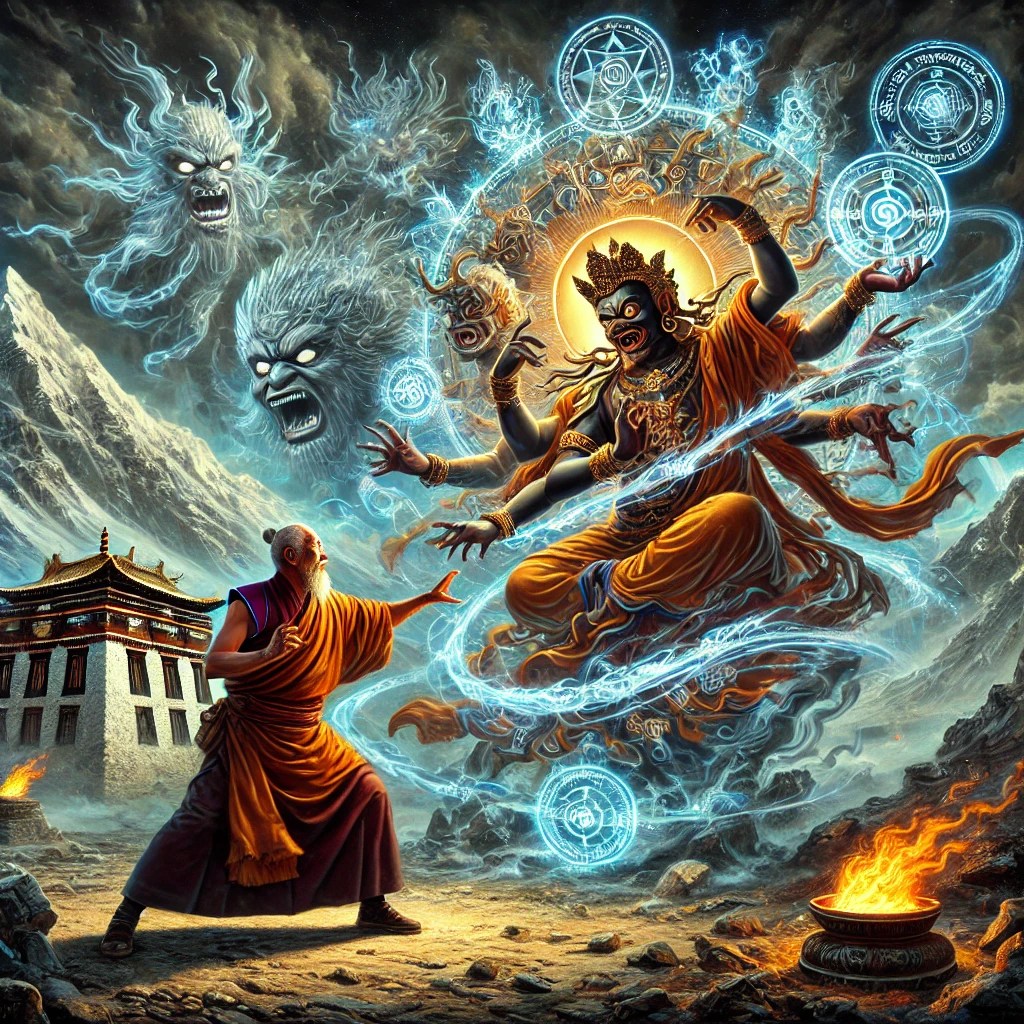
Beyond protectors, Tibetan tantric Buddhism includes rituals explicitly designed to summon harmful spirits to attack enemies. These practices often involve wrathful deities and demons, coercing them into carrying out curses, sickness, or even death.
Gyalpo spirits are mischievous and vengeful entities, often former monks or rulers who became wandering ghosts. These spirits can be bound through ritual to inflict misfortune, financial ruin, or insanity on an intended victim. Their influence is particularly feared in tantric monasteries.
Mamo spirits are wild, untamed female entities that exist in liminal spaces between worlds. These spirits are associated with plagues, natural disasters, and personal calamities. Invoking them requires blood offerings and precise tantric rituals to direct their chaotic energy toward an enemy. (These days the blood offerings have probably been replaced by symbolic blood offerings like red tormas–offering cakes made of barley flour and butter and painted red). The risk, however, is that Mamos are unpredictable and can turn against the summoner if not properly controlled.
Wrathful Drupchods in Tibetan Monasteries
In Tibetan monasteries in India and Nepal, large-scale tantric rituals known as drupchods are performed to invoke wrathful deities such as Vajrakilaya and Mahakala. These elaborate ceremonies involve extensive mantra recitations, fire offerings (homa), and ritual dances aimed at subjugating negative forces. While officially framed as purification rituals, they also contain elements of esoteric warfare.
The practice of using effigies (linga) in Tibetan Buddhist rituals, particularly during drupchods invoking wrathful deities like Vajrakilaya and Mahakala, is well-documented in esoteric Buddhist literature. These effigies are crafted to represent specific enemies, both spiritual and human, and are often imbued with personal or symbolic elements to establish a metaphysical link to the intended target. The ritual destruction, burning, or expulsion of these effigies is believed to direct the wrathful energy of the deity towards those perceived as threats.
Scholarly research highlights the significance of these practices. For instance, Haoran Hou’s study on The Ritual Use of Human Effigies in the Esoteric Buddhist Literature from Karakhoto,discusses how liṅga effigies were utilized for purposes such as inflicting harm, healing, and exorcism. These rituals, originating in India, traversed through Tibet and extended into regions like the Tangut Empire and the Yuan Dynasty. The study provides translations and annotations of ritual texts, illustrating the methods of making and using liṅga effigies for harming humans and other purposes, while exploring their transmission across Eastern Central Asia between the 11th and 14th centuries.
Additionally, contemporary practices continue to reflect these ancient traditions. At the Palpung Sherabling monastery in Baijnath, India, monks perform the cham dance on the eve of the Tibetan New Year, invoking the wrathful deity Mahakala. This ritual involves monks dressed in vibrant robes and menacing masks enacting sacred dances, accompanied by drums, cymbals, and horns. A significant aspect of this ceremony is the creation and subsequent burning of a large mask-like representation of Mahakala, made from barley flour and butter. This act symbolizes purification and the elimination of negative forces, aligning with the traditional use of effigies to target and dispel obstacles or perceived threats.
These sources underscore the ritualistic use of effigies in Tibetan Buddhist ceremonies, highlighting their role in both historical and contemporary contexts to symbolically address and neutralize adversarial forces.
How These Forces Are Used in Power Struggles
While many Tibetan Buddhists are unaware of these esoteric practices, high-ranking lamas and tantric practitioners have long used them to settle disputes, intimidate rivals, punish samaya breakers, and maintain control. Whether through secret rituals, oracles, or direct curses, these entities serve as supernatural enforcers in an unseen war for power within the tradition.
Historically, factions within Tibetan Buddhism have accused each other of using protectors and demons for political advantage. Even the exile of the Dalai Lama from Tibet involved a struggle over a protector propitiation. In modern times, stories persist of lamas employing such methods against those who leave or criticize the lama or the tradition.
Breaking Free from the Grip of These Forces
For those who have problems in Tibetan Buddhism and experience its darker aspects, the lingering influence of these protectors and spirits can be overwhelming. The key to breaking free lies in renouncing, breaking ties, forgiving those who harmed you, and refusing to participate in any aspect of Tibetan Buddhism. If one needs protection it is necessary to embrace a spiritual path that does not require servitude to wrathful entities. I find solace in Christian prayer and deliverance, a system that offers freedom from demons, witchcraft, and pagan practices.
Conclusion
While Tibetan Buddhism outwardly promotes compassion and enlightenment, its esoteric layers reveal a different story, one where worldly protectors and demons can be weaponized against others. These beings, bound by oaths and rituals, operate in a liminal realm and can be used for both defense and destruction. Understanding their dual nature is crucial for anyone seeking to navigate or escape the hidden dangers of tantric practice.
References:
Hou, Haoran.The Ritual Use of Human Effigies in Esoteric Buddhist Literature from Karakhoto. BuddhistRoad Paper Series 2.3. Ruhr-Universität Bochum, 2023.
Cuevas, Bryan J.Illustrations of Human Effigies in Tibetan Ritual Texts: With Remarks on Specific Anatomical Figures and Their Possible Iconographic Source. Journal of the Royal Asiatic Society 21, no. 1 (2011): 73–97.
Dreyfus, Georges.The Shugden Affair: Origins of a Controversy. Journal of the International Association of Buddhist Studies, 1998.
Nebesky-Wojkowitz, René de.Oracles and Demons of Tibet: The Cult and Iconography of the Tibetan Protective Deities. The Hague: Mouton, 1956.
Lopez, Donald S.Prisoners of Shangri-La: Tibetan Buddhism and the West. Chicago: University of Chicago Press, 1998.
When I share my experience with Vajrayāna Buddhism, I encounter two distinct reactions.
Some people, those who don’t practice Tibetan Buddhism but have helped individuals suffering spiritual harassment from the occult, immediately recognize the patterns I describe.
Others, particularly Western Vajrayāna practitioners and scholars, dismiss my testimony outright.
They assume that my experience must be:
A misunderstanding of Vajrayāna teachings.
A psychological disturbance.
The result of improper practice.
A projection of my fears of retribution.
But my experience is not only real but also completely plausible when examined through the lens of history, psychology, and Vajrayāna’s own teachings.
The Problem with Dismissal: A Lack of Critical Engagement
Many Western Vajrayāna practitioners approach the tradition with a romanticized view. They believe they have found an unbroken lineage of wisdom, distinct from Western religion and free from the power dynamics that have corrupted other faiths. They assume they can pick and choose what they accept while ignoring the rest.
But if we apply some intellectual honesty it is clear that:
If someone left a charismatic cult claiming they had been spiritually manipulated and attacked, we wouldn’t immediately dismiss them.
If someone escaped from a Satanic cult and said demons pursued them, we wouldn’t automatically assume they were delusional.
If someone left a New Age movement after a kundalini awakening that triggered possession-like symptoms, we wouldn’t rush to call them crazy. Many Western Buddhists acknowledge that kundalini can cause spiritual emergencies.
If an anthropologist studied indigenous shamanic traditions and found initiates reporting spirit attacks, scholars wouldn’t dismiss their experiences. They’d document how these encounters function in that culture.
Yet when someone shares a disturbing experience from Vajrayāna Buddhism, the immediate response is:
“You misunderstood the teachings.”
“The deities or gurus would never harm anyone.”
“The deities aren’t real; they’re just projections of your own mind.”
“You must have mental health issues.”
This double standard serves as a defense mechanism, not an intellectually rigorous position.
Vajrayāna’s Own Teachings Make My Experience Plausible
Vajrayāna, more than any other Buddhist tradition, teaches that initiation and meditation create real, external effects in the spirit world. If you don’t believe that, then you’re not truly practicing Vajrayāna; you’re engaging with a secularized, sanitized Western reinterpretation.
Consider the following:
Empowerments (abhisheka) explicitly link practitioners to tantric deities, dakinis, and protectors. If you believe these forces are real, why assume they are always benevolent?
Vajrayāna warns against breaking samaya (tantric vows), claiming it angers deities and protectors. Why would angering supernatural beings have consequences if they were just psychological symbols?
Many initiates, particularly in traditional Tibetan settings, report strange and distressing experiences such as dream visitations, intrusive thoughts, even physical ailments. Teachers will say, “This is your karma ripening from breaking samaya,” but isn’t this just another way of saying that ambiguous spiritual forces attached to me through the empowerments and practices?
Vajrayāna itself affirms the reality of what I describe, it just frames it differently, often in ways that maintain control over practitioners while allowing plausible deniability.
The Historical Context of Tantra and Its Parallels to Occultism
Vajrayāna did not develop in a vacuum.
Tantric Buddhism emerged in India in the late first millennium, heavily influenced by esoteric Hindu traditions, Shaiva Tantra, and the Kapalikas, wandering renunciants who engaged in spirit summoning, sex rituals, and corpse meditation.
Chinese Buddhist monks like Hsuan Chao were deeply critical of Vajrayāna because they saw parallels between tantric rituals and the black magic they had encountered in India. Despite these warnings, Tibetan Buddhist traditions absorbed these practices wholesale.
Western scholars readily acknowledge that tantric Hinduism and Shaivism engage with external spiritual forces. Why, then, would Buddhist Tantra, which emerged in the same time and place, not also be interacting with something real?
Psychological Manipulation and Cognitive Entrapment
Even if you reject the idea of spirit harm from gurus and tantric deities, consider the psychological and emotional conditioning at play in Vajrayāna.
Mantra repetition rewires the brain. Studies show that repetitive prayer, chanting, and visualization alter consciousness, reduce critical thinking, and induce dissociation.
Guru devotion fosters dependency. Many ex-practitioners struggle with guilt, fear, and paranoia, symptoms identical to those of cult survivors.
The fear of breaking samaya becomes a mental prison. Some Vajrayāna students dismiss samaya punishments as psychological control, while others live in terror of divine retribution. Either way, the belief system exerts total influence over the mind.
If Vajrayāna were just an innocuous Buddhist tradition, why does the thought of leaving it leave so many people in existential terror?
The “Magical” Elements in Buddhist Sutras: Later Additions?
One common argument is that Vajrayāna is just a natural extension of Mahāyāna Buddhism, thus the spells, deities, and rituals have always been part of Buddhist practice.
That’s only partially true.
While some Mahāyāna sutras contain dhāraṇīs (magical incantations), serious scholars debate whether these were later interpolations, added to appeal to popular religious sensibilities.
The Pali Canon, the earliest Buddhist texts, explicitly warns against summoning spirits and using supernatural powers for personal gain. The Buddha rejected such practices. Vajrayāna, by contrast, embraces them.
If you’re a Western scholar, you might want to ask: How did this shift happen? If you’re a Vajrayāna practitioner, you might ask: Why does this look more like occultism than Buddhism?
Conclusion
If you are a Vajrayāna practitioner or scholar, you might still be skeptical. That’s fine. I only ask that you apply the same intellectual standard to my experience that you would to any other spiritual testimony.
If you believe Vajrayāna empowerments connect practitioners to supernatural forces, consider the possibility that these forces may not always be benevolent.
If you acknowledge the historical connection between Vajrayāna and Hindu Tantra, ask whether something deeper is at play.
If you recognize the psychological power of guru devotion and mantra repetition, be open to the idea that Vajrayāna entraps people in ways they don’t initially see.
I’m not here to tell anyone what to believe. But I am here to challenge you to question what you think you know about Vajrayāna, power, and the unseen realms.
If you think what happened to me could never happen to you, think again.
The emergence of Tantric Buddhism, also known as Vajrayana, represents a radical departure from the original teachings of the Buddha. While early Buddhism focused on ethical conduct, meditation, and wisdom as the path to enlightenment, Tantra introduced esoteric rituals, mantras, and controversial practices that blurred the lines between Buddhism and Hindu Shaivite traditions. The origins of Tantric Buddhism can be traced back to the mid-first millennium CE, gaining prominence between the seventh and tenth centuries. This period saw its infiltration into the great Buddhist monastic institutions of India, including the renowned Nalanda University.
The Rise of Tantric Buddhism
By the seventh century, Buddhist monks and scholars at Nalanda, Vikramashila, and other centers of learning began incorporating Tantric elements into their teachings. The introduction of deities, elaborate rituals, and magical practices marked a significant transformation from the rational and ethical framework established by the Buddha. The Guhyasamāja Tantra (c. 8th century) and other tantras became part of monastic curricula, suggesting that at least some scholars at these institutions were receptive to these esoteric traditions.
However, not all Buddhist monks welcomed these innovations. The Chinese monk Hsuan Chao (Xuanzhao), who traveled to India in the 10th century, was particularly critical of the Tantric Buddhists he encountered. He likened their practices to those of the Kapalikas, a Shaivite sect notorious for engaging in transgressive rituals involving human remains, sexual rites, and magical invocations.
Hsuan Chao’s Observations
Hsuan Chao’s journey to India was part of a larger Chinese monastic tradition of seeking authentic Buddhist teachings from their source. Although there is no definitive evidence that he studied at Nalanda, he likely visited Buddhist centers where Tantra was taught and observed its practitioners firsthand. He was disturbed by their practices, which he viewed as a stark deviation from the ethical and meditative traditions that defined early Buddhism.
His critiques were not merely personal reflections; they were grounded in the belief that Buddhism had been corrupted by external influences. The Buddha’s original teachings, as preserved in the Pali Canon and early Mahayana texts, emphasized renunciation, discipline, and insight. By contrast, Tantric Buddhism introduced complex rituals, deity worship, and doctrines that mirrored Hindu traditions, leading figures like Hsuan Chao to question whether these practices were truly Buddhist at all.
The Heretical Shift
Tantric Buddhism’s divergence from the core principles of Buddhism raises important questions about its legitimacy. The Buddha’s teaching on suffering (dukkha), impermanence (anicca), and non-self (anatta) left no room for the mystical aspirations of Tantra. Yet, by the late first millennium, Tantric texts were becoming influential within Buddhist traditions, particularly through the incorporation of dhāranīs (magical incantations) and mantras into Mahayana and Vajrayana texts. Some Mahayana sutras, such as the Lotus Sutra and Golden Light Sutra, contain elements of magical prayer, leading to scholarly debate over whether these were original to the texts or later interpolations. The presence of spells and protective charms in Buddhist literature suggests that such additions may have been efforts to appeal to popular religious sensibilities rather than direct reflections of the Buddha’s earliest teachings.
It is likely that some of these magical elements were added later, as Buddhism adapted to local traditions and sought to compete with Hindu and indigenous religious movements. In doing so, it absorbed ritualistic elements that were foreign to its original doctrine. The Buddha himself warned against blind faith in supernatural powers, emphasizing instead the development of wisdom and ethical conduct. This makes the inclusion of tantric rituals, many of which involved breaking moral precepts, highly suspect.
Conclusion
The rise of Tantric Buddhism represents a significant and, arguably, heretical transformation of the Buddha’s teachings. While early Buddhism sought liberation through ethical discipline and meditation, Tantra embraced occult rituals and esoteric knowledge as shortcuts to enlightenment. Monks like Hsuan Chao saw this as a dangerous deviation, likening Tantric Buddhists to the Kapalikas, whose extreme practices had long been considered outside the bounds of both Buddhist and Hindu orthodoxy.
The question remains: Was Tantric Buddhism a legitimate evolution of Buddhist thought, or was it a corruption of its foundational principles? Given its reliance on practices that directly contradicted the Buddha’s teachings, the latter seems more likely. As such, the study of Tantric Buddhism should be approached with a critical eye, recognizing its fundamental departure from the wisdom and ethics that once defined the Buddhist path.
In the Western embrace of Tibetan Buddhism, samaya (sacred bond) is often treated as a vague concept, a flexible spiritual guideline open to interpretation. Many practitioners, influenced by modern individualism, believe they can define samaya for themselves, shaping it to fit their personal path. But it’s not so easy. Samaya is not a subjective ideal or a broad ethical principle. It is an uncompromising system of laws dictated by the deities of Tibetan Buddhist tantra, and the consequences of breaking it are catastrophic.
The Origin of Samaya: A System of Absolute Control
As Sam van Schaik explains, with the emergence of Vajrayāna in the seventh century, samaya became the defining framework of tantric practice. It was not merely a commitment to enlightenment or bodhichitta; it was a rigid contract that bound the practitioner to the deities, the guru, and the teachings in a way that left no room for negotiation. The very term “samaya” signifies a binding agreement, a point of convergence where wisdom manifests through ritual, visualization, and esoteric substances. These vows were not meant to be symbolic gestures but inviolable pacts with cosmic forces.
The West tends to frame Buddhism as a path of peace and compassion, yet within Vajrayāna, samaya is not about universal kindness or personal growth. It is about absolute allegiance to the tantric system. Any deviation from this allegiance is not simply a spiritual misstep, it is a crime against the sacred laws of tantra.
The Consequences of Breaking Samaya: Illness, Insanity, and Demonic Affliction
One of the most terrifying aspects of samaya is its enforcement mechanism. Unlike moral guidelines in mainstream Buddhism, which rely on karmic repercussions across lifetimes, samaya violations often carry immediate and devastating consequences in this very life. Tibetan texts are explicit: breaking samaya leads to physical illness, mental instability, and possession by malevolent forces.
Illness as a Sign of Broken Samaya
Tantric texts frequently warn that violating samaya will manifest as sickness. This is not metaphorical. Traditional Tibetan medical texts list broken samaya as a cause of chronic diseases, unexplained fevers, and deteriorating health that no ordinary treatment can cure. The idea is that the tantric deities and protectors, angered by the transgression, withdraw their blessings, leaving the practitioner vulnerable to suffering, often caused by the deities themselves.
It is not uncommon to hear stories in Vajrayāna circles of Westerners who fought with or abandoned their guru, only to fall into inexplicable physical decline. Some develop persistent health issues that defy medical diagnosis. Others find themselves facing severe misfortunes, financial ruin, or a string of accidents. Traditional Tibetan lamas do not hesitate to attribute such misfortunes to broken samaya.
Demonic Afflictions: The Price of Transgression
Beyond physical illness, breaking samaya is believed to invite spiritual and psychological torment. The tantric pantheon is not just composed of peaceful deities; it is teeming with wrathful beings, dharma protectors, and guardian spirits who enforce the rules of the tradition with merciless precision. When samaya is broken, these entities are said to turn against the practitioner, causing possession, insanity, or relentless bad luck.
In the Tibetan worldview, demonic affliction is not an abstract concept but a literal reality. Those who have transgressed samaya might experience intense nightmares, hallucinations, or an overwhelming sense of mental disintegration. Some report hearing voices, seeing terrifying visions, or feeling the presence of unseen entities oppressing them. In extreme cases, individuals descend into madness, their minds fractured under the weight of their spiritual transgressions.
Samaya and the Persecution of Women Who Resist Sexual Exploitation
While samaya is traditionally presented as a means of maintaining the purity of Vajrayāna teachings, there have been numerous instances where it has been weaponized against women. Throughout Tibetan Buddhist history, samaya has been invoked to silence and punish women who resisted sexual advances from their gurus or exposed instances of abuse.
The guru-disciple relationship in Vajrayāna is absolute, with the guru often regarded as the embodiment of the Buddha’s wisdom. Women who took empowerments from a lama were thus considered bound to him through samaya. If they later rejected his sexual advances or spoke out against his predatory behavior, they were accused of breaking their samaya vows, making them spiritually compromised and subject to supernatural retribution.
A striking example of this dynamic is found in the research of scholar Holly Gayley, who examines how Vajrayāna secrecy and power dynamics have historically been used against women. In her article, Revisiting the ‘Secret Consort’ (gsang yum) in Tibetan Buddhism, Gayley recounts a case in which a Tibetan woman refused the sexual advances of a lama and warned other women about him. As a result, it was said that she was condemned to Vajra Hell, an especially severe form of punishment for breaking samaya. This narrative reflects the broader pattern of how women who resist sexual coercion by spiritual authorities are framed as transgressors rather than victims.¹
Let me begin with a cautionary tale from Tibet regarding the judgment pronounced by Yama, the Lord of Death, to a woman who refused to serve as the consort for a Buddhist teacher or lama (Skt: guru, Tib: bla ma).1 The young lady from a well-to-do family, named Chödrön, had sought out Buddhist teachings from numerous esteemed lamas. One of them, the itinerant Zhönu Gyaltsen, asked her to be his “secret consort,” but she refused. The request caused her to lose faith in the lama and leave the gathering before receiving the complete instructions. Later, she told girlfriends about the incident. In Yama’s assessment, since Zhönu Gyaltsen was a master of esoteric teachings, Chödrön had breached her tantric commitments (Skt: samaya, Tib: dam tshig) on several counts: not complying with the lama’s request, not completing the training in his teachings and (worst of all, it seems) speaking about the incident with other women. When Chödrön protests that if the lama was realized, it was inappropriate for him to take a sexual interest in her, Yama counters that when Zhönu Gyaltsen died, numerous relics and miraculous signs occurred, attesting to his high degree of realization. Positioning her as a gossip, he avers that she caused numerous others to lose faith, thereby harming the lama and his disciples. He concludes, “it is a greater sin to denigrate and slander lamas and teachers than it is to murder a thousand living beings,” and condemns her to suffer the torments of the hell realms. [1]”
Some Tibetan Buddhist practitioners might argue that when a lama engages in unethical behavior, such as lying, manipulation, or sexual misconduct, he is the one who has broken samaya. They may claim that by violating his own Vinaya or Mahāyāna vows, the lama has nullified his spiritual authority, thereby freeing disciples from any obligation of fealty.
In her article for Lion’s Roar magazine, “Samaya as Symbiotic Relationship,” Damchö Diana Finnegan recounts questioning several erudite Vajrayāna teachers on this issue. According to her, these teachers asserted that “the samaya between guru and student would be broken when the guru asks the students to provide them with sexual services. Therefore, according to this doctrinal interpretation, students who are being pressed for sex are no longer bound by any samaya commitments to comply. The guru has already broken that sacred bond with the disciple.”
However, it is telling that none of these teachers were willing to go on the record with their statements. Why were they reluctant to share their names? Their silence suggests that this perspective, while politically palatable, may not reflect the deeper realities of samaya within Vajrayāna doctrine. While I may be mistaken, I believe this view misinterprets the mechanics of samaya. Within the Vajrayāna framework, if a lama has attained realization through tantric practice, disciples who receive tantric empowerments and teachings from him/her must remain bound to him/her regardless of his ethical conduct.
The logic of Vajrayāna dictates that the guru is beyond conventional morality, and his actions, even those that appear harmful, should be seen as expressions of skillful means. This rigid framework leaves little room for individual discernment; once samaya is taken, loyalty to the guru is absolute. Lesser concepts such as conventional morality, compassion, or ethical considerations do not override the tantric principle of unwavering devotion. Fealty to the guru is absolute.
The West’s Dangerous Misunderstanding of Samaya
Western practitioners often brush aside the concept of samaya, treating it as a personal promise rather than a sacred contract with supernatural consequences. Many believe they can pick and choose which vows to follow, rationalizing that samaya should align with their own moral compass. But in the rigid framework of Vajrayana Buddhism, this is not how it works. Samaya is otherwordly, enforced by divine forces beyond human comprehension.
Modern spiritual seekers dabbling in Tibetan Buddhism often think they can leave if it no longer serves them. But the system was never designed for that kind of flexibility. The moment one takes empowerment, they are bound to the guru and the deities of the tradition. There is no “undoing” samaya without consequence. The idea that one can walk away from tantric vows unscathed is a Western delusion.
The Reality Check: Understanding the Gravity of Vajrayāna Commitments
For those considering the tantric path, a harsh reality check is necessary. Vajrayāna is not a casual spiritual endeavor. It is a binding commitment that demands unwavering loyalty. Once samaya is taken, there is no turning back without risk. The system is not built on forgiveness but on law, and those who transgress it may find themselves in a living nightmare.
If Western practitioners truly wish to engage with Tibetan Buddhism, they must abandon the idea that samaya is subjective. It is not about compassion or bodhichitta in the general sense; it is a legalistic, doctrinal framework with severe consequences. Breaking samaya is not just a spiritual failing but a transgression against forces that do not easily forgive.
To those who have already taken empowerment, the only recourse is strict adherence to samaya or intense purification practices to mitigate the damage of broken samaya. For those who have not yet committed, this article serves as a warning: enter at your own risk, and understand that once you do, there is no way out without a price.
Some of the sources for this article are as follows:
Throughout Tibetan history, occult warfare has been an enduring element of religious and political life. The case of Jamgon Kongtrul the Great, one of Tibet’s most revered scholars and visionaries, illustrates this reality. The texts documenting Kongtrul’s life recount a dramatic confrontation with an adversary named Kuntrul, who sought to harm him through violent and magical means. Kongtrul, deeply engaged in esoteric practices, responded with his own ritual countermeasures, emerging victorious in a struggle that was as much metaphysical as it was physical. Notably, some accounts suggest that Kongtrul’s rituals were not merely protective but also offensive, raising questions about whether his actions aligned with the pacifist image of Tibetan Buddhism.
Given the ubiquity of such accounts in Tibetan history, it is striking that contemporary adherents of Tibetan Buddhism often dismiss similar experiences when they occur today, particularly when they involve those who challenge the power structures of the tradition.
The Occult Battles of Jamgon Kongtrul
Jamgon Kongtrul’s conflict with Kuntrul was a high-stakes struggle marked by sorcery and supernatural intervention. Historical sources describe how Kuntrul employed a mix of mundane and esoteric strategies, including bribing local leaders to attack Kongtrul’s camp. Faced with this threat, Kongtrul and his party resorted to protective rituals, invoking powerful deities such as Tārā and performing rites designed to repel harmful influences. Despite being outnumbered and targeted, Kongtrul survived unscathed, a testament, in the view of his followers, to the efficacy of his spiritual defenses.
His ritual responses played a role in neutralizing Kuntrul as a threat. “As Gardener surmises, it does not just appear that Kongtrul protected his companions and himself with various rituals and so on, but that they positively ‘vanquished their enemies’ like the victor in a ‘deadly black magic contest.’” [1] What is evident is that Tibetan Buddhist magic was not just about shielding oneself from harm but also about eliminating threats in a direct and forceful manner. This calls into question the modern perception of Tibetan Buddhism as purely compassionate and pacifist, when in reality, its historical figures wielded spiritual power as a weapon.
Kongtrul’s deep knowledge of tantric practices, including wrathful deity invocations, can be better understood through his own writings in The Treasury of Knowledge. In this monumental work, Kongtrul systematically outlines the structure of Buddhist tantra, including the use of rituals for both protection and destruction. [2] His mastery of these teachings suggests that his confrontation with Kuntrul was not an isolated event but part of a broader understanding of how spiritual power could be wielded in Tibetan Buddhism.
The 5th Dalai Lama and Ritual Warfare
One of the most well-documented cases of tantric warfare in Tibetan history is the political ascent of the 5th Dalai Lama (1617–1682). The Great Fifth, as he is known, engaged in elaborate tantric rituals to subdue his enemies, particularly those who opposed the Gelugpa school’s dominance. His autobiography describes how he invoked wrathful deities to ensure the downfall of his opponents, including the destruction of the Jonang and the suppression of rival sects. The Dalai Lama’s spiritual and political strategies were deeply interwoven, demonstrating how ritual power was a critical tool in Tibetan statecraft. [3]
The Silence Around Modern Black Magic Warfare
Given the historical reality of occult battles in Tibetan Buddhism, why is it so difficult for contemporary practitioners, especially those invested in maintaining the tradition’s public image, to acknowledge that similar tactics might still be used today?
This question is especially pertinent to my own experiences after participating in the public exposure of my first teacher as a sexual predator. Tibetan Buddhism has a long history of protecting its elite figures through both institutional suppression and supernatural means. If even luminaries such as Kongtrul were subjected to ritual attacks and responded with powerful countermeasures, why should it be inconceivable that similar tactics would be employed against those who disrupt the modern power structures of Tibetan Buddhism?
The cognitive dissonance here is profound. Those who deeply believe in the efficacy of Tibetan magic when it serves the tradition’s interests refuse to acknowledge its potential use against those who challenge the status quo. This selective skepticism allows abuse and corruption to persist while shielding the tradition from scrutiny.
Conclusion
Tibetan Buddhism has never been a purely pacifist tradition; it has always wielded spiritual power in service of political and institutional control. The case of Jamgon Kongtrul the Great, as well as the 5th Dalai Lama’s strategic use of tantric rituals, reveals that black magic battles were historically a real and recognized aspect of Tibetan life.
To dismiss similar experiences today, particularly when they involve whistleblowers or those who expose misconduct, is not only inconsistent but a deliberate act of denial.
If the Tibetan Buddhist establishment was willing to deploy supernatural means to protect its authority in the past, why would it not do so in the present?
Kongtrul, Jamgon. The Treasury of Knowledge: Book Six, Part Four: Systems of Buddhist Tantra. Translated by Elio Guarisco and Ingrid McLeod. Ithaca, NY: Snow Lion Publications, 2008.
Ngawang Lobsang Gyatso, Fifth Dalai Lama. The Autobiography of the Fifth Dalai Lama. Translated by Zahiruddin Ahmad. Bloomington: Indiana University Press, 1998.
Smith, Gene. Among Tibetan Texts: History and Literature of the Himalayan Plateau. Boston: Wisdom Publications, 2001.
Gardner, Alexander. The Life of Jamgon Kongtrul the Great. Boston: Shambhala Publications, 2019.





 Tantric Deception