The Shadow Side of Tantra: Magic and Violence Lurk Behind the Mask of Compassion

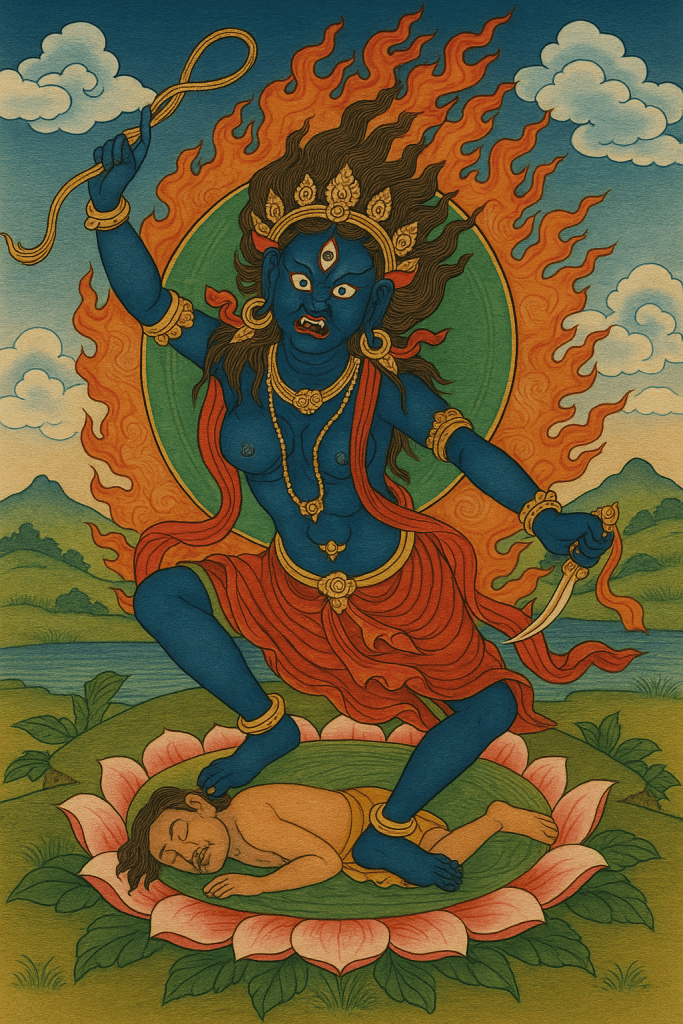
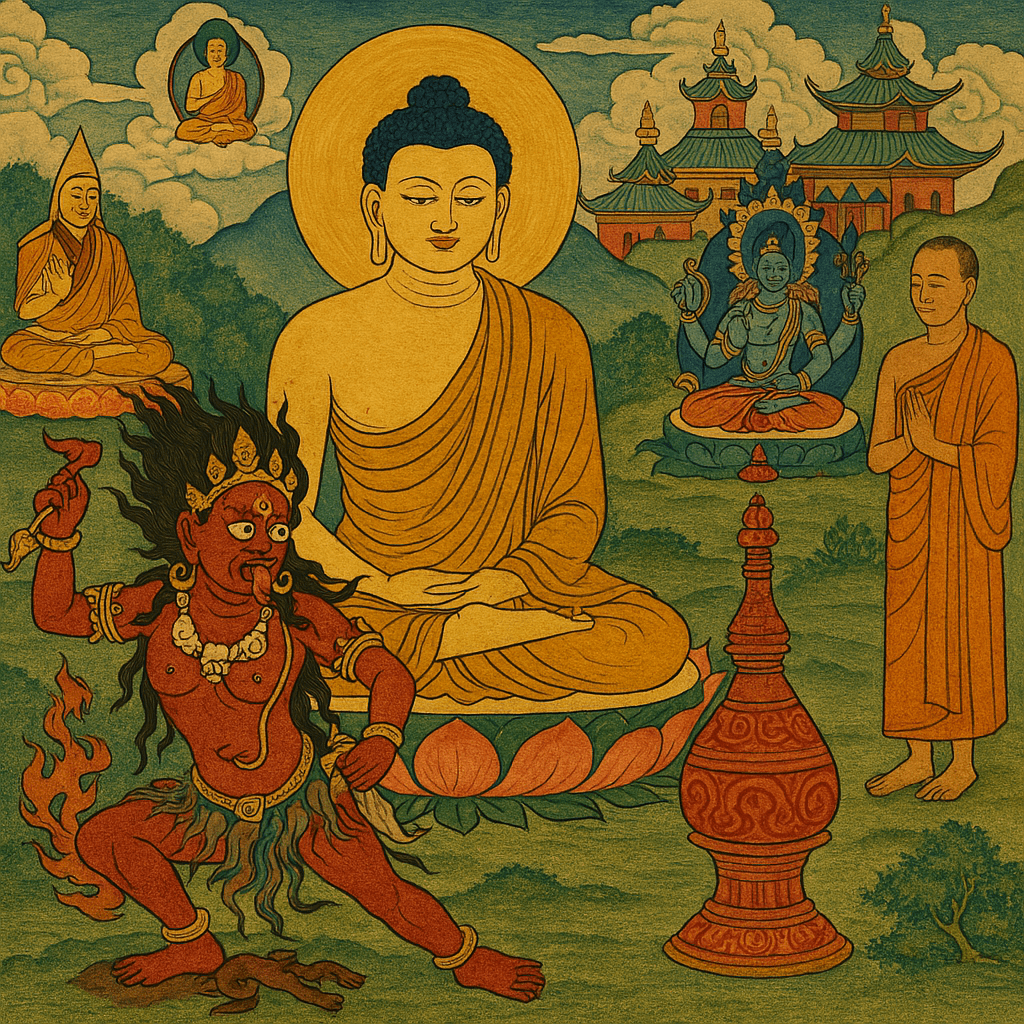
A ritual battle scene: Kschetrapala rising from a burning sacrificial torma outside Lhasa, facing the monstrous nine-headed Chinese demon in a clash of spirit armies.


This article contains excerpts from The Shadow of the Dalai Lama: Sexuality, Magic and Politics in Tibetan Buddhism by Victor and Victoria Trimondi

Who were the Trimondis?

Victor and Victoria Trimondi are the pen names of German cultural historians Herbert and Mariana Röttgen. In the 1980s and early 1990s, they were active supporters of the Dalai Lama, translating and publishing his works into German and helping to organize international events in support of Tibet. Initially, they saw Tibetan Buddhism as a beacon of compassion and ethical renewal.

But their perspective changed. Over years of study, they became disillusioned by what they regarded as the darker, concealed aspects of Tibetan tantric Buddhism: ritual magic, sexual practices, secrecy, and the fusion of religion with political power. Their critical work The Shadow of the Dalai Lama: Sexuality, Magic and Politics in Tibetan Buddhism (2003) full text here seeks to expose these elements, drawing heavily on Tibetan source texts and the earlier ethnographic research of figures like René de Nebesky-Wojkowitz (Oracles and Demons of Tibet, 1956) and Matthias Hermanns.

Because of this trajectory, from enthusiastic supporters of Tibetan Buddhism to outspoken critics, the Trimondis occupy a controversial position. Admirers of Tibetan Buddhism accuse them of exaggeration and hostility, but their book nonetheless catalogs texts, rituals, and historical examples that complicate the popular image of Tibetan Buddhism as peaceful and compassionate.


Excerpts from The Shadow of the Dalai Lama

Part II, Chapter 8: Magic as a Political Instrument

The following excerpts illustrate how the Trimondis argue that ritual magic was systematically integrated into Tibetan politics and warfare:

Invocation of demons
Since time immemorial ritual magic and politics have been one in Tibet. A large proportion of these magic practices are devoted to the annihilation of enemies, and especially to the neutralizing of political opponents. The help of demons was necessary for such ends. And they could be found everywhere — the Land of Snows all but overflowed with terror gods, fateful spirits, vampires, ghouls, vengeful goddesses, devils, messengers of death and similar entities, who, in the words of Matthias Hermanns, “completely overgrow the mild and goodly elements [of Buddhism] and hardly let them reveal their advantages” (Hermanns, 1965, p. 401).

For this reason, invocations of demons were not at all rare occurrences nor were they restricted to the spheres of personal and family life. They were in general among the most preferred functions of the lamas. Hence, “demonology” was a high science taught at the monastic universities, and ritual dealings with malevolent spirits were — as we shall see in a moment — an important function of the lamaist state.


The war demon Kschetrapala
Once the gods had accepted the sacrifice they stood at the ritual master’s disposal. The four-armed protective deity, Mahakala, was considered a particularly active assistant when it came to the destruction of enemies. In national matters his bloodthirsty emanation, the six-handed Kschetrapala, was called upon. The magician in charge wrote the war god’s mantra on a piece of paper in gold ink or blood from the blade of a sword together with the wishes he hoped to have granted, and began the invocation.

Towards the end of the forties the Gelugpa lamas sent Kschetrapala into battle against the Chinese. He was cast into a roughly three-yard high sacrificial cake (or torma). This was then set alight outside Lhasa, and whilst the priests lowered their victory banner the demon freed himself and flew in the direction of the threatened border with his army. A real battle of the spirits took place here, as a “nine-headed Chinese demon”, who was assumed to have assisted the Communists in all matters concerning Tibet, appeared on the battlefield. Both spirit princes (the Tibetan and the Chinese) have been mortal enemies for centuries. Obviously the nine-headed emerged from this final battle of the demons as the victor.


“Voodoo magic” in Tibetan Buddhism
The practice widely known from the Haitian voodoo religion of making a likeness of an enemy or a doll and torturing or destroying this in their place is also widespread in Tibetan Buddhism. Usually, some substance belonging to the opponent, be it a hair or a swatch from their clothing, has to be incorporated into the substitute. It is, however, sufficient to note their name on a piece of paper…

Such “voodoo practices” were no rare and unhealthy products of the Nyingmapa sect or the despised pre-Buddhist Bonpos. Under the Fifth Dalai Lama they became part of the elevated politics of state. The “Great Fifth” had a terrible “recipe book” (the Golden Manuscript) recorded on black thangkas which was exclusively concerned with magical techniques for destroying an enemy.


Why all this matters

These passages highlight a side of Tibetan Buddhism that is largely hidden from public view: the integration of destructive magic and spirit warfare into the machinery of the lamaist state. Nebesky-Wojkowitz’s research on ritual manuals, Hermanns’ cultural observations, and the Trimondis’ synthesis all converge on the same conclusion: alongside compassion and wisdom, Tibetan Buddhism preserved and continues to use technologies of coercion and violence.

For modern practitioners and students in the West, this raises unavoidable questions:

  • Are newcomers told that tantric ritual includes not only deities of compassion but also demon invocations and rites of subjugation? What risks do these violent magical technologies pose for the unsuspecting student?
  • What does “consent” mean if disciples are invited to take refuge in Tibetan Buddhism and receive empowerments without knowledge of these dimensions?
  • How much of this is framed as symbolic or metaphorical today, and is that distinction clearly explained? Evidence suggests that such practices continue much as they did in the past, which makes a thorough and honest examination all the more urgent.

Conclusion

The Trimondis’ work is controversial, but it is also important because it insists on remembering what is usually forgotten or denied. If the compassionate face of Tibetan Buddhism is to be embraced honestly, then its shadow side, the reality of political magic, demon invocations, and coercive ritual, must also be acknowledged. Only then can students and practitioners engage with full awareness, rather than be fooled by the illusion of partial truths.


References and Further Reading

  • Victor & Victoria Trimondi, The Shadow of the Dalai Lama: Sexuality, Magic and Politics in Tibetan Buddhism (2003).
  • René de Nebesky-Wojkowitz, Oracles and Demons of Tibet (1956).
  • Matthias Hermanns, The Indo-Tibetan Religion of the Great Goddess of the Land (1965).
  • Melvyn C. Goldstein & A. Grunfeld, The Making of Modern Tibet (1996).
  • Samten Karmay, The Secret Visions of the Fifth Dalai Lama (1988).

The Grimoire of Secret Gnosis


A Hidden Side of Tantric Buddhism

Buddhism is usually presented in the West as a religion of mindfulness and compassion. But hidden in its tantric wing is something darker. In the eighteenth century, Sélung Shepa Dorjé (Sle lung Bzhad pa’i rdo rje) compiled a sixteen-volume cycle called Secret Gnosis Dakini (Gsang ba ye shes mkha’ ’gro, or GYCK). This was not just a collection of esoteric philosophy, but also a grimoire filled with magical spells.

According to Cameron Bailey in The Magic of Secret Gnosis: A Theoretical Analysis of a Tibetan Buddhist “Grimoire,” grimoires of spell instructions are common in Tibetan Buddhism. They often appear inside larger tantric cycles like the GYCK or in the collected works of great lamas. As the scholar Berounsky, cited by Bailey, put it, the operations in such texts are “an amalgam of tantric interventions combined with popular magic.” [1]

Volumes four and twelve of the GYCK preserve dozens of rituals for worldly power. The twelfth volume in particular reads like a magician’s handbook. It does not hide its intent; it offers ninety-two spells to heal, protect, enrich, and subjugate.

Rituals of Control

Among these spells are some dedicated to domination. Far from the common image of Buddhism as a purely gentle path of liberation, the Secret Gnosis spells allowed practitioners to bind and control others. One entire text, The Magic Lasso, instructs adepts on capturing their targets through visualization and mantra. Other spells direct them to create talismans and effigies, ritually charged to influence or destroy enemies.

Bailey emphasizes that these rituals work by merging tantric deity yoga with ritual techniques: the practitioner visualizes themselves as a wrathful god, projects light rays at the target, and seals the action with mantra. Your meditation becomes, in effect, a weapon.

The Spellbook as Technology

The grimoire aspect of the Secret Gnosis cycle cannot be overlooked. It contains practical instructions for bending reality to one’s desire. Substances like herbs, turquoise, and even urine or flesh are prescribed as tools of ritual practice.

Bailey notes that these spells are framed within a bodhisattva ethic. They are said to protect the Dharma or defend communities. Yet to modern eyes, they read unmistakably as instructions for control. This is where interpretation diverges. Bailey highlights the philosophical and ritual integration, while a critical lens reveals the coercive logic beneath the compassionate rhetoric.

A Tradition of Ambivalence

Figures like Milarepa warned against sorcery, even though his story is entangled with it. The Buddhist tradition as a whole often drew a line between miracle powers that “arise naturally” from meditation and deliberate ritual magic. But that line was blurred from the beginning. The Secret Gnosis makes clear how deeply magical domination was preserved within the canon.

Conclusion

The Secret Gnosis Dakini cycle exposes a side of tantric Buddhism rarely acknowledged publicly. Bailey shows that its grimoire-like sections are integral to tantric practice, not just marginal curiosities. What I emphasize here is that these spells—especially those of subjugation—show a system where manipulation was not an aberration but an option built into the tradition. What is presented today as a path of compassion was also, sometimes, a path of great harm.


[1] Cameron Bailey, “The Magic of Secret Gnosis: A Theoretical Analysis of a Tibetan Buddhist ‘Grimoire,’” Journal of the Korean Association for Buddhist Studies 93 (2020): 535–570.

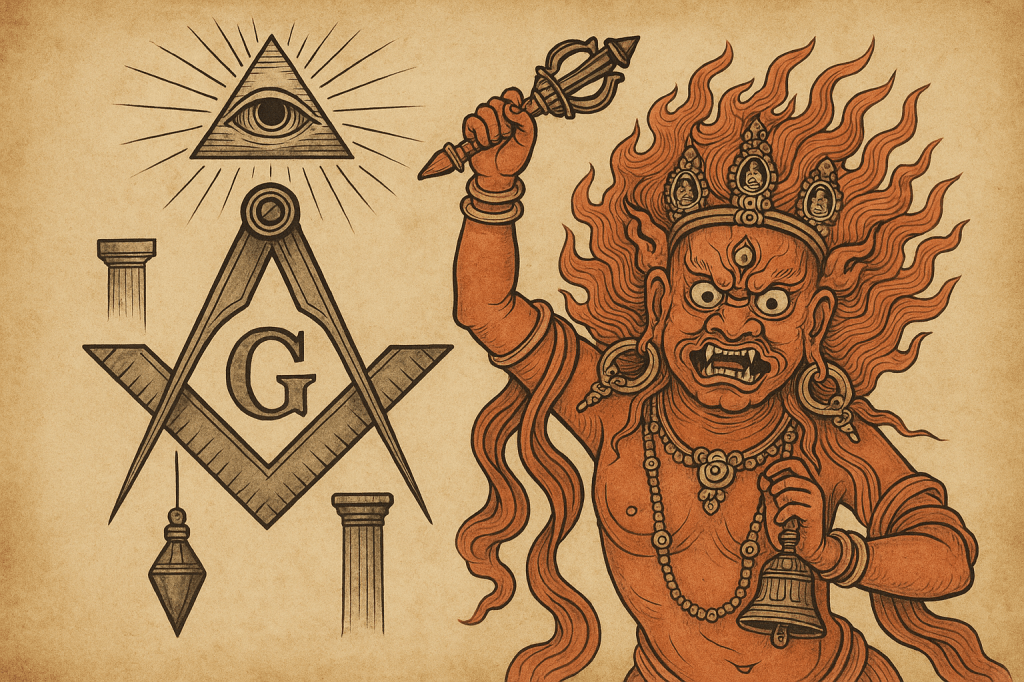
Occult Parallels Between Freemasonry and Tibetan Tantric Buddhism


When most people hear the term Freemasonry, they think of an old-world fraternity, moral instruction through symbolism, and discreet handshakes. When they hear Tibetan tantric Buddhism, they imagine serene monks, compassion, and meditation. The public image of both is carefully cultivated, and in both cases, that image obscures a deeper, more esoteric reality.

Layers of Secrecy

Freemasonry is famously structured in degrees. Early initiates learn benign moral allegories; the deeper teachings are said to be revealed only at the highest levels, with rumors persisting about a Luciferian current unveiled around the 33rd degree. Likewise, Tibetan tantric Buddhism presents an accessible outer face, with philosophical teachings and an emphasis on compassionate practices, while reserving its most potent techniques for advanced initiates. These require formal empowerment ceremonies (wangkur) and vows (samaya) that bind the disciple not only to the guru but also to the unseen entities invoked in the practice.

Initiations and Oaths

In both systems, entry into the deeper mysteries requires swearing oaths. In Masonry, the vows historically invoked dire consequences for betrayal, couched in symbolic language. In tantric Buddhism, the initiatory vows carry the threat of karmic ruin, disease, or worse for breaking them. From a critical perspective, these oaths are more than quaint tradition. They function as binding contracts with what practitioners believe are spiritual forces. Those who view the occult with suspicion might identify these forces not as enlightened beings or symbols, but as demonic entities.

Hidden Entities and Magical Practice

Strip away the Buddhist philosophical overlay and Tibetan tantra reveals a highly ritualized form of magic. Complex visualizations, mantras, and mudras serve not merely as meditation aids, but as precise methods of summoning and merging with non-human intelligences. This is not unlike the ceremonial magic that underpins parts of Masonic symbolism, particularly in its higher degrees, where the initiate engages with archetypes, symbols, and names drawn from older mystery traditions. Both traditions cloak these operations in the language of self-improvement and enlightenment, but the mechanics of calling upon unseen forces, entering altered states, and channeling power remain strikingly similar to ancient magical rites.

Shared Roots in Ancient Occultism

Freemasonry draws openly from the Hermetic and Kabbalistic streams of Western esotericism, both of which trace their roots back to the mystery schools of the ancient world. Tibetan tantric Buddhism, though filtered through the Buddhist canon, absorbed elements from pre-Buddhist Bön shamanism, Indian Tantra, and Himalayan spirit-worship. From this angle, both may be considered descendants of the same primordial magical worldview: that reality can be manipulated through ritual, symbol, and alliance with non-physical beings.

The Public Face vs. the Hidden Core

The genius of both systems is their dual-layered structure. The public face draws in seekers with ideals of morality, compassion, and personal growth. The hidden core, accessible only through successive initiations, operates in a world of occult allegory, ritual precision, and spirit interaction. Whether one calls those spirits Buddhas, angels, demons, or archetypes depends largely on one’s interpretive lens. From a Christian lens, it is clear that both systems engage with fallen angels.

Freemasonry and Tibetan tantric Buddhism, at first glance, seem to occupy opposite ends of the cultural spectrum, one a Western fraternal order, the other an Eastern spiritual tradition. Yet both can be read as initiatory magical systems that mask their deeper workings behind an accessible moral or philosophical front. For the uninitiated, this outer layer is all they will ever see. For those who pass through the degrees or empowerments, the real initiation may lie in forging a relationship with the very forces their public image denies. And that is where the parallels become most disturbing.

These similarities are not vague or coincidental. They are structural, symbolic, and functional. Strip away the public image and both systems follow the same blueprint: they lure the seeker with ideals, bind them with oaths, then initiate them into rituals that channel demonic forces. Below is a side-by-side look at how the two traditions mirror each other in startling detail.

Freemasonry vs. Tibetan Tantric Buddhism: Structural & Occult Parallels

AspectFreemasonryTibetan Tantric Buddhism
Outer PresentationFraternal order promoting moral improvement, philanthropy, brotherhoodCompassion-based philosophy, meditation, cultural preservation
Initiatory Structure3 public degrees (Entered Apprentice → Master Mason) followed by higher Scottish Rite or York Rite degrees culminating in the 33rd degreeThree turnings of the wheel of Dharma leading to tantric initiation (Vajrayana), then advanced empowerments and yogas
Vows/OathsOaths of secrecy and loyalty; historical versions included symbolic penaltiesSamaya vows taken during empowerments, with karmic penalties for violation (illness, misfortune, spiritual ruin)
Hidden CurriculumEsoteric symbolism, Kabbalistic and Hermetic philosophy, rituals involving archetypal forcesAdvanced deity yoga, mantra recitation, visualization, and energy-body work aimed at merging with yidams (tutelary deities)
Entities InvokedAllegorical architect figure, angels, and names from older magical traditions; higher degrees hint at Lucifer as light-bearerDeities, protectors, and Buddhas invoked in ritual, often fierce or wrathful forms with clear pre-Buddhist shamanic traits
Magical ToolsCompass, square, tracing boards, symbolic implements; ritual words and gesturesVajra (dorje), bell, mandalas, mudras, mantras, tormas (substitutes for sacrificial offerings), visualized palaces
Source TraditionsHermeticism, Kabbalah, Rosicrucianism, medieval guild ritualBön shamanism, Indian Tantra, Himalayan spirit practices overlaid with Buddhist philosophy
Outer vs. Inner TeachingsPublicly moral, privately esoteric; higher levels teach occult philosophyPublicly compassionate, privately tantric; higher levels teach deity invocation and magical union
Binding MechanismOaths tie member to lodge and brotherhood, reinforced through ritual dramaSamaya ties disciple to guru and the deities invoked, reinforced through ritual visualization and mantra
Potential Root ParallelsMystery schools of antiquity, ritual magic, symbolic initiationsMystery schools of antiquity, ritual magic, symbolic initiations (via Eastern streams)

When we see these parallels laid bare, the comforting illusion of ancient wisdom starts to crumble. The robes and rituals, whether in a Masonic lodge or a Himalayan temple, are not neutral cultural artifacts. They are technology for binding humans to hidden powers, likely demons. Those who hold the keys to these systems know exactly what they are doing. The question is not whether the forces behind them exist, but whether the seeker truly understands who or what is answering when the call is made.

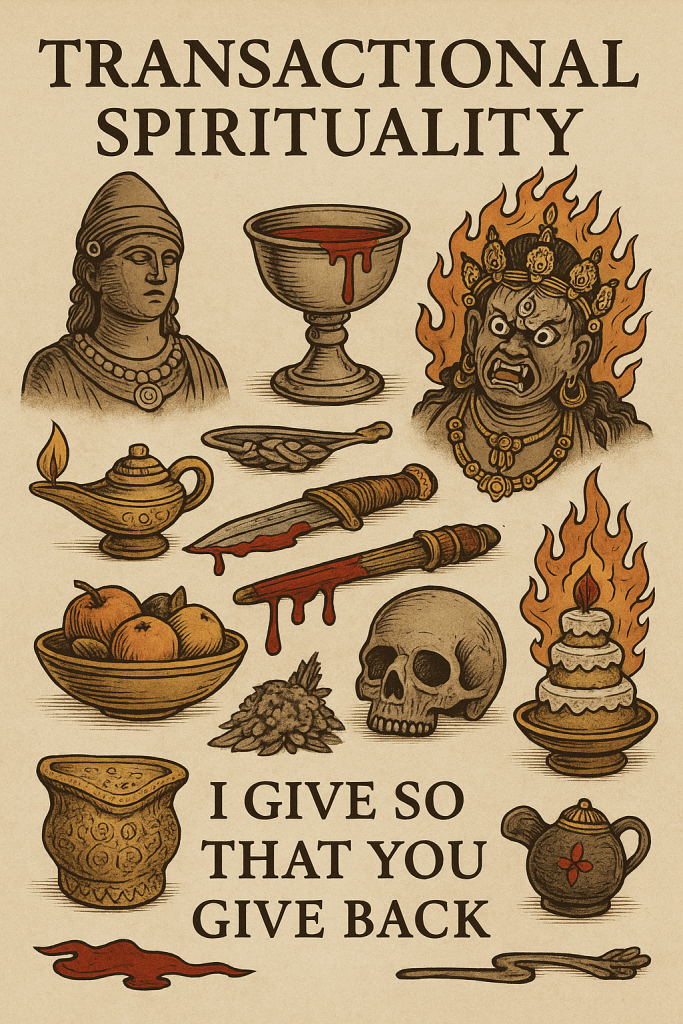
Sacrifice, Favor, Repeat


Before the modern age romanticized pagan religions into New Age panaceas, ancient worship was known to be raw and brutally pragmatic. In our modern spiritual-industrial complex, it is often sugarcoated into some kind of warm, earth-loving ceremony filled with personal empowerment and divine intimacy. But if you’re reading this, you’re probably already suspicious of that narrative.

In fact ancient religion, pagan religion, was highly transactional. The gods didn’t love you. They didn’t weep over your suffering or aspire to protect you.

A passage from Behold the Christ: Proclaiming the Gospel of Matthew by Leroy A. Huizenga makes this brutally clear. Pagan worship, he writes, operated on the ancient principle of do ut des: “I give so that you give back.”(1) In other words, the gods and humans used each other. You offered sacrifices, incense, food, or praise not out of adoration, but because you wanted something in return: good crops, protection in war, fertility, rain, wealth, healing, vengeance, and victory. And the gods? They wanted to be fed, praised, and kept relevant. It was mutual exploitation dressed up in sacred costume.

“That is, the worshipper provides a sacrifice to a god that pleases and empowers the god, who then turns around and does the worshipper favors. Because the gods are often indifferent to humans, worshippers engage in repeated ritual to reach out and get a god’s attention.”

This paragraph says more about ancient spirituality than most modern New Age books on “manifesting” or “connecting with the divine.” The ancients weren’t confused. They understood that the gods were powerful, unpredictable, and not especially interested in human wellbeing unless there was something in it for them.

And this wasn’t limited to Rome or Greece. Versions of do ut des appear in Vedic sacrifice, Mesopotamian temple economies, and also Tantric Buddhist practice where offerings are made to wrathful deities to invoke, control, or appease.

Nowhere is this transactional logic more systematized and ritualized to the point of industrial precision than in Tibetan Buddhism. While cloaked in the language of enlightenment and compassion, the tradition is saturated with mechanisms that mirror the ancient do ut des economy: elaborate offerings, incense, butter lamps, mandalas, and tormas (sacrificial cakes that replaced blood offerings when the Buddhist principle of ahimsa “non-harming” took root). These were given not out of unconditional reverence, but to elicit specific outcomes from specific deities. Monastic liturgies are not just meditative recitations, but are negotiations with a pantheon of wrathful and peaceful beings, each with their own preferences, powers, and temperaments. Moreover, the non-harming sentiment in Tibetan Buddhism only extends so far. While Buddhist tantra forbids blood sacrifice, its subjugation rituals, aimed at both spiritual and human enemies, can involve some of the most brutal punishments found in any ritual religion.

Drupchöd ceremonies, held in large monasteries, exemplify this beautifully. These are days- or weeks-long ritual marathons involving collective chanting, visualization, music, mudras, and vast offerings, all designed to propitiate deities into bestowing protection, wisdom, and worldly benefits like health and prosperity. Whether invoking Mahakala to remove obstacles or Tara for swift blessings, the assumption is clear: the deity acts when properly fed, praised, and invoked. The gods (or enlightened beings, depending on your doctrinal parsing) are not passively watching; they’re participants in a cosmic economy, and Tibetan Buddhism, more than almost any other tradition, has mastered the bureaucratic apparatus needed to transact with them. It’s not just about personal devotion. It’s about correct performance, correct offerings, and the correct “exchange rate” of ritual. The love of the gods is not assumed. Their attention must be earned over and over again.

Modern Takeaways and a Warning

This transactional pattern isn’t limited to ancient paganism or esoteric Tibetan ritualism. You’ll find the same spiritual economy alive and well in the darker corners of contemporary occultism. Take it from someone like Riaan Swiegelaar who’s lived on the other side: former Satanists and occult practitioners routinely speak of offering sacrifices, especially blood, to demons in order to negotiate outcomes.(2)

He described it well: “A lot of people ask me, ‘Why are there so many sacrifices in Satanism? Why is there blood?’ The answer is simple: blood has currency in the spirit world. If I want to negotiate with demons, I need to bring an [animal] sacrifice because that blood holds value. It functions as spiritual capital.

“But here’s the contrast: the blood of Jesus is the highest currency in the spirit world. It covers everything. That’s the authority we stand on. And every ex-Satanist or ex-occultist who’s encountered Christ will tell you the same thing. I might be the only one talking about it openly, but this is real: we engaged in negotiations with demons, offered animal sacrifices, and got results. That’s how the system worked. Then we experienced the blood and love of Christ and there’s no comparison. It’s not even close. His blood is infinitely more powerful. In spiritual warfare, people need to grasp that reality. The blood of Christ is free, but it is not cheap, is it? It came at the highest cost. And what happened on the cross? That wasn’t a one-time transaction in history: it remains as valid, active, and potent today as it was then, and always will be.”

This is so important that it bears repeating: no spiritual currency, no ritual offering, no demonic pact compares to the raw, unmatched power of the blood of Christ. This is the rupture at the heart of Christianity: the economy of sacrifice is over, not because gods stopped demanding payment, but because one sacrifice bankrupted the system.

From blood-soaked altars in Babylon to ritual offering tormas in Himalayan monasteries, humanity has always traded devotion for power and offerings for favor. But the cross flipped the script. There is no more need for bartering, manipulation, and performance to win divine attention. What Christ offered wasn’t another payment into the cosmic vending machine but a final act that rendered the machine obsolete. And if that’s true, then every attempt to re-enter the old system, whether through pagan ritual, tantric bureaucracy, or occult negotiation, isn’t just a return to tradition. It’s a rejection of victory.

(1) Leroy A. Huizenga, Behold the Christ: Proclaiming the Gospel of Matthew (Emmaus Road Publishing, Steubenville, Ohio).

(2) Riaan Swiegelaar, former co-founder of the South African Satanic Church, in various public testimonies including interviews and livestreams (e.g., “Riaan Swiegelaar Testimony,” YouTube, 2022), has spoken openly about blood sacrifice as spiritual currency and his eventual conversion after experiencing the love of Christ.


Ritual Violence: the Bairaṇa Rites of Vajrayana Buddhism


In the hidden corners of Vajrayana Buddhism lies a strand of practice that few dare to discuss openly: bairaṇa (Sanskrit: vairana) rituals. These are wrathful rites aimed at the destruction of enemies, both spiritual and human.

Often sanitized or dismissed as purely symbolic by modern interpreters, the historical and textual record suggests something more visceral, more deadly: these rituals were, and in some cases, still are, performed with the explicit intention to eliminate human beings. This underscores the urgent need for transparency in the study and transmission of Vajrayana practices, especially as many naive spiritual seekers are drawn to Tibetan Buddhism by its outward promise of peace, compassion, and enlightenment, often without awareness of its esoteric and potentially violent dimensions.

What Is a Bairaṇa Ritual?

The term bairaṇa appears in the tantric classification of the four karmas: four magical functions that a Vajrayana practitioner may perform:

  • Pacifying (śānti)
  • Enriching (puṣṭi or vaśya)
  • Subjugating (stambhana)
  • Destroying (bairaṇa)

The purpose of the fourth category, “subjugating,” is unambiguous: obliteration. Within Tibetan Buddhist traditions, especially in the rites of wrathful deities such as Vajrakīla, Yamantaka, and Mahākāla, bairaṇa rituals are used to eliminate:

  • Samaya breakers: Those who violate sacred tantric vows
  • Enemies: Individuals perceived to be actively working against the practitioner
  • Obstructive spirits: Demonic forces, ghosts, or elemental energies believed to cause illness, insanity, or misfortune
  • Political enemies: In historical contexts, entire state-level rituals were conducted against rival kings or invading armies

Ritual Actions: Effigy Creation and Destruction

Texts such as The Cult of the Deity Vajrakīla describe in detail the creation of effigies to represent obstructive forces. These are crafted using materials such as cloth taken from the target, filled with charnel substances, and inscribed with mantras.(1) The effigy is then subjected to violent ritual acts such as stabbing with ritual daggers (phurba), binding, burning, or drowning.

Example: Vajrakīla Tantras (summary from Boord, The Cult of the Deity Vajrakīla)

“Fashion a figure of the enemy from black wool… fill it with the five meats and five nectars. Tie it with red thread, place it beneath the kīla (ritual dagger). Stab it while reciting the mantra… Then, place it in the fire, imagining flames consuming the soul of the enemy.”

This is not metaphor. The rite involves constructing a magical double of the target and ritually executing it. The “enemy” may be a real, named person.

Fire Offerings and Mantra Recitation

Often, the effigy is placed in a consecrated fire pit and incinerated while wrathful mantras are recited, invoking deities to consume and destroy the obstacle.

Example: From the Dujum Namchok Putri Ritual

“To receive these five aggregates of the malefactors who are our hostile enemies and obstructing spirits (causing harm)! We now feed them into your (wide open) mouths; may you accept (these morsels and devour them)—Kharam Khahi!”

This passage metaphorically frames the act of feeding the enemy to wrathful deities, representing a kind of karmic annihilation. In tantric contexts, this has often been interpreted as a sanctioned form of ritual killing.

Another Example: From the Rituals of the Secret Assembly Tantra

“Bind the name and essence of the breaker of samaya into the effigy… May his limbs be broken, his breath cease, and his karmic stains be consumed in fire.”

How Were These Used Historically?

Scholars like Ronald Davidson and Martin Boord have documented numerous instances where wrathful rites were used to eliminate perceived threats, including human beings. These were not fringe practices. They were part of the institutionalized ritual life of powerful lamas and state-sponsored religion.

For example:

  • In the 17th century, the Gelugpa used wrathful rites against rival schools.
  • The Fifth Dalai Lama reportedly employed Vajrakīla rituals to eliminate political enemies and to legitimize military campaigns.
  • In the Nyingma tradition, terma (revealed teachings) include instructions for magical actions against sorcerers and heretics.

Ethics of Wrathful Means

Here lies the uncomfortable truth: Vajrayana Buddhism is not a pacifist tradition. It is a path of power, and power is always ambiguous.

Proponents argue that wrathful actions arise from compassion, a fierce compassion that liberates by force when necessary. Critics, both within and outside the tradition, question whether such acts truly serve liberation or whether they reveal the manipulation of tantric power for worldly gain.

Conclusion: A Tradition of Dangerous Possibilities

The bairaṇa rituals of Vajrayana are not relics of a mythic past. They are living technologies, still transmitted under specific conditions to qualified initiates.

Yet when removed from their sacred context, or cloaked in euphemism, they reveal a deeper concern: the boundary between symbolic and literal violence in Tibetan Buddhism has often been porous. The image of Tibetan Buddhism as purely peaceful and benevolent does not survive close scrutiny.

(1) In Tantric practice, particularly within cremation-ground or charnel-ground rituals, practitioners engage directly with “charnel substances.” These substances include human bones (such as skulls and femurs), cremation ashes, decomposed flesh, fat, blood, and bodily fluids, as well as soil and items saturated with the energy of death. Some rituals involve the use of skull cups (kapalas) for offerings, bone ornaments worn on the body, or the smearing of ash.


Sources and Suggested Reading

  • Boord, Martin. The Cult of the Deity Vajrakīla: According to the Texts of the Northern Treasures Tradition of Tibet. Tring: The Institute of Buddhist Studies, 1993.
  • Davidson, Ronald M. Indian Esoteric Buddhism: A Social History of the Tantric Movement. Columbia University Press, 2002.
  • Dalton, Jacob. The Taming of the Demons: Violence and Liberation in Tibetan Buddhism. Yale University Press, 2011.
  • Hirshberg, Daniel. Remembering the Lotus-Born: Padmasambhava in the History of Tibet’s Golden Age. Wisdom Publications, 2016.
  • Samuel, Geoffrey. Civilized Shamans: Buddhism in Tibetan Societies. Smithsonian Institution Press, 1993.
  • Snellgrove, David L. The Hevajra Tantra: A Critical Study. Oxford University Press, 1959.
  • Cantwell, Cathy & Mayer, Rob. Early Tibetan Documents on Phur pa from Dunhuang. Wien: Verlag der Österreichischen Akademie der Wissenschaften, 2008.

Mahāsiddhas, Mantras, and Murder: Tibetan Buddhist Ritual Violence Reexamined

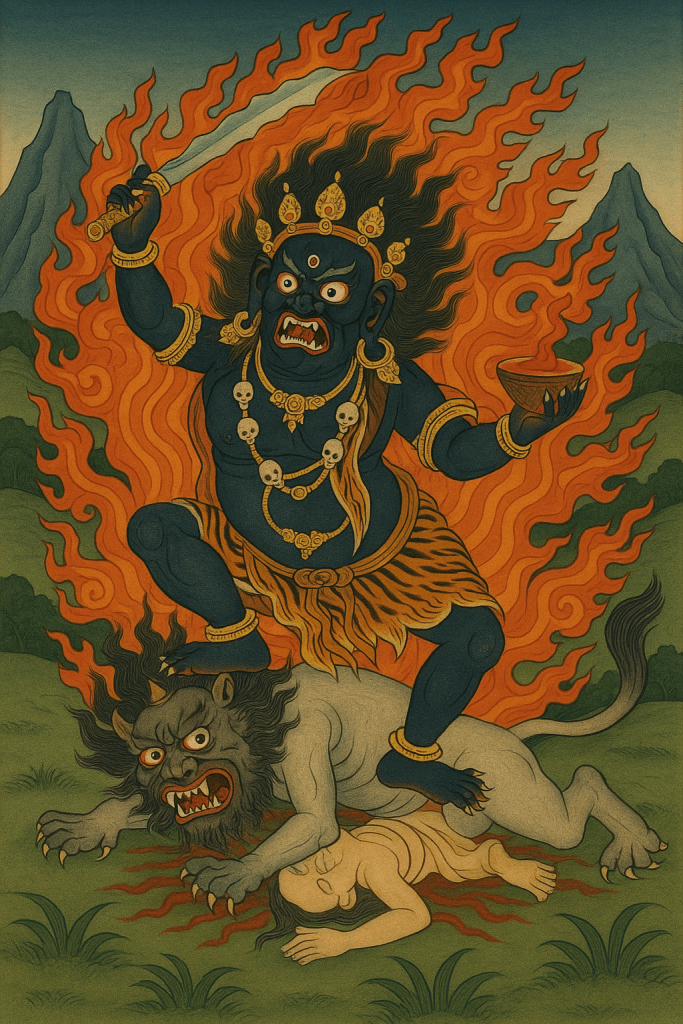
In this thangka-style painting, a wrathful tantric deity, likely Mahākāla, stands triumphant, engulfed in flames of spiritual power. He tramples a beast-like demon beneath his feet, which in turn crushes a human figure below. Far from mere symbolism, this hierarchy reveals a grim reality embedded in Tibetan tantric worldview: a cosmology where demons are organized in ranks, with wrathful deities occupying the highest tiers. These so-called “protector” spirits are themselves demonic in nature. They are powerful but subjugated through ritual, and are commanded by the guru to unleash violence against enemies of the dharma. The animal-like demon represents a lower-order spirit, weaponized by the deity. The crushed human symbolizes an actual person, someone the practitioner or lama has deemed a threat. The image is not just metaphor: it is a magical contract of domination.

Buddhists sometimes invoke ferocious protector deities like Mahākāla or Vajrakīlaya in rituals charged with violent imagery. In Tibetan history, such wrathful practices were often presented as spiritual rites to subdue obstacles, but evidence shows they could target actual enemies. For example, medieval Tibetan lamas served in warfare and politics: Lama Zhang (12th C. Kagyu) “engaged in political and military affairs” and even sent students into battle (War Magic: Tibetan Sorcery | Rubin Museum), using tantric rituals and deities (like Vajravārāhī and Mahākāla) to subjugate foes. Under the Mongol Yuan, Tibetan Buddhist “magical warfare” became statecraft: Tsami Lotsāwa, a Tangut court chaplain, authored texts like “The Usurpation of Government,” a how-to on overthrowing rulers invoking Mahākāla against armies. When Genghis Khan’s siege faltered in 1210, Tibetan sources credit Mahākāla summoned by Tsami (War Magic: Tibetan Sorcery | Rubin Museum) with bursting the Mongol siege dams and routing the attackers. The Mongols then adopted Mahākāla as their state protector. Likewise, Tibetan figures like the 8th Karmapa Karma Pakshi reportedly requested Mahākāla to exact revenge on his Chinese captors; lore even says Mahākāla “struck” the imperial palace (calling upon Mahakala…. | Ganachakra). Even the Nyingma saint Rwa Lotsāwa Dorje Drag (11th–12th C.) is celebrated in tradition for having “killed/murdered thirteen lamas” allegedly via Vajrabhairava rituals (Teacher: Rwa Lotsawa Dorje Drag). These and other incidents show tantric masters of Nyingma and Kagyu lineages historically appealed to protectors and demons in worldly struggles, not just inner battles.

Historical examples of tantric “war magic” include:

  • Imperial warfare: Tibetan Buddhist shamans at the Tangut and Yuan courts summoned Mahākāla to combat invading armies (War Magic: Tibetan Sorcery | Rubin Museum). Mongol ruler Qubilai Khan’s ritualist (the Sakya lama Dampa) was famed for invoking Mahākāla to turn back enemies; Mahākāla’s visage was later flown on Mongol battle banners (Himalayan Art: News) (War Magic: Tibetan Sorcery | Rubin Museum).
  • Sectarian conflicts: Rival Buddhist factions sometimes accused each other of violent tantra. (For example, later Gelugpa–Nyingma disputes mention rituals aimed at sectarian “enemies.”) In legend, a Kagyu master used Mahākāla to punish “impure” Gelugpas, and Dorje Shugden cult lore alleges victims of protector curses. (Such sectarian claims persist, though here we focus on pre-modern precedents.)
  • Regional skirmishes: Kagyu and Nyingma yogins were known as healers and sorcerers. One Kagyu lama reportedly used protective rites to strike fear into rebels. Vajrabhairava, a wrathful Nyingma deity, was famously employed by Rwa Lotsāwa in ritual assassinations (one story credits him with killing Marpa Lotsāwa’s son, Dharma Dode) (Himalayan Art: News).

These accounts contradict the comforting piety that “the only enemies are our defilements.” Instead, Tibetan sources show tantric deities being literally invoked against human foes and armies. Even art and prayers reinforce this: Palden Lhamo, the Dalai Lamas’ protector, is often depicted brandishing a sword and holding a skull bowl “brimming with the blood of vanquished enemies” (Palden Lhamo: Supreme Guardian Goddess of the Dalai Lamas – Tibetan Buddhist Encyclopedia). Such imagery underscores that the deity’s “compassion” is militarized.

Violent Imagery in Ritual Texts

The ritual texts themselves are unapologetically graphic. For example, a common Vajrakīlaya (Krodha Phurba) sādhanā (prayer) reads like a battle spell. One verse proclaims that Vajrakīlaya wields weapons “with which even the whole great mountain Sumeru is crushed to dust,” and that he “grinds to atoms the nine Gong-po brothers of phenomenal existence” (Cult of the Deity Vajrakila). In context, the “Gong-po brothers” symbolize fundamental enemies or obstacles (often conceptualized as Mara’s forces or the mind’s afflictions), but the language is literal and violent.

Texts on Mahākāla and Vajrabhairava likewise list long menus of violent exploits, trampling demons, cannibalizing spirits, or annihilating armies. In many kīlaya and bairaṇa (wrathful) rituals, the practitioner is explicitly instructed to cast forms or effigies of enemies into a bonfire or entangle them with magical ropes (Cult of the Deity Vajrakila) (The Rhetoric of Violence in the Buddhist Tantras). These are not purely abstract symbols but are described as actively destroying whoever or whatever they represent.

Indeed, scholar David Gray notes that Buddhist tantras use two kinds of violent rhetoric: grandiose, hyperbolic imagery to glorify the deity and impress the initiate, and actual ritual prescriptions for “violent ritual practices” (The Rhetoric of Violence in the Buddhist Tantras). While the former may seem merely figurative, Gray observes that even “symbolic” rituals often aim to harm the person symbolized (for example, burning an effigy of an enemy) (The Rhetoric of Violence in the Buddhist Tantras). Many tantra texts then justify these acts as transcending ordinary ethics: invoking a state of “non-dual gnosis” to excuse what would otherwise be murder (The Rhetoric of Violence in the Buddhist Tantras). In short, tantric sādhanās straddle symbolism and reality: they metaphorically crush delusions, but describe that metaphor in ultra-realistic, brutal terms accompanied by magical spells intended to harm human beings.

Empowered Lamas and “Transgressive” Rituals

Why this double talk? Tibetan lineages insist that only the most accomplished yogins (mahasiddhas) may perform such rites, precisely because they are “transgressive” and dangerous. The idea is that a realized master, having already tamed anger within, can safely wield wrath outside. As one modern analysis notes, advanced tantric practitioners are allowed “to invert Buddhist moral injunctions,” because rites aimed at killing are taught only to those senior enough to hold them (Buddhist Pacifists at War – JSTOR Daily). In practice, this meant kings, high lamas or court chaplains, not ordinary monks, performed these rituals.

Yet even senior masters often downplay the literal meaning today. Contemporary teachers frequently claim that prayers to “destroy enemies” really target the five poisons or ego-clinging, not people. (For instance, some explain Palden Lhamo’s blood bowl as symbolic of afflictions conquered.) Such interpretations align with inner-journey aspects of Vajrayāna. But history and ritual texts offer a different picture: these deities were invoked as warrior gods. Indeed, modern scholars argue that Buddhist tantra developed war-magic precisely because societies faced real threats. As Iain Sinclair puts it, defensive magic in early tantras was “pacifist in nature” but “destructive war magic also developed.” (Buddhist Pacifists at War – JSTOR Daily) Tantric manuals taught spells to freeze enemy armies with blizzards, sicken them with disease, or even consume them invisibly (Buddhist Pacifists at War – JSTOR Daily) ((PDF) War Magic: Religion, Sorcery, and Performance). One text in the Kālacakra cycle even provides a just-war framework, allowing only defensive conflict, infused with inner virtue, but this too presumes actual armed struggle (Buddhist Pacifists at War – JSTOR Daily).

This tension has sparked scholarly debate. Bryan Cuevas notes tantra’s fusion of “the internal and external worlds,” with protectors serving both spiritual and mundane power (War Magic: Tibetan Sorcery | Rubin Museum). Gray emphasizes that, despite rhetoric, tantrics did prescribe lethal rituals, legitimized by claims to higher awareness (The Rhetoric of Violence in the Buddhist Tantras).

Critical Perspective and Conclusions

In light of this evidence, the standard assurance that wrathful protector practices are only symbolic ring hollow. Certainly, Vajrayāna doctrine can spiritualize violence, positing that a bodhisattva’s anger is “pure compassion.” But when lamas claim “I’m just crushing my own ego,” the historical record shows they were also legitimizing political or personal power plays. At the very least, the literalist language of the liturgies warrants skepticism. A practitioner chanting “grind my enemies into dust” is arguably invoking cosmic butchery, not just inner peace.

For modern readers, this does not necessarily indict all Vajrayāna practice for many make upstanding vows and use wrathful deities for healing or psychological aid. However, it does mean we should be wary of uncritical glosses. As Gray warns, tantra’s “ethical double standard,” appealing to transcendent insight to excuse violence, has been used to justify harmful actions even in contemporary settings (The Rhetoric of Violence in the Buddhist Tantras).

For those intrigued or unsettled by these findings, scholars continue to examine how Tibetan Buddhism navigates the gulf between its nonviolent ideals and its martial heritage. Controversies within the tradition and in academic circles reflect this struggle. What is certain is that any romantic notion of pacifist Buddhism must contend with the very real phenomenon of tantric war magic and the subjugation rituals conducted against human beings.

Further Reading: For critical scholarship on these issues, see Iain Sinclair’s “War Magic and Just War in Indian Tantric Buddhism” (Buddhist Pacifists at War – JSTOR Daily) (Buddhist Pacifists at War – JSTOR Daily) and Bryan Cuevas, “The Wizarding World of Tibetan Sorcery” (in Faith and Empire, esp. ch.5) (War Magic: Tibetan Sorcery | Rubin Museum) (War Magic: Tibetan Sorcery | Rubin Museum). David B. Gray’s article “The Rhetoric of Violence in the Buddhist Tantras” (2018) explicitly examines tantric prescriptions of violence (The Rhetoric of Violence in the Buddhist Tantras). Solomon FitzHerbert’s study of 17th-c. Tibetan “ritual propaganda” is also enlightening. (Online references: Rubin Museum’s “War Magic” exhibition, Himalayan Art archives, and academic discussions by Sinclair and Gray are excellent starting points.)

The Global Spread of Tantric Buddhism: A Departure from the Buddha’s Teachings?


When people hear the term “Buddhism,” they often imagine a peaceful monk seated under a tree, cultivating mindfulness and inner stillness. They might recall the image of the Buddha, Siddhartha Gautama, who renounced wealth and power to pursue a path of liberation through ethical conduct, meditation, and wisdom. What many do not realize is that across Asia, the original teachings of the Buddha have often been overlaid with rituals, deities, and esoteric practices that resemble occultism more than renunciation. This is especially true with the spread of Tantric Buddhism, also known as Vajrayāna.

Tantric Buddhism, which developed in India around the 6th century CE, introduced rituals, visualizations, secret initiations, deity yoga, and sexual symbolism that were foreign to the early teachings found in the Pāli Canon. While it may have originated in India, the influence of Tantra has spread far beyond the Himalayas. Countries known today for their Theravāda heritage, such as Cambodia, Laos, Vietnam, and Thailand, have all, at different times, been touched or even deeply influenced by Tantric practices. This article traces the spread of Tantric Buddhism and asks a pressing question: Is this fusion of Tantra and Buddhism in harmony with what the Buddha actually taught?


India: The Birthplace of Tantra and the Turning Point

Though Siddhartha Gautama taught a path of non-attachment, the later development of Tantric Buddhism in India marked a dramatic departure. The Tantric path emphasized achieving enlightenment quickly by harnessing the powerful energies of desire, fear, and wrath through ritual and symbolic transgression.

Early Buddhist schools such as Theravāda preserved the monastic, ethical, and meditative disciplines taught by the Buddha. But by the time Vajrayāna emerged, Buddhism in India had evolved into Mahāyāna and beyond, with Tantric elements becoming dominant in institutions like Nālandā and Vikramaśīla monasteries before their destruction. From here, Tantra spread east.


Tibet: The Tantric Stronghold

No country embraced Tantric Buddhism more completely than Tibet. With the arrival of Indian masters like Padmasambhava in the 8th century, Tibet adopted esoteric practices involving deity yoga, ritual offerings (such as torma and blood libations), and secret empowerments. The NyingmaKagyuSakya, and Gelug schools all incorporated tantric texts and practices, often passed orally and practiced in secrecy.

Tibetan Buddhism’s public face often emphasizes compassion and mindfulness, but beneath the surface lies a highly ritualized system of guru devotion, spirit invocation, and occult symbolism. Even the widely admired Dalai Lama is an initiated tantric practitioner who publicly defends the practice of deity yoga and sexual yogas, raising serious questions about his alignment with the historical Buddha’s path.


China: Mixed Influence and Lingering Tantra

In China, the dominant schools of Buddhism have historically been Chan (Zen), Pure Land, and Huayan. However, during the Tang dynasty (7th–10th centuries), Esoteric Buddhism (Mizong) was introduced by Indian masters like Amoghavajra. While it never overtook the native schools, it left a lasting impact in some sects and still survives in diluted form within Chinese folk religion and Taoist-Buddhist syncretism.

Today, Chinese Buddhism largely appears non-tantric, but undercurrents remain, especially in temple rituals involving spirit appeasement, elaborate deity worship, and occult practices inherited from early Tantric transmission.


Vietnam: The Mahāyāna-Tantra Hybrid

Vietnam officially follows Mahāyāna Buddhism, heavily influenced by Chinese traditions. However, tantric rituals were introduced via Chinese Esoteric Buddhism and Indian Tantric texts. Vietnamese temples often blend Pure Land devotion with protective rituals invoking wrathful deities or dhāraṇīs (mantras with supposed magical powers). Such rituals, while less publicized, reveal an undercurrent of occultism beneath an otherwise devotional landscape.


Cambodia and Laos: Theravāda Facade, Tantric Underbelly

Cambodia and Laos are Theravāda countries, yet their histories are steeped in tantric influence from the ancient Khmer Empire. Angkor Wat, though now viewed as a Hindu and Buddhist site, was once home to elaborate Tantric rituals. Statues of multi-armed deities and ritual paraphernalia suggest tantric syncretism flourished.

Today, while the public face of Buddhism in these countries is Theravāda, local shamans (mo phi) and monks alike may engage in protective magic, spirit invocations, and talisman-making, practices more akin to Tantric ritual than Theravādan restraint.


Thailand: Theravāda Mixed with Occultism

Thailand is often held up as a bastion of Theravāda purity, yet here too the line between Buddhism and occultism blurs. Amulets, tattoos (sak yant), and rituals to appease spirits are common. Many monks perform rituals invoking Phra Ngang or other spirits linked to animistic or tantric practices. While not called Tantra, the ritual culture that has evolved in Thailand includes aspects strikingly similar: mantras, yantras, invocations, and guru devotion.


The Buddha vs. Tantra: Are They Compatible?

The question at the heart of this analysis is critical: Do tantric practices align with the historical Buddha’s teachings?

The Buddha emphasized renunciation, morality, mindfulness, and wisdom. He warned against magic, ascetic extremism, and blind devotion to teachers. He discouraged speculation about supernatural powers and encouraged liberation through insight and ethical living.

Tantric Buddhism, by contrast, often involves oath-bound secrecy, symbolic transgression (including sexual union and consumption of taboo substances), and reliance on supernatural beings and powers. In many forms, it is more reminiscent of sorcery than liberation.

Bluntly stated, Tantra is not a spiritual shortcut, but a dangerous detour. It promises power, but often delivers confusion and spiritual enslavement. For survivors of tantric abuse, like myself, it’s critical to shine a light on how these practices have hidden behind the Buddha’s name and image for centuries. As Tantric Buddhism spread across the globe, from Tibet to Thailand, from China to Cambodia, it cloaked itself in the language of compassion and enlightenment; however, its methods betray a different source, one that leans toward secrecy, manipulation, and occultic power rather than truth and freedom.

A Critical Look at Vajrayana Magic


Vajrayana Buddhism presents itself as a path of radical transformation: a sacred alchemy where ordinary perception is transmuted into enlightened wisdom. Its ritual technologies are often described as “skillful means,” and its magical practices framed as expressions of “Buddha activity.” But the colorful mandalas and enchanting deity meditations may obscure something far more dangerous than most practitioners realize.

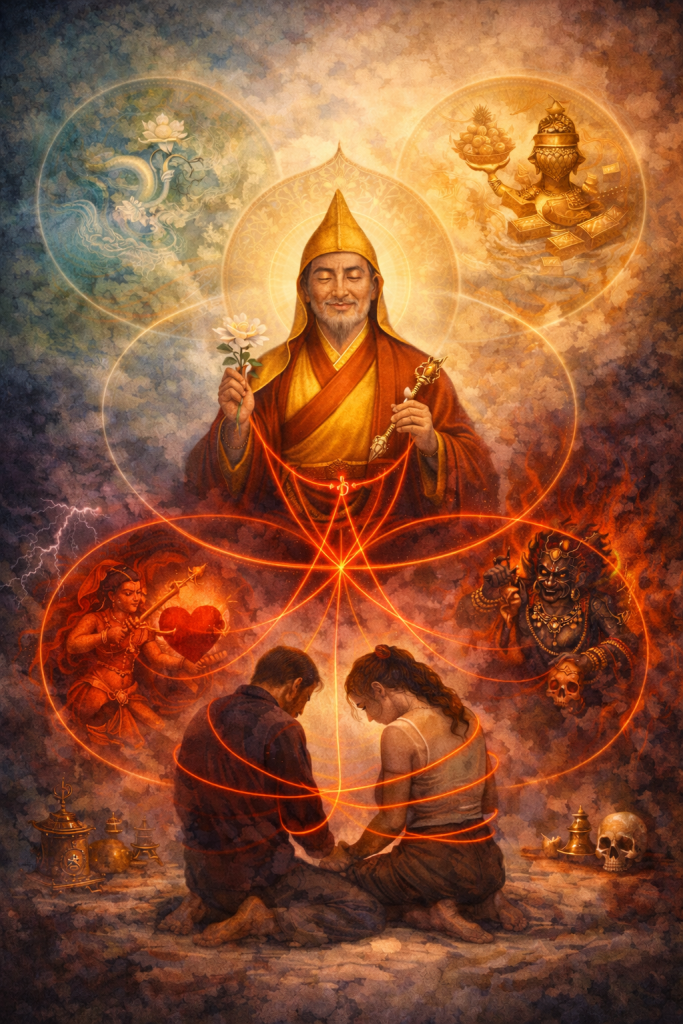
According to vajranatha.com, Vajrayana operates through four principal kinds of magical activity, each aligned with a cardinal direction, a color, and a particular type of power:

  • White (east): for pacifying and healing
  • Yellow (south): for increasing wealth and wisdom
  • Red (west): for attraction and control
  • Dark blue or green (north): for wrathful subjugation and protection

These are personified in the deity forms of White Tara, Dzambhala, Kurukulla, and Vajrakilaya, respectively. Collectively, these “Four Activities” are described as enlightened, but their function mirrors the mechanisms of many other occult systems: healing, sorcery, love spells, exorcism, and domination.

So who, or what, is powering these rituals?

Chögyam Trungpa, one of the most influential Tibetan lamas to bring Vajrayana to the West, once gave a startlingly candid warning:

“Committing oneself to the Vajrayana teaching is like inviting a poisonous snake into bed with you and making love to it. Once you have the possibility of making love to this poisonous snake, it is fantastically pleasurable: you are churning out antideath potion on the spot. The whole snake turns into antideath potion and eternal joy. But if you make the wrong move, that snake will destroy you on the spot.”
—Chögyam Trungpa

This is not a metaphor for the all-encompassing wisdom and compassion of the Buddhas and Bodhisattvas. It is a warning of immense spiritual danger.

Vajrayana demands the total surrender of body, speech, and mind, not only to the teachings, but to the guru and the spiritual forces behind those teachings. This surrender is cloaked in bliss, ecstasy, and the promise of transformation. But as Trungpa makes clear, one wrong move and the very force you trusted can turn lethal. It can turn on a dime.

I experienced this firsthand. It began as a profound visualization and mantra practice during a three-year retreat and gradually turned into energetic torment and psychological destabilization. The deities I once practiced became increasingly foreign, invasive, and predatory. The guru, once seen as a vessel of wisdom, became a wrathful executioner.

These practices are not what they seem: they tap into powerful magic. And one must ask, who is really powering these rituals? Who benefits when a practitioner opens themselves to these entities and their so-called “energies”? Why should we assume these forces are benevolent, simply because they have Buddhist names and appear in ornate, colorful iconography?

The structure described here isn’t just about religious symbolism or spiritual beauty, it reflects a deep psychological system designed to influence the mind through ritual. Vajrayana practices use visualization, chanting, offerings, and mantra repetition to create altered states of consciousness and emotional bonding with supernatural entities. This is what scholars call ritual psychology: the way ritual shapes belief, identity, and experience.

But Vajrayana doesn’t just manipulate the mind. It aligns closely with classic occult systems, ones that use similar rituals to summon, contact, and make pacts with spirits. Healing and increase, attraction and domination are bit neutral tools. They are technologies for channeling unseen forces toward specific outcomes. And these forces are personified, and bonded with through ritual acts that, the deeper you go, begin to resemble spiritual possession with demonic pacts.

In my own experience, the entities I contacted through these practices eventually revealed themselves to be something other than the enlightened mind of the Buddhas, whatever that might be. They had their own will, their own agendas, and their own personalities. Especially in the darker rites of semi-wrathful and wrathful deities, there was a sharp edge of coercion, and spiritual threat.

If we take these rituals seriously, not as colorful mysticism, but as real technologies of spiritual manipulation, then we must also take seriously the possibility that their source may not be benevolent.

Just because it’s branded as “Buddha activity” doesn’t mean it is holy. Survivors of spiritual abuse in Tibetan Buddhism must be brave enough to ask the hard questions. Who, or what, are we inviting into our minds and bodies when we chant these mantras, visualize these beings, and make offerings in exchange for spiritual results? Are these forces truly enlightened or are we just calling them that because we’ve been taught to?

When your healing comes at the cost of spiritual bondage…When your wisdom is bought by making pacts with demons…Something is deeply wrong.

Magic in Vajrayana is not peripheral but central to the practice. And it must be examined not with awe, but with clear-eyed discernment.