Saint Bartolo Longo: From Darkness to Light


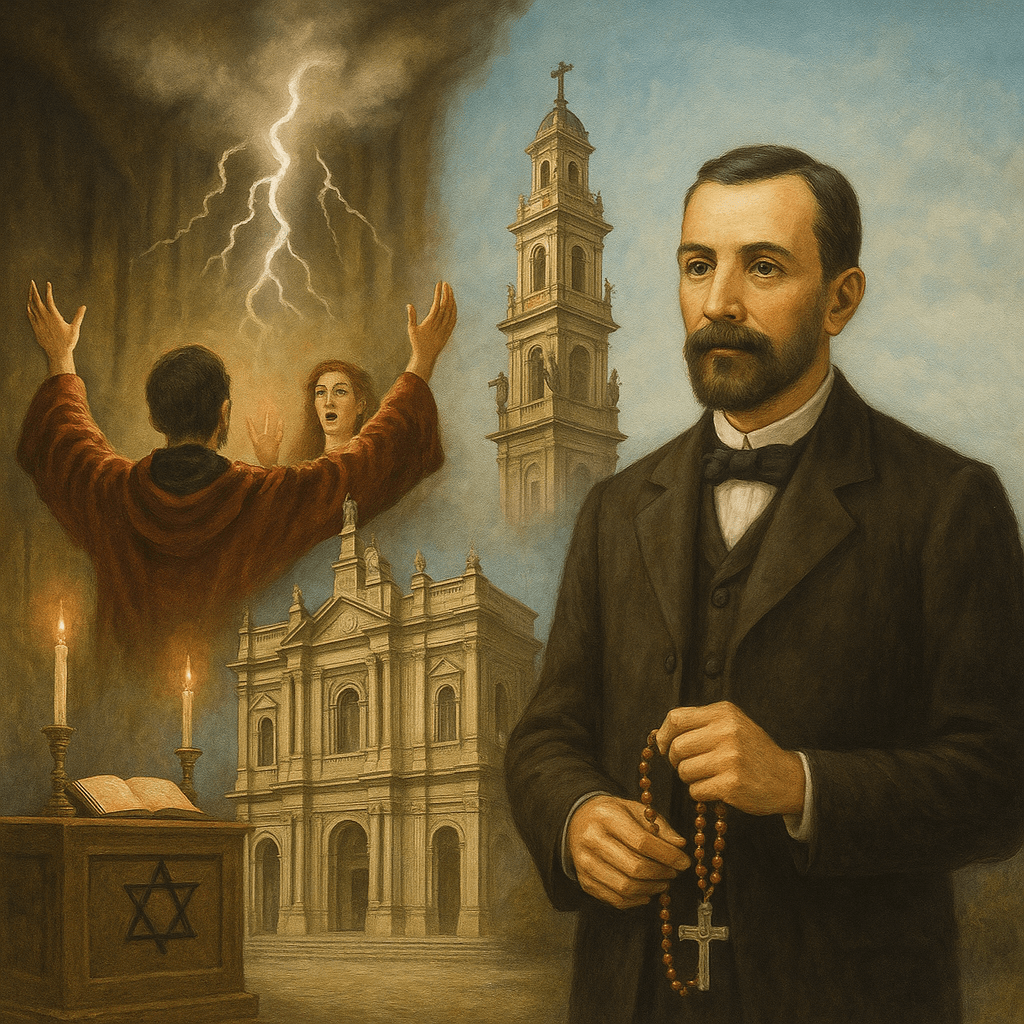
Saint Bartolo Longo was canonized by Pope Leo XIV on October 19, 2025, during a solemn Mass in St. Peter’s Square that elevated seven new saints to the altars of the Catholic Church. The Vatican’s announcement confirmed what many had long anticipated: that the once wayward lawyer who fell into occultism but found redemption would at last be formally recognized among the saints.

Before his story begins, it is worth repeating the Church’s timeless warning about the dangers of all occult practices and the spiritual counterfeits that appear holy but lead astray. The New Age fascination with séances, channeling, tarot, reiki, and yoga is not new. It is a repetition of the same deceit that misled Bartolo himself. Likewise Tibetan Buddhism, which hides black magic and sorcery behind the peaceful facade of Buddhism, should be closely examined. Bartolo Longo’s life shows something deeply consoling: no matter how far one strays into darkness, there is always a way back through repentance, confession, and devotion to Christ and His Mother.

Bartolo Longo was born in Latiano, a small southern Italian village, on February 10, 1841. His family were respected townspeople and lived comfortably with servants. Bartolo had an older sister and a younger brother, and his father worked as a physician. As a boy, Bartolo was lively and mischievous; he was quick-witted, theatrical, and often irreverent. His mother, however, formed him in devotion to the Virgin Mary and the Rosary.

When he was six, Bartolo was sent to a priest-run boarding school. He thrived there, making friends, studying hard, and developing a gift for music and fireworks. His temper, though, remained fiery. At ten, his father died, and his mother later remarried a lawyer. That stepfather’s profession drew Bartolo’s interest, and he resolved to study law.

By the 1860s, while the anti-Catholic movement was reshaping Italy, Bartolo and his brother moved to Naples for their studies. The intellectual climate was hostile to the Church. Professors openly mocked the Pope and religious orders. The young student’s faith eroded in that atmosphere. He became fascinated by the new philosophies of reason and freedom that dismissed religion as superstition.

In this environment, spiritualism was fashionable among students, and Bartolo, hungry for meaning, began attending séances. These gatherings promised secret knowledge and communion with spirits. For a time, he believed he had found truth in these occult practices. But the spirits he invoked deceived him. Gradually, curiosity gave way to obsession. He became involved with a group of spiritualists and, eventually, a full satanic sect that ordained him a “priest.” During his initiation, thunder roared, and blasphemous cries filled the air. Bartolo later recalled the terror of that night, when he felt the presence of something utterly dark take hold of him.

In the months that followed, Bartolo lived in dread. He sensed an invisible companion, an “angel of darkness,” whispering to him. He felt trapped between delusion and madness. Yet even in that state, he completed his law degree and continued public attacks against the Church. His family, horrified, prayed constantly for his conversion.

Among the few faithful Catholics left at the university was Professor Vincenzo Pepe. When Bartolo confessed that he believed he had heard his dead father’s voice, Pepe warned him that the spirits were lying and that his practices would destroy both his mind and his soul. The professor begged him to repent and return to the Church. Remarkably, Bartolo agreed. Pepe gathered others to pray for him, including Caterina Volpicelli, a devout woman who led a Rosary group dedicated to the Sacred Heart of Jesus.

Through their prayers, Bartolo met Father Alberto Radente, a Dominican friar. For a full month, Father Radente counseled and exorcised him daily. Finally, on June 23, 1865, the Feast of the Sacred Heart, Bartolo made his confession and received absolution. He was reconciled to the Church and freed from the darkness that had enslaved him.

Overwhelmed with gratitude, Bartolo vowed to save others from the same deception. He attended one last séance, not to participate, but to renounce it. In the midst of the meeting, he stood up, raised a medal of the Virgin, and publicly proclaimed that spiritualism was a web of falsehood. From that moment, he dedicated his life to Christ and to Mary.

With the guidance of his spiritual directors, Bartolo discerned that his vocation was not to marry or become a priest but to serve God as a lay Dominican. On October 7, 1871 on the Feast of Our Lady of the Rosary, he entered the Third Order of St. Dominic, taking the name Brother Rosario. He studied diligently, prayed the Rosary daily, and worked among the sick and poor.

When he traveled to Pompeii to manage property for a widow, the Countess Marianna de Fusco, Bartolo found the people living in ignorance and superstition. The local church was in ruins. Remembering his own past, he resolved to restore both the building and the people’s faith. During a time of despair, haunted by thoughts of damnation, he heard an interior voice say: “If you seek salvation, propagate the Rosary. Whoever spreads the Rosary will be saved.” At that instant, peace filled his soul, and he understood his mission.

Bartolo restored the church, began teaching the Rosary, and organized an annual Feast of the Rosary in 1873. He brought to Pompeii a worn painting of Our Lady of the Rosary, later associated with miracles that drew pilgrims from across Italy. Encouraged by the Bishop of Nola, he began building a grander church, whose cornerstone was laid on May 8, 1876. Fifteen years later, it was consecrated by Cardinal Raffaele Monaco La Valletta, representing Pope Leo XIII. Today, the Pontifical Shrine of the Blessed Virgin of the Rosary of Pompeii welcomes tens of thousands of pilgrims daily.

His mission expanded beyond the basilica. Bartolo founded schools, orphanages, and homes for the children of prisoners. He started a magazine and wrote extensively about the Rosary, the saints, and Christian life. To avoid scandal from his close collaboration with Countess de Fusco, Pope Leo XIII advised them to marry. They wed on April 7, 1885, living chastely as brother and sister while continuing their charitable work.

Bartolo died peacefully on October 5, 1926, after receiving Holy Communion and praying the Rosary surrounded by orphans. His last words were, “My only desire is to see Mary, who has saved me and who will save me from the clutches of Satan.” Pope John Paul II beatified him on October 26, 1980, calling him “a man of the Rosary.” On October 19, 2025, Pope Leo XIV canonized him as Saint Bartolo Longo, Apostle of the Rosary.

Bartolo’s life remains a witness for every age: no matter how lost or deceived, a soul that turns back to God can be saved. His feast day is October 5.


Credit:
Summary inspired by Bartolo Longo by Mary’s Dowry Productions (2017), available on YouTube: https://www.youtube.com/watch?v=3OQLRndbHIM. Used under fair use for educational and religious commentary.
Sacrifice, Favor, Repeat


Before the modern age romanticized pagan religions into New Age panaceas, ancient worship was known to be raw and brutally pragmatic. In our modern spiritual-industrial complex, it is often sugarcoated into some kind of warm, earth-loving ceremony filled with personal empowerment and divine intimacy. But if you’re reading this, you’re probably already suspicious of that narrative.

In fact ancient religion, pagan religion, was highly transactional. The gods didn’t love you. They didn’t weep over your suffering or aspire to protect you.

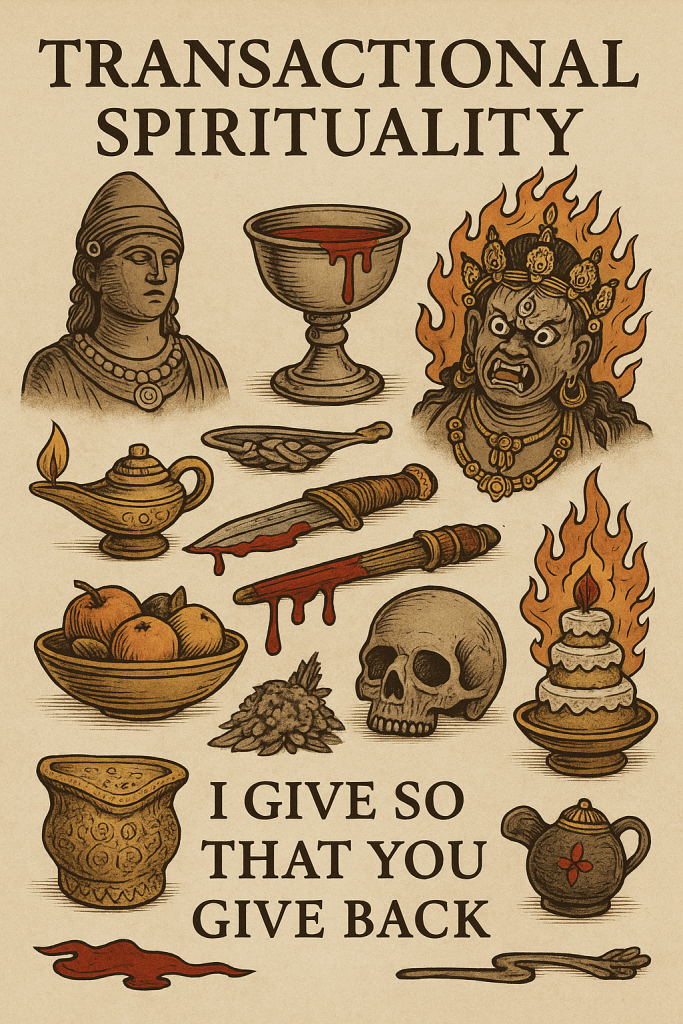
A passage from Behold the Christ: Proclaiming the Gospel of Matthew by Leroy A. Huizenga makes this brutally clear. Pagan worship, he writes, operated on the ancient principle of do ut des: “I give so that you give back.”(1) In other words, the gods and humans used each other. You offered sacrifices, incense, food, or praise not out of adoration, but because you wanted something in return: good crops, protection in war, fertility, rain, wealth, healing, vengeance, and victory. And the gods? They wanted to be fed, praised, and kept relevant. It was mutual exploitation dressed up in sacred costume.

“That is, the worshipper provides a sacrifice to a god that pleases and empowers the god, who then turns around and does the worshipper favors. Because the gods are often indifferent to humans, worshippers engage in repeated ritual to reach out and get a god’s attention.”

This paragraph says more about ancient spirituality than most modern New Age books on “manifesting” or “connecting with the divine.” The ancients weren’t confused. They understood that the gods were powerful, unpredictable, and not especially interested in human wellbeing unless there was something in it for them.

And this wasn’t limited to Rome or Greece. Versions of do ut des appear in Vedic sacrifice, Mesopotamian temple economies, and also Tantric Buddhist practice where offerings are made to wrathful deities to invoke, control, or appease.

Nowhere is this transactional logic more systematized and ritualized to the point of industrial precision than in Tibetan Buddhism. While cloaked in the language of enlightenment and compassion, the tradition is saturated with mechanisms that mirror the ancient do ut des economy: elaborate offerings, incense, butter lamps, mandalas, and tormas (sacrificial cakes that replaced blood offerings when the Buddhist principle of ahimsa “non-harming” took root). These were given not out of unconditional reverence, but to elicit specific outcomes from specific deities. Monastic liturgies are not just meditative recitations, but are negotiations with a pantheon of wrathful and peaceful beings, each with their own preferences, powers, and temperaments. Moreover, the non-harming sentiment in Tibetan Buddhism only extends so far. While Buddhist tantra forbids blood sacrifice, its subjugation rituals, aimed at both spiritual and human enemies, can involve some of the most brutal punishments found in any ritual religion.

Drupchöd ceremonies, held in large monasteries, exemplify this beautifully. These are days- or weeks-long ritual marathons involving collective chanting, visualization, music, mudras, and vast offerings, all designed to propitiate deities into bestowing protection, wisdom, and worldly benefits like health and prosperity. Whether invoking Mahakala to remove obstacles or Tara for swift blessings, the assumption is clear: the deity acts when properly fed, praised, and invoked. The gods (or enlightened beings, depending on your doctrinal parsing) are not passively watching; they’re participants in a cosmic economy, and Tibetan Buddhism, more than almost any other tradition, has mastered the bureaucratic apparatus needed to transact with them. It’s not just about personal devotion. It’s about correct performance, correct offerings, and the correct “exchange rate” of ritual. The love of the gods is not assumed. Their attention must be earned over and over again.

Modern Takeaways and a Warning

This transactional pattern isn’t limited to ancient paganism or esoteric Tibetan ritualism. You’ll find the same spiritual economy alive and well in the darker corners of contemporary occultism. Take it from someone like Riaan Swiegelaar who’s lived on the other side: former Satanists and occult practitioners routinely speak of offering sacrifices, especially blood, to demons in order to negotiate outcomes.(2)

He described it well: “A lot of people ask me, ‘Why are there so many sacrifices in Satanism? Why is there blood?’ The answer is simple: blood has currency in the spirit world. If I want to negotiate with demons, I need to bring an [animal] sacrifice because that blood holds value. It functions as spiritual capital.

“But here’s the contrast: the blood of Jesus is the highest currency in the spirit world. It covers everything. That’s the authority we stand on. And every ex-Satanist or ex-occultist who’s encountered Christ will tell you the same thing. I might be the only one talking about it openly, but this is real: we engaged in negotiations with demons, offered animal sacrifices, and got results. That’s how the system worked. Then we experienced the blood and love of Christ and there’s no comparison. It’s not even close. His blood is infinitely more powerful. In spiritual warfare, people need to grasp that reality. The blood of Christ is free, but it is not cheap, is it? It came at the highest cost. And what happened on the cross? That wasn’t a one-time transaction in history: it remains as valid, active, and potent today as it was then, and always will be.”

This is so important that it bears repeating: no spiritual currency, no ritual offering, no demonic pact compares to the raw, unmatched power of the blood of Christ. This is the rupture at the heart of Christianity: the economy of sacrifice is over, not because gods stopped demanding payment, but because one sacrifice bankrupted the system.

From blood-soaked altars in Babylon to ritual offering tormas in Himalayan monasteries, humanity has always traded devotion for power and offerings for favor. But the cross flipped the script. There is no more need for bartering, manipulation, and performance to win divine attention. What Christ offered wasn’t another payment into the cosmic vending machine but a final act that rendered the machine obsolete. And if that’s true, then every attempt to re-enter the old system, whether through pagan ritual, tantric bureaucracy, or occult negotiation, isn’t just a return to tradition. It’s a rejection of victory.

(1) Leroy A. Huizenga, Behold the Christ: Proclaiming the Gospel of Matthew (Emmaus Road Publishing, Steubenville, Ohio).

(2) Riaan Swiegelaar, former co-founder of the South African Satanic Church, in various public testimonies including interviews and livestreams (e.g., “Riaan Swiegelaar Testimony,” YouTube, 2022), has spoken openly about blood sacrifice as spiritual currency and his eventual conversion after experiencing the love of Christ.


The Subconscious as Battleground: Demonic Infiltration Through the Wounds of the Psyche


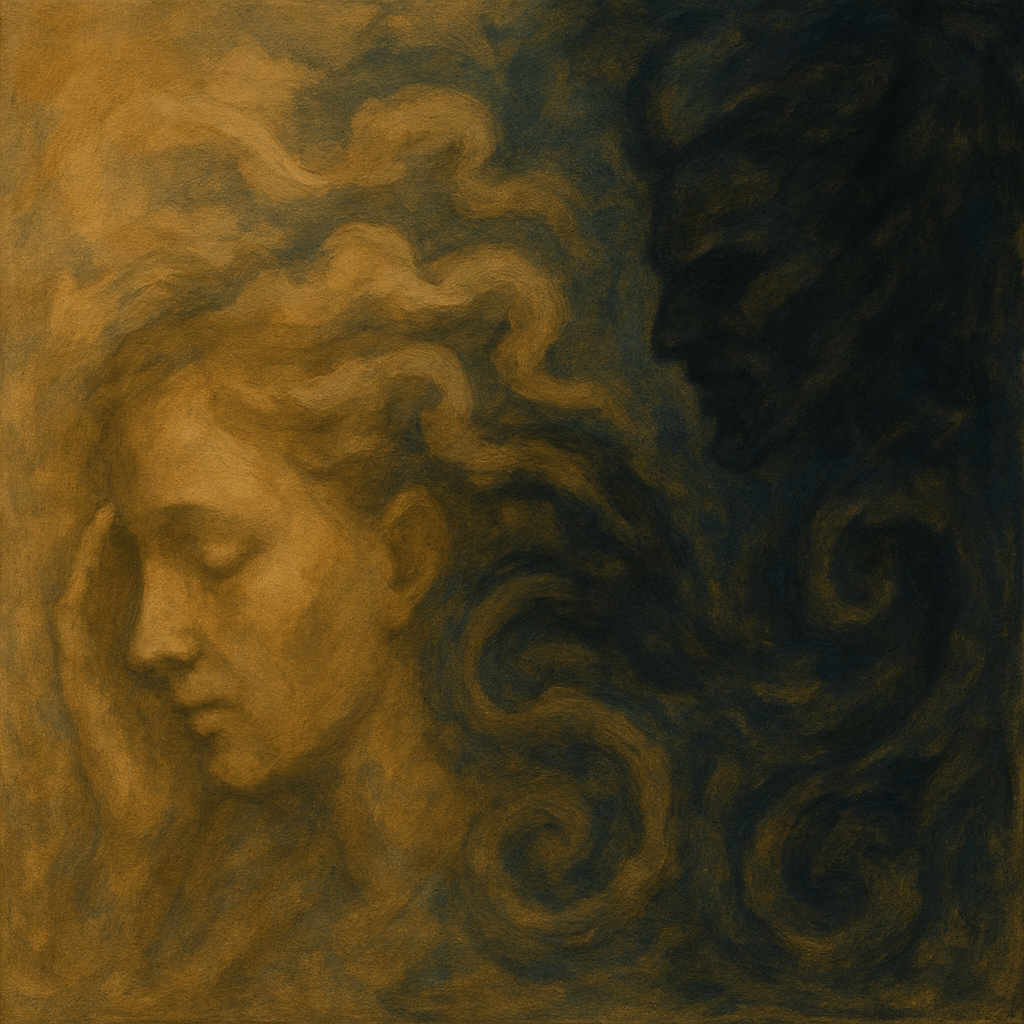
In our modern world, the subconscious is often reduced to a psychological artifact, a repository of repressed memories, habits, and impulses. But from a biblical and Catholic standpoint, this internal space is more than just a vault of emotion and instinct. It is a spiritual battleground and a vulnerable domain where real entities, such as demons seek entry and control.

I speak not in theory but from personal experience. As someone who has lived through the horror of possession, I know firsthand what it means to have my subconscious colonized by non-physical forces, in particular, Tantric deities and the so-called yidams (meditational deities) I once invoked in long term retreats. They now exert control over my dreams at night, not as fragments of memory, but with an intention, force, and intelligence all their own.

Trauma, Sin, and the Open Doors

The Catholic tradition is clear: sin creates openings. These are spiritual vulnerabilities through which demonic powers can assert influence. But it’s not always sin, but often wounds and traumas that become entry points. This aligns, ironically, with what Jung called the shadow: the parts of ourselves we deny or fail to integrate.

In occult and tantric frameworks, these shadows are often “worked with” i.e. ritualistically invited, named, and visualized. In my case, the visualizations of the yidam were never just symbolic. They were summonings that invited intelligent spiritual entities through geometric portals into the liminal space of my subconscious mind.

Obviously, tantric rituals are powerful, but the power is not “of God.” The light of Christ later revealed to me that what I had opened myself up to were demonic counterfeits or parasitic forces clothed in deceptive splendor.

The Subconscious

While the Jungian model treats these internal figures such as archetypes, gods, and dreams, as symbolic representations of the psyche, Biblical scripture offers a different view. Ephesians 6:12 tells us that our struggle is “not against flesh and blood, but against principalities, against powers, against the rulers of the darkness of this world.”

What modern psychology calls “unconscious drives” may, in reality, be demonic actors exploiting our blind spots. They can manifest through thoughts, compulsions, visions, or dreams. They don’t just influence behavior, they shape the architecture of perception, infiltrating belief itself. This is why confession and deliverance are not just spiritual maintenance but are spiritual war strategies.

Dreams: The Nightly Invasion

The yidam I practiced during my retreats appears nightly, manipulating my dreams and injecting disturbing images, physical sensations, and false feelings of failure and yearning. It tries to arouse old loyalties alternating between affects of pseudo kindness and visions of cruel and bitter punishments. These dream invasions foster confusion and despair; and sometimes cause sensations of physical torment.

From a biblical perspective, dreams are a legitimate domain of spiritual communication, but that doesn’t mean all dream figures are from God. In Jeremiah 23, the Lord condemns false prophets who “make my people forget my name by their dreams.” Satan can disguise himself as an angel of light and in my experience, tantric deities do precisely that.

We must recognize the subconscious not as a private fortress, but as a permeable space, one that requires guarding, cleansing, and illumination by Christ alone. Anything else, especially tantric visualization and archetypal meditation, opens up doors we cannot close on our own.

There is no neutral spirituality. Every spiritual practice either opens the soul to grace or to deception. As one who has been inside the snare, I say this without hesitation: tantric deities are demons in disguise, and their preferred hiding place is the very part of us we least understand: the subconscious.

But Jesus Christ, in His mercy, descends even into those hidden caverns, casting out darkness and healing the wounds that made us vulnerable in the first place.

“For this purpose the Son of God was manifested, that He might destroy the works of the devil.”
— 1 John 3:8

How Tantra Masqueraded as Buddhism: the Vajrayāna Deception


Vajrayana Buddhism, also known as Tibetan Buddhism or Tantric Buddhism, stands out for its rituals, deity worship, and complex esoteric practices. Its mantras, mandalas, and meditations on wrathful and yab/yum deities bear clear resemblance to Hindu Tantra, Vedic ritualism, and indigenous spirit cults.

So how did it convince anyone, especially devout Buddhists, that it was authentically taught by the historical Buddha?

The answer lies in a strategic combination of hidden teaching narratives, scriptural mimicry, ritual power, and imperial patronage. Let’s explore how this transformation occurred and what it means when viewed through the lens of Catholic faith and biblical discernment.

Secret Teachings: “The Buddha Taught It, But in Secret”

Vajrayana scriptures claim that the Buddha did teach tantra, but only in secret, to highly realized disciples. These teachings were said to have been hidden in celestial realms, entrusted to beings like Vajrapani or dakinis, or taught in the Buddha’s “enjoyment body” (sambhogakaya) form in other worlds such as Akanistha.(1)

This tactic mirrored earlier Mahayana developments, where new sutras like the Lotus or Avatamsaka were claimed to be higher revelations spoken by the Buddha, but not understood by his early disciples. The concept of esoteric knowledge reserved for the spiritually mature made these late texts seem like rediscovered treasures, rather than innovations.

Scriptural Mimicry and Retroactive Legitimization

To reinforce their authority, tantric scriptures deliberately mimicked the structure of traditional sutras. They often began with the familiar phrase, “Thus have I heard,” and depicted the Buddha teaching not only in celestial realms surrounded by bodhisattvas, but sometimes in radically transgressive settings such as charnel grounds, encircled by ḍākinīs and wrathful deities. These texts introduced elaborate cosmologies, detailed ritual instructions, and esoteric vows, presenting them as timeless wisdom, even though they were composed many centuries after the Buddha’s death.[2]

Authors also invented lineages, claiming that tantric teachings had been passed down secretly from Vajrapani to Nagarjuna, or from Padmasambhava to Tibetan kings.

Syncretism with Hindu and Folk Traditions

Instead of denying its similarities with Hindu Tantra, Vajrayana reinterpreted them. Wrathful deities were said to be enlightened Buddhas. Sexual rituals were described as a symbolic means to transform desire into wisdom. Offerings of blood, bones, and taboo substances were spiritualized as purifications of dualistic perception.

By repackaging Vedic and folk practices into a Buddhist framework, Vajrayana could absorb local traditions and declare them “Buddhist skillful means.”

Imperial Support and Monastic Integration

Tantra spread rapidly through the support of kings and monasteries. In Tibet, tantric masters were invited to subdue native spirits, secure political power, and perform rituals for prosperity. At Indian centers like Nalanda and Vikramashila, tantric scholars and monks practiced Mahayana logic by day and tantric visualization by night.

With the backing of the state and the academic establishment, Vajrayana was not seen as a fringe practice but as the “highest vehicle” of Buddhism.

Ritual Power and Psychological Experience

For the average practitioner, tantra “worked.” It offered visions, emotional catharsis, ritual protection, and the promise of fast-track enlightenment. The experiential pull of mantra, deity yoga, and initiation ceremonies gave people tangible results even if the doctrinal basis was historically shaky.

In the end, many believed not because of historical evidence, but because the system delivered experiences of spiritual intensity.

How Christianity Views This: The Domain of the Second Heaven

From a biblical and Catholic perspective, this raises serious concerns. The spiritual beings Vajrayana practitioners encounter, wrathful deities, dakinis, yidams, do not proclaim Christ as Lord and Savior. They do not point to the God of Abraham, Isaac, and Jacob. They offer power and enlightenment through self-transformation, not redemption.

The Bible is clear: Satan is the prince of the power of the air, ruling the spiritual domain between heaven and earth until Christ returns (Ephesians 2:2). What some refer to as the “second heaven” is where fallen angels operate, deceiving through false light, hidden knowledge, and seductive spiritual experiences.

Teachers like Derek Prince and Dr. Michael Heiser have explained how fallen entities inhabit unseen realms and impersonate divine figures such gods, ascended masters, or beings of light. Applying this view, the Buddhist realm of Akanistha, where the Buddha is said to teach in his sambhogakaya form, may not be a divine domain at all, but a carefully constructed counterfeit, orchestrated by spiritual powers aligned against the Kingdom of God.

This helps explain how a system like Vajrayana could emerge long after the Buddha’s time, imbued with supernatural power, spiritual visions, and doctrinal sophistication, yet still operate in direct opposition to the gospel of Jesus Christ.

Final Reflection: What About the Historical Buddha Himself?

This raises a deeper question: What about the historical Gautama Buddha?

His teachings, centered on renunciation, ethical conduct, and insight, seem far removed from tantric fire offerings, deity visualizations, and magical spells. He did not claim to be a god. He emphasized detachment from craving and moral clarity. So, was he simply a wise man? Or was he also deceived?

From a Catholic and biblical perspective, any system that does not point to Christ as the way, the truth, and the life (John 14:6) must be seen as incomplete at best, and spiritually dangerous at worst. Even teachings that emphasize compassion and morality can become a snare if they direct people away from the living God.

It is possible that the historical Buddha, though perhaps sincere and ethically inclined, encountered spiritual influences he did not fully understand. If he received his insights through meditation without divine revelation, then he may have opened himself to guidance from fallen beings presenting themselves as enlightened or falsely divine. This is a sobering possibility, but one that must be considered if we are to remain faithful to biblical truth.

The gospel does not offer esoteric techniques. It offers a person, Jesus, who does not ask you to awaken into the realization of emptiness. He calls you by name into communion with him, into truth, and finally, into eternal life.


Footnotes:

(1) Akanistha, also spelled Akaniṣṭha, is considered in Mahayana and Vajrayāna cosmology to be the highest of the seventeen or eighteen heavens in the form realm (rūpadhātu), and specifically the realm where Buddhas in their “enjoyment body” (sambhogakāya) manifest and teach advanced bodhisattvas. It is portrayed as a pure, radiant dimension beyond ordinary perception, where tantra and esoteric teachings are said to be revealed. From a Christian perspective, such realms existing in the unseen spiritual domain, may correspond to what theologians like Derek Prince and Michael Heiser describe as the “second heaven,” a sphere under temporary dominion of fallen angelic beings capable of impersonating divine figures (see Ephesians 6:12, Daniel 10:13).

[2] Alexis Sanderson, “The Śaiva Age: The Rise and Dominance of Śaivism during the Early Medieval Period,” in Genesis and Development of Tantrism, edited by Shingo Einoo (Tokyo: Institute of Oriental Culture, University of Tokyo, 2009), pp. 124–126. Sanderson provides detailed evidence that Buddhist tantras were modeled after Śaiva texts and appeared centuries after the Buddha’s life.

David B. Gray, The Cakrasamvara Tantra: The Discourse of Śrī Heruka, (New York: American Institute of Buddhist Studies, 2007), Introduction, pp. 18–25. Gray discusses the charnel ground setting and the structure of tantric texts, including the invocation of ḍākinīs and wrathful deities, and their divergence from earlier Buddhist sūtra literature.

Kali and Vajrayoginī: A Biblical Perspective


In both Hindu and Buddhist tantric traditions, Kali and Vajrayoginī stand as iconic figures of immense power. Wrathful, seductive, and liberating, they are revered as goddesses who destroy ignorance and ego, leading practitioners to freedom through terrifying grace. They drink blood, wear garlands of skulls, and dance on corpses. These are not symbols for the faint of heart.

Kali, in Hinduism, is the goddess of time and death. She is the dark mother who slays demons, severs illusion, and devours ego. Vajrayoginī, in Vajrayāna Buddhism, is a female buddha who leads devotees to enlightenment through the annihilation of dualistic perception, often through erotic and wrathful means.

Today, many feminists embrace these goddesses as symbols of female empowerment, strength, and liberation from patriarchal religion. But this overlooks the possibility that these figures, far from celebrating womanhood, may actually represent a deep spiritual hostility toward it. The ego-annihilation they demand may not be empowering at all, but destructive, both spiritually and psychologically. When viewed through a biblical lens, one must consider whether these so-called icons of empowerment are in fact hostile agents cloaked in feminine form. From a biblical worldview, who are they really?


Fallen Beings or Demonic Entities

If we take the Bible as the sole and literal authority:

  • There is one true God (YHWH), and worship is due to Him alone.
  • Any supernatural beings outside of YHWH and His angels fall under:
    • Idols (Psalm 96:5 – “For all the gods of the nations are idols”)
    • Deceiving spirits or demons (1 Corinthians 10:20 – “The sacrifices of pagans are offered to demons, not to God.”)

From this view:

DeityBiblical Interpretation
KaliA manifestation of a demonic spirit that seduces worshippers through fear and false power
VajrayoginīA spirit of deception using mystical allure to imitate divine enlightenment

Why They’re Considered Dangerous

1. They Accept Worship Not Meant for Them

  • Worship of any being other than the God of Israel is strictly forbidden. (Exodus 20:3 – “You shall have no other gods before Me.”)
  • Revering supernatural powers outside of God constitutes rebellion and idolatry.

2. They Promote False Teachings

3. They Offer Counterfeit Spiritual Power

  • These goddesses can induce real mystical experiences through the occult third eye, but from a biblical view, such power is not from God.
  • They mimic light and transcendence, offering access to preternatural realms that ensnare souls in spiritual bondage.

Biblical Warnings Relevant to These Figures

  • 2 Corinthians 11:14 – “Even Satan disguises himself as an angel of light.”
  • Deuteronomy 13:1–3 – Even if a sign or wonder comes to pass, if it leads you to follow other gods, it is a test from the Lord.
  • Revelation 9:20 – Condemns worship of “idols of gold and silver… which cannot see or hear or walk.”

Summary (from a Biblical Lens)

Kali and Vajrayoginī are not misunderstood archetypes or symbolic feminine faces of divine truth. From a biblical standpoint, they are false gods or fallen spirits who lure seekers through mysticism, ecstasy, and power into worship that ultimately defies the true and living God.

Their powers are spiritual deceptions, designed to mimic enlightenment while leading souls away from salvation and the truth of Jesus Christ.

To those recovering from tantric abuse or deception: the biblical path does not deny spiritual reality, it affirms that spiritual warfare is real, and that freedom is found in Christ alone, not through altered states, or the worship of seductive wrathful or peaceful goddesses, or any other small “g” god for that matter.

“You shall have no other gods before Me.” — Exodus 20:3