

I was raised in the Catholic faith. Its prayers, seasons, schools, and sacraments shaped my earliest understanding of the world. But as I grew older, the atmosphere changed and it started to feel foreign to me. After the upheavals in the liturgy and doctrine that followed the Second Vatican Council, everything became muted and seemed different. Gone was the mystery and ritual of the high Mass. What replaced it was grey and humdrum. As I embraced my mid-teens I felt like the Church had become unrecognizable. I was bored in Mass and began to question everything. I felt myself drifting, carried away by the freedom and experimentation of the post-Hippie generation.
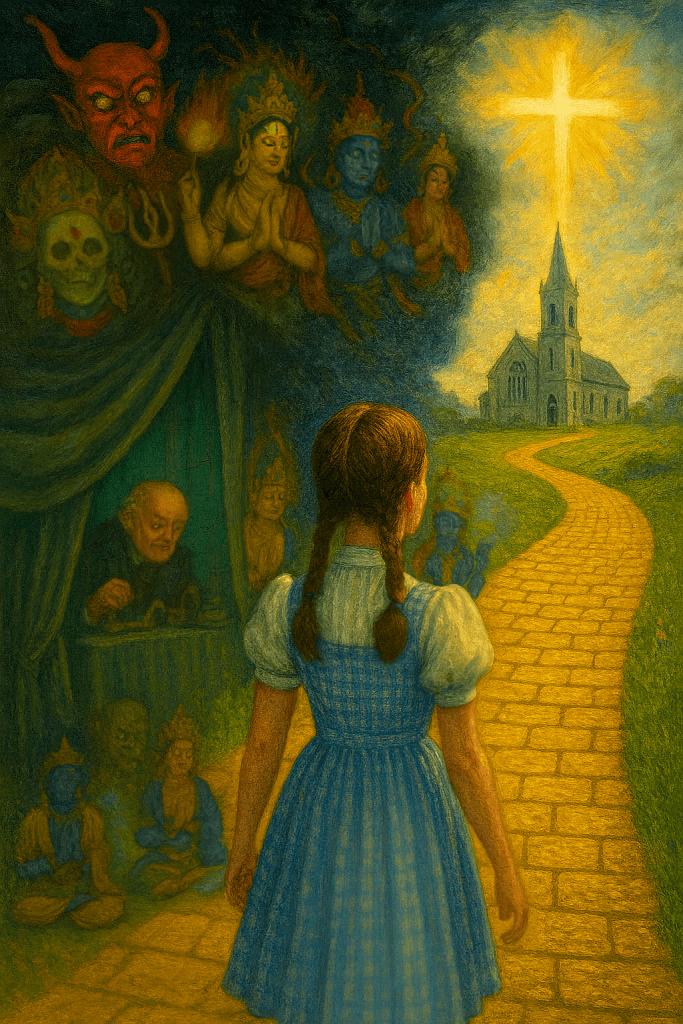
That search carried me far from the Church for more than three decades. As an adult I immersed myself in Tibetan Buddhism. Compared to the Catholicism I thought I had outgrown, this new path was exhilarating. The colorful symbols, rituals, exotic chanting, and promises of hidden knowledge shone bright like the Technicolor world Dorothy steps into after her house lands in Oz. Everything was vibrant and different. For a long time, I believed I had found a far richer spiritual universe than the one I had left behind.
As the years passed, I committed myself more deeply to Tibetan tantric Buddhism. Gurus, deities, and intricate ritual practices in long retreats promised transformation. I accepted men as guides who claimed they could lead me toward enlightenment. But slowly, over time, questions emerged. The yanas contradicted one another. The path began to feel less like liberation and more like entanglement in a feudal system with a hazy set of arcane laws. What had once seemed full of promise started to feel like a maze of deception.
The turning point came when I least expected it. Like Dorothy traversing the Emerald City, dazzled by spectacle, I had followed the yellow brick road as far as I could, believing I was approaching a transformative experience of enlightenment. And just as Dorothy eventually reaches Oz and pulls back the curtain, only to find a small man manipulating levers, I was forced to see behind the veil as well. The Root Guru I had trusted was revealed as a sorcerer, and the tantric deities I had once exalted no longer appeared as divine guides but as accusing, demonic forces. They became something like the scary flying monkeys that viciously attack Dorothy and her friends at one point. I suddenly realized that the impressive display I had put my faith in was only smoke and mirrors, and the powers behind it were not what they claimed at all, but actually fallen angels and their human minions.
That realization shook me to my core. In the very moment the illusion collapsed, a strange clarity emerged. I found myself remembering what I had learned as a child, what the Church had taught from the very beginning. The contrast between truth and imitation soon became unmistakable. What I had embraced as enlightened beings were nothing of the sort. Their nature did not align with the Most High God but with the very deceptive forces that the Bible warns against. I had spent years seeking hidden wisdom only to discover that the truth I needed had been with me since childhood. What a bizarre discovery after so many years of a life lived in error.
When I returned to the Catholic Church, I expected judgment or distance. Instead, I found the opposite. The Church received me with open arms, with the warmth of a parent waiting for a child who has been gone far too long. Over the years, thanks to Popes like John Paul II and Benedict, the Church regained some of its true colors that had been lost in the hasty rush to modernize. It now seemed sacramental and grounded in truth. I began to approach my re-version with the discerning mind of an adult hungry for knowledge. Gradually, a whole new world opened up to me and I was amazed that the truth of Christ’s sacrifice to humanity held new meaning after the horrors I had just lived through in the occult. Is the institution of the Catholic Church perfect? No. Its human side can fail, and at times it clearly has. Some say it is in crisis. Yet Christ promised, “You are Peter, and on this rock I will build my Church, and the gates of hell shall not prevail against it” (Matthew 16:18). That promise has become an anchor for me in these difficult times.
My journey through the many beguiling practices of Tibetan Buddhism taught me how convincing illusions can be. It taught me how eager the human heart is for spiritual novelty, and how easy it is to mistake mystical experiences for truth. The Catholic Church, which I once believed had lost its footing, proved steady after all. After thirty-five years away, I came home to the enduring Christian faith that had been guiding me from the beginning.
 Tantric Deception