How Tantra Masqueraded as Buddhism: the Vajrayāna Deception


Vajrayana Buddhism, also known as Tibetan Buddhism or Tantric Buddhism, stands out for its rituals, deity worship, and complex esoteric practices. Its mantras, mandalas, and meditations on wrathful and yab/yum deities bear clear resemblance to Hindu Tantra, Vedic ritualism, and indigenous spirit cults.

So how did it convince anyone, especially devout Buddhists, that it was authentically taught by the historical Buddha?

The answer lies in a strategic combination of hidden teaching narratives, scriptural mimicry, ritual power, and imperial patronage. Let’s explore how this transformation occurred and what it means when viewed through the lens of Catholic faith and biblical discernment.

Secret Teachings: “The Buddha Taught It, But in Secret”

Vajrayana scriptures claim that the Buddha did teach tantra, but only in secret, to highly realized disciples. These teachings were said to have been hidden in celestial realms, entrusted to beings like Vajrapani or dakinis, or taught in the Buddha’s “enjoyment body” (sambhogakaya) form in other worlds such as Akanistha.(1)

This tactic mirrored earlier Mahayana developments, where new sutras like the Lotus or Avatamsaka were claimed to be higher revelations spoken by the Buddha, but not understood by his early disciples. The concept of esoteric knowledge reserved for the spiritually mature made these late texts seem like rediscovered treasures, rather than innovations.

Scriptural Mimicry and Retroactive Legitimization

To reinforce their authority, tantric scriptures deliberately mimicked the structure of traditional sutras. They often began with the familiar phrase, “Thus have I heard,” and depicted the Buddha teaching not only in celestial realms surrounded by bodhisattvas, but sometimes in radically transgressive settings such as charnel grounds, encircled by ḍākinīs and wrathful deities. These texts introduced elaborate cosmologies, detailed ritual instructions, and esoteric vows, presenting them as timeless wisdom, even though they were composed many centuries after the Buddha’s death.[2]

Authors also invented lineages, claiming that tantric teachings had been passed down secretly from Vajrapani to Nagarjuna, or from Padmasambhava to Tibetan kings.

Syncretism with Hindu and Folk Traditions

Instead of denying its similarities with Hindu Tantra, Vajrayana reinterpreted them. Wrathful deities were said to be enlightened Buddhas. Sexual rituals were described as a symbolic means to transform desire into wisdom. Offerings of blood, bones, and taboo substances were spiritualized as purifications of dualistic perception.

By repackaging Vedic and folk practices into a Buddhist framework, Vajrayana could absorb local traditions and declare them “Buddhist skillful means.”

Imperial Support and Monastic Integration

Tantra spread rapidly through the support of kings and monasteries. In Tibet, tantric masters were invited to subdue native spirits, secure political power, and perform rituals for prosperity. At Indian centers like Nalanda and Vikramashila, tantric scholars and monks practiced Mahayana logic by day and tantric visualization by night.

With the backing of the state and the academic establishment, Vajrayana was not seen as a fringe practice but as the “highest vehicle” of Buddhism.

Ritual Power and Psychological Experience

For the average practitioner, tantra “worked.” It offered visions, emotional catharsis, ritual protection, and the promise of fast-track enlightenment. The experiential pull of mantra, deity yoga, and initiation ceremonies gave people tangible results even if the doctrinal basis was historically shaky.

In the end, many believed not because of historical evidence, but because the system delivered experiences of spiritual intensity.

How Christianity Views This: The Domain of the Second Heaven

From a biblical and Catholic perspective, this raises serious concerns. The spiritual beings Vajrayana practitioners encounter, wrathful deities, dakinis, yidams, do not proclaim Christ as Lord and Savior. They do not point to the God of Abraham, Isaac, and Jacob. They offer power and enlightenment through self-transformation, not redemption.

The Bible is clear: Satan is the prince of the power of the air, ruling the spiritual domain between heaven and earth until Christ returns (Ephesians 2:2). What some refer to as the “second heaven” is where fallen angels operate, deceiving through false light, hidden knowledge, and seductive spiritual experiences.

Teachers like Derek Prince and Dr. Michael Heiser have explained how fallen entities inhabit unseen realms and impersonate divine figures such gods, ascended masters, or beings of light. Applying this view, the Buddhist realm of Akanistha, where the Buddha is said to teach in his sambhogakaya form, may not be a divine domain at all, but a carefully constructed counterfeit, orchestrated by spiritual powers aligned against the Kingdom of God.

This helps explain how a system like Vajrayana could emerge long after the Buddha’s time, imbued with supernatural power, spiritual visions, and doctrinal sophistication, yet still operate in direct opposition to the gospel of Jesus Christ.

Final Reflection: What About the Historical Buddha Himself?

This raises a deeper question: What about the historical Gautama Buddha?

His teachings, centered on renunciation, ethical conduct, and insight, seem far removed from tantric fire offerings, deity visualizations, and magical spells. He did not claim to be a god. He emphasized detachment from craving and moral clarity. So, was he simply a wise man? Or was he also deceived?

From a Catholic and biblical perspective, any system that does not point to Christ as the way, the truth, and the life (John 14:6) must be seen as incomplete at best, and spiritually dangerous at worst. Even teachings that emphasize compassion and morality can become a snare if they direct people away from the living God.

It is possible that the historical Buddha, though perhaps sincere and ethically inclined, encountered spiritual influences he did not fully understand. If he received his insights through meditation without divine revelation, then he may have opened himself to guidance from fallen beings presenting themselves as enlightened or falsely divine. This is a sobering possibility, but one that must be considered if we are to remain faithful to biblical truth.

The gospel does not offer esoteric techniques. It offers a person, Jesus, who does not ask you to awaken into the realization of emptiness. He calls you by name into communion with him, into truth, and finally, into eternal life.


Footnotes:

(1) Akanistha, also spelled Akaniṣṭha, is considered in Mahayana and Vajrayāna cosmology to be the highest of the seventeen or eighteen heavens in the form realm (rūpadhātu), and specifically the realm where Buddhas in their “enjoyment body” (sambhogakāya) manifest and teach advanced bodhisattvas. It is portrayed as a pure, radiant dimension beyond ordinary perception, where tantra and esoteric teachings are said to be revealed. From a Christian perspective, such realms existing in the unseen spiritual domain, may correspond to what theologians like Derek Prince and Michael Heiser describe as the “second heaven,” a sphere under temporary dominion of fallen angelic beings capable of impersonating divine figures (see Ephesians 6:12, Daniel 10:13).

[2] Alexis Sanderson, “The Śaiva Age: The Rise and Dominance of Śaivism during the Early Medieval Period,” in Genesis and Development of Tantrism, edited by Shingo Einoo (Tokyo: Institute of Oriental Culture, University of Tokyo, 2009), pp. 124–126. Sanderson provides detailed evidence that Buddhist tantras were modeled after Śaiva texts and appeared centuries after the Buddha’s life.

David B. Gray, The Cakrasamvara Tantra: The Discourse of Śrī Heruka, (New York: American Institute of Buddhist Studies, 2007), Introduction, pp. 18–25. Gray discusses the charnel ground setting and the structure of tantric texts, including the invocation of ḍākinīs and wrathful deities, and their divergence from earlier Buddhist sūtra literature.
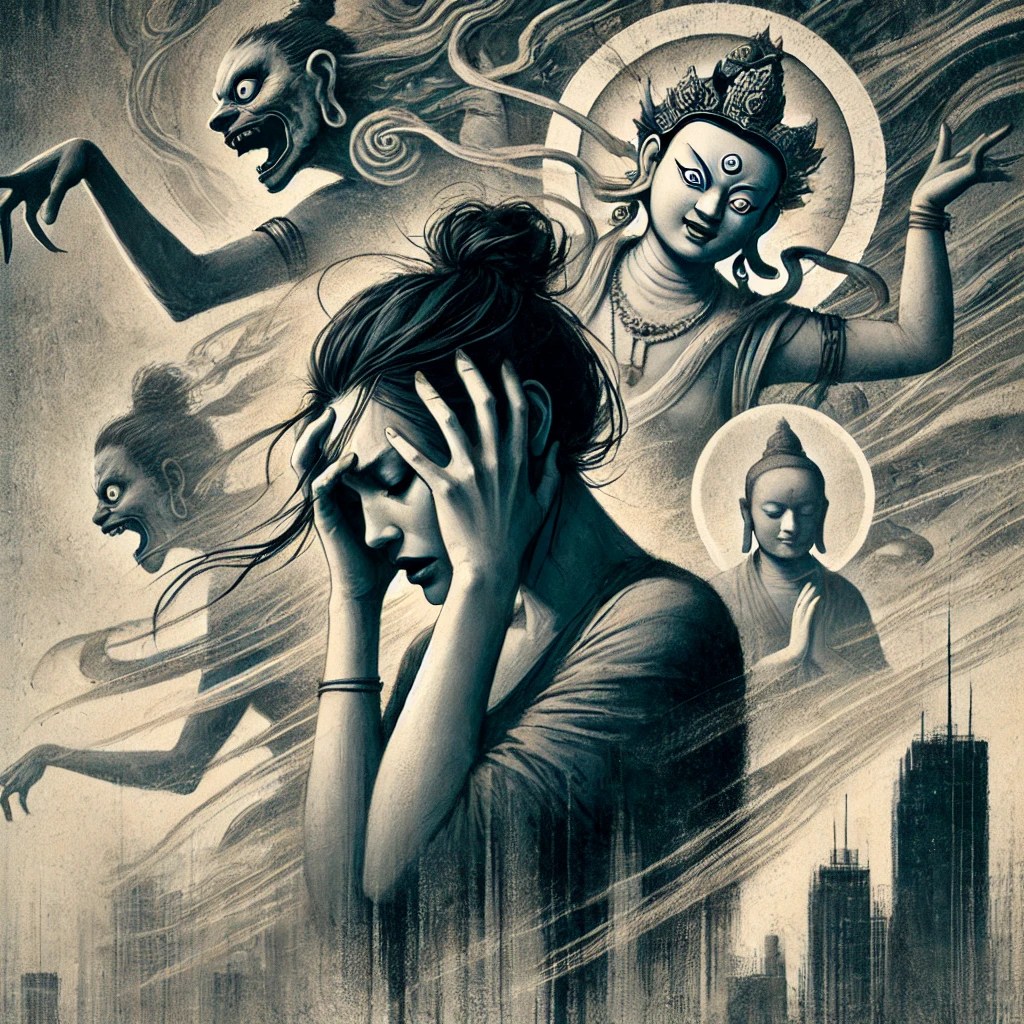
The Harsh Reality of Samaya: The Unbreakable Laws of Vajrayāna


In the Western embrace of Tibetan Buddhism, samaya (sacred bond) is often treated as a vague concept, a flexible spiritual guideline open to interpretation. Many practitioners, influenced by modern individualism, believe they can define samaya for themselves, shaping it to fit their personal path. But it’s not so easy. Samaya is not a subjective ideal or a broad ethical principle. It is an uncompromising system of laws dictated by the deities of Tibetan Buddhist tantra, and the consequences of breaking it are catastrophic.

The Origin of Samaya: A System of Absolute Control

As Sam van Schaik explains, with the emergence of Vajrayāna in the seventh century, samaya became the defining framework of tantric practice. It was not merely a commitment to enlightenment or bodhichitta; it was a rigid contract that bound the practitioner to the deities, the guru, and the teachings in a way that left no room for negotiation. The very term “samaya” signifies a binding agreement, a point of convergence where wisdom manifests through ritual, visualization, and esoteric substances. These vows were not meant to be symbolic gestures but inviolable pacts with cosmic forces.

The West tends to frame Buddhism as a path of peace and compassion, yet within Vajrayāna, samaya is not about universal kindness or personal growth. It is about absolute allegiance to the tantric system. Any deviation from this allegiance is not simply a spiritual misstep, it is a crime against the sacred laws of tantra.

The Consequences of Breaking Samaya: Illness, Insanity, and Demonic Affliction

One of the most terrifying aspects of samaya is its enforcement mechanism. Unlike moral guidelines in mainstream Buddhism, which rely on karmic repercussions across lifetimes, samaya violations often carry immediate and devastating consequences in this very life. Tibetan texts are explicit: breaking samaya leads to physical illness, mental instability, and possession by malevolent forces.

Illness as a Sign of Broken Samaya

Tantric texts frequently warn that violating samaya will manifest as sickness. This is not metaphorical. Traditional Tibetan medical texts list broken samaya as a cause of chronic diseases, unexplained fevers, and deteriorating health that no ordinary treatment can cure. The idea is that the tantric deities and protectors, angered by the transgression, withdraw their blessings, leaving the practitioner vulnerable to suffering, often caused by the deities themselves.

It is not uncommon to hear stories in Vajrayāna circles of Westerners who fought with or abandoned their guru, only to fall into inexplicable physical decline. Some develop persistent health issues that defy medical diagnosis. Others find themselves facing severe misfortunes, financial ruin, or a string of accidents. Traditional Tibetan lamas do not hesitate to attribute such misfortunes to broken samaya.

Demonic Afflictions: The Price of Transgression

Beyond physical illness, breaking samaya is believed to invite spiritual and psychological torment. The tantric pantheon is not just composed of peaceful deities; it is teeming with wrathful beings, dharma protectors, and guardian spirits who enforce the rules of the tradition with merciless precision. When samaya is broken, these entities are said to turn against the practitioner, causing possession, insanity, or relentless bad luck.

In the Tibetan worldview, demonic affliction is not an abstract concept but a literal reality. Those who have transgressed samaya might experience intense nightmares, hallucinations, or an overwhelming sense of mental disintegration. Some report hearing voices, seeing terrifying visions, or feeling the presence of unseen entities oppressing them. In extreme cases, individuals descend into madness, their minds fractured under the weight of their spiritual transgressions.

Samaya and the Persecution of Women Who Resist Sexual Exploitation

While samaya is traditionally presented as a means of maintaining the purity of Vajrayāna teachings, there have been numerous instances where it has been weaponized against women. Throughout Tibetan Buddhist history, samaya has been invoked to silence and punish women who resisted sexual advances from their gurus or exposed instances of abuse.

The guru-disciple relationship in Vajrayāna is absolute, with the guru often regarded as the embodiment of the Buddha’s wisdom. Women who took empowerments from a lama were thus considered bound to him through samaya. If they later rejected his sexual advances or spoke out against his predatory behavior, they were accused of breaking their samaya vows, making them spiritually compromised and subject to supernatural retribution.

A striking example of this dynamic is found in the research of scholar Holly Gayley, who examines how Vajrayāna secrecy and power dynamics have historically been used against women. In her article, Revisiting the ‘Secret Consort’ (gsang yum) in Tibetan Buddhism, Gayley recounts a case in which a Tibetan woman refused the sexual advances of a lama and warned other women about him. As a result, it was said that she was condemned to Vajra Hell, an especially severe form of punishment for breaking samaya. This narrative reflects the broader pattern of how women who resist sexual coercion by spiritual authorities are framed as transgressors rather than victims.¹

Let me begin with a cautionary tale from Tibet regarding the judgment pronounced by Yama, the Lord of Death, to a woman who refused to serve as the consort for a Buddhist teacher or lama (Skt: guru, Tib: bla ma).1 The young lady from a well-to-do family, named Chödrön, had sought out Buddhist teachings from numerous esteemed lamas. One of them, the itinerant Zhönu Gyaltsen, asked her to be his “secret consort,” but she refused. The request caused her to lose faith in the lama and leave the gathering before receiving the complete instructions. Later, she told girlfriends about the incident. In Yama’s assessment, since Zhönu Gyaltsen was a master of esoteric teachings, Chödrön had breached her tantric commitments (Skt: samaya, Tib: dam tshig) on several counts: not complying with the lama’s request, not completing the training in his teachings and (worst of all, it seems) speaking about the incident with other women. When Chödrön protests that if the lama was realized, it was inappropriate for him to take a sexual interest in her, Yama counters that when Zhönu Gyaltsen died, numerous relics and miraculous signs occurred, attesting to his high degree of realization. Positioning her as a gossip, he avers that she caused numerous others to lose faith, thereby harming the lama and his disciples. He concludes, “it is a greater sin to denigrate and slander lamas and teachers than it is to murder a thousand living beings,” and condemns her to suffer the torments of the hell realms. [1]”

Some Tibetan Buddhist practitioners might argue that when a lama engages in unethical behavior, such as lying, manipulation, or sexual misconduct, he is the one who has broken samaya. They may claim that by violating his own Vinaya or Mahāyāna vows, the lama has nullified his spiritual authority, thereby freeing disciples from any obligation of fealty.

In her article for Lion’s Roar magazine, “Samaya as Symbiotic Relationship,” Damchö Diana Finnegan recounts questioning several erudite Vajrayāna teachers on this issue. According to her, these teachers asserted that “the samaya between guru and student would be broken when the guru asks the students to provide them with sexual services. Therefore, according to this doctrinal interpretation, students who are being pressed for sex are no longer bound by any samaya commitments to comply. The guru has already broken that sacred bond with the disciple.”

However, it is telling that none of these teachers were willing to go on the record with their statements. Why were they reluctant to share their names? Their silence suggests that this perspective, while politically palatable, may not reflect the deeper realities of samaya within Vajrayāna doctrine. While I may be mistaken, I believe this view misinterprets the mechanics of samaya. Within the Vajrayāna framework, if a lama has attained realization through tantric practice, disciples who receive tantric empowerments and teachings from him/her must remain bound to him/her regardless of his ethical conduct.

The logic of Vajrayāna dictates that the guru is beyond conventional morality, and his actions, even those that appear harmful, should be seen as expressions of skillful means. This rigid framework leaves little room for individual discernment; once samaya is taken, loyalty to the guru is absolute. Lesser concepts such as conventional morality, compassion, or ethical considerations do not override the tantric principle of unwavering devotion. Fealty to the guru is absolute.

The West’s Dangerous Misunderstanding of Samaya

Western practitioners often brush aside the concept of samaya, treating it as a personal promise rather than a sacred contract with supernatural consequences. Many believe they can pick and choose which vows to follow, rationalizing that samaya should align with their own moral compass. But in the rigid framework of Vajrayana Buddhism, this is not how it works. Samaya is otherwordly, enforced by divine forces beyond human comprehension.

Modern spiritual seekers dabbling in Tibetan Buddhism often think they can leave if it no longer serves them. But the system was never designed for that kind of flexibility. The moment one takes empowerment, they are bound to the guru and the deities of the tradition. There is no “undoing” samaya without consequence. The idea that one can walk away from tantric vows unscathed is a Western delusion.

The Reality Check: Understanding the Gravity of Vajrayāna Commitments

For those considering the tantric path, a harsh reality check is necessary. Vajrayāna is not a casual spiritual endeavor. It is a binding commitment that demands unwavering loyalty. Once samaya is taken, there is no turning back without risk. The system is not built on forgiveness but on law, and those who transgress it may find themselves in a living nightmare.

If Western practitioners truly wish to engage with Tibetan Buddhism, they must abandon the idea that samaya is subjective. It is not about compassion or bodhichitta in the general sense; it is a legalistic, doctrinal framework with severe consequences. Breaking samaya is not just a spiritual failing but a transgression against forces that do not easily forgive.

To those who have already taken empowerment, the only recourse is strict adherence to samaya or intense purification practices to mitigate the damage of broken samaya. For those who have not yet committed, this article serves as a warning: enter at your own risk, and understand that once you do, there is no way out without a price.

Some of the sources for this article are as follows:

[¹] Holly Gayley, Revisiting the ‘Secret Consort’ (gsang yum) in Tibetan Buddhism, MDPI. https://www.mdpi.com/2077-1444/9/6/179

Sam van Schaik’s Early Tibet BlogSam van Schaik on Mahāyoga Samaya Vows:

Wikipedia on Samaya:

Samaya as Symbiotic Relationship:

The Origins of Tantric Buddhism

As a young practitioner, I was taught that the Buddhist tantras were revealed after the Buddha’s parinirvana (death). According to this myth, the Buddha appeared in a divine form to gods and advanced beings, delivering esoteric teachings that remained hidden during his lifetime. These secret instructions were entrusted to celestial beings, nāgas (serpentine spirits), and bodhisattvas, who later transmitted them when conditions were ripe. This framed the tantras as mystical extensions of the Buddha’s wisdom, distinct from his public teachings in the sutras.

However, modern scholarship, like Jacob Dalton’s work, suggests a different history. Instead of divine revelation, tantric rituals and methodologies likely evolved through independent ritual manuals rather than canonical scripture.

The Karma Kagyu Perspective

The Karma Kagyu tradition holds that tantras were revealed by Vajradhara, the Dharmakaya Buddha, through visionary transmission to highly realized beings like Tilopa. Some teachings were safeguarded by dakinis and nāgas, while others were hidden as terma (treasures) to be revealed later. These traditional narratives emphasize a mystical origin; however, Dalton’s research suggests that tantric Buddhism developed more organically, emerging from evolving ritual manuals.


If one takes the traditional Buddhist stance that tantra was revealed by the Buddha (or Vajradhara), then Dalton’s research presents a major challenge. It suggests that these teachings were likely developed and refined within Buddhist circles long after the Buddha’s time rather than being his direct transmission.


Sutras vs. Tantras

Sutras are foundational Buddhist texts attributed to the historical Buddha, emphasizing ethical conduct, meditation, and wisdom. These canonical scriptures are preserved in the Pali, Chinese, and Tibetan canons. In contrast, tantras focus on esoteric rituals, deity yoga, mantra recitation, and secret initiations aimed at accelerating enlightenment. Unlike sutras, tantras use symbolic, coded language and require initiation from a qualified teacher.

The Dunhuang Manuscripts and Ritual Manuals

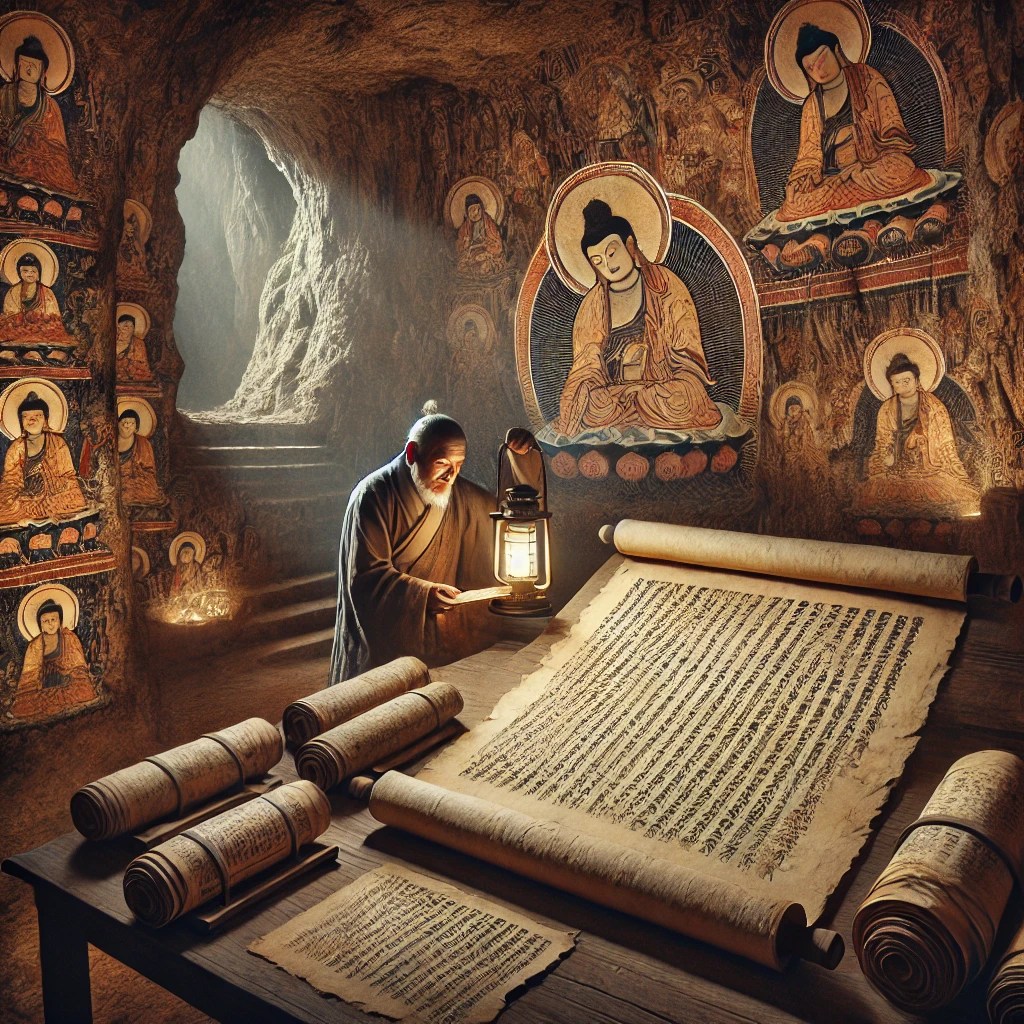
The Dunhuang manuscripts, discovered along the Silk Road, offer insight into early tantric Buddhism. Dalton’s work with these texts suggests that tantric Buddhism initially developed through practical ritual manuals (Vidhis, Kalpas, and Sadhanas) rather than formalized scriptures. These guides were adapted and often discarded, making their historical traceability difficult.

Dalton found that these manuals were frequently appended to or inserted into Dharani sutras, but also existed independently.[1] This suggests that Buddhist rituals did not originate from sutras but were already in practice before being formally recorded in scripture.

The Evolution of Tantric Practices

By the fifth century, ritual manuals became prominent alongside Dharani sutras, marking a shift toward applied spirituality. The rise of altar diagrams, temple worship, and visualization techniques in Buddhist rituals coincided with Hindu esoteric traditions, reflecting a cross-pollination of practices.

Conjuring the Buddha: A Reversal of Scriptural Authority

Jacob Dalton’s book Conjuring the Buddha: Ritual Manuals in Early Tantric Buddhism, explores how tantric Buddhism is deeply ritualistic and magical, emphasizing that practitioners sought to conjure the Buddha rather than merely study doctrine.

A key argument in his work is that ritual practices predated and shaped canonical texts, rather than the traditional assumption that textual sources dictated practice. This challenges the linear evolutionary model that sees tantric Buddhism as a straightforward development from Mahayana sutras. Instead, Dalton suggests that lived ritual traditions influenced the formation of canonical texts, making tantric Buddhism a dynamic and experiential tradition rather than a purely doctrinal one.

Rethinking Tantric Buddhism’s Origins

Dalton’s research does not outright prove that tantra did not come from the Buddha, but it strongly challenges the traditional Buddhist claim that tantras were directly revealed by him (whether in his historical form or as Vajradhara). Instead, it suggests that tantric Buddhism developed as an evolving ritual tradition rather than being a fully formed teaching originating from the Buddha himself.

Here’s why:

  1. Ritual Practices Evolved Separately from Canonical Teachings
    Dalton’s findings indicate that tantric practices were initially recorded in independent ritual manuals that were later appended to or integrated into Dharani sutras. This suggests that these practices were not originally part of the Buddha’s recorded teachings but emerged over time within Buddhist communities.
  2. No Direct Scriptural Evidence from Early Buddhist Texts
    The earliest Buddhist texts, the Pali Canon and Mahayana sutras, do not contain fully developed tantric doctrines. Tantra, as it appears in Vajrayana Buddhism, became prominent centuries later, and its early development seems to be more of a gradual accumulation of esoteric ritual practices rather than a singular revelation by the Buddha.
  3. Cross-Pollination with Other Esoteric Traditions
    Many tantric elements such as mantras, deity yoga, mandalas, and ritual visualization, resemble practices found in Indian Shaiva and Shakta traditions. This suggests that tantric Buddhism developed through cultural and religious exchange rather than being an entirely unique transmission from the Buddha.
  4. A Shift in Scriptural Authority
    The fact that tantric practices existed before being formally written into Buddhist scriptures implies that tantric Buddhism may have been practitioner-driven rather than stemming from a singular enlightened source (such as the Buddha). The codification of these rituals into texts might have been an attempt to legitimize or systematize existing practices rather than recording an original revelation.

What This Means for the Traditional View

If one takes the traditional Buddhist stance that tantra was revealed by the Buddha (or Vajradhara), then Dalton’s research presents a major challenge. It suggests that these teachings were likely developed and refined within Buddhist circles long after the Buddha’s time rather than being his direct transmission. Whether this undermines the legitimacy of tantra as a Buddhist tradition depends on one’s perspective: traditionalists may argue that the Buddha foresaw and seeded tantric teachings in hidden ways, while scholars would argue that tantra is a later development influenced by various religious and ritual traditions.


[1] In Tibetan Buddhism, a Dharani Sutra is a type of scripture or sacred text that contains dharanis—extended formulas or phrases composed of Sanskrit syllables believed to carry spiritual power. These are similar to mantras but often longer and more elaborate.

Jacob Dalton, “Conjuring the Buddha,” YouTube, October 5, 2023, https://youtu.be/UVxdmvYaOq4?si=ADR5WqZVvrX88Qo3.


The full transcript of the lecture cited in the article can be read here:

Speaker: Jacob Dalton, Ph.D. | Distinguished Professor in Tibetan Buddhism, UC Berkeley

Thank you, Sanjot, for inviting me. It’s a strange experience to speak to a home crowd.

I’ve given a couple of talks on this book before, and those were more formal, in-depth lectures on specific elements of the book. But since those are all available online, I decided to take a different approach today—something a bit more personal and informal. I want to talk about the process I went through in writing this book.

Since many of you, particularly those in my seminars, have probably heard me discuss these ideas countless times—ideas I’ve been working with for nearly 20 years—I hope this will be the last time you have to listen to me talk about them.

This book began taking shape after I finished my Ph.D. and moved to London to work at the British Library. I was hired by the International Dunhuang Project, which had received a three-year grant to digitize the Tibetan tantric manuscripts in the Stein Collection.

A brief word on the Dunhuang manuscripts: they were discovered over a century ago in a cave along the Silk Road, near the city of Dunhuang. They are a treasure trove for scholars of Chinese and Tibetan religious studies, containing some of the earliest materials we have in Tibetan.

As part of this project, I worked alongside Sam van Schaik to catalog the tantric manuscripts. It was an incredibly fortunate three years, as my interests aligned perfectly with the project’s goals, allowing me to read through the collection extensively.

As I began working through these manuscripts, I noticed that previous scholarship had largely relied on the existing catalog of Tibetan manuscripts in London. Rather than being constrained by that framework, I decided to read through the manuscripts one by one, which led to the discovery of many new treasures.

At the start, I was so excited by my findings that I rushed to publish a few articles. Looking back, I wish I could retract them—they were filled with errors. I simply wasn’t yet qualified to fully understand the collection. Realizing this, I paused my publishing efforts to re-educate myself on the early history of tantric Buddhism in India, which ultimately delayed the completion of this book for nearly two decades.

The book does several things at once. It uses the Tibetan tantric manuscripts from Dunhuang as a window into the development of tantric Buddhism in India. My previous book, Taming of the Demons, used the same manuscripts to explore early Tibetan history, but this time I wanted to contextualize them in relation to Indian developments. While I am not a Sanskritist, I undertook the challenge of examining this material from an Indian perspective.

Despite what Sanjot may have said, much of the book is quite technical, dealing with the evolution of tantric ritual and how it functioned as a system. However, two larger arguments underpin the book.

First, I emphasize the importance of ritual manuals. The book is, in many ways, a study of early tantric ritual manuals as a distinct genre, particularly those preserved in Dunhuang.

Second, influenced by my time at UC Berkeley and conversations with colleagues like Paula and Allan, I began approaching these texts through a more literary lens.

The Discovery of Ritual Manuals as a Distinct Genre

In 2004, while working on an exhibition at the British Library, I was asked to write catalog entries for several manuscripts, including a Chinese diagram of an altar for the worship of Uṣṇīṣa Vijaya. Not knowing Chinese, I sought help in translating it, and I soon realized that nothing in the Uṣṇīṣa Vijaya Dhāraṇī Sūtra itself corresponded to the ritual practices depicted in the manuscript.

This led me to investigate further, and I discovered multiple versions of the text—some with separate ritual sections, others with independently circulating ritual manuals (vīdhis). The Chinese canon preserved some of these, as did the Tibetan canon, while the Dunhuang manuscript represented yet another variant.

This realization led to a major breakthrough: I began to see that ritual manuals had a life of their own, distinct from the canonical scriptures. Using the Taishō Tripiṭaka, I traced the emergence of ritual manuals, finding that they first appeared alongside dhāraṇī sūtras in the second half of the fifth century and proliferated in the sixth and seventh centuries.

Surprisingly, I found no evidence of Buddhist ritual manuals before this period. This was a revolutionary moment for me—I realized that an entire genre, central to contemporary Buddhist practice, had emerged relatively late in Buddhist history.

Ritual Manuals and the Proto-Tantric Debate

This finding intersected with a longstanding scholarly debate about whether dhāraṇī sūtras were proto-tantric. Scholars like Michel Strickmann argued that they were, while others, such as Robert Sharf, disagreed.

I concluded that dhāraṇī sūtras themselves were not tantric but rather Mahāyāna texts. However, the ritual manuals associated with them were proto-tantric. These manuals became a kind of “literary Petri dish,” fostering experimentation, localization, and innovation in Buddhist ritual practice.

What made these ritual manuals so flexible was their non-canonical status. Unlike scriptures deemed the word of the Buddha, these were human-authored texts that practitioners personalized with notes, additions, and modifications. Today, we can still see this practice in Tibetan Buddhism, where individuals compile personalized collections of prayers and instructions.

Yet, because they were seen as unimportant, these manuscripts were rarely preserved—except in rare cases like the Dunhuang collection, which offers a unique glimpse into this otherwise ephemeral tradition.

The Literary Qualities of Ritual Manuals

A turning point in my thinking came when Paula, a literature scholar, asked me what defined ritual manuals as a genre. Until then, I had approached them purely as practical guides. But her question forced me to consider their literary qualities.

Unlike Mahāyāna sūtras, which recount the Buddha’s teachings in a narrative framework, ritual manuals speak directly to the reader, instructing them in the imperative tense: “Place the offering here. Hold the beads in your right hand. Recite the mantra 21 times.” This direct address collapses the distance between text and practitioner, drawing the reader into the ritual itself.

With the rise of tantra, another shift occurred. The imagined world of the Buddha, once distant in Mahāyāna sūtras, merged with the practitioner’s experience. Instead of merely praying to a Buddha, practitioners imagined themselves as the Buddha at the center of the mandala.

This change is vividly illustrated in an eighth-century Tibetan commentary, which states that before drawing a physical mandala, the practitioner must first visualize the true mandala hovering above it. Here, the imagined world takes precedence over the physical.

The Evolution of Tantric Ritual and Poetic Language

A key feature of tantric ritual manuals is their use of poetry at crucial ritual moments. While early manuals were mostly prose, later tantric texts incorporated poetic passages, particularly during initiations and moments of transformation.

For example, in an initiation ritual, the master bestows symbolic objects upon the initiate while reciting poetic verses. This poetic register heightens the ritual’s significance, marking it as a moment of spiritual transformation.

By the ninth and tenth centuries, entire tantric ritual manuals were composed in verse, blurring the lines between human and Buddha-authored texts. These poetic passages, rich in metaphor and imagery, were designed to induce visionary experiences in the practitioner.

Conclusion

The developments I have traced in ritual manuals culminated in the late eighth and ninth centuries with the rise of esoteric initiations, the fourth empowerment, and the direct transmission of awakening through poetic or symbolic gestures—hallmarks of later tantric Buddhism.

While I have limited my argument to the evolution of ritual manuals, it is tempting to see a connection between these literary developments and the emergence of direct transmission methods in traditions like Dzogchen and Zen. By the end of the eighth century, the transmission of awakening was no longer solely a doctrinal process but an experiential one, facilitated through poetic, symbolic, and ritual means.

Thank you.


Betrayed by Tibetan Buddhism: A System of Silencing, Gaslighting, and Abuse


For many seekers, Tibetan Buddhism presents itself as a path of compassion, wisdom, and enlightenment. The colorful rituals, profound teachings, and the promise of an awakened state draw thousands into its fold. Yet, I found that beneath this altruistic exterior lies a deeply disturbing reality that has left many devoted practitioners feeling shattered and betrayed.

The Ignored Epidemic: Sexual Abuse and Victim Blaming

Sexual abuse within Tibetan Buddhist communities is not an isolated phenomenon, it is a systemic issue that has been ignored, dismissed, and, at worst, facilitated. Victims who come forward are met with disbelief and outright hostility. Rather than holding perpetrators accountable, institutions protect the accused, often elevating them to near-divine status, making any accusation seem like an attack on Buddhism itself. Survivors who speak out are gaslit into questioning their own experiences and sanity.

Many have spent years of their lives in service to Buddhist centers and teachers, sacrificing their time, finances, and personal aspirations in the belief that they were contributing to something greater than themselves. But when they are exploited or harmed, they are left with nothing to show for their time and effort.

Devotion Without Reward: The Disillusionment of Lifelong Service

Many who enter Tibetan Buddhist communities do so with sincere intentions, offering years, sometimes decades, of unpaid or underpaid labor to their teachers and centers. They are told that serving a lama is a privilege, a form of spiritual merit that will bring them closer to enlightenment.

But the stark reality is that this so-called merit often leaves people impoverished, physically exhausted, and emotionally drained. The promised rewards of spiritual progress and personal transformation rarely materialize in any meaningful way. Instead, the real benefits accrue to the teachers, who gain wealth, power, and unchallenged authority while their followers struggle to sustain themselves. Those who finally wake up to this exploitation often find themselves discarded, ostracized, and in some cases, actively harmed.

The Dark Side of Tibetan Tantra: Black Magic and Suppression

Tibetan Buddhism is often presented to the world as a practice rooted in loving-kindness and compassion. However, what is rarely discussed is the hidden world of tantric practices that extend into the realm of manipulation and harm.

There exist rituals and practices, known only to initiated insiders, that can be used to attack, suppress, or even destroy those who pose a threat to an abusive teacher. These methods are supernatural and are employed with impunity, while the broader community remains willfully unaware. Advanced practitioners in the know choose to look the other way, refusing to intervene even when witnessing outright harm. Worse, they glorify the abusers, reinforcing their power through public displays of devotion and praise.

The Complicity of the Buddhist Community

The silence and complicity of Tibetan Buddhist institutions and practitioners enables abuse to persist, both mundane and supernatural. In dharma communities where a lama is acting harmfully, those who know the truth either fear retaliation or believe that questioning a lama is a sign of spiritual failure. This culture of submission and blind faith creates a vacuum where predators thrive, shielded by the very people they exploit.

For those who leave, the road to healing is long and painful. The betrayal cuts deeply, not just from the teachers themselves but from the entire community that was supposed to uphold compassion and integrity. The disillusionment is profound, and the scars left behind serve as a haunting reminder of the dangers hidden behind the serene facade of Tibetan Buddhism.

Breaking the Silence

The only way to dismantle this system of abuse is to expose it. Survivors must be heard, their stories believed, and perpetrators held accountable. Blind devotion must give way to critical thinking. The world must recognize that behind the elaborate ceremonies and teachings, a toxic power structure thrives, one that has left too many people in ruins.

Tibetan Buddhism, as it is practiced today in many corners of the world, is not what it claims to be. Until it confronts its dark underbelly, it will continue to betray those who place their trust in its teachings. The truth must be spoken, no matter how uncomfortable it makes those still deceived by the illusion.

Tantric Astral Projection: The Guru’s Power to “Enlighten” or Condemn


“The guru can send you to hell.”

This was one of the first things I read when I began studying Tantric Buddhism. It was a shocking statement, yet it carried the weight of an esoteric truth known to practitioners of the Vajrayana path. In the most advanced forms of Tantra, the guru is not merely a teacher; he is the gateway to “enlightenment” or the architect of one’s destruction. Through astral projection, a guru can enter the mind of a disciple, influence their thoughts, and direct their spiritual trajectory.

Avesa: The Guru’s Entry Into the Disciple

The Sanskrit concept of avesa (आवेश) refers to divine or spiritual possession, when a being, such as a deity, spirit, or guru, enters and takes hold of another person’s body or consciousness. In Tantric Buddhism, avesa can occur through astral projection, where an adept guru, having mastered yogic siddhis (supernatural abilities), can merge his subtle body with that of the disciple. This ability allows the guru to read the disciple’s thoughts, observe their karmic imprints, and even modify their spiritual path.

A compassionate guru may use this power to guide a disciple toward enlightenment, removing obstacles and transmitting realization directly into their mindstream.* However, a wrathful or corrupt guru may do the opposite, inflict suffering, confusion, and even damn the disciple to lower realms through curses or negative empowerment.

The Snake in the Bamboo Tube: Ascending or Falling into Hell

Tantric lore often compares the disciple’s spiritual journey to a snake trapped in a hollow bamboo tube. The snake has only two directions it can go: upwards, toward enlightenment, or down into the depths of hell. This metaphor illustrates the danger and intensity of the Tantric path: there is no middle ground or safe plateau where one can pause or exit the path.

If the guru possesses mastery over astral projection and avesa, he can act as the force that propels the disciple upward or, conversely, drags them downward. This is why the relationship with a guru is considered the most critical aspect of Vajrayana practice. It is said that an enlightened master can lead one to Buddhahood in a single lifetime, while a false or wrathful teacher can bring utter ruin.

The Power and Danger of Guru Astral Projection

Stories abound in Tantric Buddhist and Hindu traditions of gurus using subtle forms of possession to test, guide, or manipulate their disciples. Some accounts tell of masters who enter their students’ dreams or consciousness to impart wisdom. Others describe darker encounters where a guru, angered by disobedience or perceived betrayal, sends nightmares, sickness, or madness to a disciple through subtle-body manipulation.

It is said that once a disciple has given their trust to a guru, their mind becomes an open book. The enlightened guru, through avesa, can see their past actions, hidden thoughts, and future circumstances. A corrupt teacher may use it for personal gain or control.

The Razor’s Edge of Tantra

Tantric Buddhism is often called a “razor’s edge” path because it offers both the quickest path to enlightenment and the greatest risk of spiritual downfall. The concept of avesa, coupled with astral projection, reveals just how profound and perilous the guru-disciple relationship can be. Whether the snake in the bamboo tube ascends to liberation or falls into hell depends on the guru’s intent and the disciple’s discernment.

*From a Christian point of view, “enlightenment” is little more than “perfect possession.” This means total at-one-ment with the meditational deity (yidam) and the guru. This is similar to intentional Satanic possession.

Tantric Yantra and the Power of Linga in Vajrayana Buddhism

Tantric effigies, often referred to as linga, play a significant role in Vajrayana Buddhism, especially when used as instruments of spiritual protection or tools for overcoming various obstacles and enemies. These symbolic figures, primarily drawn or carved, are part of an extensive arsenal designed to affect not just the environment, but also entities and humans.


What is a Linga?

The term linga (or lingam) refers to a symbolic representation of divine power, often associated with Shiva in Hinduism, but in the context of Vajrayana Buddhism, it has taken on broader meanings. In Buddhist Tantra, linga effigies are intricately designed symbols or blockprints that serve as consecrated figures infused with spiritual potency. These are often drawn with profound intention and purpose, and they may be used in ritual contexts aimed at safeguarding the practitioner, overcoming internal or external obstacles, or exerting influence over other individuals.

The Role of Yantra and Linga

The creation of these effigies falls under the broader category of yantra, a Sanskrit term that means a mystical diagram, generally consisting of geometric patterns, sacred geometry, and other spiritual symbols. Yantras are central to Tantric practices across various traditions, including those found in Vajrayana Buddhism.

While the primary purpose of these yantras is to facilitate communication with higher spiritual realms, their scope extends further. They are also utilized to overcome real-world challenges and enemies. The designs, which often incorporate powerful symbols and mantras, carry potent energies capable of affecting the lives of living beings. Their geometric formations have a unique power to influence reality in profound ways.

The Darker Use of Yantra: Targeting Living Humans

While many tantric practices appear to be centered on positive transformation, some yantras, especially the one depicted in the image above, are created with a more malicious intent. These may be used as a means to control, manipulate, or incapacitate a living person. Often, these designs are invoked when a practitioner feels threatened, when they believe someone is working against them, or when they wish to remove or neutralize an opponent.

In the darker aspects of Tantric Buddhism, these images become tools of spiritual warfare. The effigies, with their precise, intricate diagrams, are said to unleash energies capable of affecting the target at a very deep level, interfering with their mental state, their health, or their circumstances. In this sense, the use of such yantras can be likened to a form of spiritual attack, though it is often viewed through the lens of the practitioner’s need for protection or redress.

The image above is an example of such designs. Similar images may be viewed here. They range from those that depict complex, concentric patterns to those that show figures bound by chains, limbs twisted into unnatural positions, and surrounded by ominous symbols. The repetitive nature of the patterns, often arranged in a triangular, circular, or star-shaped structure, is indicative of their purpose to concentrate and focus spiritual energy. Whether drawn on paper or inscribed on talismans, these figures are sometimes used in rituals specifically designed to target a human being.

Why Use Linga and Yantra Against Living Humans?

The reasons for using these powerful symbols against another human are varied. In Tantric Buddhism, as in other forms of esoteric spiritual practice, the belief exists that the power of the mind can utilize demonic forces to directly affect the material world. When someone faces extreme opposition or malefic influence, or for other reasons, they may turn to these symbols for relief or to change their reality.

These rituals, however, are not without ethical consequences. While some view the use of yantras as a form of spiritual justice, others consider it malicious, especially when the symbols are used to manipulate or harm people for personal reasons. It is important to note that such practices fall outside the bounds of mainstream Buddhist teachings but are definitely used in Tibetan Buddhist tantra. This poses the question: how “Buddhist” are the practices in tantric Tibetan Buddhism, really?

The Power and Potential of Yantras

Whether used in defense or as an act of aggression, the power of linga and yantra comes from their ability to channel spiritual energy and demonic entities. They are meticulously created and charged with specific intentions. The geometric precision and intricate design are not merely aesthetic but are believed to carry profound spiritual repercussions.

Conclusion

It is important to understand that the effigies and yantras used in Vajrayana Buddhism represent more than just spiritual protection. These powerful drawings, blockprints, and talismans are active spiritual forces that, when used effectively, can bring about profound harm. As these ancient Tantric practices continue to spread throughout the world, it is essential to understand their darker uses. Only through knowledge and wisdom can these traditions be fully comprehended. Aspirants should take care and not stumble blindly into spiritual esotericism, even if it is cloaked in an appearance of compassion and light.

Refer to the images on this HAR (Himalayan Art Resources) linga effigy page: https://www.himalayanart.org/search/set.cfm?setID=3150


Sources:

  1. Tantric Effigies in Vajrayana Buddhism, Himalayan Art Resources (HAR), www.himalayanart.org.
  2. Yantras and their Role in Tantric Practices, Tantra and Esotericism Journal, 2023.

Ritual Killings in Tibetan Tantric Buddhism: A Sensitive Area


Tibetan tantric Buddhism has long fascinated and mystified both scholars and practitioners alike. While much of its practice revolves around meditation, visualization, and philosophical discourse, historical accounts suggest that certain sects engaged in secretive and controversial rites, including subjugation rituals and, in some cases, physical executions. While some tantric lineages justify these as purely symbolic acts of internal transformation, others indicate that ritualized killings were at times part of esoteric practices. These remain one of the most sensitive and least discussed aspects of Vajrayāna Buddhism.

The Justification: Internal Alchemy and Subjugation Rites

Many Tibetan Buddhist schools frame tantric rituals as a means to subdue inner enemies such as destructive emotions, ignorance, and attachments, rather than external foes. Texts such as the Cakrasaṃvara Tantra and the Hevajra Tantra describe wrathful deities engaged in acts of destruction, yet these are often interpreted by Tibetan lamas and Western scholars as symbols of the practitioner’s battle against their own afflictions.

Rituals involving visualized violence, such as slaying demons, cutting through illusion, or drinking ritual substances from a kapala (skull cup), are intended to dismantle the ego and lead to enlightenment. This view holds that the tantric practitioner does not actually kill, but instead undergoes a psychological transformation through these rites.

The Evidence: Historical Accounts of Ritual Killings

Despite this justification, historical records and oral traditions suggest that certain tantric practitioners, particularly within the darker recesses of Tibetan esotericism, may have engaged in actual acts of ritualized violence. The practice of srog sgrol (life liberation or live killing) has been referenced in some sources, where a ritualized execution was believed to transfer the victim’s consciousness to other realms, i.e. to the lower realms or hell.

Reports from Tibetan and Western observers, including early European travelers and Buddhist historians, recount instances where enemies of the dharma, or those deemed spiritually unfit, were objects of ritual subjugation. In these cases, physical acts were justified as a form of karmic retribution.

The Role of Tantric Adepts (Mahasiddhas) in Extreme Practices

Certain Tibetan and Indian Mahasiddhas (tantric masters) were known for their transgressive practices, challenging conventional morality to break through illusions of duality. Some of these figures, such as Padmasambhava and Virupa, were associated with wrathful magical feats and subjugation rituals, though their actions are often interpreted metaphorically. However, other figures, particularly in later Tibetan history, were accused of employing lethal tantric techniques to eliminate obstacles and enemies, both spiritual and political.

Controversy and Silence: Why Modern Authorities Avoid This Topic

In contemporary Tibetan Buddhism, discussions of these practices are largely absent or carefully avoided. The emphasis in modern Vajrayāna teachings is placed on compassion, wisdom, and ethical conduct, aligning with broader Buddhist principles. However, the existence of such rituals in historical contexts poses challenging questions:

  • Were these practices ever widely accepted, or were they fringe activities of rogue tantric practitioners?
  • To what extent were physical acts considered necessary versus metaphorical transformations?
  • How do modern Tibetan lineages reconcile these historical accounts with their present-day teachings that successfully whitewash the truth?

The intersection of symbolic transformation and real-world ritual violence remains one of the least understood aspects of Tibetan Buddhist history. While most tantric traditions today publicly emphasize nonviolence and ethical discipline, the shadows of past practices linger in historical accounts and most likely continue to this day. What we do know is that actual executions took place in Tibet and later in the Tibetan diaspora outside of Tibet. There is little reason to believe that this has changed. This illustrates that tantric Buddhism has always walked a fine line between virtue and evil. This begs the question: Is the virtue just window dressing for darker practices? Just look at the photos on Facebook of some of the big drupchos (series of rituals, prayers, and meditation practices) done at the large Tibetan monasteries in India. What do you see? Are the so-called wrathful deities invoked in Tibetan Buddhist rituals really enlightened buddhas and bodhisattvas? This issue deserves sincere examination and honest discussion among Tibetan lamas and Rinpoches who go to great lengths to whitewash and obfuscate these matters.

The Hidden Dangers of Samaya in Tibetan Buddhism: What Western Practitioners Need to Know

This illustration depicts the state of “vajra hell,” the total dissolution of the mind.


When many Westerners approach Tibetan Buddhism, they do so with an open heart and a desire to deepen their spiritual practice. The exotic rituals, profound teachings, and seemingly compassionate community can be deeply appealing. However, beneath this shiny surface lies a complex web of commitments and consequences that few are prepared for, most notably, the concept of samaya (sacred bond) and its implications.

What is Samaya?

Samaya refers to the vows and commitments a student makes to their tantric guru and yidam deities. These vows are considered sacred, and maintaining them is central to the practitioner’s spiritual progress. However, the specifics of these vows and the consequences of breaking them are often vaguely communicated, especially to Western practitioners who may not be familiar with the cultural and historical contexts in which these practices developed.

The Culture of Silence and Fear

One of the most concerning aspects of samaya is the culture of silence it fosters. Criticizing or even feeling anger towards one’s guru, regardless of whether that anger is justified, is seen as a severe violation. In some teachings, it’s said that such emotions can lead to dire spiritual consequences, including rebirth in vajra hell, a particularly terrifying concept designed to enforce obedience and submission.

This culture makes it exceedingly difficult for practitioners to voice concerns or challenge questionable behavior. The fear of spiritual retribution can be paralyzing, leaving individuals trapped in harmful situations without support.

The Danger of Vague Punishments

In many Tibetan Buddhist communities, the specific repercussions for breaking samaya are deliberately left vague. This ambiguity serves to keep practitioners in a state of uncertainty and fear, unsure of what might trigger severe consequences. For those involved in intensive practices like three-year retreats, this can create an environment ripe for manipulation and abuse.

A Warning to Western Practitioners

If you’re considering entering into a tantric relationship with a Tibetan Buddhist guru, it’s crucial to fully understand the commitments you’re making. Ask questions, seek out diverse perspectives, and be wary of any teacher who discourages inquiry or transparency.

Remember, spiritual growth should not come at the cost of your autonomy, well-being, or mental health. Trust your instincts, and don’t hesitate to step away from harmful situations.

Final Thoughts

Tibetan Buddhism offers many seemingly profound teachings, but it’s essential to approach these practices with both a very discerning mind, especially if you come from a Judeo-Christian background. Understanding the hidden dangers of Tibetan Buddhism can help protect you from falling into harmful dynamics that have ensnared many unsuspecting practitioners before you.

The Syncretic Nature of Tibetan Buddhism: Black/White Magic, Tantra, and the Buddha’s Teachings–Do they Mix?


Tibetan Buddhism is widely admired in the West for its profound philosophical teachings, its meditative depth, and its association with peace and compassion as exemplified by figures like the Dalai Lama. However, there is a lesser known and far more complex aspect of Tibetan Buddhism that intertwines its spiritual practices with white and black magic, divination, and tantra. Sam van Schaik’s Buddhist Magic: Divination, Healing, and Enchantment through the Ages provides a fascinating lens into these practices, showing how Tibetan Buddhism is not a monolithic tradition but a syncretic amalgam of divergent systems.

This blog post aims to shed light on the magical underpinnings of Tibetan Buddhism, comparing them to Western grimoires, and questioning their alignment with the teachings of the historical Buddha. It also highlights the often overlooked fact that Tibetan Buddhism is not one system, but a hybrid of at least three distinct traditions: early Buddhist teachings, Hindu tantra (including influences from Kashmir Shaivism), and indigenous Tibetan shamanistic practices.

The Magical Practices of Tibetan Buddhism

Van Schaik’s book reveals the prevalence of magical practices in Tibetan Buddhism, ranging from divination to enchantment and healing. These practices are codified in texts that resemble Western grimoires, (manuals that prescribe rituals, mantras, and symbols to achieve specific outcomes such as protection, wealth, healing, or destruction). In Tibetan Buddhism, these texts often attribute their power to the blessings of deities or enlightened beings, yet their focus on manipulating outcomes through ritual actions aligns them with the magical traditions of the West.

Such practices include:

1. Divination: Techniques for predicting the future using symbolic tools such as dice, mirrors, or astrological charts.

2. Healing Rituals: Invocations of deities and spirits to cure illnesses, often involving complex rituals that parallel Western ceremonial magic.

3. Protective Charms: Talismans and mantras designed to ward off negative influences, akin to the sigils and spells of Western occultism.

4. Black Magic for the Destruction of Enemies: Rituals and spells aimed at causing harm or misfortune to perceived adversaries. These practices often involve invoking wrathful deities or spirits to unleash destructive energies, creating symbolic effigies or representations of enemies to channel harm, and performing rites designed to summon curses or disrupt the lives of opponents. These practices, though justified in some texts as a form of “compassionate wrath” to subdue harmful beings, bear a stark resemblance to the malevolent workings of Western grimoires and are a significant departure from the Buddha’s teachings of nonviolence and compassion.

While the first three categories are often framed as compassionate and benevolent, they reveal a focus on material and worldly outcomes that stands in contrast to the Buddha’s original teachings on renunciation and liberation from samsara. The fourth category is clearly destructive.

The Historical Buddha vs. Tibetan Magic

The teachings of Siddhartha Gautama, the historical Buddha, emphasize the Four Noble Truths and the Eightfold Path as a means of transcending suffering and achieving enlightenment. These teachings encourage ethical conduct, mindfulness, and wisdom, rejecting reliance on supernatural interventions or rituals. In the early Buddhist texts, the Buddha explicitly warns against using his teachings for worldly gain, emphasizing liberation over manipulation of the material world.

In contrast, the magical practices detailed in Tibetan Buddhist texts often prioritize worldly benefits, from health and wealth to protection and influence. While these practices may offer immediate relief or benefits, they risk diverting practitioners from the Buddha’s core message of liberation through self-discipline and insight.

The Influence of Tantra and Shamanism

Tibetan Buddhism’s integration of magic is largely due to its synthesis with other traditions, including:

1. Kashmir Shaivism and Hindu Tantra: Many tantric elements in Tibetan Buddhism, including the use of mandalas, mantras, and deity yoga, can be traced directly to Hindu traditions. These practices focus on harnessing esoteric energies and often include rituals that bear striking similarities to magical ceremonies.

2. Indigenous Tibetan Shamanism: Before Buddhism arrived in Tibet, the indigenous traditions were steeped in shamanistic practices involving spirit invocations, exorcisms, and divination. As Buddhism merged with these local traditions, it absorbed many of their magical elements.

3. Early Buddhist Teachings: The foundational teachings of the Buddha provide a third, distinct layer. While these teachings aim for transcendence and ultimate freedom from suffering, their integration with tantric and shamanistic practices in Tibet has created a system with seemingly contradictory goals.

Two (or Three) Systems at Work

In Tibetan Buddhism, these diverse influences coexist uneasily under the same umbrella. On one hand, we have the Buddha’s path of ethical discipline, meditation, and wisdom. On the other hand, we have the tantric and magical systems, which often emphasize power, ritual mastery, and worldly results. The attempt to merge these systems has resulted in a unique yet conflicting spiritual tradition.

For Western audiences, the peaceful and compassionate image of Tibetan Buddhism often obscures these darker, magical elements. It is crucial to recognize that beneath the veneer of benevolence lies a tradition that includes practices reminiscent of Western occultism. This highlights the importance of discernment and understanding the true nature of this tradition.

A Warning for Seekers

In conclusion, Buddhist Magic: Divination, Healing, and Enchantment through the Ages, serves as an essential resource for those seeking to understand the complex and multifaceted nature of Tibetan Buddhism.

Western practitioners and admirers of Tibetan Buddhism should approach the tradition with open eyes. While the philosophical and meditative teachings of Tibetan Buddhism offer profound insights, the magical practices described in van Schaik’s book represent a different domain, one that often contradicts the Buddha’s core message. Understanding the historical and cultural layers that make up Tibetan Buddhism can help people avoid a potential minefield of dangerous spiritual practices.

Revealing the Overlooked Connection Between Kashmir Shaivism and Tibetan Buddhist Tantra


The rich interplay between Hindu and Buddhist Tantric traditions has been a subject of rigorous scholarly inquiry, yet much of this relationship has remained obscured in popular understandings of Tibetan Buddhism. Three seminal works, Francesco Sfewa’s “Some Considerations on the Relationship Between Hindu and Buddhist Tantras”, Alexis Sanderson’s “Vajrayāna: Origin and Function in Buddhism”, and Robert Mayer’s “The Figure of Maheśvara/Rudra in the rÑiṁ-ma-pa Tantric Tradition,” shed light on the foundational role of Kashmir Shaivism in shaping the Yoginītantras of Tibetan Buddhism. These articles offer compelling evidence that Tibetan Buddhist Tantras, particularly the Yoginītantras, were heavily influenced by Saiva texts and practices, directly linking Tibetan Buddhism to the figure of Śiva himself.

In the transmission of Tibetan Buddhism to the West, Tibetan masters often downplayed or ignored this profound connection. Instead, they ascribed the Tantras to the Buddha himself, claiming that he taught these esoteric teachings in a transcendent form after his parinirvāṇa (passing away). According to traditional accounts, these teachings were revealed at specific sacred locations, such as Mount Malaya, situated in present day Sri Lanka. These teachings, it is said, were preserved in the realms of gods and nāgas (serpentine spirits) before being transmitted to humanity through visionary masters. By presenting the Tantras as originating from the Buddha rather than acknowledging their Saivite roots, Tibetan masters aimed to establish their authority and distinguish their tradition from external influences.

However, as Sanderson, Sfewa, and Mayer document, the Yoginītantras in Tibetan Buddhism were not created in isolation. They borrowed extensively from Saivite texts like the Brahmayāmala, Siddhayogeśvarīmata, and Picumata, incorporating not only ritual frameworks but also mythological narratives. This borrowing represents what scholars call “pious plagiarism,” where Saivite materials were recontextualized to align with Buddhist soteriological goals. The myths, rituals, and iconography of the Yoginītantras, which are central to Tibetan Buddhist Tantra, thus owe their origins to Śiva and his Tantras.

Recognizing this connection does not diminish the uniqueness of Tibetan Buddhism but rather situates it within a broader, interconnected spiritual landscape. It underscores how traditions evolve through dynamic cultural exchanges, offering a deeper understanding of Tantra’s history.

Shared Foundations and “Pious Plagiarism”

Francesco Sfewa’s analysis highlights the undeniable overlap between Hindu and Buddhist Tantra. He suggests that this commonality arises not from coincidental similarities but from deliberate borrowings. Sfewa notes the phenomenon of “pious plagiarism,” where texts from the Hindu Saivite tradition were adapted into Buddhist contexts, particularly the Yoginītantras. He emphasizes the need to move beyond vague notions of a “shared religious substratum” and instead examine direct textual dependencies.

Alexis Sanderson: Tracing Scriptural Borrowings

Sanderson’s meticulous philological work underscores this dependency. He demonstrates how Buddhist Vajrayāna texts, especially the Yoginītantras, borrowed heavily from Saiva sources such as the Brahmayāmala and the Siddhayogeśvarīmata. For example, he shows that ritual frameworks and mythic narratives in Buddhist texts like the Hevajra Tantra align closely with Saiva models. Sanderson argues that these borrowings are not isolated but reflect a systematic incorporation of Saivite elements into Buddhist Tantra.

Mythology as a Lens: Robert Mayer’s Insights

Robert Mayer takes a mythological approach, examining the narrative of the “Taming of Maheśvara/Rudra.” This myth, central to many Buddhist Tantras, portrays the subjugation of Saiva deities by Buddhist figures, symbolizing the assimilation of Saivite practices into Buddhist frameworks. Mayer sees this narrative as a “charter myth” that legitimizes Buddhist Vajrayāna’s adoption of Saiva elements. He also highlights how Tibetan Buddhist traditions reinterpreted these myths, assigning Buddhist meanings to Saivite symbols while acknowledging their origins.

Reconciling Differences: A Shared Soteriology?

Despite their doctrinal differences, Sfewa, Sanderson, and Mayer point to a shared soteriological framework underpinning both traditions. Both Hindu and Buddhist Tantras emphasize liberation through a union with the divine, facilitated by initiations, meditative practices, and ritual. This common ground enabled a seamless exchange of ideas, even as each tradition reinterpreted borrowed elements to align with its goals.

Implications for Modern Scholarship

The work of these scholars challenges us to rethink the boundaries between Hindu and Buddhist Tantric traditions. Rather than viewing them as isolated systems, we see them as part of a dynamic cultural and religious interplay. This perspective not only clarifies our understanding of Tantra but also offers broader insights into how religious traditions evolve through interaction. This, in turn, calls into question the myth that tantric Buddhism came directly from the Buddha himself.

Recognizing the historical and cultural debts of Tibetan Buddhism to Kashmir Shaivism, particularly in the Yoginītantras, does not detract from its significance. Instead, it situates Tibetan Buddhist Tantra within a tapestry of spiritual exchange, affirming the adaptability of religious traditions across time and space.