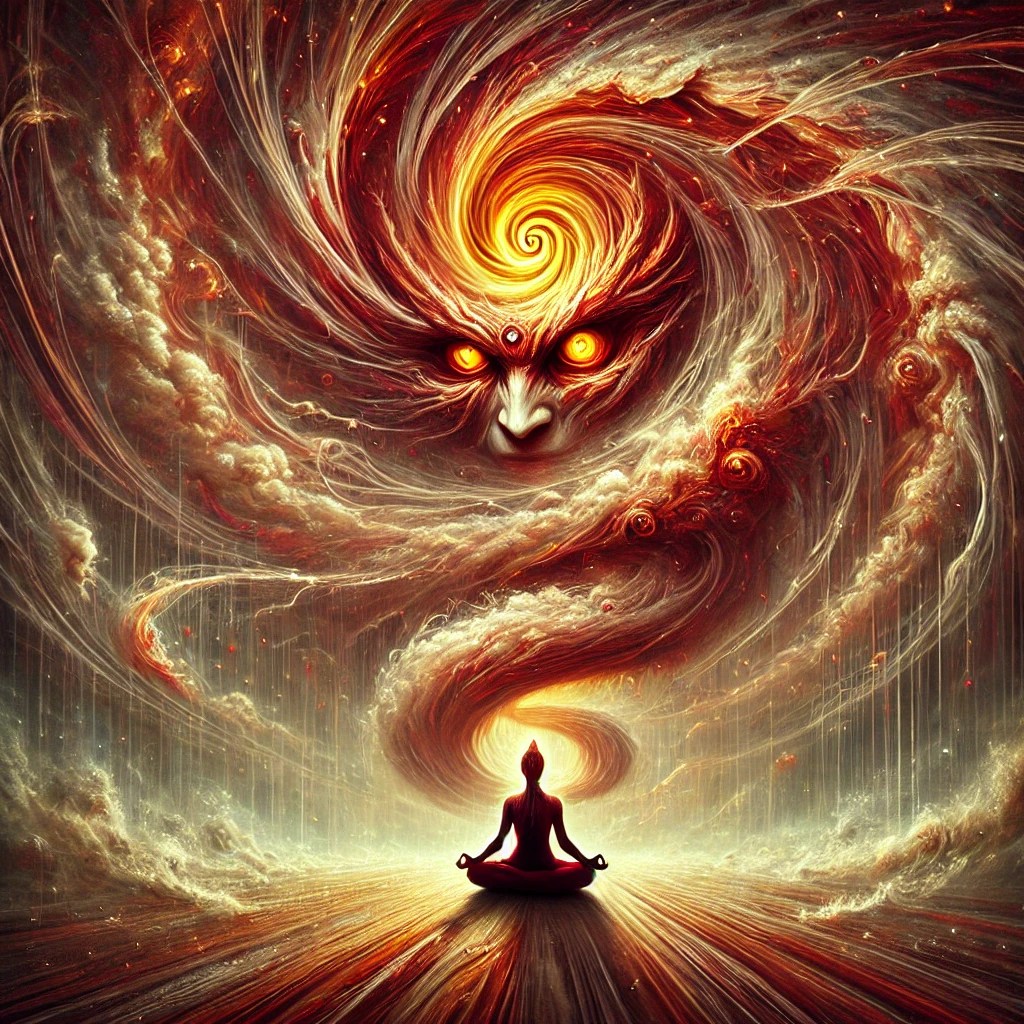
The Illusion of Harmony: How Eastern Mysticism Misleads Christian Seekers


In today’s spiritual landscape, a troubling trend is emerging: well-meaning Christians are being led to believe that Tibetan Buddhism is not only compatible with Christianity but can even enhance it. This deception, often subtle and clothed in the language of “contemplation” or “interfaith dialogue,” has found its way into Catholic monasteries and retreat centers. At the heart of this distortion is the adoption of Eastern meditative techniques, often inspired by Tibetan Buddhist practices, and the uncritical embrace of yoga as a “neutral” spiritual discipline.

To be clear: Tibetan Buddhism is not a Christian cousin. It is a profoundly different worldview, rooted in concepts like reincarnation, karma, and the ultimate dissolution of the self, doctrines wholly incompatible with Christianity’s vision of a personal, relational God and the eternal dignity of the soul.

Meditation or Manipulation?

The Christian tradition has long held a deep respect for silence, prayer, and contemplation, especially in the monastic practices of the Desert Fathers or the Hesychast tradition of Eastern Orthodoxy. But what is often marketed today as “meditation” bears little resemblance to Christian prayer. Tibetan Buddhism aims at the realization that the self and all phenomena are empty of inherent existence, a direct experience of emptiness (śūnyatā) and the luminous, non-dual nature of awareness.

This goal is diametrically opposed to Christian theology, which insists on the uniqueness of each soul, created in the image of God and destined for eternal communion with Him.

Yet Christian leaders and institutions have increasingly opened the door to these teachings. For example, the late Father Thomas Keating, one of the leaders of the Centering Prayer movement, drew heavily on Eastern techniques, often blurring the line between Christian contemplation and Buddhist meditation. Though his intentions were no doubt sincere, the result was a confusing blend of incompatible truths.

Another case is Father Richard Rohr, a popular Franciscan whose teachings often echo non-dual philosophies far closer to Eastern mysticism than to historic Christianity. Rohr’s discussions of “Christ-consciousness” and the illusion of the separate self bear striking resemblance to Tibetan Buddhist views, yet they are consumed by many Catholics and Protestants as if they are orthodox.

The Yoga Trap

Yoga is another Trojan horse in the spiritual lives of many Christians. Despite its spiritual roots in Hindu and Buddhist traditions, yoga is often presented as a harmless or purely physical practice. In truth, yoga’s asanas (postures) were designed not for exercise, but as physical preparations for meditation and kundalini awakening, specifically, awakening to a worldview that denies the personal God revealed in Jesus Christ.

When Christians engage in yoga or Tibetan-inspired meditation without discernment, they open themselves up not just to foreign practices, but to foreign spirits. This is not religious paranoia but a spiritual reality. St. Paul warned the Corinthians about participating in pagan rituals, saying, “You cannot partake of the table of the Lord and the table of demons” (1 Corinthians 10:21).

The Deception of Compatibility

Tibetan Buddhist teachers are often happy to affirm Christian practices, so long as they are reinterpreted through a Buddhist lens. Some even encourage Christians to see Jesus as an “enlightened teacher” or “bodhisattva.” This allows the surface appearance of interfaith respect while subtly undermining core Christian claims: the Incarnation, the Resurrection, and the uniqueness of Christ as Savior.

This is not compatibility, but syncretism and it poses a spiritual danger.

A Call to Discernment

This is not to instill hostility or fear of Buddhism and other Eastern Religions. Nor is it a rejection of silence, stillness, and physical well-being. But Christians must recover the spiritual discipline of discernment. Not all that brings peace is from God. The Enemy is more than capable of offering counterfeit serenity, especially when it draws people away from the Cross and toward self-deification or belief in idols.

Christianity offers its own deep, mystical tradition rooted not in esoteric techniques or mantras, but in personal relationship with the living God. Prayer, asceticism, sacramental life, and union with Christ are more than sufficient for those seeking transformation. We do not need to import Tibetan concepts or yogic practices to find God. He is already here, knocking at the door.

The growing blend of Tibetan Buddhism and Christianity may feel harmonious on the surface, but this is illusory. At its core, the Gospel is not compatible with systems that deny Christ’s divinity, the soul’s eternal destiny, or the Triune God. As Christians, we must not be seduced by exotic forms of “spirituality” that utilize half-truths, and communion with fallen angels.


Rethinking Kundalini Awakening


Kundalini has long been described as a latent energy residing in the root chakra, an evolutionary force waiting to be awakened. Across various esoteric traditions, this energy is believed to rise through the subtle body, purging karmic imprints, and ultimately merging with the crown chakra, culminating in what is often called spiritual enlightenment. But is this awakening truly a path to liberation, or is it something more insidious?

The Traditional Narrative of Kundalini

In Hinduism, kundalini is depicted as a coiled serpent at the base of the spine, lying dormant until activated through practices such as yoga, mantra recitation, or tantric rituals. Its ascent is said to be accompanied by profound energetic experiences such heat, visions, bodily tremors, and radical shifts in consciousness. Similarly, Tibetan Buddhism invokes powerful deities like Vajrayogini through tantric practice, where practitioners visualize and merge with these beings to achieve heightened states of awareness.

But what if kundalini is not simply an impersonal, evolutionary force? What if it is an entity, a being that takes possession of the initiate?

My Personal Awakening: The Force That Felt “Other”

During my three-year Tibetan Buddhist retreat, I engaged in rigorous tantric practices designed to accelerate spiritual transformation. I was instructed to visualize deities, recite mantras, engage in an extreme form of yoga and breath manipulation, replace my ordinary identity with that of the enlightened being, and then dissolve that conceptual construct into emptiness. At the culmination of my practice, I experienced a massive kundalini awakening, a phenomenon that, at the time, was being reported by many across various spiritual modalities, particularly in the nascent days of internet forums and search engines.

I was assured that kundalini was a benevolent force, the fuel for spiritual enlightenment, and a necessary purification process. But the experience was horrific. At its peak, in the midst of unbearable energetic torment, I saw the tantric deity I had been invoking appear above my head. She was trying to enter my body. I intuitively understood that what I was experiencing was her attempt to expand my nervous system so she could fully inhabit it. Whether that was for good or for ill I wasn’t sure. The kundalini energy always felt alien. Finally it dawned on me: it felt other because it is other. I have come to the conclusion that Kundalini is not just an neutral spiritual energy but a possessing spirit.

The Ancient Serpent Spirit Across Cultures


The realization that kundalini is a sentient force aligns with countless historical accounts of spirit possession in esoteric traditions. In Hinduism, Shiva and Kali are both associated with immense, transformative energy, often depicted in forms that suggest possession. Shiva’s wild, ascetic frenzy matches Kali’s violent, all-consuming nature. In Tibetan Buddhism, Vajrayogini and some other tantric deities are depicted in a similar manner. They are summoned and merged with the practitioner, suggesting an external force taking control of the body.

The ancient Greeks spoke of the Python spirit, a demonic entity associated with divination and oracles. The Bible recounts how the Apostle Paul encountered a slave girl possessed by the “python spirit,” a demon of fortune-telling, and cast it out in the name of Jesus Christ (Acts 16:16-18). The parallels between the descriptions of the python spirit and kundalini are striking. The spasms, altered states, and prophetic visions are all common signs of both kundalini awakenings and spirit possession.

Apostle Paul casting out the demon of divination from the servant girl.

Kundalini: The Spirit of the Serpent

What if kundalini is not the divine energy it claims to be? What if the spiritual transformations it promises are merely a baited hook leading to deeper and deeper possession? Many undergoing kundalini awakenings report disturbing symptoms: involuntary body movements, extreme heat, uncontrollable weeping, and even a complete breakdown of identity. These are not signs of enlightenment but of something powerful taking over.

In Christian theology, the serpent has always been a deceiver, from the Garden of Eden to the python spirit Paul cast out. In many indigenous traditions, serpent spirits are revered but also feared, as they often demand submission in exchange for their so-called “gifts.”

If kundalini is truly a possessing spirit, then its widespread activation in modern spiritual movements is not a path to liberation but a global initiation into deception. Esoteric traditions have long venerated the serpent, but history and scripture warns against it.

For those undergoing kundalini awakenings, it is crucial to question the nature of this force. Is it truly an impersonal divine energy, or is it an entity seeking a vessel? And if so, how can one break free from its grip?

The time has come to reconsider the nature of kundalini, not as an evolutionary force but as the ancient spirit of the serpent who, as deceiver, has masqueraded for centuries under the guise of enlightenment.

The Battle Over Tantric Interpretation: Symbolic vs. Literal Tantric Traditions


Tantric Buddhism has long been one of the most misunderstood and debated traditions in religious history. At the heart of this controversy lies a fundamental question: Should its texts and practices be interpreted literally or symbolically? One of the most influential figures in this debate was Jñānākara, an 11th-century scholar who championed a symbolic interpretation of tantric scriptures, countering those who advocated for a literal approach to tantric rituals.[1]

The Tantric Dilemma: Symbolism or Literalism?

Tantric texts often contain vivid imagery of sexual union, wrathful rituals, and the consumption of taboo substances. Some Buddhist practitioners and scholars understood these descriptions as directives for actual practices, while others saw them as metaphors for deeper spiritual principles.[2]

  • Literal Interpretation: Some tantric teachers and traditions argued that rituals involving sexual union, the consumption of alcohol and other taboo substances, and even violent imagery were meant to be physically enacted as part of the spiritual path. These practitioners believed that by transcending conventional morality, they could directly attain enlightenment by confronting and transforming base emotions like desire and aversion.[3]
  • Symbolic Interpretation: Jñānākara strongly opposed this approach, insisting that such texts were meant to be understood allegorically, not literally. In his Mantrāvatāra, he systematically argued that sexual union symbolized the merging of wisdom and compassion, and that tantric rituals were meant to take place on a mental and meditative level rather than in the physical world.[4]

Jñānākara’s Critique of Literal Tantra

For Jñānākara, the rise of literal interpretations was a dangerous trend that risked undermining Buddhist ethics, particularly monastic discipline. Many monks had taken vows of celibacy, and engaging in literal sexual rites contradicted their commitments. He believed that those who promoted physical tantric rituals were misunderstanding or distorting the true intent of tantric texts.[5]

To support his argument, Jñānākara drew upon hermeneutical techniques established by earlier scholars like Candrakīrti. He emphasized that tantric texts contained twilight language (sandhābhāṣā), meaning they were meant to be decoded through metaphor rather than taken at face value.[6]

For example:

  • Sexual imagery in tantric texts represents the union of wisdom (prajñā) and skillful means (upāya), rather than physical intercourse.
  • Killing and wrathful acts do not endorse violence but symbolize destroying ignorance and negative mental states.
  • Consuming taboo substances represents transcending dualistic notions of purity and impurity.[7]

The Opposition: Advocates of Literal Tantra

While Jñānākara and like-minded scholars, including Atīśa, promoted a restrained, symbolic approach, other tantric masters argued that direct experience through literal practice was essential for transformation. These practitioners contended that symbolic interpretations diluted the raw power of tantra, which aimed to cut through illusion in an immediate, experiential way.[8]

Figures such as Abhayākaragupta and Darpanācārya argued that all Buddhists, monks and laypeople alike, should be allowed to engage in tantric consecrations, including sexual initiation rites. They maintained that direct engagement with desire, fear, and social taboos could accelerate spiritual awakening.[9]

Subjection Rites and Ritual Violence in Tantra

Despite Jñānākara’s emphasis on symbolic interpretation, some tantric traditions in Tibet, including those that largely followed his approach, continued to engage in subjection rites, sometimes involving ritualized acts of violence. The Cakrasaṁvara Tantra, for instance, describes rituals meant to subjugate, bind, and even kill enemies, with wrathful deities acting as enforcers of divine justice.[10]

There is evidence that in Tibet, “live kills” (srog sgrol) were practiced into the 20th century, and possibly still occur today in some secretive circles. These rites were believed to be means of neutralizing obstacles, whether internal (psychological enemies) or external (political or spiritual threats). Even among those adhering to Jñānākara’s symbolic reading, subjection rites continued in a ritualized form, where the target of destruction was seen as a demonic force rather than an actual person.[11]

While some Tibetan tantric lineages attempted to justify these practices as symbolic acts of internal transformation, historical accounts suggest that physical executions and ritualized killings did, at times, occur as part of certain tantric sects’ secretive rites. These practices remain highly controversial and are rarely discussed openly by modern Buddhist authorities.[12]

Conclusion

Even today, different schools of Vajrayāna Buddhism hold varying interpretations of tantra. Some Tibetan Buddhist traditions, such as the Gelugpa school, maintain a strongly symbolic approach, while others, particularly some Nyingma and Kagyu traditions, acknowledge the historical presence of more literal practices in certain contexts.[14]

The controversy surrounding tantra highlights a larger question in religious traditions: Who gets to decide how sacred texts should be read? Jñānākara’s conservative stance on symbolic interpretation shaped Tibetan Buddhism in profound ways, steering it toward a more ethical, monastically compatible form of tantra. [15]

Ultimately, Jñānākara’s legacy reminds us that how we interpret texts matters as much as what they say. His approach demonstrates the lasting power of hermeneutics, how the meaning of a text is shaped by the needs, ethics, and priorities of those who read it.


Footnotes:

  1. Lopez, D. (1998). Prisoners of Shangri-La. University of Chicago Press.
  2. Davidson, R. (2004). Indian Esoteric Buddhism: A Social History of the Tantric Movement. Columbia University Press.
  3. Wenta, A. (2018). The Making of Tantric Orthodoxy in the Eleventh-Century Indo-Tibetan World: Jñānākara’s Mantrāvatāra. Springer.
  4. Gray, D. (2007). The Cakrasamvara Tantra: A Study and Annotated Translation. Columbia University Press.
  5. Wedemeyer, C. (2013). Making Sense of Tantric Buddhism: History, Semiology, and Transgression in the Indian Traditions. Columbia University Press.
  6. Sanderson, A. (2009). The Śiva Age: The Rise and Dominance of Śivism During the Early Medieval Period. Brill.
  7. Snellgrove, D. (1987). Indo-Tibetan Buddhism: Indian Buddhists and Their Tibetan Successors. Shambhala Publications.
  8. Newman, J. (1987). The Outer, Inner, and Secret Biography of Padmasambhava. Oxford University Press.
  9. Gray, D. (2016). Subjugation and Ritual Violence in Buddhist Tantra. Oxford University Press.
  10. Karmay, S. (1998). Secret Visions of the Fifth Dalai Lama. Serindia Publications.

The History of Tantra


The word “Tantra” evokes sex and mysticism in the modern world. However, it is a spiritual practice fraught with controversy and potential harm. Though its origins are deeply embedded in South Asian spiritual traditions, Tantra has long been a subject of debate for its questionable methods and the risks it poses to practitioners.

Questioning Tantra’s Validity in Indian Buddhism

One of the most contentious aspects of Tantra in Indian Buddhism is its origins. Did these esoteric practices truly originate with the Buddha, or do they stem from darker, occult sources? Many argue that Tantra’s reliance on rituals, mantras, and deity possession deviates sharply from the Buddha’s original teachings. Instead, Tantra seems to delve into a realm of magic, where practitioners invoke powerful spirits or deities that are difficult to control. The secretive and arcane nature of Tantra has even drawn comparisons to Western Satanism, with parallels in symbolic inversion, forbidden knowledge, and the harnessing of dark energies. These troubling similarities raise serious questions about the true intent and origins of Tantra.

Tantra is believed to have emerged in India around the 5th to 7th centuries CE as a response to the rigid practices of Vedic Hinduism and early Buddhism. Its origins are steeped in secrecy and myth. The term “Tantra,” means “to weave” or “to expand,” and hints at its darker origins: the weaving of esoteric forces into the human psyche.

The Core Principles of Tantra: A Double-Edged Sword

Tantra appears to challenge dualistic thinking, presenting the material and spiritual worlds as interconnected:

Shakti and Shiva: While the union of Shakti (divine feminine) and Shiva (divine masculine) is portrayed as a balance, the rituals associated with this concept often involve the invocation of chaotic energies that can destabilize practitioners.

Sacredness of the Body: Tantra’s reverence for the body as a vehicle for enlightenment can lead to practices that blur ethical boundaries, and expose aspirants to physical and psychological risks. These practices often involve an extreme form of yoga that includes breath manipulation and physical postures designed to awaken kundalini energy. This wild and often uncontrollable force is said to be a dormant energy that resides at the base of the spine, but in reality, it involves possession by a spirit.

Ritual and Symbolism: The intricate rituals, mandalas (geometric designs), and mantras (sacred sounds) used in Tantra can act as portals and invocations to preternatural forces.

Tantra in Hinduism and Buddhism

While Tantra is often associated with Hinduism and Buddhism, its practices diverge significantly from the ethical foundations of these traditions. In Hinduism, Tantra became linked with Shaivism and Shaktism, incorporating rituals that many consider to be unorthodox and even dangerous. For instance, human sacrifice, though outlawed, is still secretly practiced in India. In Buddhism, Tantra’s form, Vajrayana, emerged as an esoteric path that relies heavily on guru worship, deity yoga, and visualization. These methods often blur the line between spiritual growth and occult manipulation. Critics argue that such practices betray the Buddha’s emphasis on ethical conduct and mindfulness.

The Spread and Evolution of Tantra: A Troubling Legacy

As Tantra spread beyond India, it adapted to local cultures but retained its core. In Tibet, for instance, Tantric rituals merged with indigenous Bon practices, creating a potent fusion. During the colonial era, Western scholars sensationalized Tantra, focusing on its sexual practices and scary looking deities while ignoring its broader implications. This misrepresentation led to a rehabilitation of Tantra in the West in the second half of the 20th century that idealized Tibetan Buddhist Tantra as purely benevolent, reframing and obscuring its darker aspects.

In the modern world, Tantra has been rebranded as a tool for personal empowerment, often stripped of its spiritual and cultural context. However, this simplification overlooks the risks associated with its practices. Authentic Tantra, with its emphasis on invoking and channeling preternatural energies, is a perilous path that can lead to psychological torment and spiritual dissolution. The allure of Tantra’s supposed transformative power can blind practitioners to its potential for harm.

A Warning

The history of Tantra is not merely a tale of spiritual innovation but also a cautionary story of occult manipulation and risk. Its practices, which often involve possession by spirits or deities, can have dire consequences even if approached with extreme caution. These entities, if angered or improperly controlled, can turn on the practitioner, leading to profound suffering. While Tantra may promise enlightenment, its methods carry a heavy price. Those who seek spiritual growth would do well to heed these warnings and consider safer, more ethical paths.

Examining the Darker Facets of the Cakrasamvara Tantra: Rituals for Subjugating Adversaries

The Ruins of Nalanda, Bihar


The Cakrasamvara Tantra, a seminal text within the Vajrayana Buddhist tradition, is renowned for its intricate rituals and esoteric practices. While it primarily aims to guide practitioners toward enlightenment, the tantra also encompasses a spectrum of rituals designed to achieve various mundane siddhis (accomplishments), including those intended for the subjugation or destruction of adversaries. These harmful practices, often framed as protecting the Dharma or addressing perceived threats, reveal a complex interplay between spiritual wisdom and pragmatic, sometimes violent, methods.

 Ritual Applications and Mantras

A significant portion of the Cakrasamvara Tantra is devoted to the ritual application of mantras. These mantras are employed to enchant objects or individuals, facilitating various magical operations. They are not limited to spiritual enlightenment; many are explicitly intended for worldly outcomes, including cursing enemies, gaining power, or achieving invisibility. This dual purpose underscores the ethical ambiguities inherent in the text.

Procedures for Invisibility and Harm

Among the rituals detailed in the tantra is a procedure for becoming invisible, which involves the use of Heruka’s quintessence mantra. This ritual requires obtaining specific human remains and combining them with other substances to create a magical implement. 

Another prominent set of rituals is explicitly designed to harm adversaries, including curses and destructive spells. Practitioners might create effigies of their enemies to channel negative energy or invoke wrathful deities to unleash harm. Such practices align closely with what might be considered black magic in other traditions. These destructive rituals are not merely symbolic; historical accounts suggest they were carried out with real-world intent, especially during periods of political or religious conflict.

Ethical Considerations

The inclusion of these harmful practices raises profound ethical dilemmas. Buddhism, as taught by the historical Buddha, emphasizes nonviolence, compassion, and the cessation of suffering. However, the Cakrasamvara Tantra incorporates rituals that seem to contradict these principles, reflecting the tension between upholding spiritual ideals and addressing worldly challenges.

Why does a tradition that values compassion and liberation include practices for harming others? What cultural, historical, and philosophical factors justified these actions? Exploring these questions reveals the complexities of tantric Buddhism and its adaptation to diverse social and political contexts.

How Were These Practices Justified Within Their Historical Context?

The Cakrasamvara Tantra emerged during the Indian tantric movement, roughly between the 8th and 12th centuries CE, a time of religious competition and societal instability. The harmful practices within the tantra can be understood as responses to these challenges:

1. Protection of the Dharma: Rituals for subjugation or harm were often framed as necessary to protect Buddhist teachings and institutions from external threats, whether literal (invading forces or rival religious groups) or symbolic (negative spiritual influences).

2. Syncretism with Local Traditions: The tantra absorbed and reinterpreted indigenous Indian magical and ritualistic practices, incorporating them into a Buddhist framework. This integration allowed tantric Buddhism to appeal to a wider audience while maintaining its esoteric goals.

3. Esoteric Intentions: These rituals were often reserved for advanced practitioners who were believed to have transcended ordinary ethical boundaries. Harmful practices were justified as skillful means (upaya) to aid others or eliminate obstacles to enlightenment.

Were These Practices Metaphorical or Literal?

The ambiguity between metaphorical and literal interpretations of tantric practices adds another layer of complexity:

1. Symbolic Interpretations: Some scholars argue that destructive rituals represent inner struggles, such as overcoming ignorance or ego. Invoking wrathful deities might symbolize transforming negative emotions into wisdom.

2. Literal Applications: Historical records indicate that practitioners did perform these rituals literally. Curses, effigies, and destructive spells were used at various times, targeting political or spiritual adversaries.

3. Layered Meaning: Tantric texts often operate on multiple levels. Rituals can simultaneously serve symbolic, practical, and transcendental purposes. This layered meaning complicates simplistic interpretations of these practices.

Who Were the Intended Practitioners, and What Ethical Framework Guided Their Use of These Rituals?

The Cakrasamvara Tantra was reserved for siddhas or mahasiddhas, highly trained tantric adepts who had undergone rigorous preparation and initiation under a qualified guru. These practitioners wielded immense spiritual power and were entrusted with esoteric knowledge, including rituals for harming enemies.

While tantric teachings often emphasized the metaphorical nature of rituals, historical evidence shows that harmful practices were sometimes used literally to achieve specific objectives. 

  • Destroying Political Rivals: Tantric practitioners invoked wrathful deities like Heruka to curse or eliminate rulers and invaders perceived as threats to Buddhist institutions.
  • Exorcisms of Adversaries: Rituals targeted not only metaphysical entities, but also human opponents perceived as threats.
  • Utilizing Ritual Implements: Tools like skull cups and effigies were employed to channel destructive energy toward specific adversaries.
  • These actions were often justified as necessary for maintaining spiritual or societal harmony, but they also reveal the grey ethical areas within tantric practices.

Accountability and Ethical Ambiguities

Despite their destructive nature, these rituals were expected to align with the ethical framework of tantric Buddhism. Practitioners were taught to act from compassion, but this ideal was not always upheld:

  • Compassion as the Motive: Practitioners were instructed to act selflessly, using harmful rituals only to protect the Dharma or remove obstacles to enlightenment. However, some operated in ethically ambiguous territory, justifying personal motives as Dharma-protecting actions.
  • Karmic Awareness: Misuse of these rituals was believed to carry severe karmic consequences. Nevertheless, even so-called enlightened masters occasionally blurred the lines between protecting the Dharma and pursuing personal interests.

Contextual Understanding

The inclusion of harmful rituals in the Cakrasamvara Tantra reflects the paradoxical nature of tantric traditions, where compassion and wrathful methods coexist. These tantras include practices of subjugation that can destroy not only negative conditions but also be aimed at humans, acts that are not metaphorical but ritually enacted. It is crucial not to approach such practices blindly, but with full awareness of their potential implications and historical context. By examining these nuances, modern readers can better understand the ethical complexities and historical adaptations that shaped tantric Buddhism, and protect themselves from harm by refraining from engaging with these tantras.