

The Cross-Cultural Practice of Mirror Divination


The practice of divination has long been embedded in the religious and esoteric traditions of cultures across the world. One particularly striking example is the use of mirror divination, or prasena, a ritual in which a prepubescent child gazes into a reflective surface to reveal hidden knowledge or foresee the future. This practice, as highlighted by scholar Sam van Schaik in a recent interview, appears in both Ethiopian and Tibetan traditions and has possible roots tracing back to ancient Babylonian magic. [1]

Such continuity across vastly different cultures raises compelling questions about the transmission and persistence of esoteric knowledge throughout history.

The Ritual and Its Cultural Manifestations

Mirror divination has been historically practiced in multiple religious traditions, often involving a spiritual mediator, typically a child, who, under the guidance of a ritual master, peers into a reflective surface to receive supernatural insights. In Ethiopian traditions, this practice is documented in both ancient manuscripts and contemporary ritualistic settings. In Tibetan Buddhism, it appears in esoteric texts and continues to be used in divinatory rituals conducted by monks and lay practitioners alike.

The use of children in such rituals is significant. Many cultures have believed that children, being less conditioned by worldly concerns, are more receptive to supernatural or spiritual forces. These divinatory practices align with similar practices found in the Greco-Roman world, where oracles and seers would enter trance states to communicate divine messages.

A Babylonian Legacy?

Van Schaik suggests that mirror divination may have originated in Babylonian magic before spreading both eastward and westward. Babylon, as a major center of esoteric learning, was home to extensive traditions of divination, astrology, and ritual magic. Texts from Mesopotamia describe forms of lecanomancy (divination using liquid in a bowl) and katoptromancy (mirror scrying), practices that share structural similarities with the Ethiopian and Tibetan rituals.

This hypothesis aligns with broader historical patterns of cultural diffusion. The Silk Road and other trade routes served as conduits for not only commerce but also religious and magical knowledge. Babylonian astrological systems influenced both Greek and Indian traditions, just as mystical and ritualistic practices traveled alongside Buddhist monks and lay merchants. The presence of mirror divination in both Ethiopia and Tibet suggests that it may be a fragment of a much older and interconnected system of spiritual technologies.

Esoteric Transmission and the Kundalini Connection

The cross-cultural presence of mirror divination raises intriguing parallels with other esoteric practices, including the concept of kundalini. Just as divination involves opening oneself to external spiritual influences, kundalini awakening in tantric traditions is described as an energetic activation that fundamentally alters consciousness. In both cases, the practitioner becomes a vessel for forces beyond the self, forces that can be interpreted as divine or, in some cases, as possessing spirits.

For those who have experienced kundalini awakenings through tantric or meditative practices, the sensation of an “other” presence taking control is strikingly similar to descriptions found in spirit possession traditions. The parallel suggests that some esoteric practices, whether labeled as divination, energy work, or spiritual awakening, may stem from the same underlying phenomenon, one that has been variously interpreted depending on cultural and religious frameworks.

Implications for Understanding the Occult Legacy

If mirror divination has indeed traveled from Babylon to the far reaches of Ethiopia and Tibet, it serves as a potent reminder that esoteric traditions are rarely confined to one religion or civilization. They emerge, transform, and persist across centuries, carried by those who practice them and reshaped by the cultures that adopt them.

For those exploring the intersection of ancient magic and spiritual deception, this historical continuity offers a crucial insight: many seemingly distinct mystical practices may share a common origin, one that predates organized religions and crosses the boundaries of geography and belief. As such, these traditions warrant deeper examination, especially for those who, like myself, have encountered their hidden dangers firsthand.


[1] Sam van Schaik, interviewed by Jonathan Samuels, Interview with Sam van Schaik (January 15-16, 2019), p. 12.
Ritual Killings in Tibetan Tantric Buddhism: A Sensitive Area


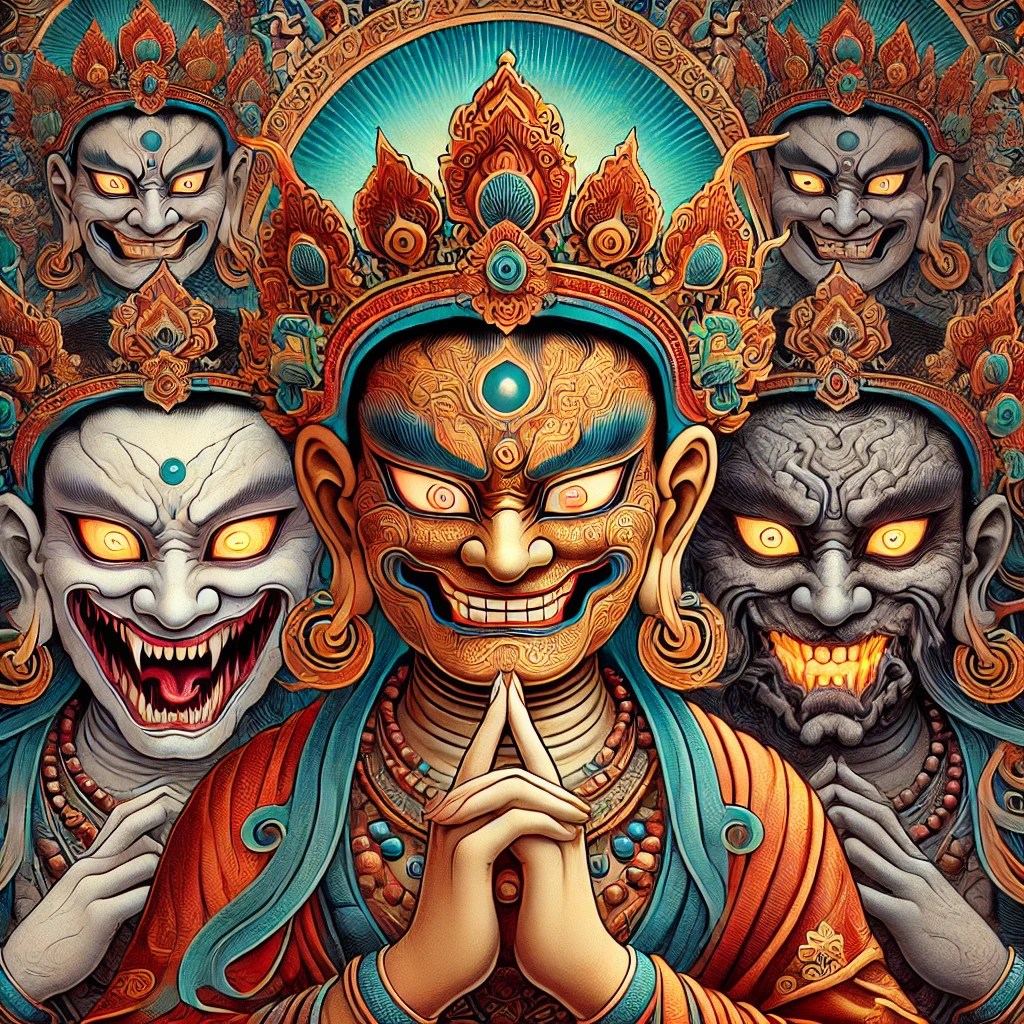
Tibetan tantric Buddhism has long fascinated and mystified both scholars and practitioners alike. While much of its practice revolves around meditation, visualization, and philosophical discourse, historical accounts suggest that certain sects engaged in secretive and controversial rites, including subjugation rituals and, in some cases, physical executions. While some tantric lineages justify these as purely symbolic acts of internal transformation, others indicate that ritualized killings were at times part of esoteric practices. These remain one of the most sensitive and least discussed aspects of Vajrayāna Buddhism.

The Justification: Internal Alchemy and Subjugation Rites

Many Tibetan Buddhist schools frame tantric rituals as a means to subdue inner enemies such as destructive emotions, ignorance, and attachments, rather than external foes. Texts such as the Cakrasaṃvara Tantra and the Hevajra Tantra describe wrathful deities engaged in acts of destruction, yet these are often interpreted by Tibetan lamas and Western scholars as symbols of the practitioner’s battle against their own afflictions.

Rituals involving visualized violence, such as slaying demons, cutting through illusion, or drinking ritual substances from a kapala (skull cup), are intended to dismantle the ego and lead to enlightenment. This view holds that the tantric practitioner does not actually kill, but instead undergoes a psychological transformation through these rites.

The Evidence: Historical Accounts of Ritual Killings

Despite this justification, historical records and oral traditions suggest that certain tantric practitioners, particularly within the darker recesses of Tibetan esotericism, may have engaged in actual acts of ritualized violence. The practice of srog sgrol (life liberation or live killing) has been referenced in some sources, where a ritualized execution was believed to transfer the victim’s consciousness to other realms, i.e. to the lower realms or hell.

Reports from Tibetan and Western observers, including early European travelers and Buddhist historians, recount instances where enemies of the dharma, or those deemed spiritually unfit, were objects of ritual subjugation. In these cases, physical acts were justified as a form of karmic retribution.

The Role of Tantric Adepts (Mahasiddhas) in Extreme Practices

Certain Tibetan and Indian Mahasiddhas (tantric masters) were known for their transgressive practices, challenging conventional morality to break through illusions of duality. Some of these figures, such as Padmasambhava and Virupa, were associated with wrathful magical feats and subjugation rituals, though their actions are often interpreted metaphorically. However, other figures, particularly in later Tibetan history, were accused of employing lethal tantric techniques to eliminate obstacles and enemies, both spiritual and political.

Controversy and Silence: Why Modern Authorities Avoid This Topic

In contemporary Tibetan Buddhism, discussions of these practices are largely absent or carefully avoided. The emphasis in modern Vajrayāna teachings is placed on compassion, wisdom, and ethical conduct, aligning with broader Buddhist principles. However, the existence of such rituals in historical contexts poses challenging questions:

  • Were these practices ever widely accepted, or were they fringe activities of rogue tantric practitioners?
  • To what extent were physical acts considered necessary versus metaphorical transformations?
  • How do modern Tibetan lineages reconcile these historical accounts with their present-day teachings that successfully whitewash the truth?

The intersection of symbolic transformation and real-world ritual violence remains one of the least understood aspects of Tibetan Buddhist history. While most tantric traditions today publicly emphasize nonviolence and ethical discipline, the shadows of past practices linger in historical accounts and most likely continue to this day. What we do know is that actual executions took place in Tibet and later in the Tibetan diaspora outside of Tibet. There is little reason to believe that this has changed. This illustrates that tantric Buddhism has always walked a fine line between virtue and evil. This begs the question: Is the virtue just window dressing for darker practices? Just look at the photos on Facebook of some of the big drupchos (series of rituals, prayers, and meditation practices) done at the large Tibetan monasteries in India. What do you see? Are the so-called wrathful deities invoked in Tibetan Buddhist rituals really enlightened buddhas and bodhisattvas? This issue deserves sincere examination and honest discussion among Tibetan lamas and Rinpoches who go to great lengths to whitewash and obfuscate these matters.