In Hilary Mantel’s The Mirror and the Light, Thomas Cromwell rises from blacksmith’s son to the right hand of King Henry VIII. He becomes the monarch’s “mirror and light,” reflecting and executing his will. But the same proximity that elevates him also destroys him. When Cromwell fails to deliver a pleasing queen, he is arrested, disgraced, and executed, his closeness to power proving fatal.
Tibetan tantric Buddhism operates on a hauntingly similar logic. In this tradition, the guru is king, and the disciple, like a courtier, is raised or destroyed at the guru’s whim. Far from being egalitarian or purely spiritual, Tibetan Buddhism, especially in its institutional forms, retains a deeply feudal structure, complete with titles, inheritance, land ownership, and enforced hierarchy.¹
Tibetan Buddhism as a Feudal System
For centuries, Tibetan Buddhism was not just a religion but the ruling system of the nation. The Dalai Lama was both spiritual sovereign and temporal king. Monasteries controlled vast tracts of land, collected taxes, and held legal authority over villages.² Senior lamas, often reincarnated tulkus, inherited wealth and power from their predecessors, a system akin to aristocracy by divine right. Large institutions like Drepung, Sera, and Tashi Lhunpo amassed political influence and wealth, with monasteries owning up to two-thirds of arable land in pre-1950s Tibet.³
The tulku system (identifying reincarnated masters) consolidated this feudalism. Wealth and authority passed to a chosen child, often from a high-status family, and the child was installed into a network of patronage, where senior monks managed the estate until the tulku matured. Ordinary monks and villagers remained economically dependent on these institutions, often working the land in exchange for spiritual services and blessings.⁴ According to historian Melvyn Goldstein, Tibetan society was “essentially a form of monastic feudalism.”⁵
The Guru as King: Absolute Power
In the Vajrayāna path, the guru is not merely a teacher: he is treated as the Buddha himself. Vajrayāna texts warn against questioning the guru, no matter how erratic or abusive his behavior.⁶ Students are bound by samaya (tantric vows), which demand total obedience, silence, and loyalty. In this relationship, the disciple becomes like Cromwell: a mirror for the guru’s will, performing rituals, making offerings, and receiving favor or punishment.
This closeness creates the illusion of intimacy, even love. Many disciples report feeling spiritually chosen or singled out by the guru. But this intimacy masks a darker truth: it is conditional and instrumental. When the disciple fails to satisfy the guru, by asking questions, expressing trauma, or failing to uphold impossible vows, they are cast out. Not just socially, but cosmically.⁷
Falling Out of Favor: Spiritual Annihilation
When a disciple displeases a guru in these feudal tantric systems, the consequences are severe. Historically, punishments ranged from beatings and public shaming to exile from the monastic estate.⁸ In modern times, exile takes subtler forms: ostracism, reputation assassination, spiritual gaslighting, and the threat of karmic damnation. Survivors of abuse report being told they were “possessed by demons,” “breaking their samaya,” or “falling into the lower realms” simply for speaking out.⁹
Just like Henry VIII’s wives or ministers, the disciple who falls out of favor is ritually erased. Their years of devotion are forgotten; their insights mocked. The same master who called them “special” now identifies them as a threat to the dharma. The disciple’s proximity to power becomes their undoing.
When the Light Burns
The title The Mirror and the Light is tragically fitting for both Thomas Cromwell and the countless disciples who believed that closeness to the guru meant safety. In Tibetan tantric Buddhism’s feudal framework, it often means the opposite. Disciples serve as tools of the guru’s charisma, devotion, and control. When they no longer reflect his will, they are discarded and spiritually “executed” without ceremony.
Just as Cromwell’s brilliance could not save him, neither can sincerity or devotion save a disciple in a rigged, feudal system.
Footnotes
Geoffrey Samuel, Civilized Shamans: Buddhism in Tibetan Societies (Smithsonian Institution Press, 1993), pp. 22–29.
Melvyn C. Goldstein, A History of Modern Tibet, Volume 1: The Demise of the Lamaist State (University of California Press, 1989), pp. 80–95.
Matthew T. Kapstein, The Tibetans (Wiley-Blackwell, 2006), pp. 142–148.
Toni Huber and Stuart Blackburn, Origins of the Tulku System in The Social History of Tibetan Institutions (Brill, 2002).
Goldstein, History of Modern Tibet, p. 90.
Alex Wayman, The Role of the Guru in Vajrayana, in Tibetan Buddhism: Reason and Revelation, ed. S. Lopez (SUNY Press, 1997).
Miranda Adams, Samaya and Silence: Enforcing Obedience in Vajrayana Communities, unpublished thesis, 2020.
Janet Gyatso, Being Human in a Buddhist World (Columbia University Press, 2015), ch. 3.
Annabella Pitkin, “Broken Samaya and the Threat of Hell: Devotion, Dissent, and Control in Contemporary Tibetan Buddhism,” Journal of Global Buddhism, Vol. 22 (2021).
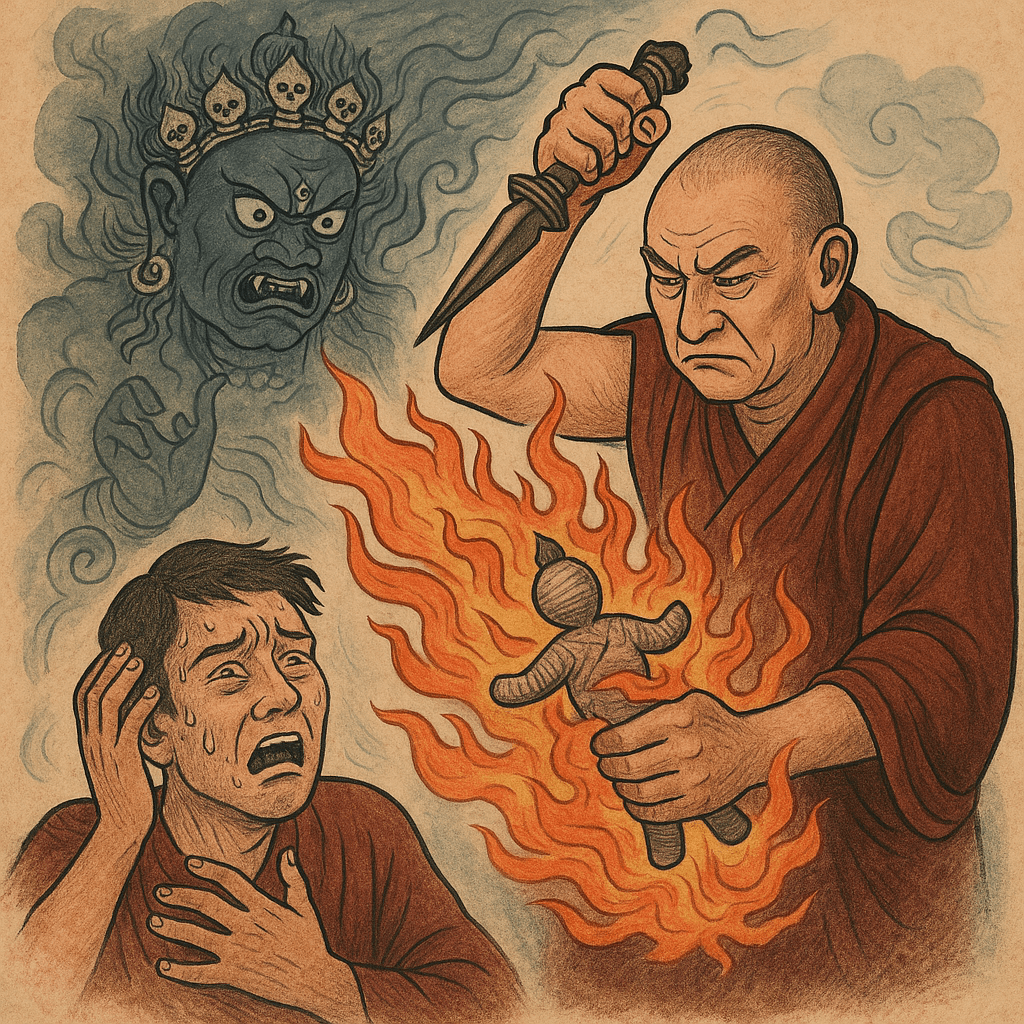
It is not far fetched to assert that it is the lama himself bringing about the karmic retribution on the student through black magic rituals using effigies and curses.
The Tibetan Buddhist tradition, especially its Vajrayana (tantric) aspect, contains teachings on wrathful rituals and even sorcery-like practices. These practices have occasionally been used (or misused) by gurus to punish or frighten disciples who violate guru devotion or samaya (sacred vows). Both classical texts and modern accounts document such phenomena:
Scriptural Warnings of Dire Consequences: Tantric scriptures and commentaries explicitly warn of terrible karmic punishment if a disciple betrays or criticizes their guru. For example, the Kalachakra Tantra says that even a moment of anger toward one’s guru destroys vast amounts of merit and causes rebirth in hell for eons (The Disadvantages of Incorrect Devotion to a Guru | Lama Yeshe Wisdom Archive).
Another text states that simply failing to properly honor a guru after receiving teachings can result in “rebirth for one hundred lifetimes as a dog” and then rebirth as a low-caste person or even a scorpion lamayeshe.com. In short, breaking samaya is portrayed as spiritually catastrophic, leading to suffering in this life and the next. These warnings, while couched as impersonal karmic law, create a climate in which gurus are held almost above criticism.
Oath-Breakers and Protector Deities: Tantric cosmology includes Dharmapāla (Dharma protectors) bound by oath to protect Buddhist teachings and teachers. Those who break their sacred vows or harm their guru are sometimes called “samaya-breakers” or oath-breakers. Historical texts indicate that oath-breakers were targeted by wrathful rituals. A striking example comes from a 13th-century Tibetan master at Kublai Khan’s court, Ga Anyen Dampa. In a decree mixing politics and magic, Dampa forbadeharming his followers through curses or demons, but warned that if anyone disobeyed him, he would “unleash the fierce punishment of the Dharma Protectors” so that their heads would split into a hundred pieces (War Magic: Tibetan Sorcery | Rubin Museum). In other words, the guru swore to call upon wrathful deities to brutally destroy anyone who violated his command. Such records (in this case preserved as a protective charm) show that invoking black magic and protective deities as punishment for disobedience was not unheard of.
Effigies and “Black Magic” in Tantric Practice: Tibetan lamas developed elaborate ritual technologies to deal with enemies or detractors. Human effigies and dough figures (torma) are traditional ritual implements used to represent a target in magical rites. According to scholars, a “wide array of images, such as human effigies…or ritual dough-offering sculptures, were employed to…subdue or destroy one’s enemies” (War Magic: Tibetan Sorcery | Rubin Museum). In wrathful rites (such as the gTor dabs or torma-throwing ritual), the lama empowers an effigy with mantras and offers it to wrathful spirits or deities, directing the ensuing harm toward the intended victim. War Magic was even used at state levels, for instance, 12th-century Lama Zhang, a militant yogi, sent cursed tormas and spells against his foes and had protector goddesses like Shri Devi “assist” in battle (War Magic: Tibetan Sorcery | Rubin Museum). These historical uses of violent sorcery, while aimed at external enemies, set a background against which a guru might also target an “enemy” disciple who they feel has betrayed them.
Historical Case – The “Cursed Boots” Plot: In 1900, an incident in Lhasa suggests the reality of such magical punishments. The 13th Dalai Lama survived an assassination attempt involving black magic: a certain gifted pair of boots, which caused illness to the wearer, upon close inspection had “a harmful mantra hidden in the sole.” (Treasury of Lives: The Case of the Dalai Lama’s Cursed Boots – Tricycle: The Buddhist Review) The inquiry revealed that the boots were prepared as a curse by a lama famous for sorcery, acting on behalf of a former regent. That sorcerer (Lama Nyaktrul) confessed he was recruited to enchant the boots “as a means to sap the vitality of the Dalai Lama and cause his eventual death” (Treasury of Lives: The Case of the Dalai Lama’s Cursed Boots – Tricycle: The Buddhist Review). The plotters, including the ex-regent, were arrested, confirming this was not mere superstition but a documented attempt to use ritual magic to punish or eliminate a high lama. While this is a political case, it shows that Tibetan lamas did employ curses (mantras on effigies or objects) to secretly harm human targets. It’s a short step to imagine a vindictive guru doing similar things to a personal disciple who is seen as a traitor.
Even when literal demons aren’t invoked, the threat of supernatural harm is a powerful tool. Some Vajrayana insiders have noted that gurus sometimes wield samaya as a weapon of fear, warning that if a student breaks their devotion, it will hinder the guru’s life or send the student to Vajra Hell. This can psychologically terrorize students into silence and obedience.
Samaya and Guru Devotion as a Control Mechanism: The reverence for gurus in Tibetan Buddhism, while spiritually meaningful in that system, can be abused. Devoted students are taught to see the guru as embodying all Buddhas (The Disadvantages of Incorrect Devotion to a Guru | Lama Yeshe Wisdom Archive), and therefore criticizing the guru is equivalent to criticizing the Buddha himself. This makes any challenge tantamount to sacrilege. Teachers who demand absolute loyalty may invoke wrathful consequences to enforce it. In the lore, breaking samaya not only brings karmic punishment but may incite the guru’s protector spirits to take revenge. For instance, many guardian deities are oath-bound to “strike down those who break their vows” to the guru or teachings. A protector like Dorje Shugden, controversially, is believed by his devotees to punish monks who “betray” their lineage, an idea which has led to real-world fear and schisms ( Go On, Break Your Samaya | Tsem Rinpoche). Thus, within the context of guru devotion, the line between religious oath and curse can blur: a disciple who disobeys is told they invite not only bad karma but possibly violent divine retribution.
To go one step further, it is not far fetched to assert that it is the lama himself bringing about the karmic retribution on the student through black magic rituals using effigies and curses. These practices are particularly potent because the disciple would have opened themselves up to being possessed by the guru’s yidams and protectors through the empowerments and teachings they received from the guru. In addition, the guru is able to enter the mind and body of the disciple magically. See Tantric Astral Projection, the Guru’s Power to Liberate or Condemn. So basically, the potential enemy is already camped within the body/mind/spirit of the victim, waiting to strike should there be any samaya breakage. Although the tantric methods contain practices to repair broken samaya, the student/victim is not always aware that he has offended the guru and been condemned as an “unripe vessel” until it is too late.
In summary, credible sources, from canonical texts to academic studies and personal testimonies, support the claim that some Tibetan Buddhist gurus have used wrathful magic to punish dissenters. Traditional scriptures describe horrific fates for disciples who violate samaya, and Tibetan histories recount lamas employing curses, effigies, and protective deities to destroy enemies and “oath-breakers.” These examples, past and present, illustrate how the immense power ascribed to Vajrayana masters can morph into a tool of coercion, a “dark side” of guru devotion that Buddhist scholars and leaders are increasingly acknowledging. The evidence is admittedly esoteric, but it paints a consistent picture: under the pretext of protecting the Dharma or upholding sacred vows, some gurus have indeed used wrathful magic, rituals, or effigies to inflict harm on those who oppose or disobey them.
Sources:
Traditional biography of Padmasambhava – Pema Kathang, as cited in Tamak (2017): Guru Rinpoche’s use of a Yaksha effigy ritual to subdue a demon ().
Tsem Rinpoche (2018) – discussion on samaya-breaking and the Dorje Shugden controversy, noting the heavy karma of “disliking the Guru” ( Go On, Break Your Samaya | Tsem Rinpoche). (These illustrate how the belief in wrathful retribution for broken vows persists in modern sectarian contexts.)
In the Western embrace of Tibetan Buddhism, samaya (sacred bond) is often treated as a vague concept, a flexible spiritual guideline open to interpretation. Many practitioners, influenced by modern individualism, believe they can define samaya for themselves, shaping it to fit their personal path. But it’s not so easy. Samaya is not a subjective ideal or a broad ethical principle. It is an uncompromising system of laws dictated by the deities of Tibetan Buddhist tantra, and the consequences of breaking it are catastrophic.
The Origin of Samaya: A System of Absolute Control
As Sam van Schaik explains, with the emergence of Vajrayāna in the seventh century, samaya became the defining framework of tantric practice. It was not merely a commitment to enlightenment or bodhichitta; it was a rigid contract that bound the practitioner to the deities, the guru, and the teachings in a way that left no room for negotiation. The very term “samaya” signifies a binding agreement, a point of convergence where wisdom manifests through ritual, visualization, and esoteric substances. These vows were not meant to be symbolic gestures but inviolable pacts with cosmic forces.
The West tends to frame Buddhism as a path of peace and compassion, yet within Vajrayāna, samaya is not about universal kindness or personal growth. It is about absolute allegiance to the tantric system. Any deviation from this allegiance is not simply a spiritual misstep, it is a crime against the sacred laws of tantra.
The Consequences of Breaking Samaya: Illness, Insanity, and Demonic Affliction
One of the most terrifying aspects of samaya is its enforcement mechanism. Unlike moral guidelines in mainstream Buddhism, which rely on karmic repercussions across lifetimes, samaya violations often carry immediate and devastating consequences in this very life. Tibetan texts are explicit: breaking samaya leads to physical illness, mental instability, and possession by malevolent forces.
Illness as a Sign of Broken Samaya
Tantric texts frequently warn that violating samaya will manifest as sickness. This is not metaphorical. Traditional Tibetan medical texts list broken samaya as a cause of chronic diseases, unexplained fevers, and deteriorating health that no ordinary treatment can cure. The idea is that the tantric deities and protectors, angered by the transgression, withdraw their blessings, leaving the practitioner vulnerable to suffering, often caused by the deities themselves.
It is not uncommon to hear stories in Vajrayāna circles of Westerners who fought with or abandoned their guru, only to fall into inexplicable physical decline. Some develop persistent health issues that defy medical diagnosis. Others find themselves facing severe misfortunes, financial ruin, or a string of accidents. Traditional Tibetan lamas do not hesitate to attribute such misfortunes to broken samaya.
Demonic Afflictions: The Price of Transgression
Beyond physical illness, breaking samaya is believed to invite spiritual and psychological torment. The tantric pantheon is not just composed of peaceful deities; it is teeming with wrathful beings, dharma protectors, and guardian spirits who enforce the rules of the tradition with merciless precision. When samaya is broken, these entities are said to turn against the practitioner, causing possession, insanity, or relentless bad luck.
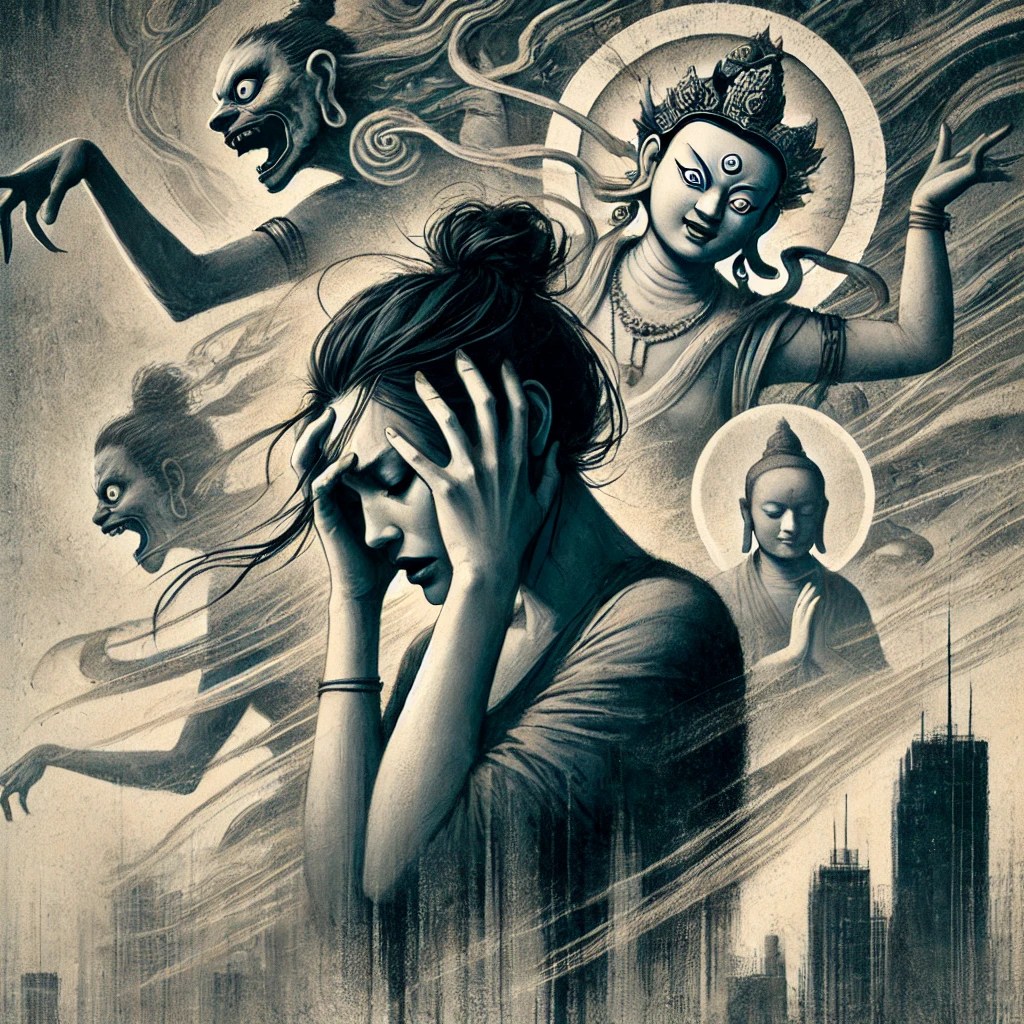
In the Tibetan worldview, demonic affliction is not an abstract concept but a literal reality. Those who have transgressed samaya might experience intense nightmares, hallucinations, or an overwhelming sense of mental disintegration. Some report hearing voices, seeing terrifying visions, or feeling the presence of unseen entities oppressing them. In extreme cases, individuals descend into madness, their minds fractured under the weight of their spiritual transgressions.
Samaya and the Persecution of Women Who Resist Sexual Exploitation
While samaya is traditionally presented as a means of maintaining the purity of Vajrayāna teachings, there have been numerous instances where it has been weaponized against women. Throughout Tibetan Buddhist history, samaya has been invoked to silence and punish women who resisted sexual advances from their gurus or exposed instances of abuse.
The guru-disciple relationship in Vajrayāna is absolute, with the guru often regarded as the embodiment of the Buddha’s wisdom. Women who took empowerments from a lama were thus considered bound to him through samaya. If they later rejected his sexual advances or spoke out against his predatory behavior, they were accused of breaking their samaya vows, making them spiritually compromised and subject to supernatural retribution.
A striking example of this dynamic is found in the research of scholar Holly Gayley, who examines how Vajrayāna secrecy and power dynamics have historically been used against women. In her article, Revisiting the ‘Secret Consort’ (gsang yum) in Tibetan Buddhism, Gayley recounts a case in which a Tibetan woman refused the sexual advances of a lama and warned other women about him. As a result, it was said that she was condemned to Vajra Hell, an especially severe form of punishment for breaking samaya. This narrative reflects the broader pattern of how women who resist sexual coercion by spiritual authorities are framed as transgressors rather than victims.¹
Let me begin with a cautionary tale from Tibet regarding the judgment pronounced by Yama, the Lord of Death, to a woman who refused to serve as the consort for a Buddhist teacher or lama (Skt: guru, Tib: bla ma).1 The young lady from a well-to-do family, named Chödrön, had sought out Buddhist teachings from numerous esteemed lamas. One of them, the itinerant Zhönu Gyaltsen, asked her to be his “secret consort,” but she refused. The request caused her to lose faith in the lama and leave the gathering before receiving the complete instructions. Later, she told girlfriends about the incident. In Yama’s assessment, since Zhönu Gyaltsen was a master of esoteric teachings, Chödrön had breached her tantric commitments (Skt: samaya, Tib: dam tshig) on several counts: not complying with the lama’s request, not completing the training in his teachings and (worst of all, it seems) speaking about the incident with other women. When Chödrön protests that if the lama was realized, it was inappropriate for him to take a sexual interest in her, Yama counters that when Zhönu Gyaltsen died, numerous relics and miraculous signs occurred, attesting to his high degree of realization. Positioning her as a gossip, he avers that she caused numerous others to lose faith, thereby harming the lama and his disciples. He concludes, “it is a greater sin to denigrate and slander lamas and teachers than it is to murder a thousand living beings,” and condemns her to suffer the torments of the hell realms. [1]”
Some Tibetan Buddhist practitioners might argue that when a lama engages in unethical behavior, such as lying, manipulation, or sexual misconduct, he is the one who has broken samaya. They may claim that by violating his own Vinaya or Mahāyāna vows, the lama has nullified his spiritual authority, thereby freeing disciples from any obligation of fealty.
In her article for Lion’s Roar magazine, “Samaya as Symbiotic Relationship,” Damchö Diana Finnegan recounts questioning several erudite Vajrayāna teachers on this issue. According to her, these teachers asserted that “the samaya between guru and student would be broken when the guru asks the students to provide them with sexual services. Therefore, according to this doctrinal interpretation, students who are being pressed for sex are no longer bound by any samaya commitments to comply. The guru has already broken that sacred bond with the disciple.”
However, it is telling that none of these teachers were willing to go on the record with their statements. Why were they reluctant to share their names? Their silence suggests that this perspective, while politically palatable, may not reflect the deeper realities of samaya within Vajrayāna doctrine. While I may be mistaken, I believe this view misinterprets the mechanics of samaya. Within the Vajrayāna framework, if a lama has attained realization through tantric practice, disciples who receive tantric empowerments and teachings from him/her must remain bound to him/her regardless of his ethical conduct.
The logic of Vajrayāna dictates that the guru is beyond conventional morality, and his actions, even those that appear harmful, should be seen as expressions of skillful means. This rigid framework leaves little room for individual discernment; once samaya is taken, loyalty to the guru is absolute. Lesser concepts such as conventional morality, compassion, or ethical considerations do not override the tantric principle of unwavering devotion. Fealty to the guru is absolute.
The West’s Dangerous Misunderstanding of Samaya
Western practitioners often brush aside the concept of samaya, treating it as a personal promise rather than a sacred contract with supernatural consequences. Many believe they can pick and choose which vows to follow, rationalizing that samaya should align with their own moral compass. But in the rigid framework of Vajrayana Buddhism, this is not how it works. Samaya is otherwordly, enforced by divine forces beyond human comprehension.
Modern spiritual seekers dabbling in Tibetan Buddhism often think they can leave if it no longer serves them. But the system was never designed for that kind of flexibility. The moment one takes empowerment, they are bound to the guru and the deities of the tradition. There is no “undoing” samaya without consequence. The idea that one can walk away from tantric vows unscathed is a Western delusion.
The Reality Check: Understanding the Gravity of Vajrayāna Commitments
For those considering the tantric path, a harsh reality check is necessary. Vajrayāna is not a casual spiritual endeavor. It is a binding commitment that demands unwavering loyalty. Once samaya is taken, there is no turning back without risk. The system is not built on forgiveness but on law, and those who transgress it may find themselves in a living nightmare.
If Western practitioners truly wish to engage with Tibetan Buddhism, they must abandon the idea that samaya is subjective. It is not about compassion or bodhichitta in the general sense; it is a legalistic, doctrinal framework with severe consequences. Breaking samaya is not just a spiritual failing but a transgression against forces that do not easily forgive.
To those who have already taken empowerment, the only recourse is strict adherence to samaya or intense purification practices to mitigate the damage of broken samaya. For those who have not yet committed, this article serves as a warning: enter at your own risk, and understand that once you do, there is no way out without a price.
Some of the sources for this article are as follows:
This illustration depicts the state of “vajra hell,” the total dissolution of the mind.
When many Westerners approach Tibetan Buddhism, they do so with an open heart and a desire to deepen their spiritual practice. The exotic rituals, profound teachings, and seemingly compassionate community can be deeply appealing. However, beneath this shiny surface lies a complex web of commitments and consequences that few are prepared for, most notably, the concept of samaya (sacred bond) and its implications.
What is Samaya?
Samaya refers to the vows and commitments a student makes to their tantric guru and yidam deities. These vows are considered sacred, and maintaining them is central to the practitioner’s spiritual progress. However, the specifics of these vows and the consequences of breaking them are often vaguely communicated, especially to Western practitioners who may not be familiar with the cultural and historical contexts in which these practices developed.
The Culture of Silence and Fear
One of the most concerning aspects of samaya is the culture of silence it fosters. Criticizing or even feeling anger towards one’s guru, regardless of whether that anger is justified, is seen as a severe violation. In some teachings, it’s said that such emotions can lead to dire spiritual consequences, including rebirth in vajra hell, a particularly terrifying concept designed to enforce obedience and submission.
This culture makes it exceedingly difficult for practitioners to voice concerns or challenge questionable behavior. The fear of spiritual retribution can be paralyzing, leaving individuals trapped in harmful situations without support.
The Danger of Vague Punishments
In many Tibetan Buddhist communities, the specific repercussions for breaking samaya are deliberately left vague. This ambiguity serves to keep practitioners in a state of uncertainty and fear, unsure of what might trigger severe consequences. For those involved in intensive practices like three-year retreats, this can create an environment ripe for manipulation and abuse.
A Warning to Western Practitioners
If you’re considering entering into a tantric relationship with a Tibetan Buddhist guru, it’s crucial to fully understand the commitments you’re making. Ask questions, seek out diverse perspectives, and be wary of any teacher who discourages inquiry or transparency.
Remember, spiritual growth should not come at the cost of your autonomy, well-being, or mental health. Trust your instincts, and don’t hesitate to step away from harmful situations.
Final Thoughts
Tibetan Buddhism offers many seemingly profound teachings, but it’s essential to approach these practices with both a very discerning mind, especially if you come from a Judeo-Christian background. Understanding the hidden dangers of Tibetan Buddhism can help protect you from falling into harmful dynamics that have ensnared many unsuspecting practitioners before you.





 Tantric Deception