

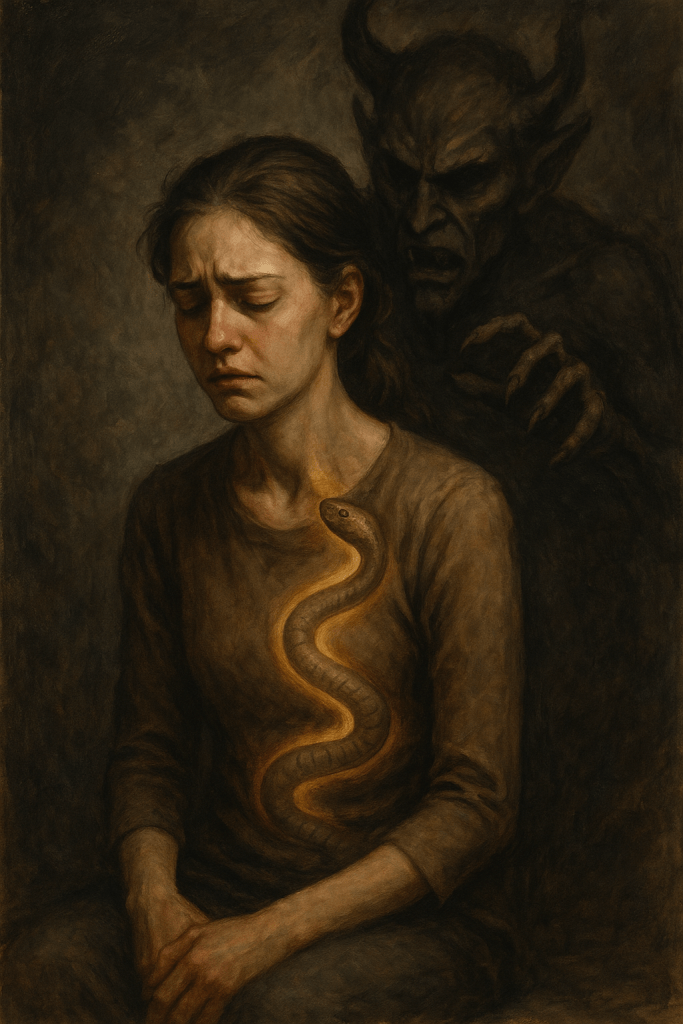
Kundalini is often described in modern yoga and New Age spirituality as a universal spiritual energy coiled at the base of the spine, waiting to rise and bring enlightenment. This portrayal is misleading. In reality, what is called a “kundalini awakening” is better understood as a form of possession. Rather than a benign inner energy, kundalini is a demonic force that enters the human mind-body continuum, hijacks the nervous system, and rewires perception, behavior, and physiology. This explains why the symptoms of kundalini often overlap with those of classic demonic possession.
Symptoms: Kundalini Possession vs. Demonic Possession
Kundalini possession symptoms
- Involuntary bodily spasms or kriyas, often violent or exhausting.
- A sensation of a serpent or current moving through the spine, causing heat, pressure, or pain.
- Rapid swings between bliss and terror, often accompanied by visions or auditory phenomena.
- Disassociation and feelings of being controlled by something non-human.
- Progressive neurological deterioration: insomnia, paranoia, and psychosis.
- Identification with Hindu deities or serpentine archetypes, which parallels demonic manifestations described in other cultures.
Demonic possession symptoms (more broadly recognized)
- Aversion to the sacred, where holy names, prayers, or symbols provoke rage.
- Manifestations of supernatural strength or the sudden ability to speak foreign languages.
- Violent outbursts, self-harm, or aggression against others.
- Distorted voice, grotesque facial expressions, or animal-like behavior.
- Physical disturbances such as objects moving, foul odors, or sudden temperature drops.
- A clear sense of hostile external control.
Both states are marked by loss of sovereignty and the intrusion of an alien intelligence. What makes kundalini more deceptive is that it cloaks itself in the language of spiritual progress.
The Entities Behind the Possessions
Kundalini-related beings
- Kundalini is personified as Shakti, the serpent goddess. While Hindu texts portray her as divine, serpent symbolism universally points to deception and danger, as the serpent has long been associated with Satan in Christianity.
- Many afflicted report contact with or identification as Kali, Durga, or other fierce Hindu and tantric Buddhist deities whose attributes of blood, violence, and intoxication align closely with demonic qualities.
Entities in wider demonic possession
- Christianity: fallen angels under Satan’s authority.
- Islam: malicious jinn, created from smokeless fire.
- Judaism: dybbuks, wandering spirits of the dead seeking to inhabit bodies.
- Indigenous traditions: hungry ghosts, nature demons, or restless ancestral spirits.
The same destructive force that is worshiped in India as divine feminine energy is interpreted in other traditions as demonic intrusion.
Why Kundalini Possession Often Appears Different
There are many anecdotal accounts of people afflicted by kundalini who do not display the same dramatic symptoms seen in major exorcisms performed by the Catholic Church. They may not display superhuman strength, speak unknown languages, or react violently to holy objects. Instead, their suffering appears as neurological collapse or uncontrollable kriyas.
Why does this happen? One possibility is what some exorcists call “perfect possession.” By willingly engaging in yoga, Eastern meditation, or tantric practices, the person effectively invites the spirit in. Once invited, the demon does not always need to manifest with violence or open hostility. It is already enthroned, so to speak, in the person’s consciousness and nervous system. It burrows in and embeds itself. The possession is often quieter but no less real.
Another possibility is that kundalini spirits simply manifest differently than other categories of demons. The absence of classic symptoms described by the Catholic Church may not mean the person is not possessed. It may mean they are afflicted by a different type of spirit, or by a demon whose preferred mode of influence is more insidious and long-term. Rather than breaking furniture or speaking in foreign tongues, it works by corrupting the nervous system, trapping the victim in cycles of ecstatic highs and devastating lows, and slowly eroding the mind and spirit.
Implications for the Catholic Church
Because many of these cases do not fit the criteria traditionally used to diagnose possession, individuals suffering from kundalini affliction are sometimes turned away by exorcists. Yet the sheer number of Westerners who have turned to yoga, meditation, and tantric practices since the 1960s suggests that the Church may need to reevaluate how possession presents in modern contexts. Kundalini demons may not manifest with the same overt signs as other kinds of possession, but their effects are no less destructive.
To dismiss these cases as mere psychological breakdowns risks ignoring an entire category of demonic assault that has proliferated under the guise of spirituality. The deceptive packaging of kundalini as “spiritual energy” makes it one of the most dangerous forms of possession today.

 Tantric Deception