It has taken me decades to admit something that began as a faint suspicion, then settled into unease, and now has crystallized into a sober conclusion: Tibetan tantric Buddhism is not what I thought it was. Nor is it what I believed when I first encountered it many years ago, a bit before the time His Holiness the Dalai Lama received the Nobel Peace Prize in 1989.
Back then, the first wave of Tibetan lamas and rinpoches were arriving in the West. To many of us, they seemed like emissaries from a lost Shangrila. Coming out of the disillusionment of the Vietnam War years, with trust in government and organized religion badly shaken, we were primed to seek something transcendent and pure. And here were these men, holy men trained in the monasteries of old Tibet, carrying with them an aura of mystery and profound wisdom. Meeting them felt like an unimaginable stroke of good fortune.
The historical Buddha’s teachings struck us as luminous and deeply humane. The philosophical treatises were subtle, the meditation techniques precise and effective. And then there was tantra. We were told, almost in passing, that tantra too came directly from the Buddha. No mention was made of its roots in Shaivism, or its overlaps with the worship of Shiva, Kali, and the other tantric currents in Indian religion. Yes, there were references to the 84 Siddhas, some of whom practiced in Hindu traditions, but it was presented as a kind of colorful backdrop rather than something that demanded careful inquiry. The task, we were told, was to study the dharma, not to ask too many uncomfortable questions.
And yet, the Buddha himself had urged his students to test his words as one tests gold: cutting, burning, hammering to see if it is true. I carried that instruction into Tibetan Buddhism. But the environment I found myself in didn’t encourage such testing. Quite the opposite.
Very quickly, I was drawn into the highest yoga tantras. After a series of initiations that were performed in Tibetan, a language I didn’t understand, I was informed by a lama I scarcely knew that from now on, I had to do whatever he told me. Cognitive dissonance set in immediately. Around me, others spoke of him as a fully enlightened buddha. Terms like samaya and vajra hell were introduced without context, wrapped in a swirl of historical Buddha teachings and cryptic tantric concepts. Critical thought was not just discouraged; it was quietly undermined. The lama was king, and the student’s role was obedience.
For Westerners raised with democratic ideals and an education that stressed inquiry, this was a bewildering fit. Many of us unconsciously overlaid our early religious conditioning onto what was, in fact, a foreign and feudal religious structure with a pantheon of strange and colorful deities. The result of treating the lama as an omniscient god created confusion, sometimes tragedy. I have heard of suicides, psychotic breaks, and lives unmoored. At the same time, I know people who genuinely believe they have benefited from Tibetan Buddhism. For years, I counted myself among them, until my own turn came.
I was privately attacked by my gurus during a tantric ritual for what I considered minor offenses related to situations outside of my control. What followed was worse: a series of what can only be described as black magical assaults. I now look back at those suicides I had once heard about and wonder: had they endured similar attacks, subtle or overt, after questioning or disappointing their teachers? Perhaps. I cannot know for sure. But I do know this: the mask of compassion many lamas wear often drops when they feel challenged or exposed. Not all, certainly. But enough to form a pattern.
That slow dawning that Tibetan tantric Buddhism was not what it was presented to be has been deeply painful. The disillusionment runs far beyond personal disappointment; it speaks to a betrayal of trust, the suppression of critical thought, and the dangers that arise when power is handed to unaccountable gurus who claim authority over hidden magical practices and wield them at will. Brought into a Western culture of sincere but searching seekers, this has created a toxic mix that leaves people vulnerable at the very moment they are most open.
Leaving Tibetan Buddhism is not just a change of belief systems; it can be a deep spiritual battle. For those who’ve practiced tantra, divination, or deity yoga, you may have sensed that something was not right and that which was supposed to be “enlightened” came with confusion, heaviness, and spiritual oppression.
If you’re reading this, you may already be in the process of leaving Tibetan Buddhism or maybe you’re considering it.
Why People Leave Tibetan Buddhism
At first, Tibetan Buddhism can appear beautiful, complex, and pure. But over time, many practitioners begin to discern troubling spiritual dynamics:
Worship of wrathful deities and demons presented as “enlightened beings”
Tantric rituals and yoga cause physical and mental anxiety
Dependence on gurus, where questioning is not allowed but seen as a kind of spiritual betrayal
Dreams, sleep paralysis, or oppression that begin after initiations or sadhana practices
These are not mere coincidences. The Bible clearly warns against idolatry, necromancy, sorcery, and invoking spirits, practices central to Tibetan tantric systems (Deuteronomy 18:10–12, Galatians 5:19–21):
Deuteronomy 18:10–12 (NKJV)
“There shall not be found among you anyone who makes his son or his daughter pass through the fire, or one who practices witchcraft, or a soothsayer, or one who interprets omens, or a sorcerer, or one who conjures spells, or a medium, or a spiritist, or one who calls up the dead. For all who do these things are an abomination to the Lord, and because of these abominations the Lord your God drives them out from before you.”
Galatians 5:19–21 (NKJV)
“Now the works of the flesh are evident, which are: adultery, fornication, uncleanness, lewdness, idolatry, sorcery, hatred, contentions, jealousies, outbursts of wrath, selfish ambitions, dissensions, heresies, envy, murders, drunkenness, revelries, and the like; of which I tell you beforehand, just as I also told you in time past, that those who practice such things will not inherit the kingdom of God.”
Demonic Retaliation Is Real
When someone leaves these systems, there can be real spiritual backlash and former practitioners often experience:
Nightmares or visitations
Voices or intrusive thoughts
Emotional heaviness and fear
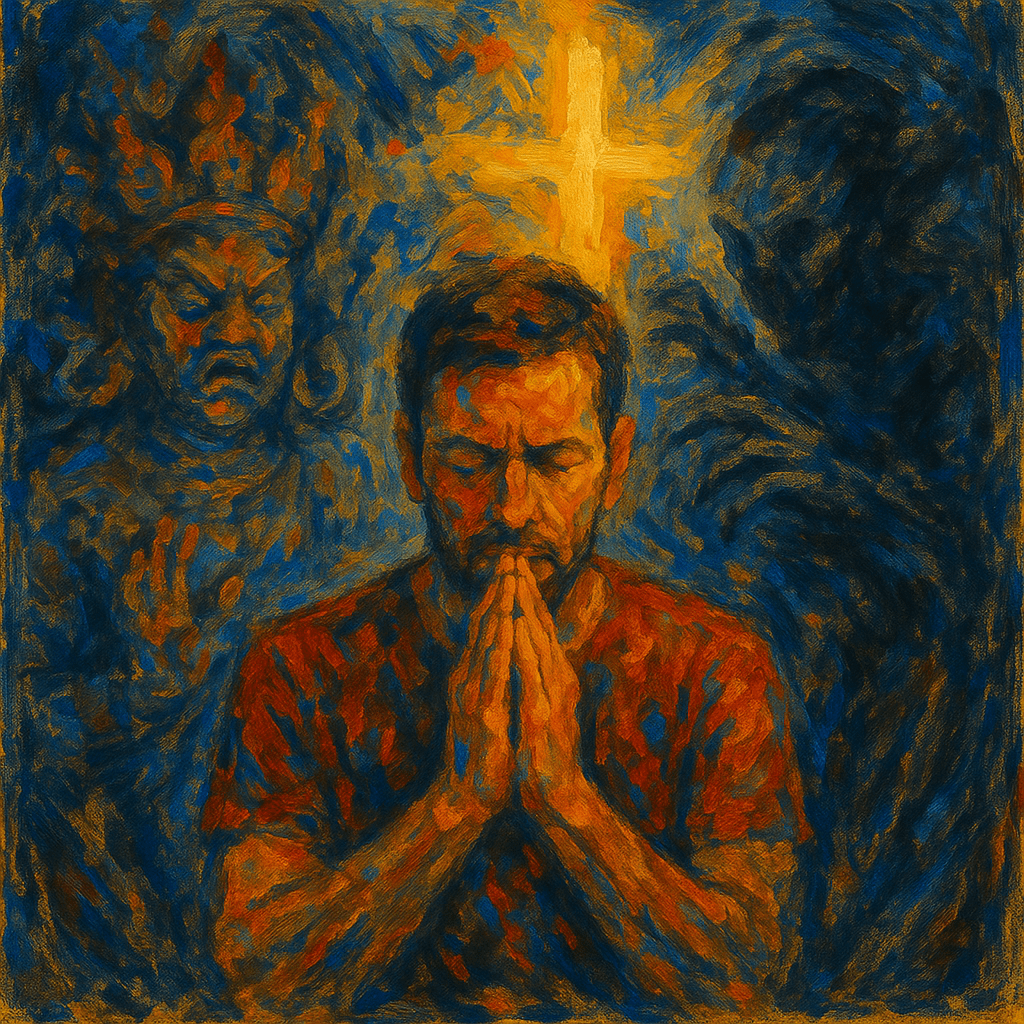
The spiritual world does not easily let go, but Jesus Christ has authority over it all (Luke 10:19), so know that you are not alone.
Step-by-Step: How to Leave Tibetan Buddhism
1. Acknowledge the Truth
Call it what it is. Confess to God that you participated in practices that He calls abomination. There is no shame in this. We were deceived. He already knows and is ready to forgive (1 John 1:9).
2. Renounce All Involvement
With your words backed by your will, say out loud:
“I renounce all involvement in Tibetan Buddhism, tantra, deity worship, and all practices that are not of the one true God. I reject every false spirit of divination and claim the blood of Jesus over my life.”
Destroy objects associated with your past practice: malas, thangkas, statues, books, empowerment trinkets. Do not give them away, but burn, break, or throw them out.
3. Receive Jesus Christ as Lord and Savior
Deliverance comes through a Person, not a ritual. Jesus is the only one who has authority to truly save and set free.
“Lord Jesus, I believe You died for my sins and rose again. I repent and turn to You. Come into my life, forgive me, cleanse me, and fill me with Your Holy Spirit. I make You Lord of my life.”
4. Seek Deliverance Prayer
Depending on your level of involvement, you may need help from mature believers to walk through deliverance. This isn’t superstition but real spiritual warfare. Find a priest and church that understands deliverance ministry.
5. Saturate Yourself in God’s Word and Worship
Replace mantras with Scripture. Replace deity visualizations with the truth of God’s love. This requires patience because it can be a slow process as you’re being spiritually rewired. Read Ephesians, Psalms, and the Gospels daily. If you are Catholic, make a formal confession to a priest. Go to Mass frequently and receive the sacraments. Take steps to convert or revert.
6. Expect Retaliation but Know That You’re Safe
Don’t be surprised if you experience spiritual attack. That’s confirmation you’re on the right path. Demons may try to reassert old ties, but they are already defeated in Christ. You now have authority to rebuke them (James 4:7, Mark 16:17):
James 4:7 (NKJV)
“Therefore submit to God. Resist the devil and he will flee from you.”
Mark 16:17 (NKJV)
“And these signs will follow those who believe: In My name they will cast out demons; they will speak with new tongues;”
Final Thoughts: This Is War, but You’re on the Winning Side
Leaving Tibetan Buddhism may feel like you’re walking away from decades of sincere spiritual seeking. But the reality is: you are walking into the truth, the light, and the freedom that only Jesus can give.
You are not betraying your path but escaping a spiritual system that masked bondage as enlightenment. Demonic deception is real, but the power of Jesus is greater.
He said, I am the way, the truth, and the life. No one comes to the Father except through me” (John 14:6).
You are loved and being called out of darkness. For more information about Deliverance from the Occult, visit www.catholicexorcism.org.
In the modern spiritual landscape, the image of the Tibetan Buddhist guru reigns supreme: a figure of wisdom, compassion, and radiant loving-kindness. They preach mindfulness, selflessness, and sanctity, inviting seekers into what appears to be a sacred journey toward enlightenment. Yet, to me, this image is a facade, a carefully curated performance masking a much darker reality.
I write these words not as a distant observer but as someone who has experienced firsthand the profound betrayal of being targeted by spiritual teachers I once trusted. In my personal journey, three different gurus, revered in their communities for saintly and/or enlightened behavior, turned to black magic rituals against me when I questioned, disagreed, or simply became inconvenient to their carefully maintained personas. This article is an exploration of the deep cognitive dissonance that allows such individuals to publicly embody ideals of compassion while privately committing acts of cruelty.
The Ideal: Loving-Kindness and Compassion as a Mask
Gurus in traditions such as Tibetan Buddhism, Hinduism, and various New Age movements are often held up as embodiments of selfless love and wisdom. Their teachings and writings are saturated with the language of peace and universal compassion. In public, they radiate qualities such as patience and gentleness, reinforcing the image of infallibility.
This idealized projection is not merely for the benefit of followers; it also serves the guru’s own self-concept. They must see themselves, and be seen as holy, thereby reinforcing their authority and maintaining their social and spiritual power.
The Threat: When a Disciple Questions Authority
In the sanitized image of the perfect guru, there is no room for dissent. Questions, criticisms, or any sign of independence from a disciple can be perceived not as opportunities for dialogue, but as existential threats. After all, if a guru’s authority rests on the illusion of flawless wisdom and compassion, any crack in that image could unravel the entire edifice.
When faced with a questioning or independent-minded disciple, an insecure guru may respond not with the compassion they preach, but with fear, rage, and vindictiveness. To protect their power, they must eliminate the threat, not through open dialogue or humility, but through covert aggression.
The Betrayal: Weaponizing Spiritual Power
Traditions rich in esoteric knowledge provide tools that can be used for healing and protection, but also for harm. Tibetan Buddhism, for instance, preserves rituals historically intended to call down curses, obstacles, and psychic attack upon perceived enemies.
In my experience, these gurus invoked black magic against me. These were not random charlatans; they were highly respected spiritual leaders, who waxed eloquently in the language of love and compassion. Yet when challenged, they resorted to covert energetic and magical attacks, using the very tradition they claimed to uphold to violate the sacred trust between teacher and student.
Cognitive Dissonance: Reconciling Saintliness with Malice
How does a guru reconcile the horror of harming a disciple while maintaining their self-image as a bodhisattva, a compassionate enlightened being? The answer must lie in cognitive dissonance: the mental stress of holding two contradictory beliefs simultaneously.
To preserve their self-concept, the guru must justify their actions internally:
“I am protecting the dharma.”
“This disciple was dangerous, impure, deserving of punishment.”
“Sometimes cruel and violent actions are necessary for the greater good.”
Through rationalization, projection, and splitting, they maintain the fiction of compassion while engaging in spiritual violence. They convince themselves that their harmful actions are righteous, necessary, and justified.
The Aftermath for the Disciple
For those of us on the receiving end, the experience is devastating on many levels. It deeply tears at the soul to be targeted by those we once revered. The betrayal fractures trust not only in teachers but in the entire spiritual path. The disciple may grapple at first with:
Confusion: “Was it my fault?”
Self-doubt: “Did I deserve this?”
Spiritual disillusionment: “Is true compassion even real?”
If the disciple survives this first stage, similar to a victim of Stockholm syndrome, there comes a gradual dawning of the truth: the Tibetan Buddhist path, far from being one of light, has revealed itself as a path of darkness. That realization, painful as it is, can ultimately be deeply empowering.
I do not minimize the devastating effects of the powerful magic performed by these modern-day mahasiddhas. Black magic attacks are very real, manifesting as physical illness, emotional despair, and worse. Healing from such trauma requires immense courage and deep inner work. It is one of the most horrific experiences a human being can endure.
Yet, there is a stronger and truly holy force at work in the universe: the Most High God–yes, the biblical God. Sadly, many Tibetan gurus seem to have little experience of Jesus Christ, the Holy Spirit, or the true mercy and compassion that they embody.
The Deeper Horror: Gurus Possessed by False Spirits
It is not enough to say these gurus made mistakes or succumbed to human weakness. When a soul trained in the disciplines of compassion, wisdom, and loving-kindness instead chooses cruelty, retaliation, and spiritual violence, something darker is at work.
One must ask: how can they inflict such harm without being crushed by the weight of their own conscience? The terrifying truth is that many of these gurus may no longer be acting from their own hearts at all. They are, at some deep inner level, possessed, not by the enlightened deities they claim to serve, but by deceptive demonic forces masquerading as gods, bodhisattvas, protectors, and spirits of light.
In their ignorance and self-deception, they have invited darkness into themselves. They have handed over their will to entities that delight in mockery, destruction, and the inversion of sacred teachings. The rituals they once performed for healing and protection now become channels for curses, oppression, and spiritual decay.
And yet, even in this darkness, a greater light shines.
There is a true and living God, the Most High, whose justice is perfect and whose mercy is real. There is Jesus Christ, the Holy Spirit, and the incorruptible power of divine love, utterly beyond the reach of these childish gurus and their counterfeit spiritualities.
When I was a devoted Tibetan Buddhist, the word enlightenment held sacred weight. It meant the complete awakening of compassion and wisdom, the state of a Buddha who sees through illusion and dedicates themselves to freeing all sentient beings from the sufferings of samsara. I trusted in that vision, because I believed I was following a noble tradition.
But even then, something always felt a little off. I had a quiet discomfort I kept pushing aside.
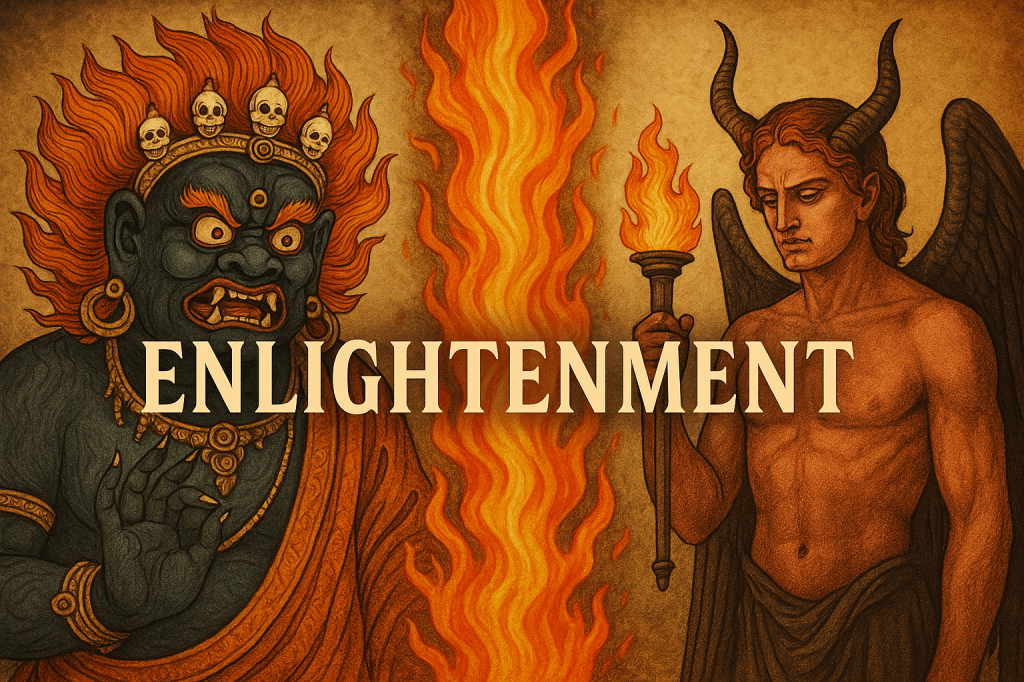
The problem was this: the term enlightenment wasn’t exclusive to Buddhism. I saw the same word used in the occult, in Theosophy, Freemasonry, and even Luciferianism, often in ways that glorified rebellion and the pursuit of hidden knowledge. Why were systems as wildly different as Tibetan Buddhism and Luciferian occultism both invoking “enlightenment” and “awakening” as their ultimate goal? Why did the same term span both the sacred and the profane?
Tibetan Buddhism: Enlightenment as Compassionate Wisdom
In Tibetan Buddhism, enlightenment is the realization of emptiness, the transcendence of ego, and the birth of boundless compassion. The ideal of the bodhisattva is someone who delays their own final nirvana in order to help all other beings reach liberation. This enlightenment isn’t just something a guru gifts you; it’s a hard-won transformation of your own mind.
Vajrayana Buddhism, the tantric branch of Tibetan Buddhism, adds layers of secrecy and initiation. There are empowerments, mantras, visualizations, and guru devotion practices. It uses powerful symbols such as vajras, weapons, fire, and wrathful deities that on the surface could resemble occult ritual. This made me uneasy. Was this actually an Eastern form of the same hidden path to power that Western esoteric groups followed?
I reassured myself that Vajrayana was different. It used “occult” methods, maybe, but only to realize true compassion and emptiness. Still, the similarity in tone and terminology between tantric rituals and occult rites always bothered me.
Now, after 35 years of hard work, study, devotion, and ultimately betrayal at the hands of tantric Buddhist gurus and deities, I’ve come to a grim realization: the enlightenment I was seeking wasn’t what I thought it was. It is merely an occult system dressed in Buddhist robes. The deeper I went, the clearer it became that Tibetan Buddhism and Luciferianism are two sides of the same coin. They may use different language, imagery, and rituals, but they are architecturally and spiritually similar and they both serve darkness, not light.
The word that they share, enlightenment, is the bait they use to ensnare seekers.
Luciferianism and Tibetan Buddhism: Two Faces of the Same Enlightenment Agenda
In Luciferianism, enlightenment is about becoming your own god. Lucifer is framed not as evil, but as the “light-bringer,” the one who defies divine authority to bestow forbidden knowledge. Enlightenment here is rebellion, self-deification, and esoteric power.
Helena Blavatsky, the founder of Theosophy, which heavily influenced modern occultism, named her journal Lucifer and described the figure as a misunderstood bringer of divine wisdom¹. In The Secret Doctrine, she refers to Lucifer as the “spirit of intellectual enlightenment”² and equates him with the higher mind of humanity. Freemasonry, Theosophy, and modern occultism all share the core motif: moving from darkness to light, and from ignorance to gnosis, through secret initiation.³
This kind of “light” is occult and exclusive. The “enlightened ones” in these systems are initiates who’ve been brought into deeper mysteries. The light is not for everyone; it’s reserved for those chosen by the system who are able to serve its agenda.
What shocked me, and what I ignored for years, is that tantric Buddhism functions much the same way. It promises special teachings, revealed only to the initiated. It trains students to see their guru as a living Buddha, above criticism or doubt, and presents his questionable actions as “skillful means,” while bypassing basic moral accountability. There is a similar secretive, hierarchical structure although this one is surrounded by colorful thangkas and Sanskrit mantras.
The deeper I went, the more I saw that my devotion was being weaponized against me. Tantric gurus used “crazy wisdom” to justify harm, and “samaya vows” to silence dissent. It wasn’t really compassion, but a spiritual aristocracy, no different from the occult orders I once thought Buddhism stood apart from. The beatific vision of enlightenment for the benefit of all sentient beings was merely the bait. The hook was the hidden power of dark forces.
Now I see clearly that the word enlightenment, both in Tibetan Buddhism and Luciferianism, functions as a kind of smokescreen. It sounds noble, luminous, and superior. But in both systems, it serves those in power and creates a class of “enlightened ones” who are above reproach, who serve gods and buddhas from unseen realms that are not what they appear to be.
“Enlightened Ones” as Agents of the Lie
It’s not just that the term enlightenment is misused. It’s that those who claim it, whether in Tibetan Buddhism or Luciferianism, are agents of a system that serves a being or beings pretending to be of the light.
These “enlightened ones” often behave the same way, regardless of tradition: they demand loyalty, obedience, and silence. They wield charisma and secrecy as tools. And when challenged, they invoke mystical authority and retaliation.
In both systems, the “light” is a mask and those who follow it are bound to something posing as divine. Whether it’s called Buddha, a Bodhisattva, an Ascended Master, or Lucifer, the same current runs underneath: it is a demonic force clothed in the language of transcendence.
Christianity and the True Nature of Light
Unlike Tibetan Buddhism and occultism, Christianity doesn’t use enlightenment as a central goal. It speaks instead of salvation, grace, and being born again through the Holy Spirit. The light of Christ is not esoteric knowledge reserved for an initiated elite but is open, relational, and grounded in love and repentance. Christ’s light is not something attained through ritual or secrecy; it is something revealed publicly and offered to all.
As Jesus says in the Gospel of John: *“I have spoken openly to the world. I have always taught in synagogues and in the temple, where all Jews come together. I have said nothing in secret.”⁵ This sharply contrasts with occult traditions, including tantric Buddhism, where knowledge is concealed, layered in initiations, and distributed only to those deemed “ready.” In my own experience, this secrecy became a mask for control. I was told not to question or doubt. I had to sacrifice my own inner wisdom and clarity.
But the light of Christ does not require silence or blind devotion. The Holy Spirit is not a power to be manipulated, but a divine presence who convicts, comforts, and guides with truth. In my experience, that is the only light that does not deceive.
Every other version I followed, no matter how radiant it appeared, eventually demanded that I suppress my discernment, abandon my conscience, and serve a system of secrecy cloaked in mystical language.
A Word to the Seekers
To anyone still in these systems, or brushing up against them through yoga, New Age teachings, or tantric practices: be careful with “light” that demands you stop using discernment. Be cautious of teachers who ask for your silence or your soul. Be wary of the spiritual forces behind the promised enlightenment.
I say this not as an outsider, but as someone who gave my life to this path. I practiced the rituals, prostrated to the gurus, and offered my heart in devotion. And when the mask came off, I saw what was truly being served, and it wasn’t holy. It was something else entirely.
Footnotes and Sources
Blavatsky, H. P., Lucifer, Vol. 1. Theosophical Society, 1887.
Blavatsky, H. P., The Secret Doctrine, Vol. 2. Theosophical Publishing House, 1888.
Pike, Albert. Morals and Dogma of the Ancient and Accepted Scottish Rite of Freemasonry. Southern Jurisdiction, 1871.
Mackey, Albert G. The Symbolism of Freemasonry. Masonic Publishing, 1882.
The Holy Bible, English Standard Version, John 18:20.
Crowley, Aleister. The Book of the Law. 1904.
Bailey, Alice A. Initiation, Human and Solar. Lucis Publishing Company, 1922.
Dapsance, Marion. “Behind the Smiling Façade: Abuse in Tibetan Buddhism.” Le Nouvel Observateur, 2018. Translated and discussed in Tricycle: The Buddhist Review.
Sawerthal, Anna. “Sogyal Rinpoche’s Abuse and the Breakdown of Secrecy in Buddhism.” Tricycle, 2018.
Peljor, Tenzin. “Tibetan Buddhism and Abuse: Why Critical Thinking is Essential.” Interview in Spiegel Online, 2019.
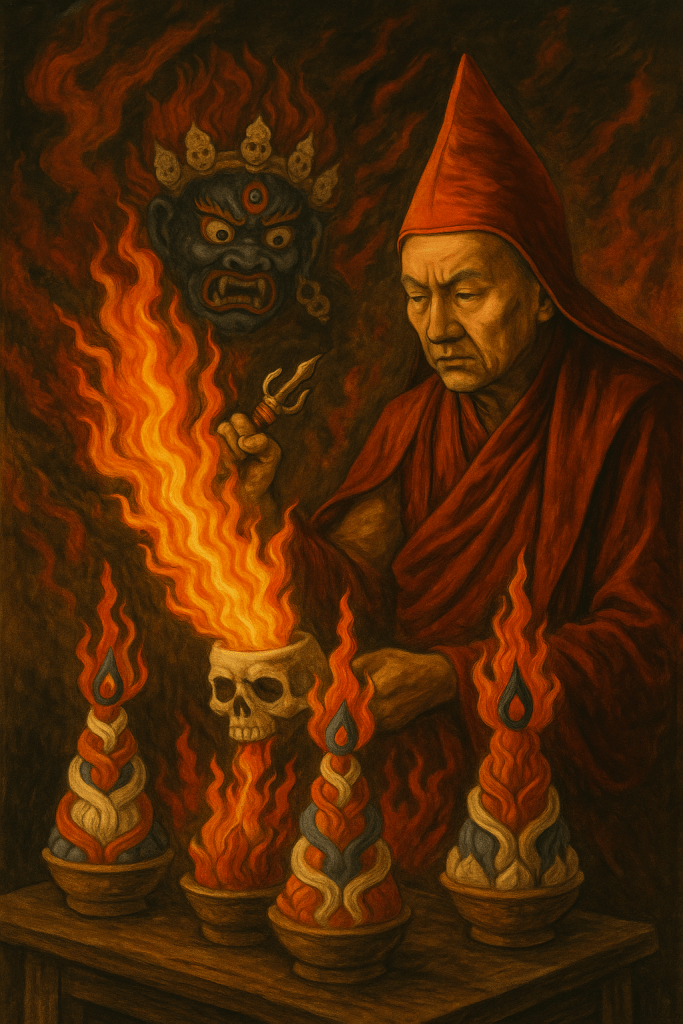
Tormas, those colorful, often conical sculptures made of barley flour, butter, and symbolic color, are widely recognized in Tibetan Buddhism as ritual offerings to deities. They are often seen as objects of devotion, used to accumulate merit and cultivate compassion. But there is another seldom discussed dimension of torma practice: their use in rituals of subjugation. These are aimed at destroying enemies, silencing dissenters, and even killing.
This article isn’t written for shock value or out of cultural disrespect. It comes from a deep need for transparency. I practiced within Tibetan Buddhism for decades, and what I discovered about the weaponization of these ritual objects came not from hearsay or internet rumors, but from firsthand experience, insider teachings, and years of quiet observation that finally crystallized into understanding.
What Are Tormas?
Tormas are empowered physical representations of deities as well as their palaces and mandalas. They also serve as offerings to the deities. Some types of tormas are used for offerings to spirits, and as weapons against obstructive spirits or humans. Other types of tormas known as “effigies” serve as targets. They are not merely symbolic. In Vajrayana practice, the effigies serve as “substitute bodies” for the consciousness of beings, meaning that a torma can become the ritual stand-in for an actual person. When a torma is offered, burned, stabbed, buried, or fed to spirits, it is not just a prop. It is, ritually speaking, a direct vessel for action.
In general, use of tormas can be for peaceful or wrathful purposes.
Categories of Harmful Tormas
While Western practitioners are often taught the “peaceful” or “blissful” uses of tormas (such as offering to bodhisattvas or for pacifying illnesses), most Tibetan tantric lineages include the “four activities” of pacifying, enriching, magnetizing, and subjugating. These last two, magnetizing and subjugating, can lead to dangerous territory.
Here are some of the more occult, wrathful uses of tormas:
1. Subjugation of Enemies
Tormas are used to summon wrathful deities, who are then directed to “crush” or “bind” an enemy’s consciousness. This includes ritual domination of the enemy’s will, health, and spiritual power.
2. “Black Torma” Killings
Some lineages include advanced practices where a torma is empowered as the life force of a person. The torma is ritually destroyed: stabbed, burned, or fed to spirits. The goal is to destroy the target’s body, mind, or soul. In some cases, the practitioner prays explicitly for the target’s death.
3. “Torma of Speech Destruction”
These are used to silence critics or opposing religious figures. The practitioner invokes wrathful deities to sever the “enemy’s” speech, discredit them, or even cause them to go mad.
4. Sending Spirits via Tormas
Tormas can serve as carriers or offerings to nefarious spirits, binding the target’s consciousness to entities tasked with tormenting them. This can result in psychic invasion, night terrors, loss of mental clarity, or obsession.
Why This Needs to Be Talked About
These rituals are rarely, if ever, disclosed to outsiders. In fact, many lamas downplay them entirely until a student is “ripe” for higher teachings. But many practitioners have felt the effects of these rituals without knowing what they are. Unexplained breakdowns, spiritual confusion, sudden illness, and relational collapse often follow a break with the guru or a breach of samaya. We are told it is just our karma, but sometimes, it’s a ritual backlash.
If this sounds unbelievable, I understand. It sounded unbelievable to me, too, until I experienced it firsthand.
These practices are not just theoretical. They are happening now, in retreat centers and monasteries in India, Nepal and the West, in ritual rooms, behind closed doors. And their effects are very real.
Who Is Most at Risk?
Former students who break samaya or speak out
Critics of the guru or institution
Those perceived as spiritual “competitors”
Women who reject inappropriate advances
Outsiders who get too close to the truth
Reclaiming Truth
This article is not an indictment of all Tibetan teachers or practitioners. There are sincere people within the tradition who reject the use of harmful rites. But silence around these rituals has enabled a culture of fear, manipulation, and unchecked spiritual abuse.
It’s time to talk about it. The torma is not always what it seems. What looks like a simple offering on the altar may, in some cases, be a vessel of vengeance. We must not look away. If we really care deeply about the benefit of “all sentient beings” we must expose the truth about the dark side of tormas and their harmful uses in tantric Tibetan Buddhism.
When I first encountered Tibetan Buddhism, I was filled with awe, curiosity, and hope. I was drawn to the idea of understanding the nature of mind, developing calm abiding (shamatha), and cultivating compassion and insight. I immersed myself in classic Mahayana texts like the Uttaratantra Shastra, with its soaring vision of Buddha nature, the luminous potential for awakening that each sentient being carries within them.
At that time, I was eager to deepen my meditation practice and learn how to navigate the mental storms of daily life. I believed this was a path of inner wisdom, clarity, and direct realization. I thought I had found something intellectually rigorous and deeply profound.
But after committing years of my life I realized that Tibetan Tantric Buddhism was a spiritual system that operated under authoritarian control, cultural secrecy, and a disturbing atmosphere of fear.
The Surface Beauty: What Drew Me In
The language of awareness, wisdom, and nonduality
Practices that promised to tame the mind and open the heart
Philosophical texts filled with Buddhist logic, the concept of emptiness, and the path of the bodhisattva
Encouragement to observe the mind and transcend egoic fixation
Like many sincere Western seekers, I accepted the rigid cultural structure, including the many hours of chanting in Tibetan, the hierarchy, and the ornate rituals, as necessary forms for accessing ancient wisdom. I told myself these were wrappings around the real treasure.
What I Actually Encountered
Instead of freedom, I slowly found myself embedded in a system that demanded unquestioning obedience to the guru, who was said to be indistinguishable from the Buddha himself. We were told the guru’s words were more important than our own inner convictions. If we had doubts, those were signs of impure perception or obstacles on the path.
And so, I suppressed my own sense of truth.
Instead of learning to observe my mind freely, I was encouraged, compelled, really, to submit my perception, my will, and even my moral conscience to someone else’s “realization.” In time, I was told that even misconduct or abuse from a guru must be viewed as pure, and that questioning it was a sign of my spiritual deficiency.
Essentially this was total submission to a human teacher presented as a living deity.
A Necessary Evil… or Something More?
For a long time, I rationalized this aspect of guru devotion. I thought, “This is just part of the package. I’ll take the good parts and accept the hierarchical guru system as a necessary condition to receive the blessings.”
But nothing prepared me for the revelation that this system involved actual practices of deity possession, and in some cases, black magic rituals by a covert spiritual power structure that operated on vengeance. And this wasn’t metaphorical.
The Hidden Core: Deity Possession and Guru Sorcery
Many Tibetan Vajrayana rituals involve āveśa, a concept that translates into spirit or deity possession. The practitioner “invites” a deity to merge with their mindstream. The guru is not just a teacher; he is seen as an embodiment of the deity, and rituals are performed to enforce that identification.
I discovered too late that some high-level gurus use this system to gain psychic and physical access to their disciples, manipulate their minds, and even curse those who disobey or break vows. This is not hyperbole but what has been hidden under the language of compassion and wisdom: a deeply esoteric system of spiritual domination.
My Awakening
It took me years to deprogram myself from the idea that questioning a guru meant spiritual death, and even longer to reclaim my own inner voice, the voice God placed in me. I now walk a different path entirely: One that does not require blind submission, that honors truth over secrecy, and Christ over cosmic manipulation.
If You’re Reading This…
You’re not crazy for feeling that something is off. You’re not wrong to listen to your instincts. What seems like harmless chanting, beautiful thangkas, and inspiring philosophy may hide something far more controlling and spiritually dangerous than you realize.
When I began my journey into Tibetan Buddhism, I was swiftly enveloped in its rituals and traditions. Without much explanation, I was handed monastic robes, instructed to shave my head, and urged to take lifelong vows. This rapid immersion into a structured and demanding system left me questioning the true nature of the practice. Was this a genuine spiritual path, or was I being drawn into a cult masquerading as a path to enlightenment?
The Allure of Tibetan Buddhism
Tibetan Buddhism often presents itself as a path of loving-kindness, compassion, and profound meditative insight. Its teachings emphasize peace, mindfulness, and the cultivation of wisdom. On the surface, these ideals are appealing and resonate with many.
However, lurking beneath this serene exterior is a complex structure of vows, rituals, and hierarchical relationships that can be overwhelming and oppressive.
The Samaya Vows: Protective or Deadly?
Central to Vajrayana Buddhism are the samaya vows, which are commitments taken by practitioners during tantric initiations. They establish a sacred bond between the guru and the disciple, outlining the conduct required to uphold that bond.
These vows can create a sense of obligation and fear. Breaking samaya is believed to lead to severe karmic consequences, placing immense pressure on individuals to adhere strictly to obedience no matter what the guru does.
Hidden Subjugation and Control
The hierarchical nature of Tibetan Buddhist communities can lead to overt forms of mind control and manipulation. The reverence for the guru borders on unquestioning subservience, with the guru’s authority rarely being challenged. This dynamic can foster an environment where questioning is discouraged, and followers are compelled to conform to the guru’s demands and the group’s expectations.
Moreover, the concept of “crazy wisdom” is sometimes used to justify behavior that would otherwise be deemed inappropriate or abusive. This philosophy, associated with figures like Chögyam Trungpa, suggests that unconventional or even disruptive actions by a guru are acceptable if they lead to spiritual awakening. Such justifications can blur ethical boundaries to the extent that students are ripe for abuse.
The Dark Side of Tibetan Buddhism
Instances of widespread misconduct within Tibetan Buddhist communities have been reported, raising concerns about the integrity of these institutions. The case of Sogyal Rinpoche, the founder of the Rigpa organization, is one example where allegations of sexual abuse and severe authoritarian control surfaced, leading to significant controversy and criticism. After eight students leaked a letter on the internet exposing his crimes, a highly-regarded Khenpo associated with the group gave a talk denouncing those eight students, angrily declaring that they would all go to vajra hell. Even though many Westerner disciples of Tibetan Buddhism don’t believe in vajra hell, I can assure you from first hand experience that it’s very real. You can read more about it here.
These incidents highlight the potential for exploitation within systems that place immense power in the hands of a single individual or a small group of leaders. The lack of accountability and transparency in many Tibetan Buddhist organizations can create an environment ripe for cultish abuse.
Conclusion: A Call for Critical Reflection
While Tibetan Buddhism appears to offer profound teachings and practices, it is essential to approach these traditions with a critical eye. The allure of compassion and peace should not overshadow the lack of ethical conduct, transparency, and respect for individual autonomy that often hides beneath the surface.
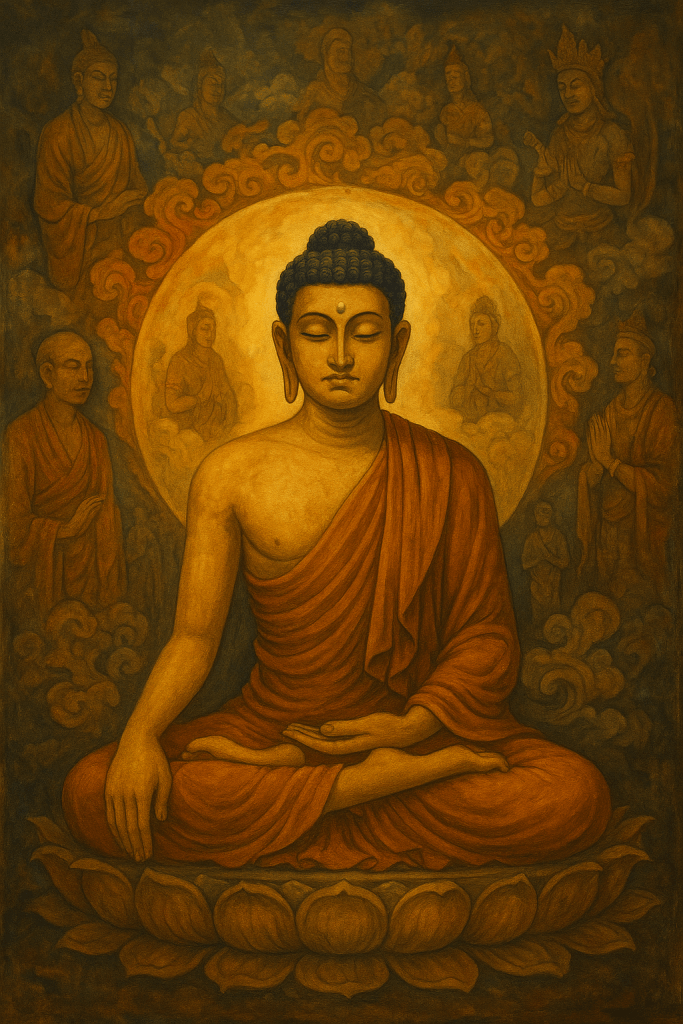
When people hear the term “Buddhism,” they often imagine a peaceful monk seated under a tree, cultivating mindfulness and inner stillness. They might recall the image of the Buddha, Siddhartha Gautama, who renounced wealth and power to pursue a path of liberation through ethical conduct, meditation, and wisdom. What many do not realize is that across Asia, the original teachings of the Buddha have often been overlaid with rituals, deities, and esoteric practices that resemble occultism more than renunciation. This is especially true with the spread of Tantric Buddhism, also known as Vajrayāna.
Tantric Buddhism, which developed in India around the 6th century CE, introduced rituals, visualizations, secret initiations, deity yoga, and sexual symbolism that were foreign to the early teachings found in the Pāli Canon. While it may have originated in India, the influence of Tantra has spread far beyond the Himalayas. Countries known today for their Theravāda heritage, such as Cambodia, Laos, Vietnam, and Thailand, have all, at different times, been touched or even deeply influenced by Tantric practices. This article traces the spread of Tantric Buddhism and asks a pressing question: Is this fusion of Tantra and Buddhism in harmony with what the Buddha actually taught?
India: The Birthplace of Tantra and the Turning Point
Though Siddhartha Gautama taught a path of non-attachment, the later development of Tantric Buddhism in India marked a dramatic departure. The Tantric path emphasized achieving enlightenment quickly by harnessing the powerful energies of desire, fear, and wrath through ritual and symbolic transgression.
Early Buddhist schools such as Theravāda preserved the monastic, ethical, and meditative disciplines taught by the Buddha. But by the time Vajrayāna emerged, Buddhism in India had evolved into Mahāyāna and beyond, with Tantric elements becoming dominant in institutions like Nālandā and Vikramaśīla monasteries before their destruction. From here, Tantra spread east.
Tibet: The Tantric Stronghold
No country embraced Tantric Buddhism more completely than Tibet. With the arrival of Indian masters like Padmasambhava in the 8th century, Tibet adopted esoteric practices involving deity yoga, ritual offerings (such as torma and blood libations), and secret empowerments. The Nyingma, Kagyu, Sakya, and Gelug schools all incorporated tantric texts and practices, often passed orally and practiced in secrecy.
Tibetan Buddhism’s public face often emphasizes compassion and mindfulness, but beneath the surface lies a highly ritualized system of guru devotion, spirit invocation, and occult symbolism. Even the widely admired Dalai Lama is an initiated tantric practitioner who publicly defends the practice of deity yoga and sexual yogas, raising serious questions about his alignment with the historical Buddha’s path.
China: Mixed Influence and Lingering Tantra
In China, the dominant schools of Buddhism have historically been Chan (Zen), Pure Land, and Huayan. However, during the Tang dynasty (7th–10th centuries), Esoteric Buddhism (Mizong) was introduced by Indian masters like Amoghavajra. While it never overtook the native schools, it left a lasting impact in some sects and still survives in diluted form within Chinese folk religion and Taoist-Buddhist syncretism.
Today, Chinese Buddhism largely appears non-tantric, but undercurrents remain, especially in temple rituals involving spirit appeasement, elaborate deity worship, and occult practices inherited from early Tantric transmission.
Vietnam: The Mahāyāna-Tantra Hybrid
Vietnam officially follows Mahāyāna Buddhism, heavily influenced by Chinese traditions. However, tantric rituals were introduced via Chinese Esoteric Buddhism and Indian Tantric texts. Vietnamese temples often blend Pure Land devotion with protective rituals invoking wrathful deities or dhāraṇīs (mantras with supposed magical powers). Such rituals, while less publicized, reveal an undercurrent of occultism beneath an otherwise devotional landscape.
Cambodia and Laos: Theravāda Facade, Tantric Underbelly
Cambodia and Laos are Theravāda countries, yet their histories are steeped in tantric influence from the ancient Khmer Empire. Angkor Wat, though now viewed as a Hindu and Buddhist site, was once home to elaborate Tantric rituals. Statues of multi-armed deities and ritual paraphernalia suggest tantric syncretism flourished.
Today, while the public face of Buddhism in these countries is Theravāda, local shamans (mo phi) and monks alike may engage in protective magic, spirit invocations, and talisman-making, practices more akin to Tantric ritual than Theravādan restraint.
Thailand: Theravāda Mixed with Occultism
Thailand is often held up as a bastion of Theravāda purity, yet here too the line between Buddhism and occultism blurs. Amulets, tattoos (sak yant), and rituals to appease spirits are common. Many monks perform rituals invoking Phra Ngang or other spirits linked to animistic or tantric practices. While not called Tantra, the ritual culture that has evolved in Thailand includes aspects strikingly similar: mantras, yantras, invocations, and guru devotion.
The Buddha vs. Tantra: Are They Compatible?
The question at the heart of this analysis is critical: Do tantric practices align with the historical Buddha’s teachings?
The Buddha emphasized renunciation, morality, mindfulness, and wisdom. He warned against magic, ascetic extremism, and blind devotion to teachers. He discouraged speculation about supernatural powers and encouraged liberation through insight and ethical living.
Tantric Buddhism, by contrast, often involves oath-bound secrecy, symbolic transgression (including sexual union and consumption of taboo substances), and reliance on supernatural beings and powers. In many forms, it is more reminiscent of sorcery than liberation.
Bluntly stated, Tantra is not a spiritual shortcut, but a dangerous detour. It promises power, but often delivers confusion and spiritual enslavement. For survivors of tantric abuse, like myself, it’s critical to shine a light on how these practices have hidden behind the Buddha’s name and image for centuries. As Tantric Buddhism spread across the globe, from Tibet to Thailand, from China to Cambodia, it cloaked itself in the language of compassion and enlightenment; however, its methods betray a different source, one that leans toward secrecy, manipulation, and occultic power rather than truth and freedom.
This week, a well-known lineage master in Tibetan Buddhism is live-streaming teachings to an international audience. The subject? The Fifty Verses on the Guru, a classical text often revered in Tibetan spiritual circles.
What stands out is not the spiritual inspiration one might expect, but the chilling severity of the warnings directed at anyone who dares to question or criticize the guru. In these verses, critics are threatened with death by plagues, poison, spirits, and natural disasters. They’re told they’ll be attacked by bandits, burned alive, and ultimately “cooked in hell.”
Yes, cooked in hell.
These aren’t metaphorical suggestions. They’re clear, unambiguous threats proclaimed with spiritual authority and recited with solemnity. And they’re being taught to women (a group of nuns) dedicating their lives to a religion that claims to offer liberation.
One may ask, is this liberation? Or is it spiritual coercion?
Consider how the following verses read:
Those great fools who criticize The guru’s feet will die from plagues, Disasters, fevers, evil spirits, Contagions, and from poisons.
They will be killed by tyrants, snakes, Water, fire, dakinis, bandits, And vighna and vinayaka spirits, And then they will go to the hells.
You must never rile the mind Of the master. A fool who does Will certainly be cooked in hell.
These are not compassionate teachings encouraging wisdom and discernment. These are fear-based tactics meant to silence and suppress any legitimate questioning of authority. And they’re not buried in obscure corners of the tradition; they are central, foundational texts, recited aloud in front of devoted students, streamed across the world for anyone to witness.
So what does it say about a religion when its core teachings equate dissent with spiritual doom? What kind of teacher feels justified in repeating these words to those under his care?
And more importantly: what happens to someone who dares to think critically? Remember, many of the advanced gurus have the supernatural ability (siddhi) to read the thoughts of their disciples.
In the wake of widespread abuse scandals across Tibetan Buddhist institutions, many of which have been publicly documented, the insistence on blind obedience to the guru should raise serious red flags. If you’re drawn to Tibetan Buddhism or already involved, ask yourself: Do you feel free to question? Do you feel safe? Perhaps it is time to take an honest look at this tradition.
Vajrayana Buddhism presents itself as a path of radical transformation: a sacred alchemy where ordinary perception is transmuted into enlightened wisdom. Its ritual technologies are often described as “skillful means,” and its magical practices framed as expressions of “Buddha activity.” But the colorful mandalas and enchanting deity meditations may obscure something far more dangerous than most practitioners realize.
According to vajranatha.com, Vajrayana operates through four principal kinds of magical activity, each aligned with a cardinal direction, a color, and a particular type of power:
White (east): for pacifying and healing
Yellow (south): for increasing wealth and wisdom
Red (west): for attraction and control
Dark blue or green (north): for wrathful subjugation and protection
These are personified in the deity forms of White Tara, Dzambhala, Kurukulla, and Vajrakilaya, respectively. Collectively, these “Four Activities” are described as enlightened, but their function mirrors the mechanisms of many other occult systems: healing, sorcery, love spells, exorcism, and domination.
So who, or what, is powering these rituals?
Chögyam Trungpa, one of the most influential Tibetan lamas to bring Vajrayana to the West, once gave a startlingly candid warning:
“Committing oneself to the Vajrayana teaching is like inviting a poisonous snake into bed with you and making love to it. Once you have the possibility of making love to this poisonous snake, it is fantastically pleasurable: you are churning out antideath potion on the spot. The whole snake turns into antideath potion and eternal joy. But if you make the wrong move, that snake will destroy you on the spot.” —Chögyam Trungpa
This is not a metaphor for the all-encompassing wisdom and compassion of the Buddhas and Bodhisattvas. It is a warning of immense spiritual danger.
Vajrayana demands the total surrender of body, speech, and mind, not only to the teachings, but to the guru and the spiritual forces behind those teachings. This surrender is cloaked in bliss, ecstasy, and the promise of transformation. But as Trungpa makes clear, one wrong move and the very force you trusted can turn lethal. It can turn on a dime.
I experienced this firsthand. It began as a profound visualization and mantra practice during a three-year retreat and gradually turned into energetic torment and psychological destabilization. The deities I once practiced became increasingly foreign, invasive, and predatory. The guru, once seen as a vessel of wisdom, became a wrathful executioner.
These practices are not what they seem: they tap into powerful magic. And one must ask, who is really powering these rituals? Who benefits when a practitioner opens themselves to these entities and their so-called “energies”? Why should we assume these forces are benevolent, simply because they have Buddhist names and appear in ornate, colorful iconography?
The structure described here isn’t just about religious symbolism or spiritual beauty, it reflects a deep psychological system designed to influence the mind through ritual. Vajrayana practices use visualization, chanting, offerings, and mantra repetition to create altered states of consciousness and emotional bonding with supernatural entities. This is what scholars call ritual psychology: the way ritual shapes belief, identity, and experience.
But Vajrayana doesn’t just manipulate the mind. It aligns closely with classic occult systems, ones that use similar rituals to summon, contact, and make pacts with spirits. Healing and increase, attraction and domination are bit neutral tools. They are technologies for channeling unseen forces toward specific outcomes. And these forces are personified, and bonded with through ritual acts that, the deeper you go, begin to resemble spiritual possession with demonic pacts.
In my own experience, the entities I contacted through these practices eventually revealed themselves to be something other than the enlightened mind of the Buddhas, whatever that might be. They had their own will, their own agendas, and their own personalities. Especially in the darker rites of semi-wrathful and wrathful deities, there was a sharp edge of coercion, and spiritual threat.
If we take these rituals seriously, not as colorful mysticism, but as real technologies of spiritual manipulation, then we must also take seriously the possibility that their source may not be benevolent.
Just because it’s branded as “Buddha activity” doesn’t mean it is holy. Survivors of spiritual abuse in Tibetan Buddhism must be brave enough to ask the hard questions. Who, or what, are we inviting into our minds and bodies when we chant these mantras, visualize these beings, and make offerings in exchange for spiritual results? Are these forces truly enlightened or are we just calling them that because we’ve been taught to?
When your healing comes at the cost of spiritual bondage…When your wisdom is bought by making pacts with demons…Something is deeply wrong.
Magic in Vajrayana is not peripheral but central to the practice. And it must be examined not with awe, but with clear-eyed discernment.






 Tantric Deception