
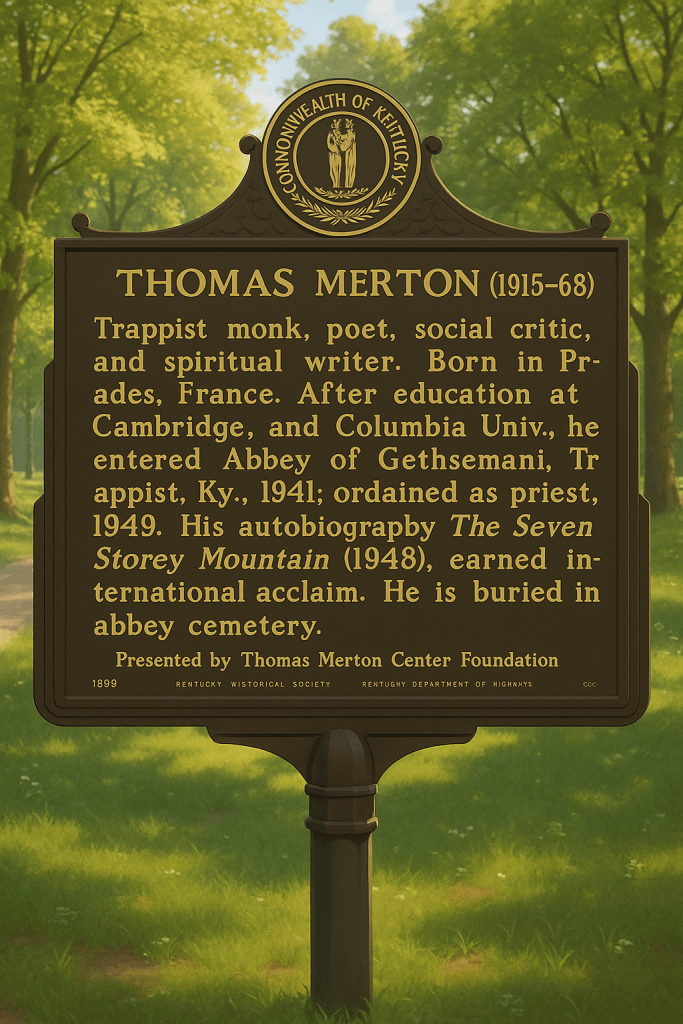
Thomas Merton’s Exploration of Tibetan Buddhist Mysticism and His Untimely Death


Thomas Merton remains one of the most fascinating and controversial figures in modern Catholic spirituality. A Trappist monk whose writing reached millions, he invited readers into a life of contemplation shaped by silence, inner stillness, and spiritual inquiry. By the 1960s, his search had expanded far beyond the borders of Christian tradition and into the world of Eastern mysticism. His journey raises important questions about discernment, authority, and the possibility that some mystical experiences do not come from God at all.

Why Merton looked East

Merton believed that Western Christianity had lost something essential. He felt that institutional concerns and intellectual debate had overshadowed direct experience of God. Eastern religions appeared to preserve a contemplative path in a purer form. Like many in the post–Vatican II era, he saw dialogue with non-Christian religions as an opportunity rather than a threat.

But such openness came with a cost. Many Catholics of his time assumed that all deep mystical traditions shared a common source. The idea that spiritual experiences could arise from contrary or even deceptive origins was rarely discussed. This lack of discernment created a vulnerable generation of seekers who treated Eastern practices as spiritually neutral when they were not.

Merton’s early interest in Asia

Long before traveling to Asia, Merton was reading Zen, Taoism, Advaita Vedanta, and Sufi mystics. He approached them with sincere curiosity, but also with a growing assumption that truth could be gleaned from any direction. His writings from this period suggest a desire for universal contemplative experience, sometimes without sufficient attention to the distinct theological and spiritual claims behind each tradition.

This tendency to universalize mystical experience would shape his final years.

Meeting the Dalai Lama

In 1968, Merton traveled to Dharamsala and spent several days with the Dalai Lama. Their meetings were warm and genuinely contemplative. Merton admired the Dalai Lama’s kindness, discipline, and clarity. The Dalai Lama later remembered Merton as the first Christian monk who came to him not as a tourist or academic but as a fellow practitioner of deep prayer.

Yet admiration does not erase theological differences. Tibetan Buddhism denies a creator God, embraces reincarnation, and employs esoteric tantric practices that involve deities outside the Holy Trinity. From a Christian point of view, this difference is huge. The Church has long taught the discernment of spirits: mystical experiences must be tested, because deceptive spiritual forces can imitate peace, clarity, and even compassion. Merton did not always express this caution.

Encounter with Kalu Rinpoche

Merton also met Kalu Rinpoche, one of the most respected Tibetan meditation masters of the twentieth century. He attended teachings on Mahamudra and was deeply impressed by the monastic discipline he witnessed. Kalu Rinpoche even invited him to undertake a long hermit retreat. Merton seemed drawn to the idea.

But Tibetan Buddhism contains layers of esoteric practice that Merton, like most Westerners of his time, did not fully understand. The serene exterior of Tibetan spirituality often conceals tantric rituals, spirit invocation, and hierarchical guru devotion that are fundamentally incompatible with Christianity. Later revelations of abuse and occult manipulation inside some of the major Tibetan lineages show how incomplete the Western picture had been. Merton could not have known this, yet his enthusiasm reflected a lack of discernment that would affect many who followed in his footsteps.

What else he explored

Merton’s range of interests was broad. He read Zen masters, Taoist sages, Hindu philosophers, and Sufi poets. He studied Christian hesychasm with new energy and sought common threads among all traditions. His impulse was generous, but generosity is not the same as spiritual clarity. Christian prayer directs the soul toward union with God. Eastern meditation, especially tantra, aims at dissolving the ego and merging with non-Christian spiritual entities.

These are not complementary goals but representative of different spiritual destinies.

Bangkok and a mysterious death

After leaving Dharamsala, Merton traveled to Bangkok to speak at an international monastic conference. On December 10, 1968, he died in his cottage shortly after giving a lecture. The official explanation was accidental electrocution from a faulty fan. Yet no autopsy was performed, and the circumstances were poorly documented. The inconsistencies have fueled speculation for decades.

His death came at a moment when he was moving more deeply into Buddhist thought. Whether he intended to integrate aspects of Tibetan practice into Christian monasticism remains unknown. His passing has an unfinished quality, as if he was on the edge of a major spiritual shift whose implications were never tested.

Why Merton still matters

Merton’s life challenges readers to seek authentic spiritual contemplation, not just intellectual understanding. It also warns Christians that not every path that promises depth is aligned with God. Eastern systems often carry metaphysical commitments and spiritual forces that stand in real conflict with Christian revelation. Without a strong framework of discernment, even sincere seekers can be misled.

Merton’s writings still inspire, yet his story also stands as a cautionary tale. The longing for mystical experience is real and often holy, but it must be shaped by sound doctrine and a sober awareness that not every spiritual path leads toward God.
Saint Bartolo Longo: From Darkness to Light


Saint Bartolo Longo was canonized by Pope Leo XIV on October 19, 2025, during a solemn Mass in St. Peter’s Square that elevated seven new saints to the altars of the Catholic Church. The Vatican’s announcement confirmed what many had long anticipated: that the once wayward lawyer who fell into occultism but found redemption would at last be formally recognized among the saints.

Before his story begins, it is worth repeating the Church’s timeless warning about the dangers of all occult practices and the spiritual counterfeits that appear holy but lead astray. The New Age fascination with séances, channeling, tarot, reiki, and yoga is not new. It is a repetition of the same deceit that misled Bartolo himself. Likewise Tibetan Buddhism, which hides black magic and sorcery behind the peaceful facade of Buddhism, should be closely examined. Bartolo Longo’s life shows something deeply consoling: no matter how far one strays into darkness, there is always a way back through repentance, confession, and devotion to Christ and His Mother.

Bartolo Longo was born in Latiano, a small southern Italian village, on February 10, 1841. His family were respected townspeople and lived comfortably with servants. Bartolo had an older sister and a younger brother, and his father worked as a physician. As a boy, Bartolo was lively and mischievous; he was quick-witted, theatrical, and often irreverent. His mother, however, formed him in devotion to the Virgin Mary and the Rosary.

When he was six, Bartolo was sent to a priest-run boarding school. He thrived there, making friends, studying hard, and developing a gift for music and fireworks. His temper, though, remained fiery. At ten, his father died, and his mother later remarried a lawyer. That stepfather’s profession drew Bartolo’s interest, and he resolved to study law.

By the 1860s, while the anti-Catholic movement was reshaping Italy, Bartolo and his brother moved to Naples for their studies. The intellectual climate was hostile to the Church. Professors openly mocked the Pope and religious orders. The young student’s faith eroded in that atmosphere. He became fascinated by the new philosophies of reason and freedom that dismissed religion as superstition.

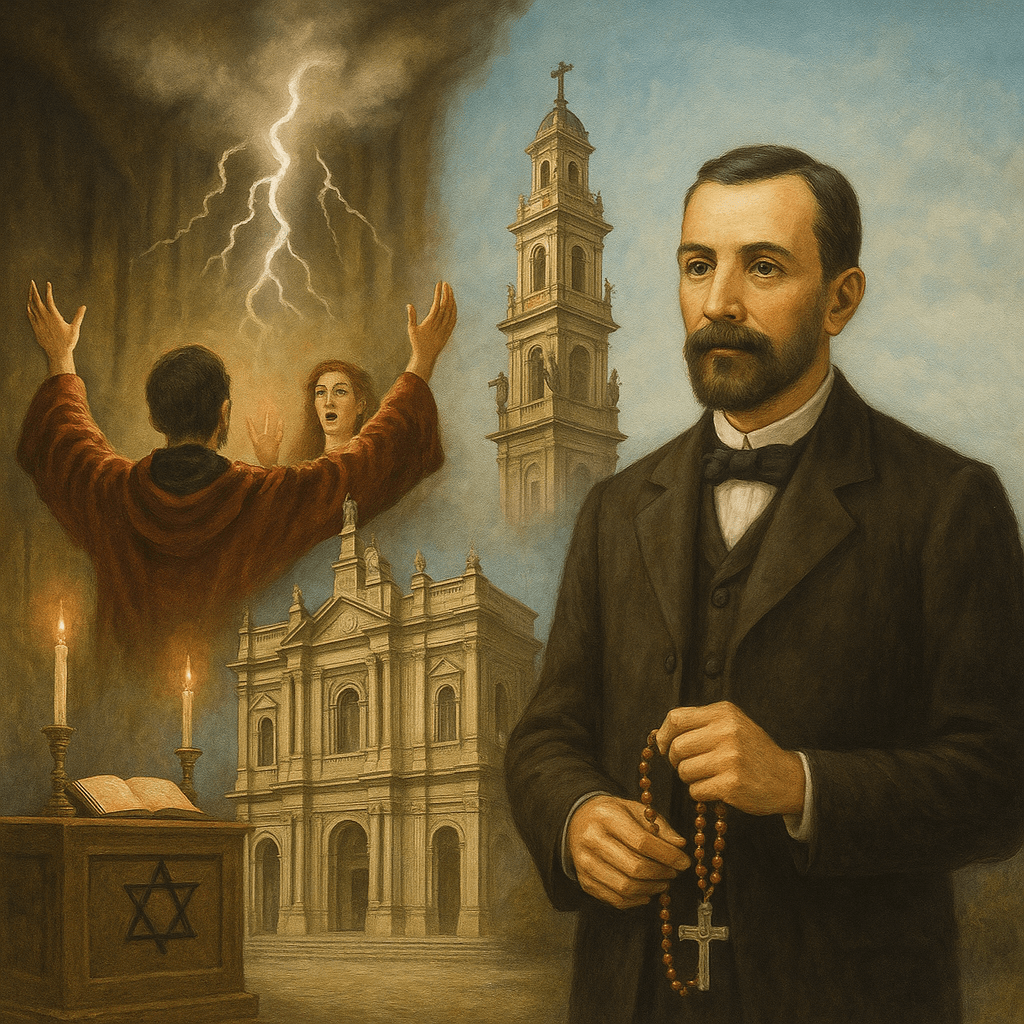
In this environment, spiritualism was fashionable among students, and Bartolo, hungry for meaning, began attending séances. These gatherings promised secret knowledge and communion with spirits. For a time, he believed he had found truth in these occult practices. But the spirits he invoked deceived him. Gradually, curiosity gave way to obsession. He became involved with a group of spiritualists and, eventually, a full satanic sect that ordained him a “priest.” During his initiation, thunder roared, and blasphemous cries filled the air. Bartolo later recalled the terror of that night, when he felt the presence of something utterly dark take hold of him.

In the months that followed, Bartolo lived in dread. He sensed an invisible companion, an “angel of darkness,” whispering to him. He felt trapped between delusion and madness. Yet even in that state, he completed his law degree and continued public attacks against the Church. His family, horrified, prayed constantly for his conversion.

Among the few faithful Catholics left at the university was Professor Vincenzo Pepe. When Bartolo confessed that he believed he had heard his dead father’s voice, Pepe warned him that the spirits were lying and that his practices would destroy both his mind and his soul. The professor begged him to repent and return to the Church. Remarkably, Bartolo agreed. Pepe gathered others to pray for him, including Caterina Volpicelli, a devout woman who led a Rosary group dedicated to the Sacred Heart of Jesus.

Through their prayers, Bartolo met Father Alberto Radente, a Dominican friar. For a full month, Father Radente counseled and exorcised him daily. Finally, on June 23, 1865, the Feast of the Sacred Heart, Bartolo made his confession and received absolution. He was reconciled to the Church and freed from the darkness that had enslaved him.

Overwhelmed with gratitude, Bartolo vowed to save others from the same deception. He attended one last séance, not to participate, but to renounce it. In the midst of the meeting, he stood up, raised a medal of the Virgin, and publicly proclaimed that spiritualism was a web of falsehood. From that moment, he dedicated his life to Christ and to Mary.

With the guidance of his spiritual directors, Bartolo discerned that his vocation was not to marry or become a priest but to serve God as a lay Dominican. On October 7, 1871 on the Feast of Our Lady of the Rosary, he entered the Third Order of St. Dominic, taking the name Brother Rosario. He studied diligently, prayed the Rosary daily, and worked among the sick and poor.

When he traveled to Pompeii to manage property for a widow, the Countess Marianna de Fusco, Bartolo found the people living in ignorance and superstition. The local church was in ruins. Remembering his own past, he resolved to restore both the building and the people’s faith. During a time of despair, haunted by thoughts of damnation, he heard an interior voice say: “If you seek salvation, propagate the Rosary. Whoever spreads the Rosary will be saved.” At that instant, peace filled his soul, and he understood his mission.

Bartolo restored the church, began teaching the Rosary, and organized an annual Feast of the Rosary in 1873. He brought to Pompeii a worn painting of Our Lady of the Rosary, later associated with miracles that drew pilgrims from across Italy. Encouraged by the Bishop of Nola, he began building a grander church, whose cornerstone was laid on May 8, 1876. Fifteen years later, it was consecrated by Cardinal Raffaele Monaco La Valletta, representing Pope Leo XIII. Today, the Pontifical Shrine of the Blessed Virgin of the Rosary of Pompeii welcomes tens of thousands of pilgrims daily.

His mission expanded beyond the basilica. Bartolo founded schools, orphanages, and homes for the children of prisoners. He started a magazine and wrote extensively about the Rosary, the saints, and Christian life. To avoid scandal from his close collaboration with Countess de Fusco, Pope Leo XIII advised them to marry. They wed on April 7, 1885, living chastely as brother and sister while continuing their charitable work.

Bartolo died peacefully on October 5, 1926, after receiving Holy Communion and praying the Rosary surrounded by orphans. His last words were, “My only desire is to see Mary, who has saved me and who will save me from the clutches of Satan.” Pope John Paul II beatified him on October 26, 1980, calling him “a man of the Rosary.” On October 19, 2025, Pope Leo XIV canonized him as Saint Bartolo Longo, Apostle of the Rosary.

Bartolo’s life remains a witness for every age: no matter how lost or deceived, a soul that turns back to God can be saved. His feast day is October 5.


Credit:
Summary inspired by Bartolo Longo by Mary’s Dowry Productions (2017), available on YouTube: https://www.youtube.com/watch?v=3OQLRndbHIM. Used under fair use for educational and religious commentary.