Shape-Shifting in Tantra and Shamanism


Shape-shifting has long been a recurring theme in mystical traditions across the world, appearing in shamanic practices, tantric rituals, and folklore. In Tibetan Buddhism, the Chakrasamvara Tantra contains instructions for shape-shifting, particularly into animals such as hawks and eagles. The presence of these spells in a sacred text raises an intriguing question: where do these siddhis (spiritual powers) truly originate from? Are they manifestations of enlightenment, or do they come at a cost, placing the practitioner in debt to unseen forces?

Shape-Shifting in the Cakrasamvara Tantra

The Cakrasamvara Tantra is one of the most esoteric and influential texts within the Anuttarayoga (highest yoga) class of Tantric Buddhism. Among its many rituals, it contains precise instructions for practitioners to take on non-human forms, including that of a bird. David Gray, in his translation and commentary on the text, notes that these shape-shifting spells are not mere metaphors but were understood as actual yogic attainments.

The text outlines multiple methods for transformation. One passage describes a ritual in which a practitioner can enchant a cord made from the sinew or hair of an animal and bind it around their neck to assume that animal’s form. This includes birds such as hawks, owls, and vultures, as well as larger quadrupeds (Cakrasamvara Tantra, Chapter XLVII, p. 363). Another section states that by consuming or even touching an enchanted substance, the yogin may take on a divine or animal form (Cakrasamvara Tantra, Chapter XLIX, p. 369). These instructions suggest that shape-shifting was considered a real and attainable siddhi for advanced practitioners.

In Vajrayana, these extraordinary abilities, known as siddhis, are divided into two categories:

  • Mundane siddhis (laukika siddhis), which include powers such as flight, invisibility, and shape-shifting.
  • Supreme siddhis (lokottara siddhis), which refer to enlightenment itself.

While the latter is the ultimate goal of practice, the existence of spells for mundane abilities suggests that some practitioners were actively seeking, and attaining, more earthly, supernatural powers.

But why would a Buddhist tantra contain shape-shifting spells? The standard response is that these abilities help advanced practitioners aid sentient beings and overcome obstacles. However, if the goal were purely benevolent, why does the very same tantra contain spells for harming, controlling, and even destroying sentient beings? The presence of violent and coercive rituals alongside shape-shifting practices suggests that acquiring such siddhis was not solely about compassion or enlightenment. Instead, these abilities may have served more ambiguous or self-serving purposes, whether for power, domination, and even destruction. Moreover, history is filled with accounts of people acquiring mystical abilities at a hidden cost, often through pacts with forces beyond their ultimate control or comprehension. If a yogin can assume the form of an animal, what else might they be gaining or losing in the process?

Debt to the Unseen: Shape-Shifting and Supernatural Pacts

The idea that magical transformations require spiritual debt is not unique to Tantra. Across cultures, shape-shifting often comes with hidden agreements between the practitioner and demonic entities.

  • Shamanism and Possession: In many indigenous traditions, a shaman does not shape-shift alone but must first enter a trance state, often facilitated by spirits or tutelary deities. This raises the question, when a shaman transforms into an animal, are they truly in control, or is something else working through them?
  • Vampirism and the Undead Pact: The myth of the vampire is closely related to shape-shifting, with folklore describing their ability to turn into bats, wolves, or mist. Yet, vampires are universally depicted as cursed beings who exist by taking the life force of others. Their transformations are not self-generated but come as a consequence of an external force, a dark exchange that binds them to an unnatural state.
  • Faustian Bargains in Occult Traditions: From medieval grimoires to modern occultism, the idea persists that those who seek supernatural abilities must often enter into a contract with demonic non-human entities. The magician gains knowledge or power but loses something in return, whether it be autonomy or a portion of their soul.

Could the siddhis described in tantric texts function similarly? If shape-shifting is possible, does it occur through the practitioner’s own spiritual mastery, or is it facilitated by a demonic force to which they become indebted?

The Cost of Siddhis: Are They Truly Benevolent?

Tantric Buddhism teaches that mundane siddhis should never be sought for their own sake. In the Hevajra Tantra, a text closely related to Chakrasamvara, the practitioner is warned that seeking supernatural abilities out of attachment can lead to ruin. Some Buddhist teachers even caution that siddhis can become obstacles on the path to liberation, enticing practitioners away from true spiritual realization.

If shape-shifting and similar siddhis are real, should they be seen as gifts of an awakened mind or as evidence of hidden transactions with demonic forces? If the latter, what do these forces ultimately seek in return?

For those who have witnessed such transformations firsthand, the question remains: What is really behind them?

[1] Gray, David B. (2007). The Cakrasamvara Tantra (The Discourse of Śrī Heruka): A Study and Annotated Translation. New York: American Institute of Buddhist Studies at Columbia University. ISBN: 978-0975373460. See Chapter XLVII, p. 363, and Chapter XLIX, p. 369 for descriptions of shape-shifting methods.
Ritual Killings in Tibetan Tantric Buddhism: A Sensitive Area


Tibetan tantric Buddhism has long fascinated and mystified both scholars and practitioners alike. While much of its practice revolves around meditation, visualization, and philosophical discourse, historical accounts suggest that certain sects engaged in secretive and controversial rites, including subjugation rituals and, in some cases, physical executions. While some tantric lineages justify these as purely symbolic acts of internal transformation, others indicate that ritualized killings were at times part of esoteric practices. These remain one of the most sensitive and least discussed aspects of Vajrayāna Buddhism.

The Justification: Internal Alchemy and Subjugation Rites

Many Tibetan Buddhist schools frame tantric rituals as a means to subdue inner enemies such as destructive emotions, ignorance, and attachments, rather than external foes. Texts such as the Cakrasaṃvara Tantra and the Hevajra Tantra describe wrathful deities engaged in acts of destruction, yet these are often interpreted by Tibetan lamas and Western scholars as symbols of the practitioner’s battle against their own afflictions.

Rituals involving visualized violence, such as slaying demons, cutting through illusion, or drinking ritual substances from a kapala (skull cup), are intended to dismantle the ego and lead to enlightenment. This view holds that the tantric practitioner does not actually kill, but instead undergoes a psychological transformation through these rites.

The Evidence: Historical Accounts of Ritual Killings

Despite this justification, historical records and oral traditions suggest that certain tantric practitioners, particularly within the darker recesses of Tibetan esotericism, may have engaged in actual acts of ritualized violence. The practice of srog sgrol (life liberation or live killing) has been referenced in some sources, where a ritualized execution was believed to transfer the victim’s consciousness to other realms, i.e. to the lower realms or hell.

Reports from Tibetan and Western observers, including early European travelers and Buddhist historians, recount instances where enemies of the dharma, or those deemed spiritually unfit, were objects of ritual subjugation. In these cases, physical acts were justified as a form of karmic retribution.

The Role of Tantric Adepts (Mahasiddhas) in Extreme Practices

Certain Tibetan and Indian Mahasiddhas (tantric masters) were known for their transgressive practices, challenging conventional morality to break through illusions of duality. Some of these figures, such as Padmasambhava and Virupa, were associated with wrathful magical feats and subjugation rituals, though their actions are often interpreted metaphorically. However, other figures, particularly in later Tibetan history, were accused of employing lethal tantric techniques to eliminate obstacles and enemies, both spiritual and political.

Controversy and Silence: Why Modern Authorities Avoid This Topic

In contemporary Tibetan Buddhism, discussions of these practices are largely absent or carefully avoided. The emphasis in modern Vajrayāna teachings is placed on compassion, wisdom, and ethical conduct, aligning with broader Buddhist principles. However, the existence of such rituals in historical contexts poses challenging questions:

  • Were these practices ever widely accepted, or were they fringe activities of rogue tantric practitioners?
  • To what extent were physical acts considered necessary versus metaphorical transformations?
  • How do modern Tibetan lineages reconcile these historical accounts with their present-day teachings that successfully whitewash the truth?

The intersection of symbolic transformation and real-world ritual violence remains one of the least understood aspects of Tibetan Buddhist history. While most tantric traditions today publicly emphasize nonviolence and ethical discipline, the shadows of past practices linger in historical accounts and most likely continue to this day. What we do know is that actual executions took place in Tibet and later in the Tibetan diaspora outside of Tibet. There is little reason to believe that this has changed. This illustrates that tantric Buddhism has always walked a fine line between virtue and evil. This begs the question: Is the virtue just window dressing for darker practices? Just look at the photos on Facebook of some of the big drupchos (series of rituals, prayers, and meditation practices) done at the large Tibetan monasteries in India. What do you see? Are the so-called wrathful deities invoked in Tibetan Buddhist rituals really enlightened buddhas and bodhisattvas? This issue deserves sincere examination and honest discussion among Tibetan lamas and Rinpoches who go to great lengths to whitewash and obfuscate these matters.

The History of Tantra


The word “Tantra” evokes sex and mysticism in the modern world. However, it is a spiritual practice fraught with controversy and potential harm. Though its origins are deeply embedded in South Asian spiritual traditions, Tantra has long been a subject of debate for its questionable methods and the risks it poses to practitioners.

Questioning Tantra’s Validity in Indian Buddhism

One of the most contentious aspects of Tantra in Indian Buddhism is its origins. Did these esoteric practices truly originate with the Buddha, or do they stem from darker, occult sources? Many argue that Tantra’s reliance on rituals, mantras, and deity possession deviates sharply from the Buddha’s original teachings. Instead, Tantra seems to delve into a realm of magic, where practitioners invoke powerful spirits or deities that are difficult to control. The secretive and arcane nature of Tantra has even drawn comparisons to Western Satanism, with parallels in symbolic inversion, forbidden knowledge, and the harnessing of dark energies. These troubling similarities raise serious questions about the true intent and origins of Tantra.

Tantra is believed to have emerged in India around the 5th to 7th centuries CE as a response to the rigid practices of Vedic Hinduism and early Buddhism. Its origins are steeped in secrecy and myth. The term “Tantra,” means “to weave” or “to expand,” and hints at its darker origins: the weaving of esoteric forces into the human psyche.

The Core Principles of Tantra: A Double-Edged Sword

Tantra appears to challenge dualistic thinking, presenting the material and spiritual worlds as interconnected:

Shakti and Shiva: While the union of Shakti (divine feminine) and Shiva (divine masculine) is portrayed as a balance, the rituals associated with this concept often involve the invocation of chaotic energies that can destabilize practitioners.

Sacredness of the Body: Tantra’s reverence for the body as a vehicle for enlightenment can lead to practices that blur ethical boundaries, and expose aspirants to physical and psychological risks. These practices often involve an extreme form of yoga that includes breath manipulation and physical postures designed to awaken kundalini energy. This wild and often uncontrollable force is said to be a dormant energy that resides at the base of the spine, but in reality, it involves possession by a spirit.

Ritual and Symbolism: The intricate rituals, mandalas (geometric designs), and mantras (sacred sounds) used in Tantra can act as portals and invocations to preternatural forces.

Tantra in Hinduism and Buddhism

While Tantra is often associated with Hinduism and Buddhism, its practices diverge significantly from the ethical foundations of these traditions. In Hinduism, Tantra became linked with Shaivism and Shaktism, incorporating rituals that many consider to be unorthodox and even dangerous. For instance, human sacrifice, though outlawed, is still secretly practiced in India. In Buddhism, Tantra’s form, Vajrayana, emerged as an esoteric path that relies heavily on guru worship, deity yoga, and visualization. These methods often blur the line between spiritual growth and occult manipulation. Critics argue that such practices betray the Buddha’s emphasis on ethical conduct and mindfulness.

The Spread and Evolution of Tantra: A Troubling Legacy

As Tantra spread beyond India, it adapted to local cultures but retained its core. In Tibet, for instance, Tantric rituals merged with indigenous Bon practices, creating a potent fusion. During the colonial era, Western scholars sensationalized Tantra, focusing on its sexual practices and scary looking deities while ignoring its broader implications. This misrepresentation led to a rehabilitation of Tantra in the West in the second half of the 20th century that idealized Tibetan Buddhist Tantra as purely benevolent, reframing and obscuring its darker aspects.

In the modern world, Tantra has been rebranded as a tool for personal empowerment, often stripped of its spiritual and cultural context. However, this simplification overlooks the risks associated with its practices. Authentic Tantra, with its emphasis on invoking and channeling preternatural energies, is a perilous path that can lead to psychological torment and spiritual dissolution. The allure of Tantra’s supposed transformative power can blind practitioners to its potential for harm.

A Warning

The history of Tantra is not merely a tale of spiritual innovation but also a cautionary story of occult manipulation and risk. Its practices, which often involve possession by spirits or deities, can have dire consequences even if approached with extreme caution. These entities, if angered or improperly controlled, can turn on the practitioner, leading to profound suffering. While Tantra may promise enlightenment, its methods carry a heavy price. Those who seek spiritual growth would do well to heed these warnings and consider safer, more ethical paths.

Examining the Darker Facets of the Cakrasamvara Tantra: Rituals for Subjugating Adversaries

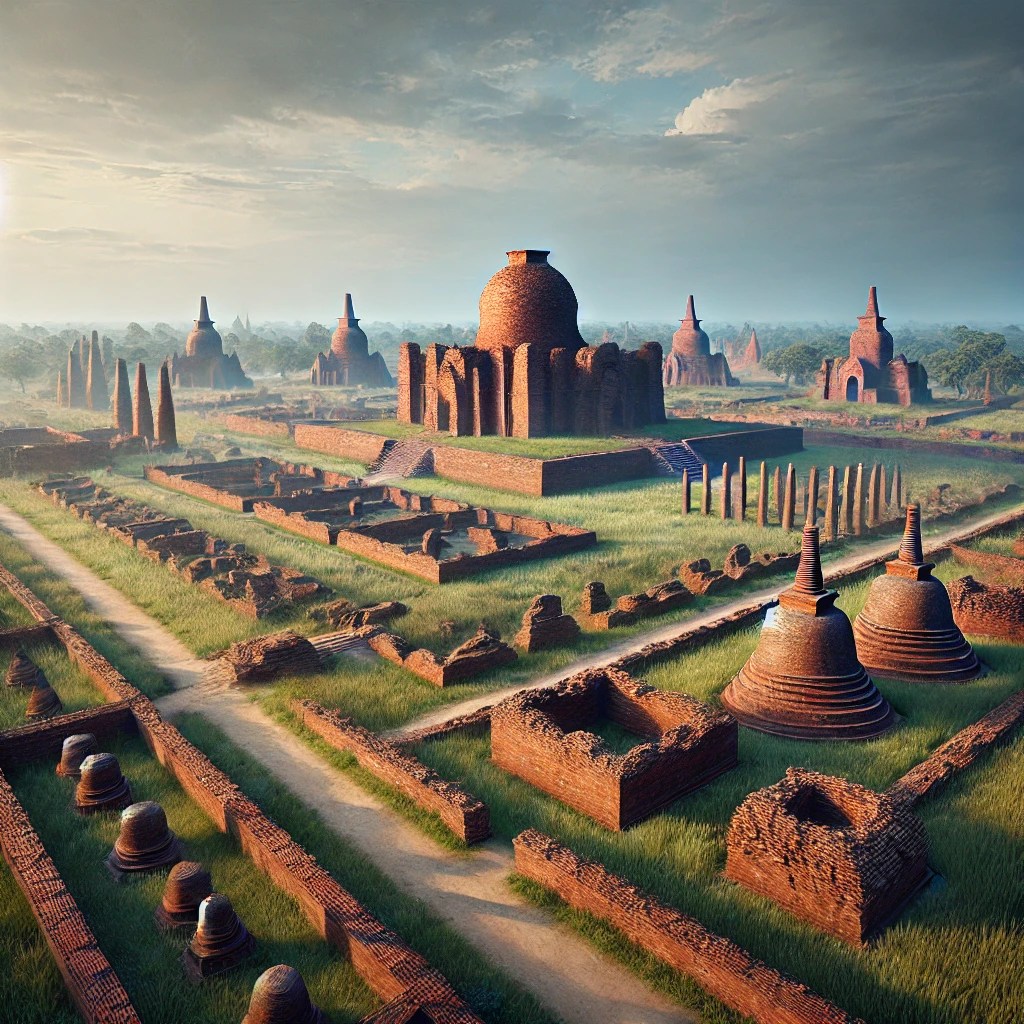
The Ruins of Nalanda, Bihar


The Cakrasamvara Tantra, a seminal text within the Vajrayana Buddhist tradition, is renowned for its intricate rituals and esoteric practices. While it primarily aims to guide practitioners toward enlightenment, the tantra also encompasses a spectrum of rituals designed to achieve various mundane siddhis (accomplishments), including those intended for the subjugation or destruction of adversaries. These harmful practices, often framed as protecting the Dharma or addressing perceived threats, reveal a complex interplay between spiritual wisdom and pragmatic, sometimes violent, methods.

 Ritual Applications and Mantras

A significant portion of the Cakrasamvara Tantra is devoted to the ritual application of mantras. These mantras are employed to enchant objects or individuals, facilitating various magical operations. They are not limited to spiritual enlightenment; many are explicitly intended for worldly outcomes, including cursing enemies, gaining power, or achieving invisibility. This dual purpose underscores the ethical ambiguities inherent in the text.

Procedures for Invisibility and Harm

Among the rituals detailed in the tantra is a procedure for becoming invisible, which involves the use of Heruka’s quintessence mantra. This ritual requires obtaining specific human remains and combining them with other substances to create a magical implement. 

Another prominent set of rituals is explicitly designed to harm adversaries, including curses and destructive spells. Practitioners might create effigies of their enemies to channel negative energy or invoke wrathful deities to unleash harm. Such practices align closely with what might be considered black magic in other traditions. These destructive rituals are not merely symbolic; historical accounts suggest they were carried out with real-world intent, especially during periods of political or religious conflict.

Ethical Considerations

The inclusion of these harmful practices raises profound ethical dilemmas. Buddhism, as taught by the historical Buddha, emphasizes nonviolence, compassion, and the cessation of suffering. However, the Cakrasamvara Tantra incorporates rituals that seem to contradict these principles, reflecting the tension between upholding spiritual ideals and addressing worldly challenges.

Why does a tradition that values compassion and liberation include practices for harming others? What cultural, historical, and philosophical factors justified these actions? Exploring these questions reveals the complexities of tantric Buddhism and its adaptation to diverse social and political contexts.

How Were These Practices Justified Within Their Historical Context?

The Cakrasamvara Tantra emerged during the Indian tantric movement, roughly between the 8th and 12th centuries CE, a time of religious competition and societal instability. The harmful practices within the tantra can be understood as responses to these challenges:

1. Protection of the Dharma: Rituals for subjugation or harm were often framed as necessary to protect Buddhist teachings and institutions from external threats, whether literal (invading forces or rival religious groups) or symbolic (negative spiritual influences).

2. Syncretism with Local Traditions: The tantra absorbed and reinterpreted indigenous Indian magical and ritualistic practices, incorporating them into a Buddhist framework. This integration allowed tantric Buddhism to appeal to a wider audience while maintaining its esoteric goals.

3. Esoteric Intentions: These rituals were often reserved for advanced practitioners who were believed to have transcended ordinary ethical boundaries. Harmful practices were justified as skillful means (upaya) to aid others or eliminate obstacles to enlightenment.

Were These Practices Metaphorical or Literal?

The ambiguity between metaphorical and literal interpretations of tantric practices adds another layer of complexity:

1. Symbolic Interpretations: Some scholars argue that destructive rituals represent inner struggles, such as overcoming ignorance or ego. Invoking wrathful deities might symbolize transforming negative emotions into wisdom.

2. Literal Applications: Historical records indicate that practitioners did perform these rituals literally. Curses, effigies, and destructive spells were used at various times, targeting political or spiritual adversaries.

3. Layered Meaning: Tantric texts often operate on multiple levels. Rituals can simultaneously serve symbolic, practical, and transcendental purposes. This layered meaning complicates simplistic interpretations of these practices.

Who Were the Intended Practitioners, and What Ethical Framework Guided Their Use of These Rituals?

The Cakrasamvara Tantra was reserved for siddhas or mahasiddhas, highly trained tantric adepts who had undergone rigorous preparation and initiation under a qualified guru. These practitioners wielded immense spiritual power and were entrusted with esoteric knowledge, including rituals for harming enemies.

While tantric teachings often emphasized the metaphorical nature of rituals, historical evidence shows that harmful practices were sometimes used literally to achieve specific objectives. 

  • Destroying Political Rivals: Tantric practitioners invoked wrathful deities like Heruka to curse or eliminate rulers and invaders perceived as threats to Buddhist institutions.
  • Exorcisms of Adversaries: Rituals targeted not only metaphysical entities, but also human opponents perceived as threats.
  • Utilizing Ritual Implements: Tools like skull cups and effigies were employed to channel destructive energy toward specific adversaries.
  • These actions were often justified as necessary for maintaining spiritual or societal harmony, but they also reveal the grey ethical areas within tantric practices.

Accountability and Ethical Ambiguities

Despite their destructive nature, these rituals were expected to align with the ethical framework of tantric Buddhism. Practitioners were taught to act from compassion, but this ideal was not always upheld:

  • Compassion as the Motive: Practitioners were instructed to act selflessly, using harmful rituals only to protect the Dharma or remove obstacles to enlightenment. However, some operated in ethically ambiguous territory, justifying personal motives as Dharma-protecting actions.
  • Karmic Awareness: Misuse of these rituals was believed to carry severe karmic consequences. Nevertheless, even so-called enlightened masters occasionally blurred the lines between protecting the Dharma and pursuing personal interests.

Contextual Understanding

The inclusion of harmful rituals in the Cakrasamvara Tantra reflects the paradoxical nature of tantric traditions, where compassion and wrathful methods coexist. These tantras include practices of subjugation that can destroy not only negative conditions but also be aimed at humans, acts that are not metaphorical but ritually enacted. It is crucial not to approach such practices blindly, but with full awareness of their potential implications and historical context. By examining these nuances, modern readers can better understand the ethical complexities and historical adaptations that shaped tantric Buddhism, and protect themselves from harm by refraining from engaging with these tantras.

The Syncretic Nature of Tibetan Buddhism: Black/White Magic, Tantra, and the Buddha’s Teachings–Do they Mix?


Tibetan Buddhism is widely admired in the West for its profound philosophical teachings, its meditative depth, and its association with peace and compassion as exemplified by figures like the Dalai Lama. However, there is a lesser known and far more complex aspect of Tibetan Buddhism that intertwines its spiritual practices with white and black magic, divination, and tantra. Sam van Schaik’s Buddhist Magic: Divination, Healing, and Enchantment through the Ages provides a fascinating lens into these practices, showing how Tibetan Buddhism is not a monolithic tradition but a syncretic amalgam of divergent systems.

This blog post aims to shed light on the magical underpinnings of Tibetan Buddhism, comparing them to Western grimoires, and questioning their alignment with the teachings of the historical Buddha. It also highlights the often overlooked fact that Tibetan Buddhism is not one system, but a hybrid of at least three distinct traditions: early Buddhist teachings, Hindu tantra (including influences from Kashmir Shaivism), and indigenous Tibetan shamanistic practices.

The Magical Practices of Tibetan Buddhism

Van Schaik’s book reveals the prevalence of magical practices in Tibetan Buddhism, ranging from divination to enchantment and healing. These practices are codified in texts that resemble Western grimoires, (manuals that prescribe rituals, mantras, and symbols to achieve specific outcomes such as protection, wealth, healing, or destruction). In Tibetan Buddhism, these texts often attribute their power to the blessings of deities or enlightened beings, yet their focus on manipulating outcomes through ritual actions aligns them with the magical traditions of the West.

Such practices include:

1. Divination: Techniques for predicting the future using symbolic tools such as dice, mirrors, or astrological charts.

2. Healing Rituals: Invocations of deities and spirits to cure illnesses, often involving complex rituals that parallel Western ceremonial magic.

3. Protective Charms: Talismans and mantras designed to ward off negative influences, akin to the sigils and spells of Western occultism.

4. Black Magic for the Destruction of Enemies: Rituals and spells aimed at causing harm or misfortune to perceived adversaries. These practices often involve invoking wrathful deities or spirits to unleash destructive energies, creating symbolic effigies or representations of enemies to channel harm, and performing rites designed to summon curses or disrupt the lives of opponents. These practices, though justified in some texts as a form of “compassionate wrath” to subdue harmful beings, bear a stark resemblance to the malevolent workings of Western grimoires and are a significant departure from the Buddha’s teachings of nonviolence and compassion.

While the first three categories are often framed as compassionate and benevolent, they reveal a focus on material and worldly outcomes that stands in contrast to the Buddha’s original teachings on renunciation and liberation from samsara. The fourth category is clearly destructive.

The Historical Buddha vs. Tibetan Magic

The teachings of Siddhartha Gautama, the historical Buddha, emphasize the Four Noble Truths and the Eightfold Path as a means of transcending suffering and achieving enlightenment. These teachings encourage ethical conduct, mindfulness, and wisdom, rejecting reliance on supernatural interventions or rituals. In the early Buddhist texts, the Buddha explicitly warns against using his teachings for worldly gain, emphasizing liberation over manipulation of the material world.

In contrast, the magical practices detailed in Tibetan Buddhist texts often prioritize worldly benefits, from health and wealth to protection and influence. While these practices may offer immediate relief or benefits, they risk diverting practitioners from the Buddha’s core message of liberation through self-discipline and insight.

The Influence of Tantra and Shamanism

Tibetan Buddhism’s integration of magic is largely due to its synthesis with other traditions, including:

1. Kashmir Shaivism and Hindu Tantra: Many tantric elements in Tibetan Buddhism, including the use of mandalas, mantras, and deity yoga, can be traced directly to Hindu traditions. These practices focus on harnessing esoteric energies and often include rituals that bear striking similarities to magical ceremonies.

2. Indigenous Tibetan Shamanism: Before Buddhism arrived in Tibet, the indigenous traditions were steeped in shamanistic practices involving spirit invocations, exorcisms, and divination. As Buddhism merged with these local traditions, it absorbed many of their magical elements.

3. Early Buddhist Teachings: The foundational teachings of the Buddha provide a third, distinct layer. While these teachings aim for transcendence and ultimate freedom from suffering, their integration with tantric and shamanistic practices in Tibet has created a system with seemingly contradictory goals.

Two (or Three) Systems at Work

In Tibetan Buddhism, these diverse influences coexist uneasily under the same umbrella. On one hand, we have the Buddha’s path of ethical discipline, meditation, and wisdom. On the other hand, we have the tantric and magical systems, which often emphasize power, ritual mastery, and worldly results. The attempt to merge these systems has resulted in a unique yet conflicting spiritual tradition.

For Western audiences, the peaceful and compassionate image of Tibetan Buddhism often obscures these darker, magical elements. It is crucial to recognize that beneath the veneer of benevolence lies a tradition that includes practices reminiscent of Western occultism. This highlights the importance of discernment and understanding the true nature of this tradition.

A Warning for Seekers

In conclusion, Buddhist Magic: Divination, Healing, and Enchantment through the Ages, serves as an essential resource for those seeking to understand the complex and multifaceted nature of Tibetan Buddhism.

Western practitioners and admirers of Tibetan Buddhism should approach the tradition with open eyes. While the philosophical and meditative teachings of Tibetan Buddhism offer profound insights, the magical practices described in van Schaik’s book represent a different domain, one that often contradicts the Buddha’s core message. Understanding the historical and cultural layers that make up Tibetan Buddhism can help people avoid a potential minefield of dangerous spiritual practices.