

The Darker Aspects of Tibetan Buddhism Revealed
Tibetan Buddhism is often associated with peace, compassion, and enlightenment. However, recent research by scholars such as Alexis Sanderson, Bryan J. Cuevas, and Sam van Schaik has shed light on lesser-known aspects of Tibetan Buddhism that unveil a darker side of the tradition that has remained largely hidden from the mainstream. These scholars have delved into the origins, rituals, and practices of Tibetan Buddhism, revealing intricate connections with Shaivism, the use of effigies in rituals to harm not only bad spirits but also humans, and the existence of magical spell books known as grimoires. By exploring these topics, they have provided a more comprehensive understanding of the complexity within Tibetan Buddhism.
1. Alexis Sanderson’s Research on Vajrayana and Shaivism:
Alexis Sanderson’s research has been influential in unraveling the origins and functions of Vajrayana practices within Tibetan Buddhism. He has meticulously studied the interconnections between Vajrayana and Shaivism. One of Sanderson’s significant contributions is his research on the Buddhist Yoginitantras and their dependence on Saiva scriptural sources. He has demonstrated that Buddhist tantric traditions were heavily influenced by Shaiva tantric traditions, challenging the previously dominant view that observed similarities were merely the result of a common cultural substrate.
Through detailed philological analysis and the examination of primary sources, Sanderson has provided evidence of the movement of text from specific Saiva sources into Buddhist Herukatantras. He has also identified the presence of Saiva prototypes in the general categories of the Buddhist Vajrayana. Additionally, he has explored the similarities and differences in the mythologies of both traditions, highlighting the predominant direction of borrowings from Saivism into Buddhism.
Through his translations and critical editions of ancient texts, Sanderson has significantly contributed to our understanding of these traditions. His work challenges the notion that observed similarities between Buddhist and Shaiva tantric traditions are merely coincidental, instead revealing a deep influence of Shaivism on Buddhist tantric practices.
2. Bryan J. Cuevas and the Use of Effigies in Tibetan Rituals:
Bryan J. Cuevas explores the ritual use of effigies or surrogates in Tibetan Buddhism and discusses how these effigies have practical applications in Tibetan ritual practices, both within Buddhist and Bonpo traditions. He wrote, “In Tibetan practice, effigies sculpted in the likeness of an enemy or figures drawn on paper into which the practitioner directs the power of a deity or demon that he controls are called linga. Such effigies are employed broadly in Tibetan mimetic rituals targeted against enemies, either demonic or human.”
Cuevas suggests that the use of effigies in Tibetan rituals likely originated from much older Indian practices that were transmitted to Tibet. By examining the iconography and ritual use of these effigies, Cuevas sheds light on the significance and symbolism behind their creation and utilization.
He writes that “effigies have been and continue to be utilised as mimetic devices in a wide variety of ritual contexts, though they are most commonly found in magical rituals to heal, defend, or inflict harm.
“Indeed, references to ritual effigies are abundant in the Indian Buddhist canonical tantras and tantric commentaries that began to be translated into Tibetan from the eighth century onward.
“In all cases, the use of effigies in ritual are based on sympathetic assumptions, that persons or things sharing a resemblance can act on one another at a distance; similarity of appearance indicating that the two are linked together by invisible bonds, and thus it is possible for one to be manipulated by the other.”
3. Sam van Schaik and Tibetan Magical Spells:
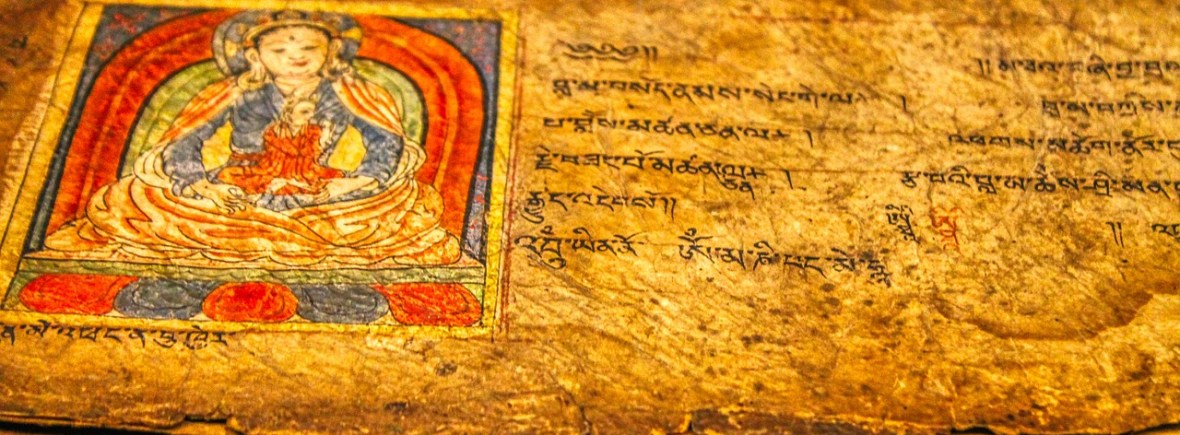
Sam van Schaik’s research focuses on a significant finding in the realm of Tibetan Buddhism–an early Tibetan book of spells discovered among a cache of manuscripts in a sealed cave in Dunhuang, China. This manuscript, believed to be the earliest surviving compendium of Tibetan Buddhist magical rituals, provides insights into the practical application of both white and black magic within Tibetan Buddhism. Through the examination of this manuscript, van Schaik unveils the fascinating world of Tibetan magical practices, providing a glimpse into the lesser-known rituals of Tibetan Buddhists that are used for both profit and harm.
Conclusion:
While Tibetan Buddhism is often associated with loving kindness and compassion, the research of scholars like Alexis Sanderson, Bryan J. Cuevas, and Sam van Schaik reveals a more complex, darker side. By exploring these lesser-known aspects, we gain a deeper understanding of the tradition and the multifaceted nature of its practices.
 Tantric Deception