

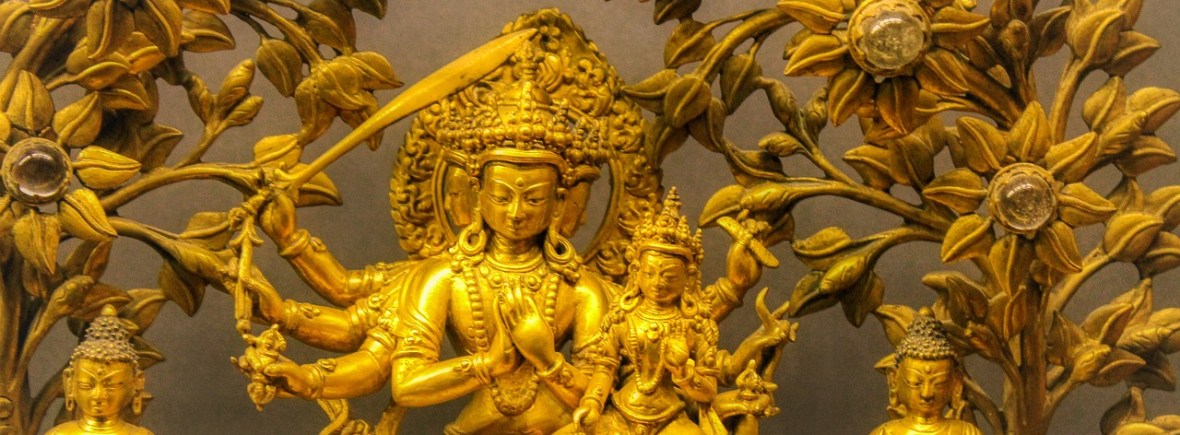
Tibetan Buddhism, an ancient spiritual tradition known for its rich symbolism, elaborate rituals, and sophisticated philosophy, represents one of the most complex forms of Buddhism practiced today. Notable for its diverse array of practices and teachings, it includes the unique practice known as Anuttarayoga Tantra (“Highest Yoga Tantra”), which holds a revered position in Tibetan Buddhism’s esoteric pantheon.
Highest Yoga Tantra within Vajrayana Buddhism, as I have come to understand it, is a dangerous gateway to the unknown. I believed in the promises of spiritual growth, but instead, I found myself possessed by malevolent entities that I could not control. The intricate rituals, the chanting, and the deep meditative states opened my very soul to demonic forces. My life has been consumed by a darkness I never knew existed, all because I ventured into a practice I did not fully comprehend. The dangers of Highest Yoga Tantra, from my point of view, are real and horrifying, and they have led me down a path from which it is difficult to return.
Historical Context
Tibetan Buddhism, also known as Vajrayana or Tantric Buddhism, evolved in Tibet around the 7th century CE, synthesizing the teachings of Indian Mahayana Buddhism with local Bon practices and Hindu tantra. The tantric system, comprising a vast collection of spiritual practices and scriptures, became integral to this unique Buddhist tradition.
The tantric practices in Tibetan Buddhism are usually categorized into four classes: Kriya Tantra, Charya Tantra, Yoga Tantra, and Anuttarayoga Tantra or Highest Yoga Tantra. The Highest Yoga Tantra, coming to prominence in India between the 5th and 8th centuries, emerged as the apex of Tantric Buddhism and subsequently became an essential part of Tibetan Buddhism.
Philosophical Underpinnings
The Highest Yoga Tantra is not merely a set of practices but encapsulates profound philosophical teachings. At its core, it is supposed to embody the Mahayana Buddhist philosophy of the Bodhisattva–the aspiration to achieve Buddhahood for the benefit of all sentient beings. Highest Yoga Tantra brings a unique dimension to this philosophy by providing the means to attain enlightenment in a single lifetime.
The Highest Yoga Tantra teachings revolve around two crucial elements of practice: the Generation Stage and the Completion Stage. The Generation Stage involves the visualization of oneself as a deity, replete with a celestial palace and accompanying deities. This stage aims to dissolve one’s ordinary perception and conception of self, replacing it with divine identity.
The Completion Stage follows, where practitioners use specific yogic techniques to work with the subtle energies within their bodies. This stage is marked by practices such as tummo (inner heat) meditation, channeling of subtle energy through the body’s channels, and manipulation of the mind to experience various states of consciousness.
These teachings rest on the principle of deity yoga, where one visualizes oneself as a deity to realize the true nature of reality. By experiencing oneself as a deity, practitioners aim to recognize their innate Buddha-nature and the emptiness of all phenomena, fundamental principles of Mahayana Buddhism.
Practices and Rituals
Practices in the Highest Yoga Tantra involve a combination of meditation, mantra recitation, visualization, and yogic exercises. Each practice usually revolves around a particular deity or a mandala of deities, with each deity embodying specific enlightened qualities. Central to the practice is the sadhana, a liturgy that guides a practitioner through a series of visualizations and recitations. Practitioners visualize themselves as a deity, seeking to embody the deity’s enlightened qualities.
Empowerment or initiation (wang) by a qualified teacher is a prerequisite to engaging in these complex practices. These empowerments serve as spiritual transmissions, connecting practitioners to a lineage of teachers and granting permission to engage in specific Tantric practices.
Significance in Tibetan Buddhism
Highest Yoga Tantra holds a pivotal role in Tibetan Buddhism due to its potent methods for spiritual transformation. The practices of Highest Yoga Tantra aim to expedite the process of achieving enlightenment, making it theoretically possible within a single lifetime. The practice is extraordinarily effective and also carries great risks.
Stepping deeply into the shadowy realms of Vajrayana Buddhism, I encountered the Highest Yoga Tantra. Initially promised as a path towards unparalleled spiritual growth and enlightenment, I now perceive it as a treacherous doorway that unveils not deities, but temperamental and potentially dark spiritual entities. The meticulous rituals that were supposed to elevate my consciousness instead chained me to malicious entities beyond human comprehension. Where I once sought solace and wisdom, I was finally met with physical and psychological torment replete with malevolent visions. The traditional belief holds that Highest Yoga Tantra aligns practitioners with deities, guiding them to realize their inner Buddha-nature. However, my harrowing experience suggests otherwise: that instead of connecting with benevolent deities, one becomes trapped in a ceaseless dance with entities that possess and consume.
Each practice, meant to propel me towards spiritual ascension, instead was a binding agreement with forces eager to possess and destroy. The potency of the Highest Yoga Tantra cannot be disputed; its effectiveness is undeniable. But therein lies the danger.
 Tantric Deception