The hexagram symbol on the right depicts the mandala of an important Tibetan Buddhist female deity.
I was having a discussion with a former tantric Buddhist practitioner, and it got me thinking about the popular notion that all roads lead to God and that it doesn’t matter whether or not one has practiced in occult traditions as long as they are trying to live virtuous lives. This idea is comforting to many, but from a theological standpoint, it is deeply flawed. Not all spiritual paths lead to God, and certain practices, no matter how well-intentioned, can take people further away from Him rather than closer.
The Illusion of “Enlightenment”
Many believe that high-level Buddhist teachers or gurus have a special ability to perceive the karma of others. This belief leads followers to trust their guidance blindly, assuming they possess supernatural wisdom. But from a theological perspective, what these figures claim to see and know is not divine insight but a form of spiritual deception. The power they wield does not come from God but from spiritual forces that oppose Him.
The very concept of enlightenment in Tibetan Buddhism is fundamentally at odds with Biblical teachings. In this system, enlightenment is not about growing closer to God, but about achieving a state of being that makes one a vessel for spiritual forces that are hostile to Him. The gurus who have attained the so-called spiritual height of “enlightenment” have not reached divine truth but have instead become “perfectly possessed” by the spirits that fuel the tantric path.
The Reality of Spiritual Pacts
Participation in tantric initiations is not merely symbolic. The promises made in these rituals have serious spiritual consequences. When one makes commitments during empowerments, even unknowingly, they are entering into agreements that give authority over their soul to forces that do not serve God.
This is not a matter of personal interpretation. The laws governing these spiritual transactions are real, and those who understand the theology behind them recognize that they operate within a strict legalistic framework. The idea that someone can engage with these practices while remaining spiritually “safe” is misguided. The demons involved do not care whether a person understands what they have agreed to; once the ritual is completed, the spiritual consequences are set in motion.
The False Hope of Virtue Alone
A common misconception in modern spiritual thought is that simply being a good or virtuous person is enough to secure salvation. But righteousness apart from God does not lead to eternal life. If someone is actively engaging in spiritual practices that align with forces opposed to God, no amount of virtue can undo that.
As written in Deuteronomy 18:10-12, “There shall not be found among you anyone who burns his son or his daughter as an offering, anyone who practices divination or tells fortunes or interprets omens, or a sorcerer or a charmer or a medium or a necromancer or one who inquires of the dead, for whoever does these things is an abomination to the Lord.” Tibetan Buddhism’s reliance on occult rituals, divination, and spirit invocations falls into this category.
This is why it is crucial to educate people about these realities. Many well-intentioned individuals are being led into spiritual traps without realizing it. They are promised wisdom, peace, or power, but in reality, they are binding themselves to forces that seek to separate them from God permanently.
The good news is that no one is beyond redemption. Those who have unknowingly or knowingly engaged in these practices can still turn back to Jesus Christ, who alone has the power to break these spiritual bonds. The key is to recognize the deception, reject it, and seek salvation in Christ alone.
Our responsibility is to share this knowledge with others, so they, too, can be set free. It is not enough to hope that people will figure it out on their own. We must share the truth and help guide others away from deception and into the light of God’s salvation.
For 35 years, I was deeply immersed in Tibetan Buddhism. I devoted myself to its teachings, its rituals, and its promises of enlightenment. But along the way, I encountered something dark and realized that all was not as it seemed. And then, one day, I became aware of something that had lodged itself deep within me, waiting for the right moment to exert itself.
The First Encounter
In 2017, I awoke to the sound of a voice, not in a language I could recognize, but in guttural grunts and nonsensical syllables. It was not the voice of an external being; it came from deep within my own mind. It spoke from a place of severe mental challenge, a space I had never known existed within me. I was horrified. I had always been grateful that I was an intelligent person with an above average intellect, or at the very least, someone of average intelligence with a great deal of curiosity. But suddenly there was some part of my mind that seemed very mentally challenged. Was this a foreshadowing of a severe mental decline?
Or was this a demon? It turns out that a demonic parasite had burrowed deep into my mind during my years of tantric practice. I sought advice from a high-ranking Rinpoche, a man considered to be enlightened. His response? I should seek out the Chödpa at my Buddhist center, the lama known for performing Chöd, a ritual practice designed to cut through attachments and expel spirits.
But I had no personal connection with that lama. I had practiced Chöd myself before my kundalini awakening threw my world into chaos. I subsequently found someone else to perform the ritual, but nothing changed. The demon was a consciousness of severe limitation, a sentient being trapped in broken syllables and incoherence who sometimes surfaced in the early hours of morning, reminding me of its presence.
Understanding the Reason for the Demon’s Presence
By 2020, the demon’s presence began to make more sense.
Two of my most trusted gurus performed an annihilation ritual on me. After that, for months and years the Tibetan Buddhist gurus and their demons beat into me the notion that I would never be reborn as a human being again. I was destined to fall into the animal realms or worse, the hell realms, where I would remain for eternity. They tortured me, distorted my physical form, and severely twisted my identity. I lived in a waking nightmare. Slowly, painfully, I returned to the Catholic faith of my youth.
The demons fought back through harrassments and tortures. But over time, through exorcisms, prayer, and sheer endurance, I began to regain ground. Still, this particular demon lingered and resurfaced occasionally, groaning like a wounded animal within, its garbled words haunting me more than the voices of the very intelligent demons that manifested as my guru and yidam (meditational deity). Sadly, those two still somewhat control and torture me, especially at night when I am the most vulnerable, and in dreams.
Though I want to be free of all of them, in these past few months I have specifically prayed very hard that the cognitively impaired demon would be cast out as soon as possible.
The Exorcism
This week, I met a new priest. He is willing to help me. He will seek permission from his bishop to perform a major exorcism on me. Up until now, I have had one major exorcism, along with several minor exorcisms, or deliverance sessions, both in-person and over Zoom. But last week, I had my first session with this new priest.
After a long interview, where I shared my entire history, he performed an intense exorcism prayer in Latin. It was powerful. I drove home, exhausted. That night, I fell into a deep sleep.
The Expulsion
At around 1 AM, I woke up and prayed. The demons stirred. My mind flooded with bizarre images and then, something strange happened. I felt the nerves in my face ripple, from my right temple down to my mouth. And then, something left in a small gust of air.
I was stunned. Although I had experienced small demons leaving in puffs of air before, nothing that felt like this had happened.
An hour later, I felt a strong presence in my sinus area, between my eyes. A loud, pitiful groaning erupted from that area within me, like a dying animal. It went on for a couple of minutes, rising and falling. Then, it moved down into my throat and forced itself out with a significant burst of air. One or two smaller puffs followed.
The mentally challenged demon was gone. Not all of the demons left, by any means, the strongmen demons (the guru and yidam) still seem to be here. But something major left me that night.
The Battle Continues
This was just one more step in a long battle, but it felt like a victory. Tibetan Buddhism stole 35 years of my life, entangling me in a web of control, fear, and spiritual deception. But the truth is setting me free (as cliche as that sounds). The more I turn to Christ, the more the grip of these demons loosens. There is still more work to be done, but I believe I am one step closer to freedom.
I am very grateful to the priests and pastors who have prayed over me the past few years. It has had a cumulative effect. Deliverance is like peeling off the layers of an onion. For me, anyway, it has been a very gradual process. This week felt like a major victory. The battle is not over by any means, but I will not stop fighting until I am free.
I recently listened to a fascinating and unsettling account from a young Asian woman who had a profound spiritual experience after converting to Christianity. She described being shown various demonic realms, places that at first appeared luminous and beautiful but were, in reality, realms of deception and bondage. One of these realms stood out to her in particular.
She recalled that upon entering, everything seemed overwhelmingly radiant, almost heavenly. Had she not been given divine insight, she would have mistaken it for paradise. But as she looked deeper, the illusion crumbled. The ruler of this realm was a powerful female demon who often appeared to her in the form of a sweet, innocent little girl. Yet behind this deceptive facade lay a being of immense control and manipulation.
The woman recounted a terrifying moment when she found herself completely paralyzed, unable to move or wake up, an experience eerily similar to what I endured many times during my own tantric Buddhist retreat. Although she tried to cry out for help, her voice was muted and she wasn’t able to make a sound. This also happened to me. The presence she describe, this seemingly innocent yet domineering entity, was one I, too, had encountered, appearing to me repeatedly in the guise of a little girl.
What struck me most about her testimony was the nature of perception in these deceptive realms. She was shown that those who followed the demon experienced twisted illusions: what seemed pure and good was, in truth, horrifying. She gave the example of one disciple enjoying what he believed to be the most delicious meal, but when the illusion was stripped away, it was revealed to be putrid, bloody, and rotten. The demon had blinded her followers, warping their perception of reality.
Hearing this, I couldn’t help but think of certain so-called “pure realms” I once believed in. Could it be that what many perceive as celestial paradises are, in fact, carefully crafted demonic illusions and that what seems like liberation is, in reality, a deeper form of enslavement?
This woman’s testimony confirmed something I had long suspected: some of the most dangerous deceptions do not come in the form of overt evil but in the guise of beauty, power, and enlightenment. If we are not discerning, we risk being ensnared by realms that promise transcendence yet drag us into darkness.
For some years, I lived in a small retreat house at a Tibetan Buddhist center, nestled in a quiet, wooded landscape. It was a new, meticulously clean space with no rotting food or garbage. There was nothing that should have attracted swarms of flies. Yet, there they were: clinging to the screens on the front of the house, a dark, buzzing mass that never seemed to disappear. It didn’t matter the season, the weather, or my efforts to get rid of them.
At the time, I was undergoing what many in the spiritual world would call a Kundalini awakening, an intense, often overwhelming process where powerful spiritual energy rises through the spine, the chakras, and the channels of the subtle body. But there was nothing peaceful or transcendent about what I was experiencing. Instead of clarity and enlightenment, I suffered intensely. My body burned, my mind was tormented, and I felt under siege.
During that time, I was receiving visits, both physically and astrally, from various gurus and deities associated with Tibetan Buddhism. They would appear in dreams and visions, and in ways that were difficult to explain in rational terms. Despite these encounters, my suffering deepened. My body felt like it was being torn apart, my mind filled with fear, and my energy drained to the point of collapse.
As I struggled, I began to suspect that the flies weren’t just a coincidence. In spiritual traditions across the world, flies have long been associated with decay, demonic forces, and sorcery. In Christianity, Beelzebub, one of the chief demons, is known as the “Lord of the Flies.” In some indigenous shamanic practices, swarms of flies indicate spiritual corruption or an entity feeding off suffering.
Tibetan Buddhism, for all its outward beauty and mystical allure, is deeply entwined with tantric and shamanic practices that most Westerners don’t fully understand. Tantric rituals involve elaborate visualizations, empowerments, and the summoning of deities. But these deities are not mere symbols but are powerful spiritual forces. When a practitioner takes part in these rituals, they are essentially opening doors to these entities, inviting them into their lives, their minds, and their bodies.
I came to realize that I was not simply experiencing the effects of Kundalini awakening, nor was I being guided by compassionate, enlightened beings. Instead, I was being attacked, manipulated, and drained by forces I had unknowingly allowed in. The gurus I had once trusted, who claimed to be working for my spiritual liberation, were not what they seemed. Whether knowingly or unknowingly, they had unleashed something dark into my life.
The flies at my retreat house were more than just a physical nuisance. They were an omen, a manifestation of the unseen forces at play. They clung to my house as the spiritual attacks intensified, seeming to feed off the energy of my suffering. Eventually after two or three years, the flies dropped off, but my troubles had only begun.
For those drawn to the mystical allure of Tantra and Tibetan Buddhism, I offer a warning: things are not always what they seem. Beneath the beautiful rituals, the elaborate thangkas, and the poetic teachings lies a world that can be deeply dangerous. The spiritual forces summoned in these traditions are real and they do not always have your best interests in mind.
If you find yourself suffering inexplicably, if you are experiencing intense spiritual distress, and if strange phenomena, like the endless buzzing of flies, begin to manifest around you, pay attention. Sometimes, it’s a warning that demons have been summoned to destroy your life.
This was one of the first things I read when I began studying Tantric Buddhism. It was a shocking statement, yet it carried the weight of an esoteric truth known to practitioners of the Vajrayana path. In the most advanced forms of Tantra, the guru is not merely a teacher; he is the gateway to “enlightenment” or the architect of one’s destruction. Through astral projection, a guru can enter the mind of a disciple, influence their thoughts, and direct their spiritual trajectory.
Avesa: The Guru’s Entry Into the Disciple
The Sanskrit concept of avesa (आवेश) refers to divine or spiritual possession, when a being, such as a deity, spirit, or guru, enters and takes hold of another person’s body or consciousness. In Tantric Buddhism, avesa can occur through astral projection, where an adept guru, having mastered yogic siddhis (supernatural abilities), can merge his subtle body with that of the disciple. This ability allows the guru to read the disciple’s thoughts, observe their karmic imprints, and even modify their spiritual path.
A compassionate guru may use this power to guide a disciple toward enlightenment, removing obstacles and transmitting realization directly into their mindstream.* However, a wrathful or corrupt guru may do the opposite, inflict suffering, confusion, and even damn the disciple to lower realms through curses or negative empowerment.
The Snake in the Bamboo Tube: Ascending or Falling into Hell
Tantric lore often compares the disciple’s spiritual journey to a snake trapped in a hollow bamboo tube. The snake has only two directions it can go: upwards, toward enlightenment, or down into the depths of hell. This metaphor illustrates the danger and intensity of the Tantric path: there is no middle ground or safe plateau where one can pause or exit the path.
If the guru possesses mastery over astral projection and avesa, he can act as the force that propels the disciple upward or, conversely, drags them downward. This is why the relationship with a guru is considered the most critical aspect of Vajrayana practice. It is said that an enlightened master can lead one to Buddhahood in a single lifetime, while a false or wrathful teacher can bring utter ruin.
The Power and Danger of Guru Astral Projection
Stories abound in Tantric Buddhist and Hindu traditions of gurus using subtle forms of possession to test, guide, or manipulate their disciples. Some accounts tell of masters who enter their students’ dreams or consciousness to impart wisdom. Others describe darker encounters where a guru, angered by disobedience or perceived betrayal, sends nightmares, sickness, or madness to a disciple through subtle-body manipulation.
It is said that once a disciple has given their trust to a guru, their mind becomes an open book. The enlightened guru, through avesa, can see their past actions, hidden thoughts, and future circumstances. A corrupt teacher may use it for personal gain or control.
The Razor’s Edge of Tantra
Tantric Buddhism is often called a “razor’s edge” path because it offers both the quickest path to enlightenment and the greatest risk of spiritual downfall. The concept of avesa, coupled with astral projection, reveals just how profound and perilous the guru-disciple relationship can be. Whether the snake in the bamboo tube ascends to liberation or falls into hell depends on the guru’s intent and the disciple’s discernment.
*From a Christian point of view, “enlightenment” is little more than “perfect possession.” This means total at-one-ment with the meditational deity (yidam) and the guru. This is similar to intentional Satanic possession.
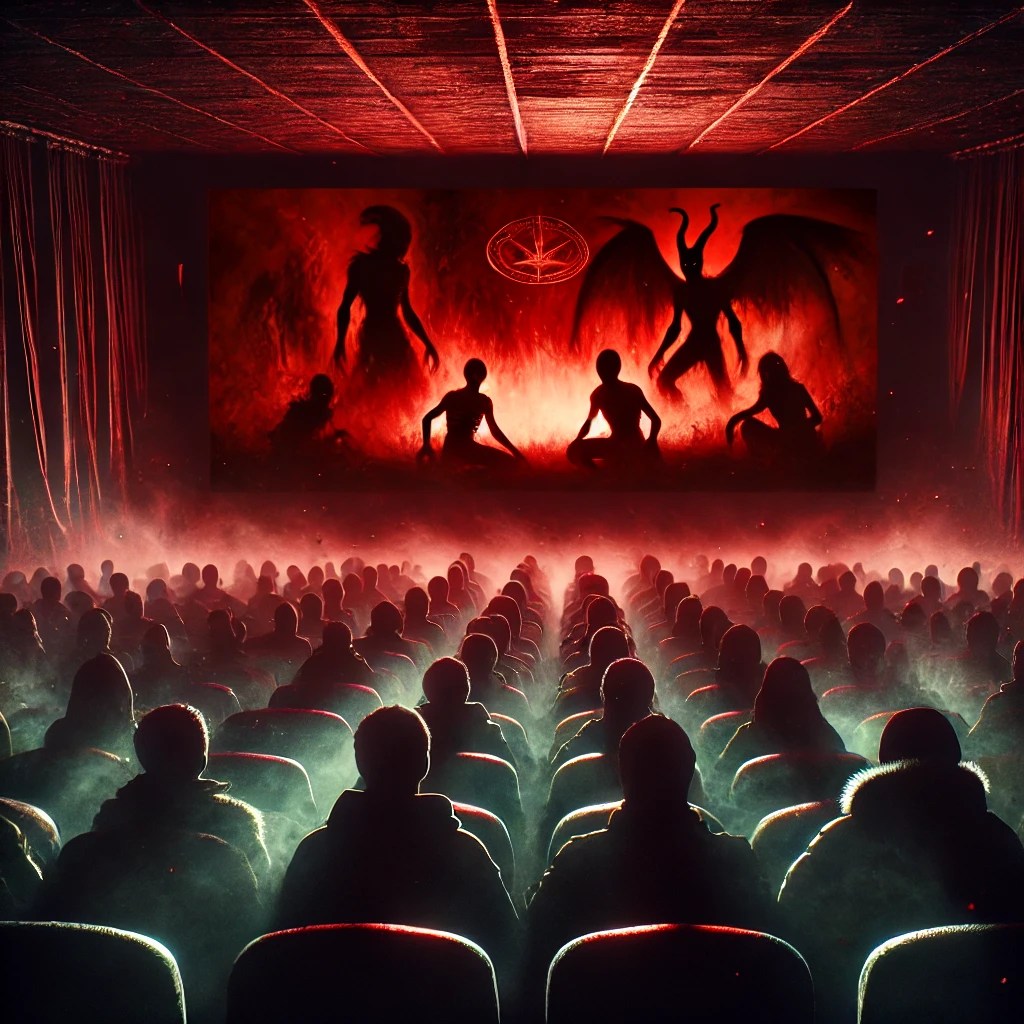
Throughout history, the arts have served as a medium for storytelling, catharsis, and even spiritual reflection. However, in recent years, a growing number of films appear to be crossing a line, one where the portrayal of darkness is not just aesthetic but seemingly invokes real, malevolent forces. The recent release of Nosferatu is a striking example of this unsettling trend.
The Rise of Demonically Charged Cinema
Hollywood has long had an obsession with horror, but there is a distinction between fictional fright and something more sinister. Many films today go beyond mere storytelling and instead seem to act as vessels for darkness, whether intentionally or not. With ever-increasing realism in cinematography, ritualistic imagery, and thematic elements that glorify despair, possession, and the occult, it begs the question: are these films merely depicting evil, or are they summoning it?
The 2024 Nosferatu adaptation, for instance, is drenched in eerie, almost ritualistic cinematography, with scenes and performances that seem unnervingly genuine. Some have noted a palpable sense of dread while watching. Historically, films such as Rosemary’s Baby and The Exorcist have been linked to unexplained phenomena, with actors and crew members reporting disturbing occurrences during production. Could it be that these films do more than just entertain?
Perhaps one of the most infamous cases is Rosemary’s Baby (1968). The film, which delves into themes of satanic cults and demonic influence, was followed by eerie and tragic events. Director Roman Polanski’s wife, Sharon Tate, was brutally murdered by the Manson Family, a crime that many believe had occult connections. Composer Krzysztof Komeda died under strange circumstances, and producer William Castle suffered a series of health issues, including hallucinations of scenes from the film. Some believe the film invited real darkness into the lives of those involved.
Similarly, The Exorcist (1973) was plagued by disturbing incidents, including unexplained fires on set, sudden deaths of cast members, and actors suffering from severe injuries. Linda Blair, who played the possessed child, was allegedly haunted by strange experiences, and some crew members believed the film set itself had become cursed.
The Spiritual Risks of Watching These Films
Engaging with media that dwells in the demonic can have real consequences, both psychologically and spiritually. Here are some dangers to consider:
Opening Spiritual Doors: Scripture warns us to guard our hearts and minds. When we engage in films that glorify demonic entities or rituals, we may unknowingly open ourselves to oppressive spiritual influences.
Desensitization to Evil: What once shocked us now entertains us. The more we consume content that normalizes or even romanticizes darkness, the less discernment we have in recognizing spiritual dangers in real life.
Psychological Impact: Fear, anxiety, and depressive thoughts often accompany those who immerse themselves in horror films saturated with occult symbolism. These effects can linger long after the credits roll.
Hidden Agendas in Filmmaking: Some directors and producers openly admit to drawing inspiration from real occult practices. This isn’t just fiction but a presentation of real, dangerous beliefs masked as entertainment.
While art and film are powerful tools for storytelling, not all stories are meant to be consumed. There is a fine line between observing evil to understand it and being entangled in it. The spiritual battle is real, and entertainment is one of the most subtle yet effective ways that darkness creeps in. Guard your mind, protect your soul, and choose wisely what you allow into your life.
The question remains: when we watch films that channel darkness, who is truly watching whom?
For years, I was ensnared in the world of Tantric Buddhism, believing its practices held the key to enlightenment. But instead of finding peace and liberation, I encountered spiritual torment on and off for years, first with sexual abuse by a lama and then when the kundalini energy went completely awry. My guru, whom I had trusted, placed a curse on me, and the so-called enlightened deities of Tibetan Buddhism revealed themselves as tormenting demons. The suffering I endured was beyond anything I could have imagined.
After the linga annihilation ritual, I thought there was no hope. I had been completely immersed in their tantric system for most of my adult life. Thanks to a suggestion from a young man I met who was going through a devastating kundalini awakening, I had the idea to contact a Catholic exorcist. I read his book called Diary of an American Exorcist that came out in 2021 , and for the first time in my life, I started to think I might actually be possessed by the tantric deities I had practiced for years. I had been taught they were perfectly enlightened buddhas, so why had they turned against me, manifesting as demonic forces bent on my total destruction? How could I overcome these forces that seemed so powerful, so intransigent? The answer was something higher, greater, and infinitely more powerful than the tantric magical system. In order for it to work, it had to be completely outside of their deceptive system. That answer was the Biblical God and his son Jesus Christ.
The Power of Christ Over Dark Forces
Tibetan Buddhism presents itself as a perfect path to enlightenment, but what I experienced was a system built on deception and control. The practices I had been taught that used rituals, empowerments, and deity visualizations, brought many experiences, both blissful and horrible. When I started to have grave doubts and investigated the origins of tantra, to question and examine, it became obvious that was not allowed. Then came punishment and the bloody realization that these forces would never let me go.
But ever since I turned to Jesus Christ, slowly, gradually, things have changed. His power is greater than any so-called tantric magic or divine blessing from a guru. The name of Jesus brings healing and casts out demons. He has authority over all the small “g” gods.
Tibetan Buddhism teaches that its deities are compassionate buddhas and bodhisattvas, but in the end, I found them to be nothing but oppressive spirits masquerading as wisdom beings. They were powerless against Christ. The moment I surrendered to Jesus, they started to lose their grip on me. This was not psychological; it was spiritual warfare. I am not unique; many others have experienced the same freedom from demons and darkness.
Evidence in My Own Life: Healing, Hope, and Peace
If Tibetan Buddhism had been the true path, I would have found healing through it. Instead, it nearly destroyed me. The fact that I am now very much recovered, that I am healing and have hope, happiness, and peace, is proof that Christ is real and that He reigns above all. No Buddhist deity, no tantric ritual, no guru’s power is more powerful.
As Psalm 91:13 declares, “You will tread on the lion and the cobra; you will trample the great lion and the serpent.” This scripture became real in my life as Jesus granted me victory over the kundalini spirit and the guru. Although I am not completely free, they still have some control over my dreams and my body, I am so much more healed. I finally see the light at the end of the tunnel.
Why Christianity is the True Religion
Christ’s Power Over Darkness: No tantric deity or Buddhist practice could free me. Only Jesus could break the chains that bound me spiritually.
A Relationship, Not Rituals: Christianity is about knowing a living God, not engaging in endless rituals to appease deities that ultimately bring suffering.
True Healing and Transformation: The peace, hope, and healing I have now are real and lasting. No Buddhist practice ever gave me that.
The Dominion of Christ: The fact that Jesus Christ is triumphing over all the forces that tormented me proves His supremacy over all spiritual powers.
I spent a lifetime in Tibetan Buddhism, immersing myself in it. My spiritual journey took me to places I never imagined in the search for ultimate truth. I experienced expansive states of consciousness, and feeling a deep and blissful connection to the divine. But which “divinity?” What I didn’t know then, and what I have come to realize, is that there is a darkness woven into the fabric of tantric practices. What appears to be ascension, enlightenment, and higher understanding is, in reality, an ingenious, demonic hack of consciousness.
The Tibetan Buddhist teachings I followed, deeply rooted in ancient tantric rituals, promised transcendence through their intense and elaborate practices. I absolutely believed that I would be completely enlightened in this life, in the bardo (the period between lives) or in the next life. But sadly this was not to be because I angered my first lama, and later on my second guru, by taking issue with the sexual abuse by lamas of their students. It had happened to me many years ago by my first lama and had been deeply traumatic; I never completely recovered from it. Then a few years ago, I was the victim of a “linga annihilation ritual,” a highly secretive and disturbing process, led by two gurus who used their power to sever my connection with the divine. These gurus were attempting to bring about spiritual “death” through the destruction of my mind and body, but what they did was far worse than anything I could have imagined. The ritual shattered my consciousness, left me stripped of my spirit, and plunged me into a terrifying, hellish reality.
Before this happened to me, I believed that the tantric rituals, no matter how painful or intense, were a part of the path to enlightenment. I knew that the sexual abuse by the lamas of their students was very wrong and destructive, but I thought that the teachings themselves were pure. The sexual abuse, however common, must just be an aberration, I thought. But the linga annihilation ritual that occurred after my first lama was publicly exposed for predatory sexual abuse after many years left me spiritually completely hollow and cut off from any sense of peace or hope. I was literally attacked day and night by the gurus and their demons. This went on for years, and continues in a lesser form even up to the present day. It is obvious to me now that for all those years, I had been deeply deceived. In the guise of spiritual awakening, I had been led into the deepest form of spiritual manipulation. The guru, with his promise of divine power and liberation, became little more than an agent of destruction, using a deep knowledge of tantra to exploit, control, and then destroy my very being.
This devastating crisis led me to search for an answer beyond the confines of Tibetan Buddhism, something that could provide true healing, hope, and redemption. After a lot of suffering, I eventually found my way back to Catholicism, the faith of my childhood that I had left so many years ago in search of something more powerful and profound. I came to realize that Christianity, and Catholicism in particular, offers a truth that tantric practices could never deliver. The love of God, the grace of Christ, and the power of the Holy Spirit were waiting for me all along, not in the dark corners of esoteric rituals, but in the simplicity and purity of Christ’s message of salvation.
Returning to Catholicism has not been easy. The process of re-entering the Church after years of living in a completely different spiritual system has been humbling, and at times, disorienting. The Church has had many upheavals of Her own. But as I embrace the sacraments, pray with sincerity, and allow God’s healing grace to wash over me, I am starting to feel a deep sense of peace that I have not known in years. The darkness that has clouded my mind is slowly lifting.
I know now that tantra, with its promises of spiritual power and transcendence, is not a path to liberation but a detour that leads one further away from God. Its manipulations of consciousness, through rituals and doctrines, are not about divine union but about yielding to spiritual forces that are in reality dark entities seeking to enslave and destroy. I can see it now for what it is, an elaborate trick of the enemy, gussied up as enlightenment. It took my mind, spirit, and soul sinking to a place of the deepest despair before I could finally see the truth.
To anyone reading this who may feel lost or deceived in their spiritual journey, I urge you to seek truth, not in hidden, mystical practices, but in the clear, unwavering love of Christ. He is the only way, the truth, and the life. After all these years, I finally understand the symbolism of the crucifix: Jesus Christ sacrificed himself to pay the deep debt of all of humanity. As I continue to make progress on my journey and engage in spiritual warfare against the enemy to become completely free, I hope to document this process as I engage in the biggest battle of my life.
Tantric effigies, often referred to as linga, play a significant role in Vajrayana Buddhism, especially when used as instruments of spiritual protection or tools for overcoming various obstacles and enemies. These symbolic figures, primarily drawn or carved, are part of an extensive arsenal designed to affect not just the environment, but also entities and humans.
What is a Linga?
The term linga (or lingam) refers to a symbolic representation of divine power, often associated with Shiva in Hinduism, but in the context of Vajrayana Buddhism, it has taken on broader meanings. In Buddhist Tantra, linga effigies are intricately designed symbols or blockprints that serve as consecrated figures infused with spiritual potency. These are often drawn with profound intention and purpose, and they may be used in ritual contexts aimed at safeguarding the practitioner, overcoming internal or external obstacles, or exerting influence over other individuals.
The Role of Yantra and Linga
The creation of these effigies falls under the broader category of yantra, a Sanskrit term that means a mystical diagram, generally consisting of geometric patterns, sacred geometry, and other spiritual symbols. Yantras are central to Tantric practices across various traditions, including those found in Vajrayana Buddhism.
While the primary purpose of these yantras is to facilitate communication with higher spiritual realms, their scope extends further. They are also utilized to overcome real-world challenges and enemies. The designs, which often incorporate powerful symbols and mantras, carry potent energies capable of affecting the lives of living beings. Their geometric formations have a unique power to influence reality in profound ways.
The Darker Use of Yantra: Targeting Living Humans
While many tantric practices appear to be centered on positive transformation, some yantras, especially the one depicted in the image above, are created with a more malicious intent. These may be used as a means to control, manipulate, or incapacitate a living person. Often, these designs are invoked when a practitioner feels threatened, when they believe someone is working against them, or when they wish to remove or neutralize an opponent.
In the darker aspects of Tantric Buddhism, these images become tools of spiritual warfare. The effigies, with their precise, intricate diagrams, are said to unleash energies capable of affecting the target at a very deep level, interfering with their mental state, their health, or their circumstances. In this sense, the use of such yantras can be likened to a form of spiritual attack, though it is often viewed through the lens of the practitioner’s need for protection or redress.
The image above is an example of such designs. Similar images may be viewed here. They range from those that depict complex, concentric patterns to those that show figures bound by chains, limbs twisted into unnatural positions, and surrounded by ominous symbols. The repetitive nature of the patterns, often arranged in a triangular, circular, or star-shaped structure, is indicative of their purpose to concentrate and focus spiritual energy. Whether drawn on paper or inscribed on talismans, these figures are sometimes used in rituals specifically designed to target a human being.
Why Use Linga and Yantra Against Living Humans?
The reasons for using these powerful symbols against another human are varied. In Tantric Buddhism, as in other forms of esoteric spiritual practice, the belief exists that the power of the mind can utilize demonic forces to directly affect the material world. When someone faces extreme opposition or malefic influence, or for other reasons, they may turn to these symbols for relief or to change their reality.
These rituals, however, are not without ethical consequences. While some view the use of yantras as a form of spiritual justice, others consider it malicious, especially when the symbols are used to manipulate or harm people for personal reasons. It is important to note that such practices fall outside the bounds of mainstream Buddhist teachings but are definitely used in Tibetan Buddhist tantra. This poses the question: how “Buddhist” are the practices in tantric Tibetan Buddhism, really?
The Power and Potential of Yantras
Whether used in defense or as an act of aggression, the power of linga and yantra comes from their ability to channel spiritual energy and demonic entities. They are meticulously created and charged with specific intentions. The geometric precision and intricate design are not merely aesthetic but are believed to carry profound spiritual repercussions.
Conclusion
It is important to understand that the effigies and yantras used in Vajrayana Buddhism represent more than just spiritual protection. These powerful drawings, blockprints, and talismans are active spiritual forces that, when used effectively, can bring about profound harm. As these ancient Tantric practices continue to spread throughout the world, it is essential to understand their darker uses. Only through knowledge and wisdom can these traditions be fully comprehended. Aspirants should take care and not stumble blindly into spiritual esotericism, even if it is cloaked in an appearance of compassion and light.
Many individuals in the Western world grow up in homes steeped in Judaeo-Christian traditions, often baptized as children and raised with an understanding of Jesus Christ as the central figure of faith. Yet, as they mature, many are drawn into Eastern religious practices that promise inner peace and spiritual enlightenment. This pull toward Eastern religions, particularly Tibetan Buddhism and its practices, is sometimes presented as harmless, even compatible with Christian teachings. In my own experience, some Tibetan Buddhist teachers have claimed that there is no conflict between the teachings of Christ and those of Tibetan Buddhism. While this may sound like a comforting and inclusive message, it is, at best, misleading, and at worst, a dangerous lie that leads many Christians astray.
For individuals baptized into the Christian faith as infants or children, an indelible spiritual imprint occurs on the soul, one that marks them as belonging to the God of the Bible. This sacred act establishes a direct relationship with the Creator, which stands in stark contrast to the beliefs and practices found in Eastern religions. Despite this foundational truth, many are lured into a syncretic blend of Christian teachings with the mystical, spiritual practices of Buddhism, Hinduism, or other occult traditions. The danger lies in the fact that this mixture ultimately dilutes or distorts one’s Christian identity and opens individuals to the influence of deceptive spiritual forces.
The Danger of Syncretism: Mixing Christian Faith with Pagan Practices
The claim that Jesus’ teachings and Tibetan Buddhism can coexist is rooted in a concept known as syncretism, the blending of two or more belief systems. While this may seem like a path to spiritual open-mindedness and personal growth, the Bible clearly warns against such practices. The Old Testament is filled with injunctions against idolatry and the worship of foreign gods, whether in the form of pagan deities or mystical spiritual practices.
In Deuteronomy 18:9-14, God commands His people to avoid any form of divination, sorcery, or magic, practices that are prevalent in many Eastern traditions. These acts are considered detestable to God and directly oppose the purity of worshiping the one true Creator God. These prohibitions apply just as much today as they did thousands of years ago, even if modern expressions of occultism have evolved and adapted into seemingly more “acceptable” forms, like meditation or chakra healing.
When individuals who have been baptized in the Christian faith engage in practices like Buddhist meditation, energy work, or divination, they risk opening themselves up to dark spiritual forces. The Bible warns against such practices not only because they involve the worship of false gods but because they undermine the central role of Christ as the sole mediator between God and humanity. Jesus himself makes this clear in John 14:6 when He says, “I am the way, the truth, and the life. No one comes to the Father except through me.” To engage in Eastern religious practices is to step away from that singular path to salvation.
The Spiritual Imprint of Baptism: A Mark of Belonging to the Christian God
Moreover, for those baptized as children, the Bible teaches that baptism is not merely a symbolic act but a profound spiritual marking of the soul. In baptism, one is initiated into the life of Christ and made part of His Church. This sacred act is intended to be the foundation of a lifelong relationship with God, one that is in direct opposition to pagan practices.
Romans 6:3-4 tells us that in baptism, we are “buried with him through baptism into death in order that, just as Christ was raised from the dead through the glory of the Father, we too may live a new life.” This new life is one marked by obedience to God and rejection of all that seeks to draw us away from Him. Pagan religious systems, including Eastern occult practices, offer a counterfeit spirituality that leads away from Christ, not toward Him. The baptismal mark on a Christian soul is a direct line of connection to the one true God and should not be confused with the spiritual practices that often accompany other belief systems.
While Eastern religions may offer an alluring promise of inner peace or spiritual awakening, they can never replace the saving grace found in Christ. The temptation to seek answers outside of the Christian faith leads individuals into dangerous spiritual territory, where demonic influence can gain a foothold. The apostle Paul warns in 2 Corinthians 11:14-15 that “Satan himself masquerades as an angel of light,” and many false teachers will appear to offer what seems like truth but ultimately lead people astray.
The Spirit of Divination: The Third Eye and Demonic Portals
The Bible also highlights the dangers of divination, which are common practices in many Eastern traditions, including Tibetan Buddhism. One vivid example is found in Acts 16:16-18, where the apostle Paul encounters a slave girl who possesses a spirit of divination. This spirit enables her to predict the future. The girl follows Paul and his companions, shouting that they are servants of the Most High God, which seems to align with truth, but in reality, the spirit she possesses is a demonic force.
Paul, recognizing the deception, casts out the demon of divination, saying, “In the name of Jesus Christ, I command you to come out of her!” (Acts 16:18). This moment is significant because it reveals the true nature of divination: it is not a benign spiritual gift or insight, but rather a demonic influence. The spirit of divination that Paul confronts is the very same one that oversees the opening of the occult “third eye,” a concept in Eastern occultism often linked to psychic abilities and spiritual awakening.
The “third eye” or so-called “wisdom eye” is considered by many as a metaphysical organ that allows one to access hidden spiritual realms and tap into supernatural knowledge. However, the Bible warns against such practices because they open a door to the preternatural world, a world where demonic spirits can influence and deceive those who seek power outside of God. This “third eye” is not a gateway to divine enlightenment but a portal that leads into the realm of darkness, where demons dwell and influence human lives. Jesus is the only true source of spiritual insight and enlightenment. Any attempt to open one’s spiritual eyes outside of Christ is a dangerous invitation to demonic oppression.
The Spiritual Dangers of Divination, Meditation, and Yoga
Eastern religious practices often involve forms of meditation or yoga that encourage individuals to connect with unseen spiritual forces. Tibetan Buddhist meditation, for example, often involves visualizing deities or engaging in rituals that invite spiritual forces into one’s body and mind. Energy work and chakra healing, popular in New Age practices, propose that spiritual power can be manipulated through physical means or harnessed from the universe. However, the Bible teaches that all spiritual power comes from God alone and that seeking power outside of Him is an act of rebellion. In Ephesians 6:12, Paul reminds us that our battle is not against flesh and blood but against “the rulers, the authorities, the powers of this dark world and against the spiritual forces of evil in the heavenly realms.” Engaging in occult practices, however begin they may seem, opens individuals to these forces of darkness.
Conclusion: Remain Faithful to Your Christian Roots
It is crucial for those of the Christian faith to understand the deep spiritual dangers that arise from dabbling in occult practices, particularly those from Eastern religions. The temptation to blend the Biblical teachings with those of pagan systems is not new, but it remains just as dangerous today as it was in ancient times. God calls His people to remain pure in their worship, to avoid the seductive allure of false spiritual practices, and to stand firm in the faith that was once for all entrusted to the saints (Jude 1:3).
Christ is the only way to salvation, and any attempt to mix Him with other gods or spiritual practices ultimately leads to deception and destruction. Baptism marks a Christian as belonging to God, and that identity must not be compromised by the pursuit of false teachings. Therefore, stand firm in the faith, and guard hearts and minds against the dangerous allure of Eastern occult practices.











 Tantric Deception