The Harsh Reality of Samaya: The Unbreakable Laws of Vajrayāna


In the Western embrace of Tibetan Buddhism, samaya (sacred bond) is often treated as a vague concept, a flexible spiritual guideline open to interpretation. Many practitioners, influenced by modern individualism, believe they can define samaya for themselves, shaping it to fit their personal path. But it’s not so easy. Samaya is not a subjective ideal or a broad ethical principle. It is an uncompromising system of laws dictated by the deities of Tibetan Buddhist tantra, and the consequences of breaking it are catastrophic.

The Origin of Samaya: A System of Absolute Control

As Sam van Schaik explains, with the emergence of Vajrayāna in the seventh century, samaya became the defining framework of tantric practice. It was not merely a commitment to enlightenment or bodhichitta; it was a rigid contract that bound the practitioner to the deities, the guru, and the teachings in a way that left no room for negotiation. The very term “samaya” signifies a binding agreement, a point of convergence where wisdom manifests through ritual, visualization, and esoteric substances. These vows were not meant to be symbolic gestures but inviolable pacts with cosmic forces.

The West tends to frame Buddhism as a path of peace and compassion, yet within Vajrayāna, samaya is not about universal kindness or personal growth. It is about absolute allegiance to the tantric system. Any deviation from this allegiance is not simply a spiritual misstep, it is a crime against the sacred laws of tantra.

The Consequences of Breaking Samaya: Illness, Insanity, and Demonic Affliction

One of the most terrifying aspects of samaya is its enforcement mechanism. Unlike moral guidelines in mainstream Buddhism, which rely on karmic repercussions across lifetimes, samaya violations often carry immediate and devastating consequences in this very life. Tibetan texts are explicit: breaking samaya leads to physical illness, mental instability, and possession by malevolent forces.

Illness as a Sign of Broken Samaya

Tantric texts frequently warn that violating samaya will manifest as sickness. This is not metaphorical. Traditional Tibetan medical texts list broken samaya as a cause of chronic diseases, unexplained fevers, and deteriorating health that no ordinary treatment can cure. The idea is that the tantric deities and protectors, angered by the transgression, withdraw their blessings, leaving the practitioner vulnerable to suffering, often caused by the deities themselves.

It is not uncommon to hear stories in Vajrayāna circles of Westerners who fought with or abandoned their guru, only to fall into inexplicable physical decline. Some develop persistent health issues that defy medical diagnosis. Others find themselves facing severe misfortunes, financial ruin, or a string of accidents. Traditional Tibetan lamas do not hesitate to attribute such misfortunes to broken samaya.

Demonic Afflictions: The Price of Transgression

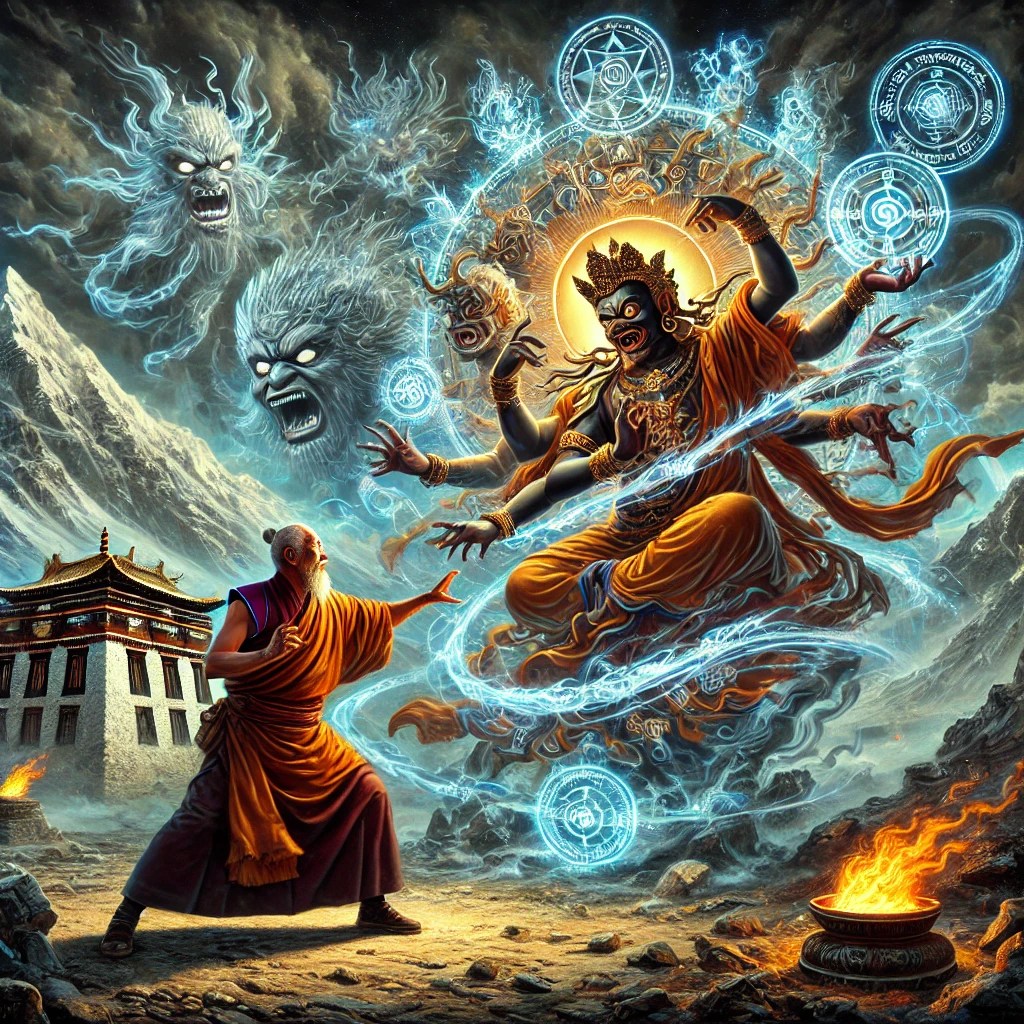
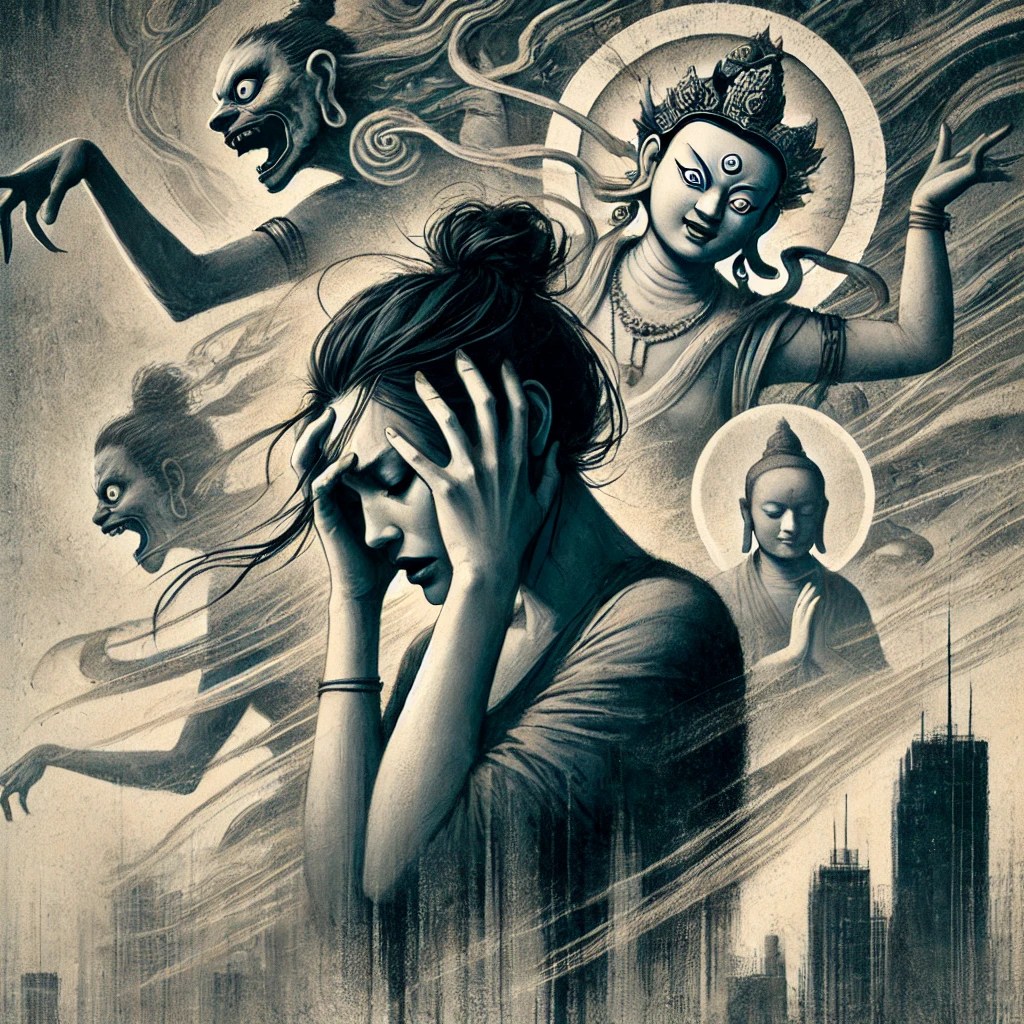
Beyond physical illness, breaking samaya is believed to invite spiritual and psychological torment. The tantric pantheon is not just composed of peaceful deities; it is teeming with wrathful beings, dharma protectors, and guardian spirits who enforce the rules of the tradition with merciless precision. When samaya is broken, these entities are said to turn against the practitioner, causing possession, insanity, or relentless bad luck.

In the Tibetan worldview, demonic affliction is not an abstract concept but a literal reality. Those who have transgressed samaya might experience intense nightmares, hallucinations, or an overwhelming sense of mental disintegration. Some report hearing voices, seeing terrifying visions, or feeling the presence of unseen entities oppressing them. In extreme cases, individuals descend into madness, their minds fractured under the weight of their spiritual transgressions.

Samaya and the Persecution of Women Who Resist Sexual Exploitation

While samaya is traditionally presented as a means of maintaining the purity of Vajrayāna teachings, there have been numerous instances where it has been weaponized against women. Throughout Tibetan Buddhist history, samaya has been invoked to silence and punish women who resisted sexual advances from their gurus or exposed instances of abuse.

The guru-disciple relationship in Vajrayāna is absolute, with the guru often regarded as the embodiment of the Buddha’s wisdom. Women who took empowerments from a lama were thus considered bound to him through samaya. If they later rejected his sexual advances or spoke out against his predatory behavior, they were accused of breaking their samaya vows, making them spiritually compromised and subject to supernatural retribution.

A striking example of this dynamic is found in the research of scholar Holly Gayley, who examines how Vajrayāna secrecy and power dynamics have historically been used against women. In her article, Revisiting the ‘Secret Consort’ (gsang yum) in Tibetan Buddhism, Gayley recounts a case in which a Tibetan woman refused the sexual advances of a lama and warned other women about him. As a result, it was said that she was condemned to Vajra Hell, an especially severe form of punishment for breaking samaya. This narrative reflects the broader pattern of how women who resist sexual coercion by spiritual authorities are framed as transgressors rather than victims.¹

Let me begin with a cautionary tale from Tibet regarding the judgment pronounced by Yama, the Lord of Death, to a woman who refused to serve as the consort for a Buddhist teacher or lama (Skt: guru, Tib: bla ma).1 The young lady from a well-to-do family, named Chödrön, had sought out Buddhist teachings from numerous esteemed lamas. One of them, the itinerant Zhönu Gyaltsen, asked her to be his “secret consort,” but she refused. The request caused her to lose faith in the lama and leave the gathering before receiving the complete instructions. Later, she told girlfriends about the incident. In Yama’s assessment, since Zhönu Gyaltsen was a master of esoteric teachings, Chödrön had breached her tantric commitments (Skt: samaya, Tib: dam tshig) on several counts: not complying with the lama’s request, not completing the training in his teachings and (worst of all, it seems) speaking about the incident with other women. When Chödrön protests that if the lama was realized, it was inappropriate for him to take a sexual interest in her, Yama counters that when Zhönu Gyaltsen died, numerous relics and miraculous signs occurred, attesting to his high degree of realization. Positioning her as a gossip, he avers that she caused numerous others to lose faith, thereby harming the lama and his disciples. He concludes, “it is a greater sin to denigrate and slander lamas and teachers than it is to murder a thousand living beings,” and condemns her to suffer the torments of the hell realms. [1]”

Some Tibetan Buddhist practitioners might argue that when a lama engages in unethical behavior, such as lying, manipulation, or sexual misconduct, he is the one who has broken samaya. They may claim that by violating his own Vinaya or Mahāyāna vows, the lama has nullified his spiritual authority, thereby freeing disciples from any obligation of fealty.

In her article for Lion’s Roar magazine, “Samaya as Symbiotic Relationship,” Damchö Diana Finnegan recounts questioning several erudite Vajrayāna teachers on this issue. According to her, these teachers asserted that “the samaya between guru and student would be broken when the guru asks the students to provide them with sexual services. Therefore, according to this doctrinal interpretation, students who are being pressed for sex are no longer bound by any samaya commitments to comply. The guru has already broken that sacred bond with the disciple.”

However, it is telling that none of these teachers were willing to go on the record with their statements. Why were they reluctant to share their names? Their silence suggests that this perspective, while politically palatable, may not reflect the deeper realities of samaya within Vajrayāna doctrine. While I may be mistaken, I believe this view misinterprets the mechanics of samaya. Within the Vajrayāna framework, if a lama has attained realization through tantric practice, disciples who receive tantric empowerments and teachings from him/her must remain bound to him/her regardless of his ethical conduct.

The logic of Vajrayāna dictates that the guru is beyond conventional morality, and his actions, even those that appear harmful, should be seen as expressions of skillful means. This rigid framework leaves little room for individual discernment; once samaya is taken, loyalty to the guru is absolute. Lesser concepts such as conventional morality, compassion, or ethical considerations do not override the tantric principle of unwavering devotion. Fealty to the guru is absolute.

The West’s Dangerous Misunderstanding of Samaya

Western practitioners often brush aside the concept of samaya, treating it as a personal promise rather than a sacred contract with supernatural consequences. Many believe they can pick and choose which vows to follow, rationalizing that samaya should align with their own moral compass. But in the rigid framework of Vajrayana Buddhism, this is not how it works. Samaya is otherwordly, enforced by divine forces beyond human comprehension.

Modern spiritual seekers dabbling in Tibetan Buddhism often think they can leave if it no longer serves them. But the system was never designed for that kind of flexibility. The moment one takes empowerment, they are bound to the guru and the deities of the tradition. There is no “undoing” samaya without consequence. The idea that one can walk away from tantric vows unscathed is a Western delusion.

The Reality Check: Understanding the Gravity of Vajrayāna Commitments

For those considering the tantric path, a harsh reality check is necessary. Vajrayāna is not a casual spiritual endeavor. It is a binding commitment that demands unwavering loyalty. Once samaya is taken, there is no turning back without risk. The system is not built on forgiveness but on law, and those who transgress it may find themselves in a living nightmare.

If Western practitioners truly wish to engage with Tibetan Buddhism, they must abandon the idea that samaya is subjective. It is not about compassion or bodhichitta in the general sense; it is a legalistic, doctrinal framework with severe consequences. Breaking samaya is not just a spiritual failing but a transgression against forces that do not easily forgive.

To those who have already taken empowerment, the only recourse is strict adherence to samaya or intense purification practices to mitigate the damage of broken samaya. For those who have not yet committed, this article serves as a warning: enter at your own risk, and understand that once you do, there is no way out without a price.
Some of the sources for this article are as follows:

[¹] Holly Gayley, Revisiting the ‘Secret Consort’ (gsang yum) in Tibetan Buddhism, MDPI. https://www.mdpi.com/2077-1444/9/6/179

Sam van Schaik’s Early Tibet BlogSam van Schaik on Mahāyoga Samaya Vows:

Wikipedia on Samaya:

Samaya as Symbiotic Relationship:

The Shadow Wars of Tibetan Buddhism: Black Magic, Power Struggles, and the Case for Contemporary Spiritual Warfare


Throughout Tibetan history, occult warfare has been an enduring element of religious and political life. The case of Jamgon Kongtrul the Great, one of Tibet’s most revered scholars and visionaries, illustrates this reality. The texts documenting Kongtrul’s life recount a dramatic confrontation with an adversary named Kuntrul, who sought to harm him through violent and magical means. Kongtrul, deeply engaged in esoteric practices, responded with his own ritual countermeasures, emerging victorious in a struggle that was as much metaphysical as it was physical. Notably, some accounts suggest that Kongtrul’s rituals were not merely protective but also offensive, raising questions about whether his actions aligned with the pacifist image of Tibetan Buddhism.

Given the ubiquity of such accounts in Tibetan history, it is striking that contemporary adherents of Tibetan Buddhism often dismiss similar experiences when they occur today, particularly when they involve those who challenge the power structures of the tradition.

The Occult Battles of Jamgon Kongtrul

Jamgon Kongtrul’s conflict with Kuntrul was a high-stakes struggle marked by sorcery and supernatural intervention. Historical sources describe how Kuntrul employed a mix of mundane and esoteric strategies, including bribing local leaders to attack Kongtrul’s camp. Faced with this threat, Kongtrul and his party resorted to protective rituals, invoking powerful deities such as Tārā and performing rites designed to repel harmful influences. Despite being outnumbered and targeted, Kongtrul survived unscathed, a testament, in the view of his followers, to the efficacy of his spiritual defenses.

His ritual responses played a role in neutralizing Kuntrul as a threat. “As Gardener surmises, it does not just appear that Kongtrul protected his companions and himself with various rituals and so on, but that they positively ‘vanquished their enemies’ like the victor in a ‘deadly black magic contest.’” [1] What is evident is that Tibetan Buddhist magic was not just about shielding oneself from harm but also about eliminating threats in a direct and forceful manner. This calls into question the modern perception of Tibetan Buddhism as purely compassionate and pacifist, when in reality, its historical figures wielded spiritual power as a weapon.

Kongtrul’s deep knowledge of tantric practices, including wrathful deity invocations, can be better understood through his own writings in The Treasury of Knowledge. In this monumental work, Kongtrul systematically outlines the structure of Buddhist tantra, including the use of rituals for both protection and destruction. [2] His mastery of these teachings suggests that his confrontation with Kuntrul was not an isolated event but part of a broader understanding of how spiritual power could be wielded in Tibetan Buddhism.

The 5th Dalai Lama and Ritual Warfare

One of the most well-documented cases of tantric warfare in Tibetan history is the political ascent of the 5th Dalai Lama (1617–1682). The Great Fifth, as he is known, engaged in elaborate tantric rituals to subdue his enemies, particularly those who opposed the Gelugpa school’s dominance. His autobiography describes how he invoked wrathful deities to ensure the downfall of his opponents, including the destruction of the Jonang and the suppression of rival sects. The Dalai Lama’s spiritual and political strategies were deeply interwoven, demonstrating how ritual power was a critical tool in Tibetan statecraft. [3]

The Silence Around Modern Black Magic Warfare

Given the historical reality of occult battles in Tibetan Buddhism, why is it so difficult for contemporary practitioners, especially those invested in maintaining the tradition’s public image, to acknowledge that similar tactics might still be used today?

This question is especially pertinent to my own experiences after participating in the public exposure of my first teacher as a sexual predator. Tibetan Buddhism has a long history of protecting its elite figures through both institutional suppression and supernatural means. If even luminaries such as Kongtrul were subjected to ritual attacks and responded with powerful countermeasures, why should it be inconceivable that similar tactics would be employed against those who disrupt the modern power structures of Tibetan Buddhism?

The cognitive dissonance here is profound. Those who deeply believe in the efficacy of Tibetan magic when it serves the tradition’s interests refuse to acknowledge its potential use against those who challenge the status quo. This selective skepticism allows abuse and corruption to persist while shielding the tradition from scrutiny.

Conclusion

Tibetan Buddhism has never been a purely pacifist tradition; it has always wielded spiritual power in service of political and institutional control. The case of Jamgon Kongtrul the Great, as well as the 5th Dalai Lama’s strategic use of tantric rituals, reveals that black magic battles were historically a real and recognized aspect of Tibetan life.

To dismiss similar experiences today, particularly when they involve whistleblowers or those who expose misconduct, is not only inconsistent but a deliberate act of denial.

If the Tibetan Buddhist establishment was willing to deploy supernatural means to protect its authority in the past, why would it not do so in the present?


Sources:

  1. Dakini Translations. Murder Plots, Omens, Black Magic, and Kalacakra: Tantric Hero Jamgon Kongtrul’s Dangerous First Trip to Jonang Monastery. September 20, 2019. https://dakinitranslations.com/2019/09/20/murder-plots-omens-black-magic-and-kalacakra-tantric-hero-jamgon-kongtruls-dangerous-first-trip-to-jonang-monastery/.
  2. Kongtrul, Jamgon. The Treasury of Knowledge: Book Six, Part Four: Systems of Buddhist Tantra. Translated by Elio Guarisco and Ingrid McLeod. Ithaca, NY: Snow Lion Publications, 2008.
  3. Ngawang Lobsang Gyatso, Fifth Dalai Lama. The Autobiography of the Fifth Dalai Lama. Translated by Zahiruddin Ahmad. Bloomington: Indiana University Press, 1998.
  4. Smith, Gene. Among Tibetan Texts: History and Literature of the Himalayan Plateau. Boston: Wisdom Publications, 2001.
  5. Gardner, Alexander. The Life of Jamgon Kongtrul the Great. Boston: Shambhala Publications, 2019.

Film Review: Chaos: The Manson Murders – A Chilling Exploration of Mind Control and Cult Dynamics


Netflix’s new film, Chaos: The Manson Murders, directed by the legendary Errol Morris, is more than just another retelling of the infamous crimes that shook America in 1969. It is a profound examination of mind control, cult dynamics, and how Charles Manson weaponized psychological manipulation and psychedelic drugs to create an army of devoted, robotic killers. For those of us who have experienced the coercive techniques of cult-like organizations firsthand, this film is an essential watch.

Manson was not just a criminal mastermind; he was a self-styled religious leader, a messianic figure who controlled his followers at Spahn Ranch with absolute authority. His methods were eerily similar to those used in religious cults: isolation from the outside world, restriction of personal freedoms, sleep deprivation, and the gradual erosion of individual identity. The film masterfully captures how he used LSD not just as a recreational drug but as a tool of mind control, breaking down personalities, rewiring belief systems, and creating a state of dependency where his “Family” looked to him as an enlightened guru.

Based on Tom O’Neill’s 2019 book, Chaos: Charles Manson, the CIA, and the Secret History of the Sixties, the film delves into the unsettling possibility that Manson’s ability to command his followers to kill without remorse was not merely a result of his manipulative prowess but also linked to covert government experiments. O’Neill’s two-decade investigation uncovers potential connections between Manson and the CIA’s MKUltra program, which aimed to create mind-controlled assassins through the use of LSD and other techniques. The film explores the chilling implication that Manson may have been a pawn in a larger scheme to discredit the counterculture movement by associating it with violence and chaos.

Watching this film brought back haunting memories of my first experience at a Buddhist retreat center, where similar mind control tactics were at play, albeit under the guise of training for spiritual enlightenment. Like Manson, the lama who led the retreat exerted total control over his followers. We were pressured to become monastics, our personal autonomy slowly stripped away as we were deprived of sleep, cut off from newspapers, magazines, and outside influences, and encouraged to see the lama as an all-knowing, god-like figure. Even our physical identities were erased with shaved heads, identical robes, a collective mindset of obedience.

Over time, much like Manson’s followers, we became conditioned to accept a new reality, one where personal boundaries no longer existed. Women were expected to surrender themselves to the leader, just as Manson’s female followers did. The lama, later exposed as a sexual predator, used his position to exploit those who had come seeking spiritual growth, much like Manson exploited young women under the guise of love and freedom.

This parallel raises unsettling questions about where such leaders acquire their manipulative skills. While it is unlikely that the lama was trained by any governmental mind control program, it is plausible that these coercive techniques are embedded within certain esoteric practices themselves. The precision with which these methods were employed suggests a deep understanding of psychological manipulation, whether learned intentionally or as a byproduct of the power dynamics inherent in such hierarchical structures.

Chaos: The Manson Murders is a powerful and necessary film that exposes the terrifying realities of mind control and cult psychology. It forces us to ask difficult questions: How do seemingly normal people fall under the influence of a charismatic yet manipulative leader? How does ideology, paired with coercive tactics, strip away free will? And most importantly, how do we recognize and resist such psychological enslavement?

For those of us who have lived through similar experiences, the film is not just an investigation into Manson but a chilling reminder of how fragile personal autonomy can be when faced with a skilled manipulator. Whether the control is enforced through psychedelics and orgies in the California desert or through rigid monastic discipline in a secluded Buddhist retreat center, the tactics remain eerily the same.

If you want to understand the depths of Manson’s control and the insidious nature of cult mind control, Chaos: The Manson Murders is essential viewing. And for those who have survived such experiences, it is a stark reminder that coercion, whether labeled as spiritual awakening or revolutionary freedom, is still coercion.

Ancient Grimoires, Pagan Rituals, and the Biblical Warning


Throughout history, humans have sought ways to control nature, heal diseases, and influence their surroundings through ritualistic means. In some traditions, these practices were written down in books of spells, known as grimoires, that provided detailed instructions for supernatural interventions. While such texts may appear as cultural artifacts, the Bible warns against engaging in these kinds of rituals, associating them with the pagan practices of idol worship and demon invocation.

One such example is a Tibetan grimoire from the 9th or 10th century, which includes a ritual using a frog effigy to cure diseases attributed to nagas or serpent-like water spirits believed to control rain and fertility. The ritual involves crafting a frog from barley flour, applying a special ointment to the affected area, and performing visualizations to drive out the ailment. The effigy is then placed near a spring with incense offerings to complete the healing process.¹

A modern parallel to this practice can be found in Nepal, where villagers perform a rain-making ceremony. This ritual, blending Tibetan and Hindu elements, involves crafting wax frog effigies filled with mystical inscriptions and black dog excrement. One effigy is submerged in a sacred spring, while the other is burned at a crossroads to compel serpent-spirits and sky deities to release rain.¹ These practices, rooted in ancient beliefs, illustrate a continued reliance on rituals to manipulate nature.

The Tibetan Grimoire: A Book of Spells and Ritual Power

The Tibetan grimoire in question provides a fascinating glimpse into the ritualistic practices of Buddhist monks from the early medieval period. Inscribed on stitched-together leaves of paper, this spellbook belonged to Bhikṣu Prajñāprabhā, a Buddhist monk whose name appears on its cover.²

Its contents include a wide variety of spells and rituals, such as:

  • Prophecies and Divination – Techniques for foreseeing future events.
  • Demon Subjugation – Methods to bind and control malevolent spirits.
  • Conflict Resolution – Spells to pacify enemies and restore friendships.
  • Wild Animal Control – Incantations to protect against dangerous beasts.
  • Resource Generation – Spells to locate hidden treasures or create valuable objects.
  • Healing Practices – Rituals for curing illnesses, including severe ailments and mental disturbances.
  • Control Over Natural Phenomena – Invocations to summon springs or alter water flow.

One particularly complex ritual in the grimoire is a fire puja (homa), intended to cure insanity. This ceremony involves offering specific items into a ritual fire while reciting sacred formulas.² Such practices reflect a deep intertwining of spiritual and practical concerns, with Buddhist monks acting as intermediaries between the divine and human realms.

The Biblical Warning: Pagan Rituals and the Israelites’ Downfall

These rituals and grimoires bear striking resemblance to the pagan practices that God repeatedly warned the Israelites against. The Old Testament contains clear instructions to avoid divination, sorcery, and calling upon spirits. In Deuteronomy 18:10-12, God explicitly forbids these activities, declaring them an abomination.

Despite these warnings, the Israelites often fell into syncretism, combining their worship of God with the rituals of the surrounding nations. Their participation in idol worship, sacrifices to false gods, and magical rites ultimately led to their downfall. The Babylonian exile was one of the greatest consequences of their disobedience, demonstrating the dangers of engaging in forbidden spiritual practices.

Does the New Testament Forbid These Practices?

The New Testament continues to condemn such rituals. Galatians 5:19-21 lists sorcery among the “acts of the flesh,” warning that those who engage in it will not inherit the Kingdom of God. Acts 19:19 recounts how new believers in Ephesus publicly burned their books of magic, signifying their rejection of occultism in favor of Christ.

The Bible consistently teaches that attempts to control nature or the spirit world through mystical means, whether through Tibetan grimoires, pagan idol worship, or modern occult practices, are not merely neutral cultural traditions but spiritual dangers that lead people away from God.

What Can Modern Christians Learn?

The lesson from both the Old and New Testaments is clear: Christians must reject practices that seek power through forbidden spiritual means. Even if these rituals appear harmless or are framed as “folk traditions,” they ultimately fall into the category of divination and magic condemned by Scripture. The Israelites’ downfall serves as a warning that straying from God’s commandments leads to spiritual ruin.

As modern Christians navigate a world filled with fascination for ancient practices, new age mysticism, and spiritual rituals such as those found in Tibetan Buddhism, they must remain vigilant. The Bible offers the only true path to spiritual salvation through reliance on God alone.


Footnotes:

¹ Sam van Schaik, “Two Frogs a Thousand Years Apart,” Early Tibet, September 23, 2011. https://earlytibet.com/2011/09/23/two-frogs-a-thousand-years-apart/.

² Sam van Schaik, “A Tibetan Book of Spells,” Early Tibet, February 19, 2009. https://earlytibet.com/2009/02/19/a-tibetan-book-of-spells/.


The Cross-Cultural Practice of Mirror Divination


The practice of divination has long been embedded in the religious and esoteric traditions of cultures across the world. One particularly striking example is the use of mirror divination, or prasena, a ritual in which a prepubescent child gazes into a reflective surface to reveal hidden knowledge or foresee the future. This practice, as highlighted by scholar Sam van Schaik in a recent interview, appears in both Ethiopian and Tibetan traditions and has possible roots tracing back to ancient Babylonian magic. [1]

Such continuity across vastly different cultures raises compelling questions about the transmission and persistence of esoteric knowledge throughout history.

The Ritual and Its Cultural Manifestations

Mirror divination has been historically practiced in multiple religious traditions, often involving a spiritual mediator, typically a child, who, under the guidance of a ritual master, peers into a reflective surface to receive supernatural insights. In Ethiopian traditions, this practice is documented in both ancient manuscripts and contemporary ritualistic settings. In Tibetan Buddhism, it appears in esoteric texts and continues to be used in divinatory rituals conducted by monks and lay practitioners alike.

The use of children in such rituals is significant. Many cultures have believed that children, being less conditioned by worldly concerns, are more receptive to supernatural or spiritual forces. These divinatory practices align with similar practices found in the Greco-Roman world, where oracles and seers would enter trance states to communicate divine messages.

A Babylonian Legacy?

Van Schaik suggests that mirror divination may have originated in Babylonian magic before spreading both eastward and westward. Babylon, as a major center of esoteric learning, was home to extensive traditions of divination, astrology, and ritual magic. Texts from Mesopotamia describe forms of lecanomancy (divination using liquid in a bowl) and katoptromancy (mirror scrying), practices that share structural similarities with the Ethiopian and Tibetan rituals.

This hypothesis aligns with broader historical patterns of cultural diffusion. The Silk Road and other trade routes served as conduits for not only commerce but also religious and magical knowledge. Babylonian astrological systems influenced both Greek and Indian traditions, just as mystical and ritualistic practices traveled alongside Buddhist monks and lay merchants. The presence of mirror divination in both Ethiopia and Tibet suggests that it may be a fragment of a much older and interconnected system of spiritual technologies.

Esoteric Transmission and the Kundalini Connection

The cross-cultural presence of mirror divination raises intriguing parallels with other esoteric practices, including the concept of kundalini. Just as divination involves opening oneself to external spiritual influences, kundalini awakening in tantric traditions is described as an energetic activation that fundamentally alters consciousness. In both cases, the practitioner becomes a vessel for forces beyond the self, forces that can be interpreted as divine or, in some cases, as possessing spirits.

For those who have experienced kundalini awakenings through tantric or meditative practices, the sensation of an “other” presence taking control is strikingly similar to descriptions found in spirit possession traditions. The parallel suggests that some esoteric practices, whether labeled as divination, energy work, or spiritual awakening, may stem from the same underlying phenomenon, one that has been variously interpreted depending on cultural and religious frameworks.

Implications for Understanding the Occult Legacy

If mirror divination has indeed traveled from Babylon to the far reaches of Ethiopia and Tibet, it serves as a potent reminder that esoteric traditions are rarely confined to one religion or civilization. They emerge, transform, and persist across centuries, carried by those who practice them and reshaped by the cultures that adopt them.

For those exploring the intersection of ancient magic and spiritual deception, this historical continuity offers a crucial insight: many seemingly distinct mystical practices may share a common origin, one that predates organized religions and crosses the boundaries of geography and belief. As such, these traditions warrant deeper examination, especially for those who, like myself, have encountered their hidden dangers firsthand.


[1] Sam van Schaik, interviewed by Jonathan Samuels, Interview with Sam van Schaik (January 15-16, 2019), p. 12.

The Origins of Tantric Buddhism

As a young practitioner, I was taught that the Buddhist tantras were revealed after the Buddha’s parinirvana (death). According to this myth, the Buddha appeared in a divine form to gods and advanced beings, delivering esoteric teachings that remained hidden during his lifetime. These secret instructions were entrusted to celestial beings, nāgas (serpentine spirits), and bodhisattvas, who later transmitted them when conditions were ripe. This framed the tantras as mystical extensions of the Buddha’s wisdom, distinct from his public teachings in the sutras.

However, modern scholarship, like Jacob Dalton’s work, suggests a different history. Instead of divine revelation, tantric rituals and methodologies likely evolved through independent ritual manuals rather than canonical scripture.

The Karma Kagyu Perspective

The Karma Kagyu tradition holds that tantras were revealed by Vajradhara, the Dharmakaya Buddha, through visionary transmission to highly realized beings like Tilopa. Some teachings were safeguarded by dakinis and nāgas, while others were hidden as terma (treasures) to be revealed later. These traditional narratives emphasize a mystical origin; however, Dalton’s research suggests that tantric Buddhism developed more organically, emerging from evolving ritual manuals.


If one takes the traditional Buddhist stance that tantra was revealed by the Buddha (or Vajradhara), then Dalton’s research presents a major challenge. It suggests that these teachings were likely developed and refined within Buddhist circles long after the Buddha’s time rather than being his direct transmission.


Sutras vs. Tantras

Sutras are foundational Buddhist texts attributed to the historical Buddha, emphasizing ethical conduct, meditation, and wisdom. These canonical scriptures are preserved in the Pali, Chinese, and Tibetan canons. In contrast, tantras focus on esoteric rituals, deity yoga, mantra recitation, and secret initiations aimed at accelerating enlightenment. Unlike sutras, tantras use symbolic, coded language and require initiation from a qualified teacher.

The Dunhuang Manuscripts and Ritual Manuals

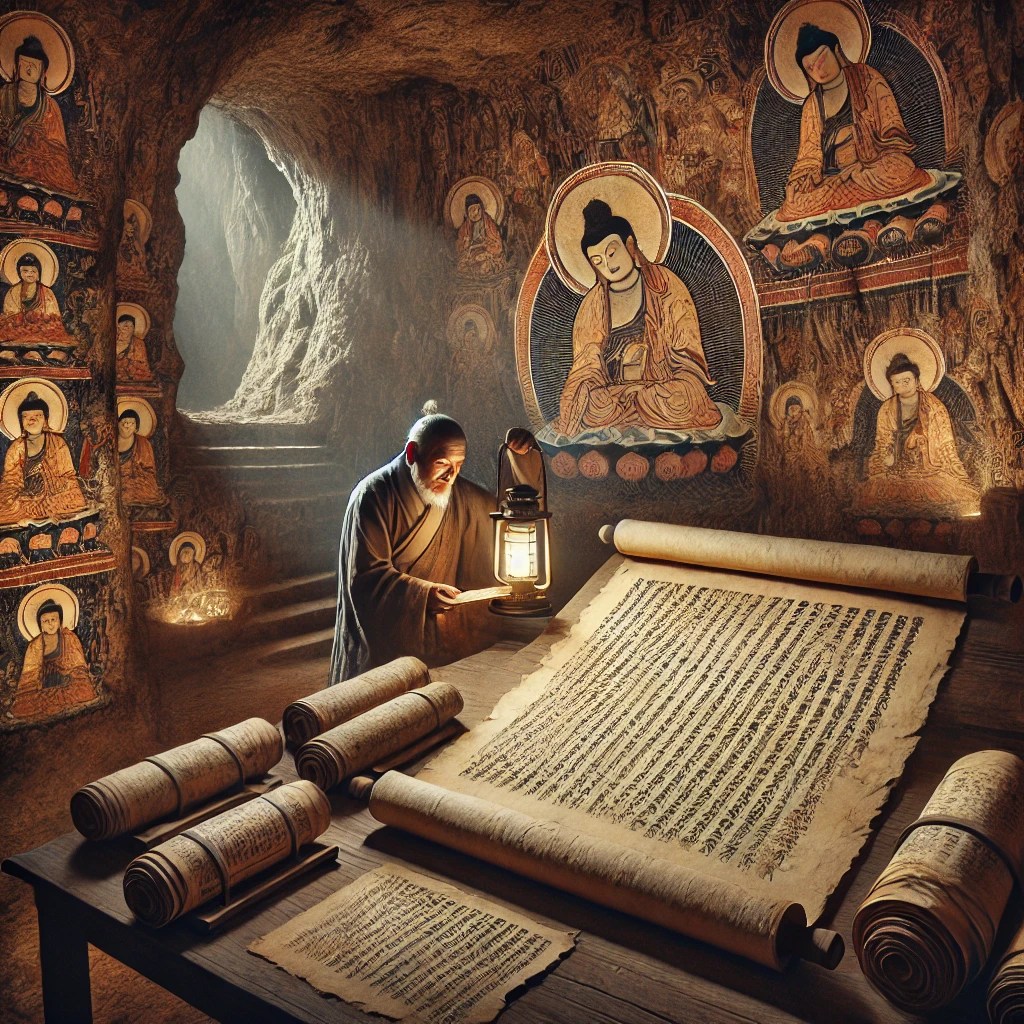
The Dunhuang manuscripts, discovered along the Silk Road, offer insight into early tantric Buddhism. Dalton’s work with these texts suggests that tantric Buddhism initially developed through practical ritual manuals (Vidhis, Kalpas, and Sadhanas) rather than formalized scriptures. These guides were adapted and often discarded, making their historical traceability difficult.

Dalton found that these manuals were frequently appended to or inserted into Dharani sutras, but also existed independently.[1] This suggests that Buddhist rituals did not originate from sutras but were already in practice before being formally recorded in scripture.

The Evolution of Tantric Practices

By the fifth century, ritual manuals became prominent alongside Dharani sutras, marking a shift toward applied spirituality. The rise of altar diagrams, temple worship, and visualization techniques in Buddhist rituals coincided with Hindu esoteric traditions, reflecting a cross-pollination of practices.

Conjuring the Buddha: A Reversal of Scriptural Authority

Jacob Dalton’s book Conjuring the Buddha: Ritual Manuals in Early Tantric Buddhism, explores how tantric Buddhism is deeply ritualistic and magical, emphasizing that practitioners sought to conjure the Buddha rather than merely study doctrine.

A key argument in his work is that ritual practices predated and shaped canonical texts, rather than the traditional assumption that textual sources dictated practice. This challenges the linear evolutionary model that sees tantric Buddhism as a straightforward development from Mahayana sutras. Instead, Dalton suggests that lived ritual traditions influenced the formation of canonical texts, making tantric Buddhism a dynamic and experiential tradition rather than a purely doctrinal one.

Rethinking Tantric Buddhism’s Origins

Dalton’s research does not outright prove that tantra did not come from the Buddha, but it strongly challenges the traditional Buddhist claim that tantras were directly revealed by him (whether in his historical form or as Vajradhara). Instead, it suggests that tantric Buddhism developed as an evolving ritual tradition rather than being a fully formed teaching originating from the Buddha himself.

Here’s why:

  1. Ritual Practices Evolved Separately from Canonical Teachings
    Dalton’s findings indicate that tantric practices were initially recorded in independent ritual manuals that were later appended to or integrated into Dharani sutras. This suggests that these practices were not originally part of the Buddha’s recorded teachings but emerged over time within Buddhist communities.
  2. No Direct Scriptural Evidence from Early Buddhist Texts
    The earliest Buddhist texts, the Pali Canon and Mahayana sutras, do not contain fully developed tantric doctrines. Tantra, as it appears in Vajrayana Buddhism, became prominent centuries later, and its early development seems to be more of a gradual accumulation of esoteric ritual practices rather than a singular revelation by the Buddha.
  3. Cross-Pollination with Other Esoteric Traditions
    Many tantric elements such as mantras, deity yoga, mandalas, and ritual visualization, resemble practices found in Indian Shaiva and Shakta traditions. This suggests that tantric Buddhism developed through cultural and religious exchange rather than being an entirely unique transmission from the Buddha.
  4. A Shift in Scriptural Authority
    The fact that tantric practices existed before being formally written into Buddhist scriptures implies that tantric Buddhism may have been practitioner-driven rather than stemming from a singular enlightened source (such as the Buddha). The codification of these rituals into texts might have been an attempt to legitimize or systematize existing practices rather than recording an original revelation.

What This Means for the Traditional View

If one takes the traditional Buddhist stance that tantra was revealed by the Buddha (or Vajradhara), then Dalton’s research presents a major challenge. It suggests that these teachings were likely developed and refined within Buddhist circles long after the Buddha’s time rather than being his direct transmission. Whether this undermines the legitimacy of tantra as a Buddhist tradition depends on one’s perspective: traditionalists may argue that the Buddha foresaw and seeded tantric teachings in hidden ways, while scholars would argue that tantra is a later development influenced by various religious and ritual traditions.


[1] In Tibetan Buddhism, a Dharani Sutra is a type of scripture or sacred text that contains dharanis—extended formulas or phrases composed of Sanskrit syllables believed to carry spiritual power. These are similar to mantras but often longer and more elaborate.

Jacob Dalton, “Conjuring the Buddha,” YouTube, October 5, 2023, https://youtu.be/UVxdmvYaOq4?si=ADR5WqZVvrX88Qo3.


The full transcript of the lecture cited in the article can be read here:

Speaker: Jacob Dalton, Ph.D. | Distinguished Professor in Tibetan Buddhism, UC Berkeley

Thank you, Sanjot, for inviting me. It’s a strange experience to speak to a home crowd.

I’ve given a couple of talks on this book before, and those were more formal, in-depth lectures on specific elements of the book. But since those are all available online, I decided to take a different approach today—something a bit more personal and informal. I want to talk about the process I went through in writing this book.

Since many of you, particularly those in my seminars, have probably heard me discuss these ideas countless times—ideas I’ve been working with for nearly 20 years—I hope this will be the last time you have to listen to me talk about them.

This book began taking shape after I finished my Ph.D. and moved to London to work at the British Library. I was hired by the International Dunhuang Project, which had received a three-year grant to digitize the Tibetan tantric manuscripts in the Stein Collection.

A brief word on the Dunhuang manuscripts: they were discovered over a century ago in a cave along the Silk Road, near the city of Dunhuang. They are a treasure trove for scholars of Chinese and Tibetan religious studies, containing some of the earliest materials we have in Tibetan.

As part of this project, I worked alongside Sam van Schaik to catalog the tantric manuscripts. It was an incredibly fortunate three years, as my interests aligned perfectly with the project’s goals, allowing me to read through the collection extensively.

As I began working through these manuscripts, I noticed that previous scholarship had largely relied on the existing catalog of Tibetan manuscripts in London. Rather than being constrained by that framework, I decided to read through the manuscripts one by one, which led to the discovery of many new treasures.

At the start, I was so excited by my findings that I rushed to publish a few articles. Looking back, I wish I could retract them—they were filled with errors. I simply wasn’t yet qualified to fully understand the collection. Realizing this, I paused my publishing efforts to re-educate myself on the early history of tantric Buddhism in India, which ultimately delayed the completion of this book for nearly two decades.

The book does several things at once. It uses the Tibetan tantric manuscripts from Dunhuang as a window into the development of tantric Buddhism in India. My previous book, Taming of the Demons, used the same manuscripts to explore early Tibetan history, but this time I wanted to contextualize them in relation to Indian developments. While I am not a Sanskritist, I undertook the challenge of examining this material from an Indian perspective.

Despite what Sanjot may have said, much of the book is quite technical, dealing with the evolution of tantric ritual and how it functioned as a system. However, two larger arguments underpin the book.

First, I emphasize the importance of ritual manuals. The book is, in many ways, a study of early tantric ritual manuals as a distinct genre, particularly those preserved in Dunhuang.

Second, influenced by my time at UC Berkeley and conversations with colleagues like Paula and Allan, I began approaching these texts through a more literary lens.

The Discovery of Ritual Manuals as a Distinct Genre

In 2004, while working on an exhibition at the British Library, I was asked to write catalog entries for several manuscripts, including a Chinese diagram of an altar for the worship of Uṣṇīṣa Vijaya. Not knowing Chinese, I sought help in translating it, and I soon realized that nothing in the Uṣṇīṣa Vijaya Dhāraṇī Sūtra itself corresponded to the ritual practices depicted in the manuscript.

This led me to investigate further, and I discovered multiple versions of the text—some with separate ritual sections, others with independently circulating ritual manuals (vīdhis). The Chinese canon preserved some of these, as did the Tibetan canon, while the Dunhuang manuscript represented yet another variant.

This realization led to a major breakthrough: I began to see that ritual manuals had a life of their own, distinct from the canonical scriptures. Using the Taishō Tripiṭaka, I traced the emergence of ritual manuals, finding that they first appeared alongside dhāraṇī sūtras in the second half of the fifth century and proliferated in the sixth and seventh centuries.

Surprisingly, I found no evidence of Buddhist ritual manuals before this period. This was a revolutionary moment for me—I realized that an entire genre, central to contemporary Buddhist practice, had emerged relatively late in Buddhist history.

Ritual Manuals and the Proto-Tantric Debate

This finding intersected with a longstanding scholarly debate about whether dhāraṇī sūtras were proto-tantric. Scholars like Michel Strickmann argued that they were, while others, such as Robert Sharf, disagreed.

I concluded that dhāraṇī sūtras themselves were not tantric but rather Mahāyāna texts. However, the ritual manuals associated with them were proto-tantric. These manuals became a kind of “literary Petri dish,” fostering experimentation, localization, and innovation in Buddhist ritual practice.

What made these ritual manuals so flexible was their non-canonical status. Unlike scriptures deemed the word of the Buddha, these were human-authored texts that practitioners personalized with notes, additions, and modifications. Today, we can still see this practice in Tibetan Buddhism, where individuals compile personalized collections of prayers and instructions.

Yet, because they were seen as unimportant, these manuscripts were rarely preserved—except in rare cases like the Dunhuang collection, which offers a unique glimpse into this otherwise ephemeral tradition.

The Literary Qualities of Ritual Manuals

A turning point in my thinking came when Paula, a literature scholar, asked me what defined ritual manuals as a genre. Until then, I had approached them purely as practical guides. But her question forced me to consider their literary qualities.

Unlike Mahāyāna sūtras, which recount the Buddha’s teachings in a narrative framework, ritual manuals speak directly to the reader, instructing them in the imperative tense: “Place the offering here. Hold the beads in your right hand. Recite the mantra 21 times.” This direct address collapses the distance between text and practitioner, drawing the reader into the ritual itself.

With the rise of tantra, another shift occurred. The imagined world of the Buddha, once distant in Mahāyāna sūtras, merged with the practitioner’s experience. Instead of merely praying to a Buddha, practitioners imagined themselves as the Buddha at the center of the mandala.

This change is vividly illustrated in an eighth-century Tibetan commentary, which states that before drawing a physical mandala, the practitioner must first visualize the true mandala hovering above it. Here, the imagined world takes precedence over the physical.

The Evolution of Tantric Ritual and Poetic Language

A key feature of tantric ritual manuals is their use of poetry at crucial ritual moments. While early manuals were mostly prose, later tantric texts incorporated poetic passages, particularly during initiations and moments of transformation.

For example, in an initiation ritual, the master bestows symbolic objects upon the initiate while reciting poetic verses. This poetic register heightens the ritual’s significance, marking it as a moment of spiritual transformation.

By the ninth and tenth centuries, entire tantric ritual manuals were composed in verse, blurring the lines between human and Buddha-authored texts. These poetic passages, rich in metaphor and imagery, were designed to induce visionary experiences in the practitioner.

Conclusion

The developments I have traced in ritual manuals culminated in the late eighth and ninth centuries with the rise of esoteric initiations, the fourth empowerment, and the direct transmission of awakening through poetic or symbolic gestures—hallmarks of later tantric Buddhism.

While I have limited my argument to the evolution of ritual manuals, it is tempting to see a connection between these literary developments and the emergence of direct transmission methods in traditions like Dzogchen and Zen. By the end of the eighth century, the transmission of awakening was no longer solely a doctrinal process but an experiential one, facilitated through poetic, symbolic, and ritual means.

Thank you.


Tibetan Buddhism and Christianity: Traditions Very Much at Odds


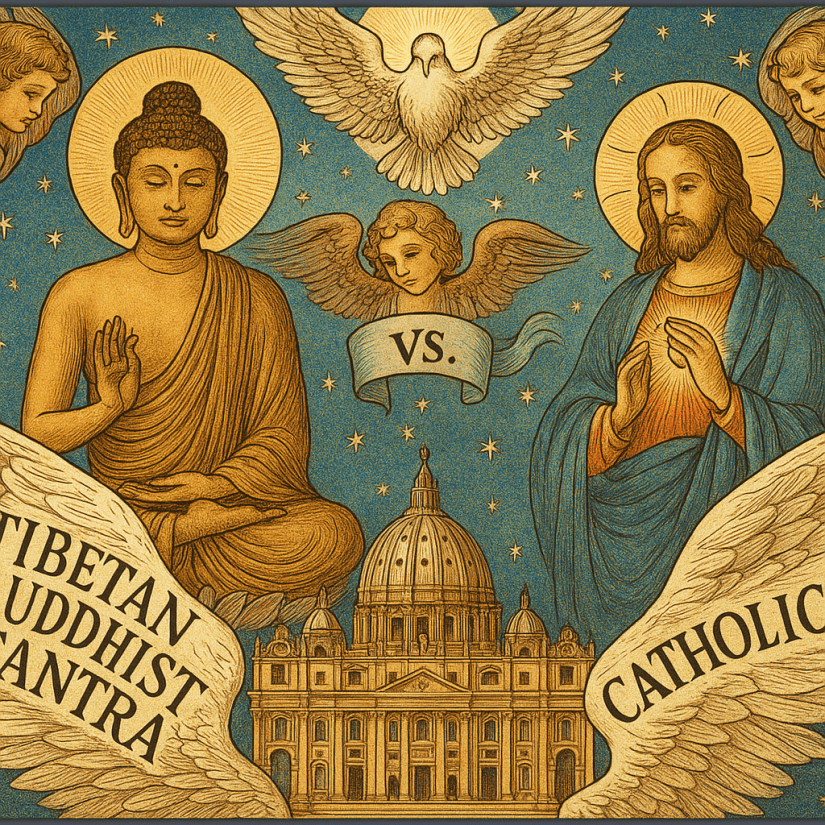
As a young person, I was assured by a respected Tibetan Buddhist rinpoche that one could be both Christian and Buddhist. [1] He acknowledged that many had faith in Jesus Christ and claimed there was no contradiction between the two traditions. Yet, this assertion directly contradicts biblical Christianity. Whether well-intentioned or deceptive, he was wrong.

Tibetan Buddhism is often presented in the West as a tradition of wisdom and compassion, sometimes compared to Christianity. However, its fundamental tenets conflict with Christian doctrine, not only in rejecting a Creator God but also in its deep commitment to tantric practices that diverge from biblical teachings. Tibetan Buddhism’s fusion of Indian Buddhist philosophy, tantric practices, and Tibetan shamanism has resulted in a system where esoteric tantric laws supersede even the historical Buddha’s teachings, let alone Christian principles.

Tantric Roots: Beyond the Buddha’s Teachings

It is important to note that Tibetan Buddhism is not solely derived from the historical Buddha’s teachings but incorporates various esoteric influences, including elements from broader South Asian tantric traditions. Scholar Jacob Dalton notes that early Buddhist tantra developed ritualized practices such as mantra recitation and yogic breath-control techniques. Over centuries, Tibetan Buddhist tantra evolved beyond the Buddha’s original teachings, shaped by ongoing ritual innovations and textual developments rather than direct continuity with the Buddha’s doctrine (Dalton, “On the Early Development of Sexual Union in Buddhist Tantric Practice”) [2]

The Buddha’s original teachings emphasized ethics, meditation, and wisdom, not esoteric rituals, deity invocations, or secret empowerments, which later became central to Tibetan Buddhist practice. The introduction of tantric elements centuries after his death fundamentally altered Buddhism, aligning it more closely with Hindu tantra than with its original foundations.

The Fusion of Buddhism, Tantra, and Tibetan Shamanism

Tibetan Buddhism is not a pure continuation of the Buddha’s teachings but a blend of:

  • Mahayana Buddhism: Contributed philosophical concepts like emptiness (shunyata) and the bodhisattva ideal.
  • Kashmir Shaivism & Indian Tantra: Introduced deity yoga, secret initiations, and esoteric sexual rituals.
  • Tibetan Bon Shamanism: Integrated animistic practices, spirit invocations, and sorcery.

This synthesis was fraught with contradictions. The Buddha’s ethical teachings often clashed with tantra’s disregard for conventional morality, which, according to tantric texts, must be transcended for enlightenment. Tantric laws ultimately took precedence over traditional Buddhist ethics, justifying actions that the Buddha explicitly condemned, such as ritual intoxication, sexual practices, and deceptive methods of control.

Dalton’s book, The Taming of the Demons: Violence and Liberation in Tibetan Buddhism, highlights how tantric law overshadowed Buddhist nonviolence, allowing for ritual violence against perceived enemies of the dharma (Dalton, The Taming of the Demons). [3] This unresolved tension continues in Tibetan Buddhist circles, where lamas justify behaviors the Buddha would have rejected.

Idol Worship and the Biblical Condemnation of Tibetan Buddhism

Christianity explicitly condemns the core practices of Tibetan Buddhism, particularly idol worship, sorcery, and reliance on spiritual intermediaries outside of God. Scripture warns against such practices:

  • Isaiah 42:8 “I am the Lord; that is my name! I will not yield my glory to another or my praise to idols.”
  • Galatians 1:8 “Even if we or an angel from heaven should preach a gospel other than the one we preached to you, let them be under God’s curse!”
  • Deuteronomy 18:10-12 “There shall not be found among you anyone who… practices divination, tells fortunes, or interprets omens… For whoever does these things is an abomination to the Lord.”
  • 1 Corinthians 10:20-21 “The sacrifices of pagans are offered to demons, not to God, and I do not want you to be participants with demons.”

Tibetan Buddhism actively promotes deity worship, ritual magic, and tantric initiations that invoke spiritual forces, aligning it with practices the Bible condemns as deceptive and demonic.

Two Paths That Cannot Be Reconciled

Despite modern claims of compatibility, Christianity and Tibetan Buddhism are fundamentally irreconcilable. Tibetan Buddhism is rooted in tantric laws that contradict the teachings of both the Buddha and Christ. It is not merely a philosophy but an esoteric system steeped in idol worship, occult rituals, and doctrines opposed to biblical truth.

  1. An honorific title used to refer to highly respected teachers.
  2. Jacob Dalton, On the Early Development of Sexual Union in Buddhist Tantric Practice, Journal of the International Association of Buddhist Studies, vol. 32, no. 1–2, 2009.
  3. Jacob Dalton, The Taming of the Demons: Violence and Liberation in Tibetan Buddhism (New Haven: Yale University Press, 2011).