

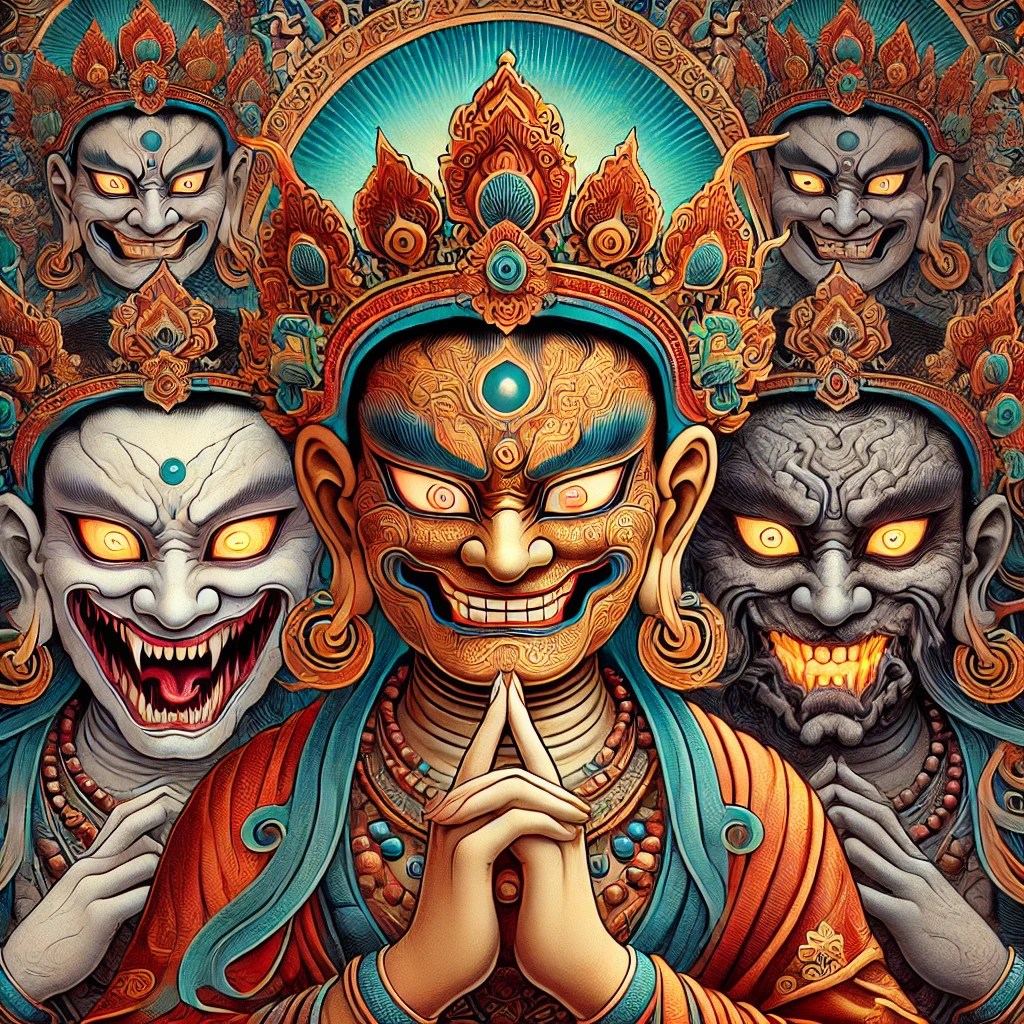
Tibetan tantric Buddhism has long fascinated and mystified both scholars and practitioners alike. While much of its practice revolves around meditation, visualization, and philosophical discourse, historical accounts suggest that certain sects engaged in secretive and controversial rites, including subjugation rituals and, in some cases, physical executions. While some tantric lineages justify these as purely symbolic acts of internal transformation, others indicate that ritualized killings were at times part of esoteric practices. These remain one of the most sensitive and least discussed aspects of Vajrayāna Buddhism.
The Justification: Internal Alchemy and Subjugation Rites
Many Tibetan Buddhist schools frame tantric rituals as a means to subdue inner enemies such as destructive emotions, ignorance, and attachments, rather than external foes. Texts such as the Cakrasaṃvara Tantra and the Hevajra Tantra describe wrathful deities engaged in acts of destruction, yet these are often interpreted by Tibetan lamas and Western scholars as symbols of the practitioner’s battle against their own afflictions.
Rituals involving visualized violence, such as slaying demons, cutting through illusion, or drinking ritual substances from a kapala (skull cup), are intended to dismantle the ego and lead to enlightenment. This view holds that the tantric practitioner does not actually kill, but instead undergoes a psychological transformation through these rites.
The Evidence: Historical Accounts of Ritual Killings
Despite this justification, historical records and oral traditions suggest that certain tantric practitioners, particularly within the darker recesses of Tibetan esotericism, may have engaged in actual acts of ritualized violence. The practice of srog sgrol (life liberation or live killing) has been referenced in some sources, where a ritualized execution was believed to transfer the victim’s consciousness to other realms, i.e. to the lower realms or hell.
Reports from Tibetan and Western observers, including early European travelers and Buddhist historians, recount instances where enemies of the dharma, or those deemed spiritually unfit, were objects of ritual subjugation. In these cases, physical acts were justified as a form of karmic retribution.
The Role of Tantric Adepts (Mahasiddhas) in Extreme Practices
Certain Tibetan and Indian Mahasiddhas (tantric masters) were known for their transgressive practices, challenging conventional morality to break through illusions of duality. Some of these figures, such as Padmasambhava and Virupa, were associated with wrathful magical feats and subjugation rituals, though their actions are often interpreted metaphorically. However, other figures, particularly in later Tibetan history, were accused of employing lethal tantric techniques to eliminate obstacles and enemies, both spiritual and political.
Controversy and Silence: Why Modern Authorities Avoid This Topic
In contemporary Tibetan Buddhism, discussions of these practices are largely absent or carefully avoided. The emphasis in modern Vajrayāna teachings is placed on compassion, wisdom, and ethical conduct, aligning with broader Buddhist principles. However, the existence of such rituals in historical contexts poses challenging questions:
- Were these practices ever widely accepted, or were they fringe activities of rogue tantric practitioners?
- To what extent were physical acts considered necessary versus metaphorical transformations?
- How do modern Tibetan lineages reconcile these historical accounts with their present-day teachings that successfully whitewash the truth?
The intersection of symbolic transformation and real-world ritual violence remains one of the least understood aspects of Tibetan Buddhist history. While most tantric traditions today publicly emphasize nonviolence and ethical discipline, the shadows of past practices linger in historical accounts and most likely continue to this day. What we do know is that actual executions took place in Tibet and later in the Tibetan diaspora outside of Tibet. There is little reason to believe that this has changed. This illustrates that tantric Buddhism has always walked a fine line between virtue and evil. This begs the question: Is the virtue just window dressing for darker practices? Just look at the photos on Facebook of some of the big drupchos (series of rituals, prayers, and meditation practices) done at the large Tibetan monasteries in India. What do you see? Are the so-called wrathful deities invoked in Tibetan Buddhist rituals really enlightened buddhas and bodhisattvas? This issue deserves sincere examination and honest discussion among Tibetan lamas and Rinpoches who go to great lengths to whitewash and obfuscate these matters.
 Tantric Deception