

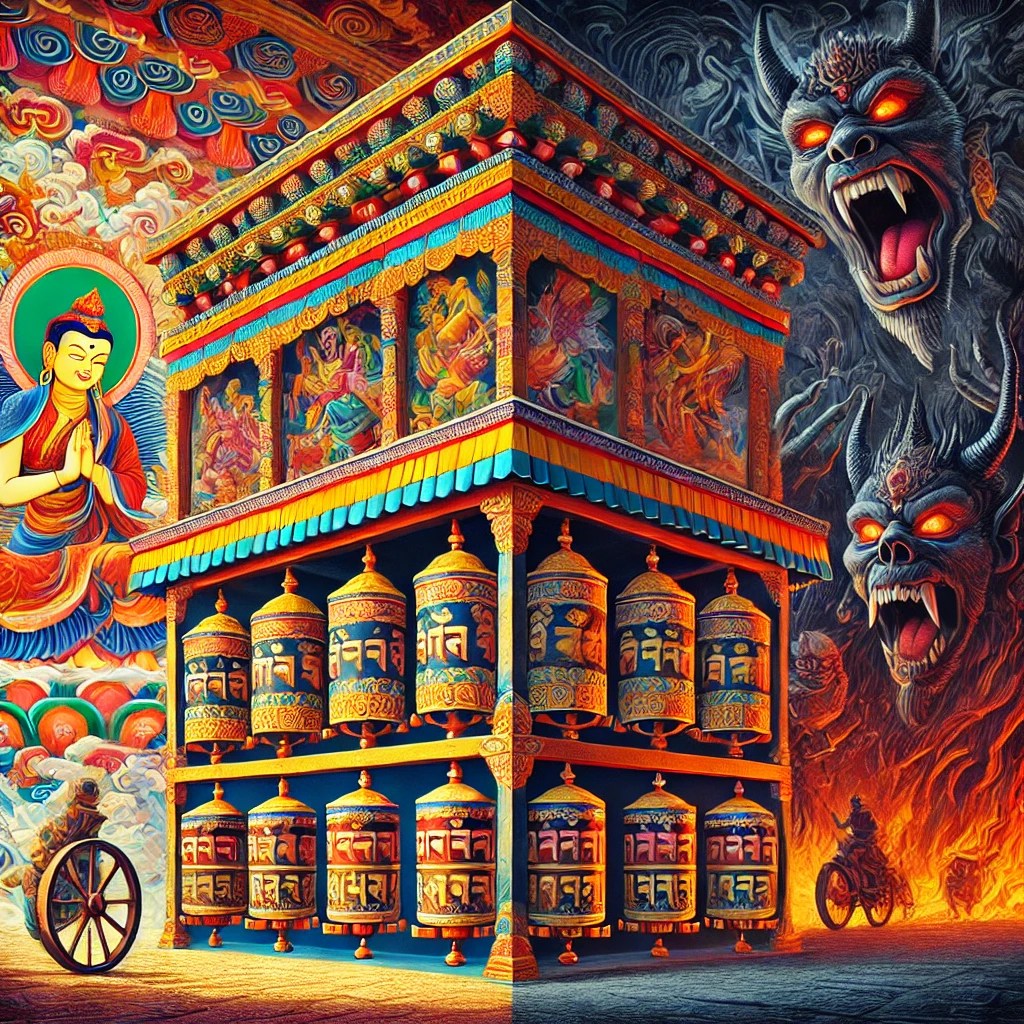
Tibetan Buddhism is widely admired in the West for its profound philosophical teachings, its meditative depth, and its association with peace and compassion as exemplified by figures like the Dalai Lama. However, there is a lesser known and far more complex aspect of Tibetan Buddhism that intertwines its spiritual practices with white and black magic, divination, and tantra. Sam van Schaik’s Buddhist Magic: Divination, Healing, and Enchantment through the Ages provides a fascinating lens into these practices, showing how Tibetan Buddhism is not a monolithic tradition but a syncretic amalgam of divergent systems.
This blog post aims to shed light on the magical underpinnings of Tibetan Buddhism, comparing them to Western grimoires, and questioning their alignment with the teachings of the historical Buddha. It also highlights the often overlooked fact that Tibetan Buddhism is not one system, but a hybrid of at least three distinct traditions: early Buddhist teachings, Hindu tantra (including influences from Kashmir Shaivism), and indigenous Tibetan shamanistic practices.
The Magical Practices of Tibetan Buddhism
Van Schaik’s book reveals the prevalence of magical practices in Tibetan Buddhism, ranging from divination to enchantment and healing. These practices are codified in texts that resemble Western grimoires, (manuals that prescribe rituals, mantras, and symbols to achieve specific outcomes such as protection, wealth, healing, or destruction). In Tibetan Buddhism, these texts often attribute their power to the blessings of deities or enlightened beings, yet their focus on manipulating outcomes through ritual actions aligns them with the magical traditions of the West.
Such practices include:
1. Divination: Techniques for predicting the future using symbolic tools such as dice, mirrors, or astrological charts.
2. Healing Rituals: Invocations of deities and spirits to cure illnesses, often involving complex rituals that parallel Western ceremonial magic.
3. Protective Charms: Talismans and mantras designed to ward off negative influences, akin to the sigils and spells of Western occultism.
4. Black Magic for the Destruction of Enemies: Rituals and spells aimed at causing harm or misfortune to perceived adversaries. These practices often involve invoking wrathful deities or spirits to unleash destructive energies, creating symbolic effigies or representations of enemies to channel harm, and performing rites designed to summon curses or disrupt the lives of opponents. These practices, though justified in some texts as a form of “compassionate wrath” to subdue harmful beings, bear a stark resemblance to the malevolent workings of Western grimoires and are a significant departure from the Buddha’s teachings of nonviolence and compassion.
While the first three categories are often framed as compassionate and benevolent, they reveal a focus on material and worldly outcomes that stands in contrast to the Buddha’s original teachings on renunciation and liberation from samsara. The fourth category is clearly destructive.
The Historical Buddha vs. Tibetan Magic
The teachings of Siddhartha Gautama, the historical Buddha, emphasize the Four Noble Truths and the Eightfold Path as a means of transcending suffering and achieving enlightenment. These teachings encourage ethical conduct, mindfulness, and wisdom, rejecting reliance on supernatural interventions or rituals. In the early Buddhist texts, the Buddha explicitly warns against using his teachings for worldly gain, emphasizing liberation over manipulation of the material world.
In contrast, the magical practices detailed in Tibetan Buddhist texts often prioritize worldly benefits, from health and wealth to protection and influence. While these practices may offer immediate relief or benefits, they risk diverting practitioners from the Buddha’s core message of liberation through self-discipline and insight.
The Influence of Tantra and Shamanism
Tibetan Buddhism’s integration of magic is largely due to its synthesis with other traditions, including:
1. Kashmir Shaivism and Hindu Tantra: Many tantric elements in Tibetan Buddhism, including the use of mandalas, mantras, and deity yoga, can be traced directly to Hindu traditions. These practices focus on harnessing esoteric energies and often include rituals that bear striking similarities to magical ceremonies.
2. Indigenous Tibetan Shamanism: Before Buddhism arrived in Tibet, the indigenous traditions were steeped in shamanistic practices involving spirit invocations, exorcisms, and divination. As Buddhism merged with these local traditions, it absorbed many of their magical elements.
3. Early Buddhist Teachings: The foundational teachings of the Buddha provide a third, distinct layer. While these teachings aim for transcendence and ultimate freedom from suffering, their integration with tantric and shamanistic practices in Tibet has created a system with seemingly contradictory goals.
Two (or Three) Systems at Work
In Tibetan Buddhism, these diverse influences coexist uneasily under the same umbrella. On one hand, we have the Buddha’s path of ethical discipline, meditation, and wisdom. On the other hand, we have the tantric and magical systems, which often emphasize power, ritual mastery, and worldly results. The attempt to merge these systems has resulted in a unique yet conflicting spiritual tradition.
For Western audiences, the peaceful and compassionate image of Tibetan Buddhism often obscures these darker, magical elements. It is crucial to recognize that beneath the veneer of benevolence lies a tradition that includes practices reminiscent of Western occultism. This highlights the importance of discernment and understanding the true nature of this tradition.
A Warning for Seekers
In conclusion, Buddhist Magic: Divination, Healing, and Enchantment through the Ages, serves as an essential resource for those seeking to understand the complex and multifaceted nature of Tibetan Buddhism.
Western practitioners and admirers of Tibetan Buddhism should approach the tradition with open eyes. While the philosophical and meditative teachings of Tibetan Buddhism offer profound insights, the magical practices described in van Schaik’s book represent a different domain, one that often contradicts the Buddha’s core message. Understanding the historical and cultural layers that make up Tibetan Buddhism can help people avoid a potential minefield of dangerous spiritual practices.
 Tantric Deception